City guide

architecture in Montgomery.

7 buildings worth a detour, each with what to look for. Open them on the map, or walk them with the iPhone app, which collects each one you photograph.

Landmarks

The buildings that define the city's architecture.

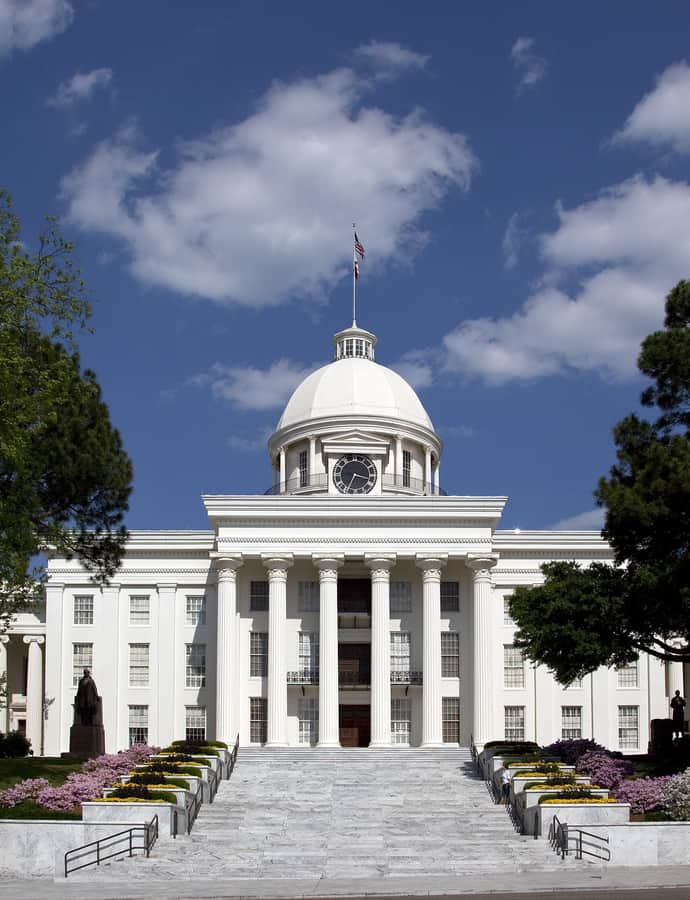
Alabama State Capitol

Greek Revival

Alabama State Capitol

Frank Lockwood

The Alabama State Capitol sits on Capitol Hill, originally known as Goat Hill, and has served as the seat of state government since Montgomery became the capital in 1846. Designed in the Greek Revival style by architect Frank Lockwood, it is listed on the National Register of Historic Places as the First Confederate Capitol and was declared a National Historic Landmark on December 19, 1960. Unusually, the legislature no longer meets here; the building holds the governor's office and functions largely as a museum.

Photo: Carol M. Highsmith , Public domain
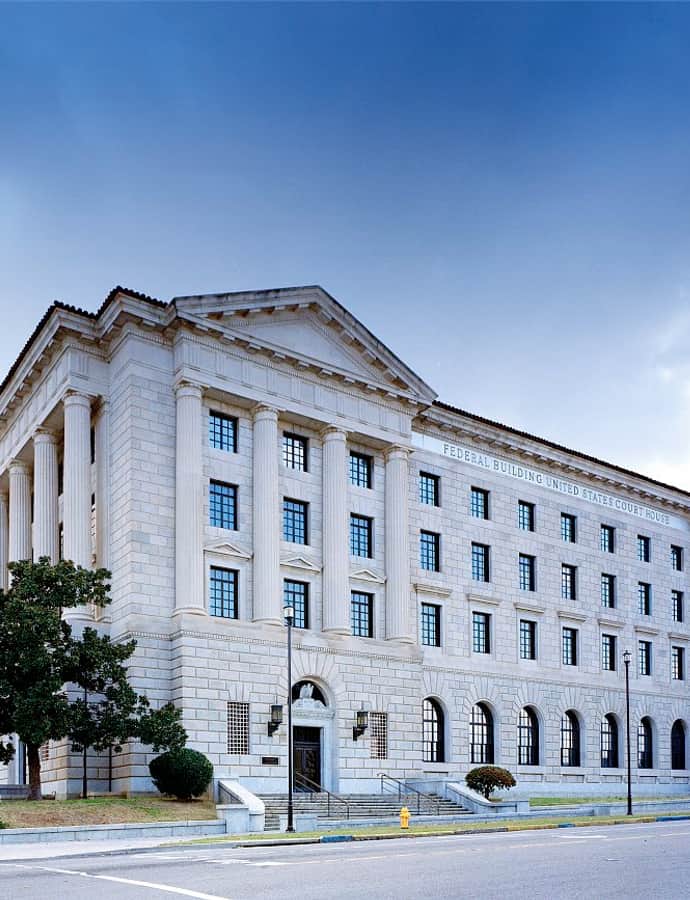
Frank M. Johnson, Jr., Federal Building and United States Courthouse

Neoclassical

Frank M. Johnson, Jr., Federal Building and United States Courthouse

The Frank M. Johnson, Jr., Federal Building and United States Courthouse was completed in 1933 to relieve Montgomery's crowded, outdated, and scattered federal offices. Congress authorized funding in 1930, and the government purchased and razed the site's Court Street Methodist Church for $114,000 in 1931 to make way for it. Originally known as the United States Post Office and Courthouse—Montgomery, it was renamed by Congress in 1992 to honor judge Frank Minis Johnson and was designated a National Historic Landmark in 2015.

Photo: Carol M. Highsmith , Public domain
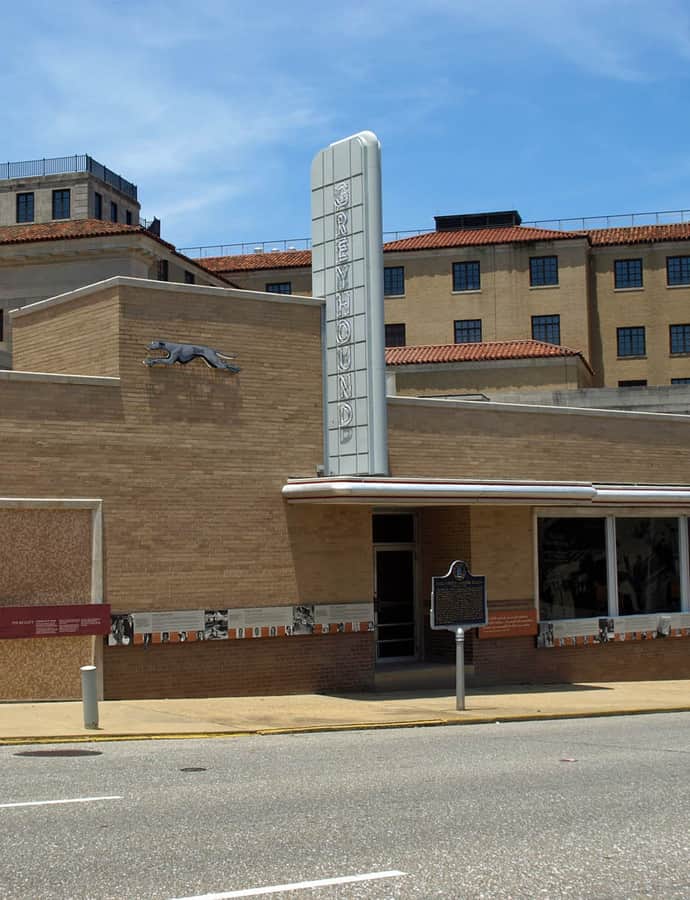
Freedom Rides Museum

Streamline Moderne

Freedom Rides Museum

William Strudwick Arrasmith

The Freedom Rides Museum occupies the former Montgomery Greyhound Bus Station at 210 South Court Street, the site of a violent 1961 mob attack on Freedom Riders during the Civil Rights Movement. Greyhound Lines commissioned architect W.S. Arrasmith in 1950 to design the streamlined Moderne station, replacing an earlier depot on North Court Street. Saved from demolition and restored, the building opened as a museum in 2011 and was listed on the National Register of Historic Places the same year.

Photo: Chris Pruitt , CC BY-SA 3.0

Jefferson Davis Hotel

Chicago School

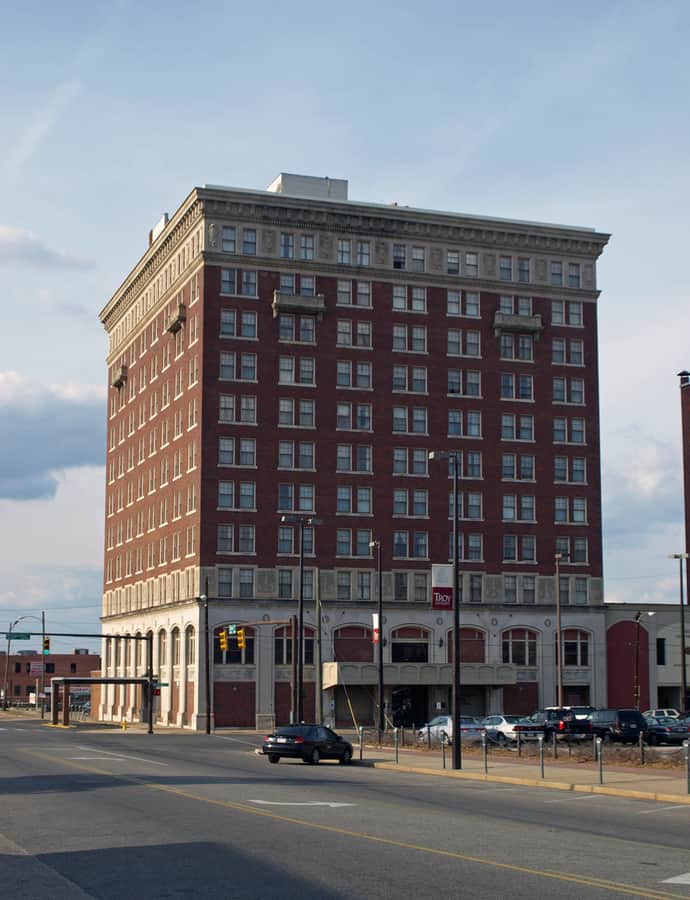
Jefferson Davis Hotel

Frederick Ausfeld

The Jefferson Davis Hotel, built in 1927 in the Chicago School style by architect Frederick Ausfeld, was named for Confederate president Jefferson Davis. The building once housed the WSFA radio studio, where Hank Williams performed in the late 1930s, and it was added to the National Register of Historic Places on March 13, 1979. It is currently used as apartments for the elderly.

Photo: Chris Pruitt , CC BY-SA 3.0

St. John's Episcopal Church

Gothic Revival

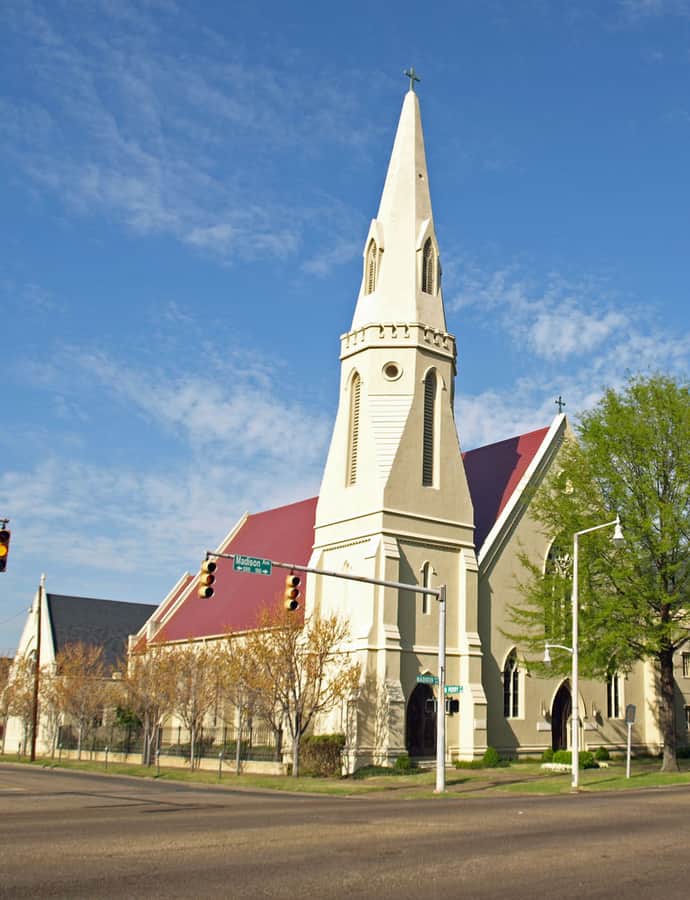
St. John's Episcopal Church

Frank Wills · 1854

St. John's Episcopal Church, completed in 1855 in the Gothic Revival style, was designed by the New York firm of Frank Wills and Henry Dudley for a parish organized in 1834. The congregation outgrew its original 1837 brick sanctuary as Montgomery's population swelled after the state capital moved there and cotton production expanded. The church hosted the 1861 Secession Convention of Southern Churches and was attended by Confederate President Jefferson Davis; it was placed on the National Register of Historic Places on February 24, 1975.

Photo: Chris Pruitt , CC BY-SA 3.0

Notable buildings

Worth a stop when you're nearby.

Dexter Avenue Baptist Church

Renaissance Revival

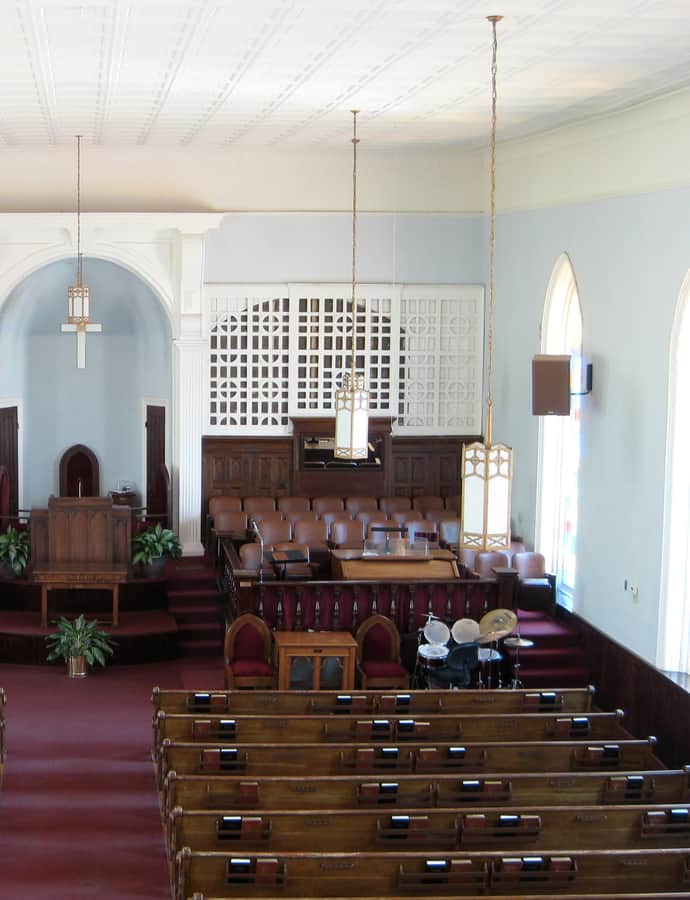
Dexter Avenue Baptist Church

Dexter Avenue Baptist Church, built in the Renaissance Revival style, was organized in 1877 by freedmen and free people of color and was originally known as the Second Colored Baptist Church. Martin Luther King Jr. served as its pastor and helped organize the 1955 Montgomery bus boycott from here, prompting its 1978 renaming to Dexter Avenue King Memorial Baptist Church. It was designated a National Historic Landmark in 1974 and sits just steps from the Alabama State Capitol.

Photo: Ronzoni (talk) , CC BY-SA 3.0

Hidden gems

Fine buildings that fewer people seek out.

Grove Court Apartments

International Style

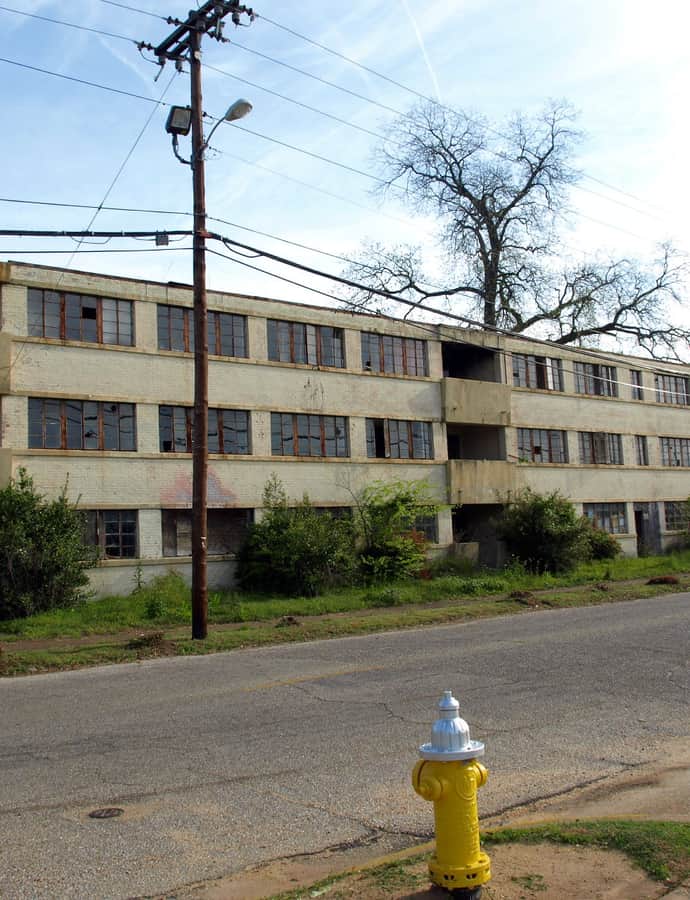
Grove Court Apartments

1947

Grove Court Apartments, built in 1947 in the International Style, was an award-winning apartment complex at 559 South Court Street, part of the post-WWII push to house returning servicemen amid a national housing shortage. It was abandoned in the 1990s and has stood derelict since, though it was listed on the National Register of Historic Places in 2013.

Photo: Chris Pruitt , CC BY-SA 3.0