City guide

architecture in Staten Island.

18 buildings worth a detour, each with what to look for. Open them on the map, or walk them with the iPhone app, which collects each one you photograph.

Landmarks

The buildings that define the city's architecture.

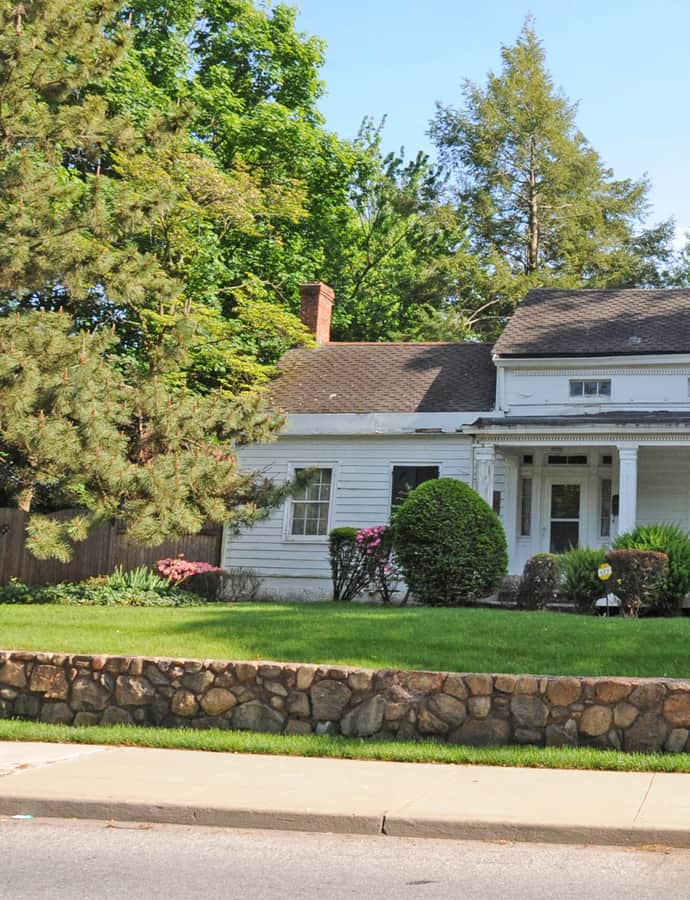
5910 Amboy Road

Greek Revival

5910 Amboy Road

1840

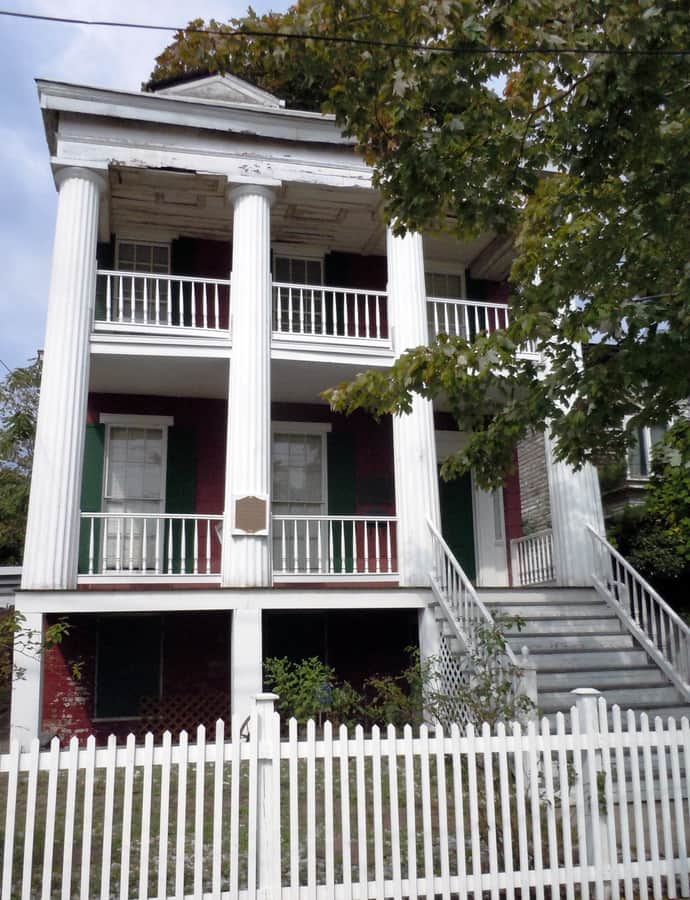
5910 Amboy Road is a Greek Revival house built around 1840 in Prince's Bay, Staten Island. It is both individually listed on the National Register of Historic Places and designated a New York City Landmark, recognition of a well-preserved example of the style in a part of the island that still reads as historic waterfront village.

Photo: JERRYE & ROY KLOTZ, M.D. , CC BY-SA 4.0
Battery Weed

Landmark

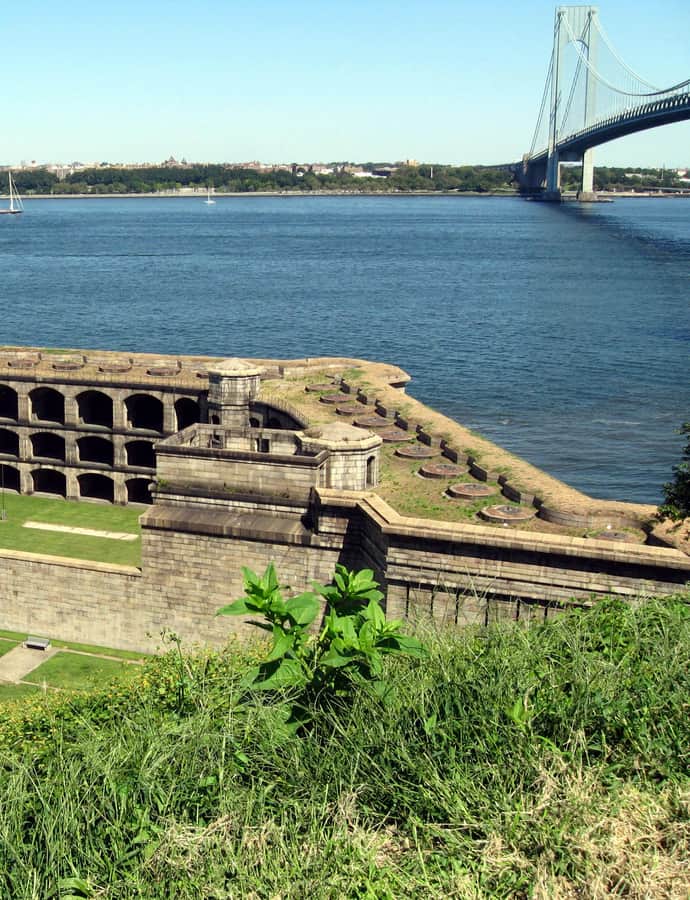
Battery Weed

Robert E. Lee; Joseph Gilbert Totten · 1861

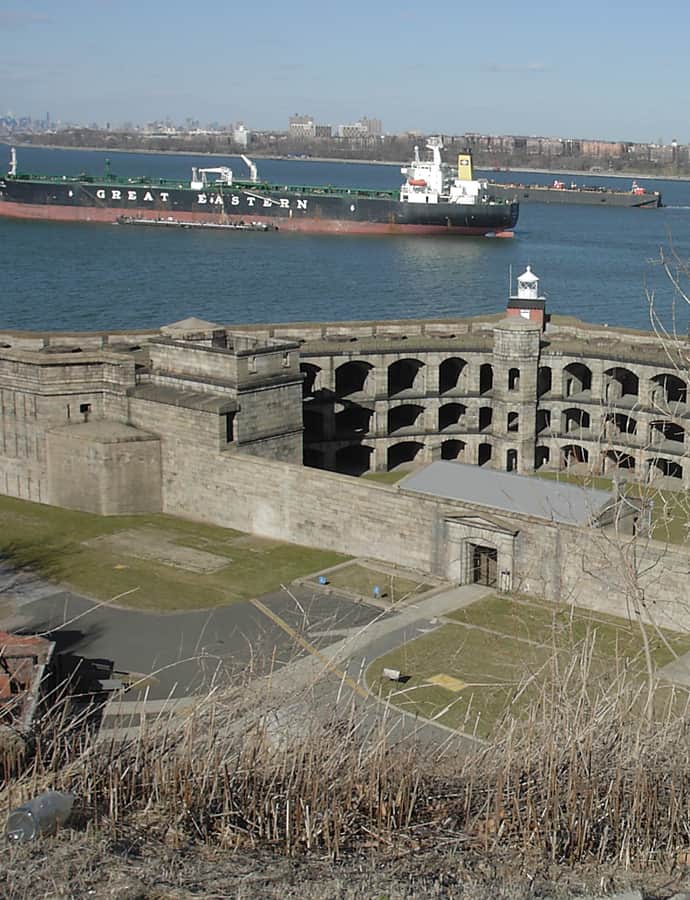
Battery Weed is a four-tiered fortification completed in 1861 on the Staten Island shore of the Narrows, guarding the main sea approach to New York Harbor from directly across the water from Fort Hamilton in Brooklyn. It replaced an earlier fort on the same site, Fort Richmond, built by New York State starting in 1806. Its design carries the names of two major military engineers, Robert E. Lee and Joseph Gilbert Totten, tying the fort to one of the most consequential careers in American military history.

Photo: Jim.henderson , Public domain

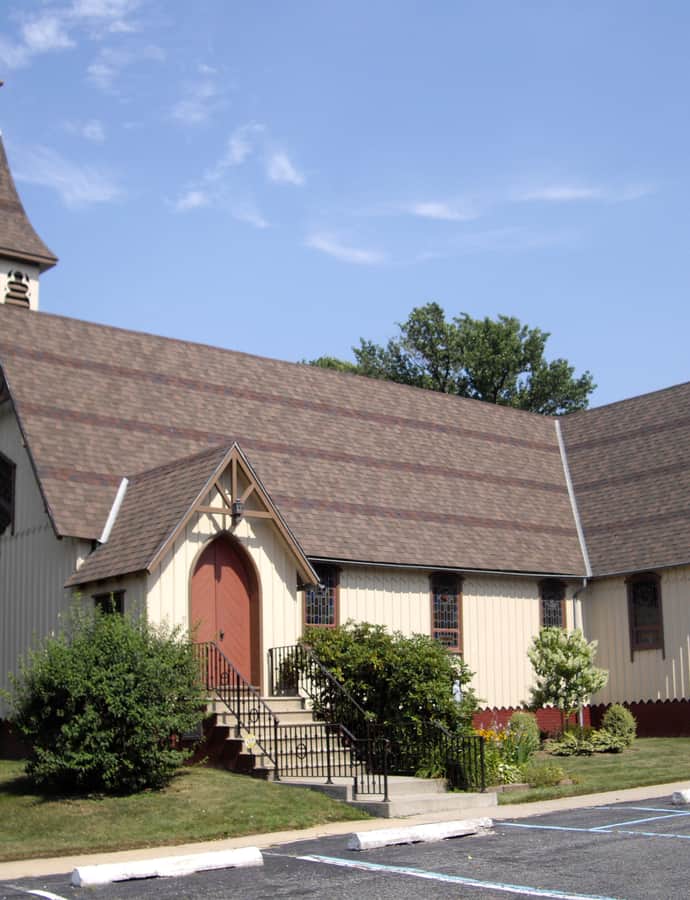
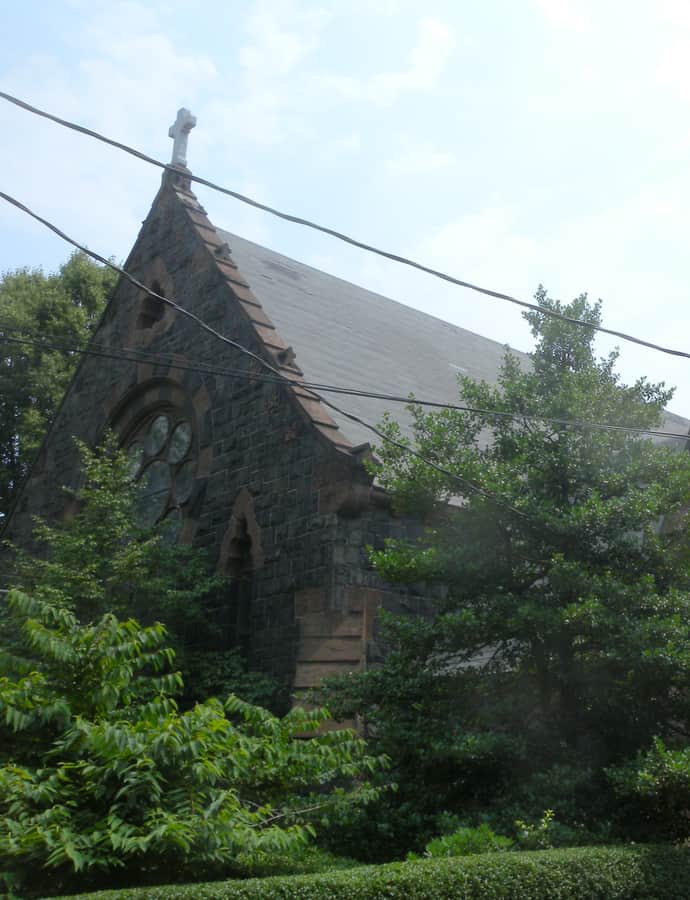
Christ Church Complex

Gothic Revival

Christ Church Complex

1904

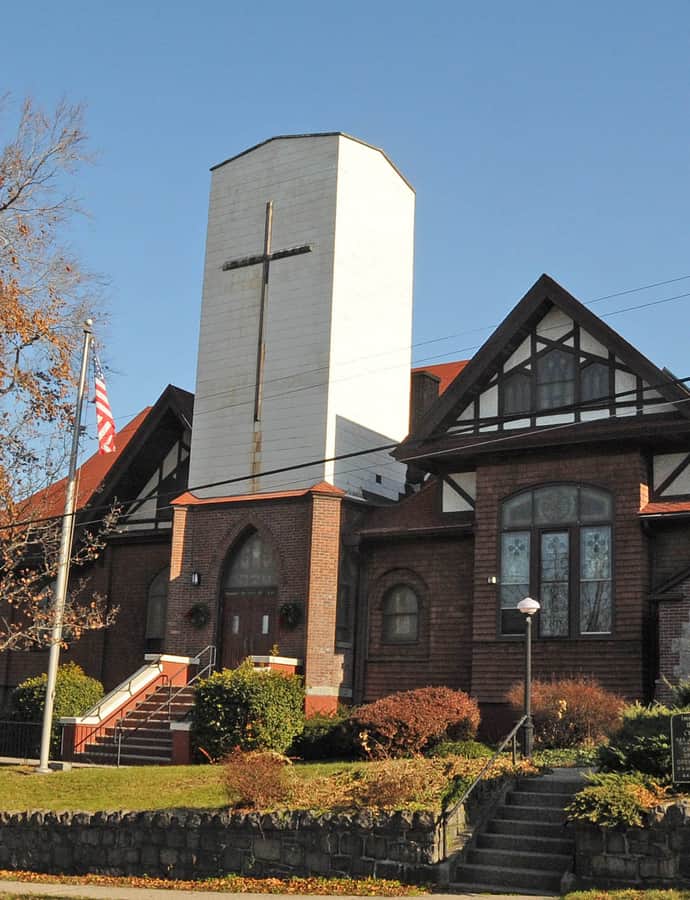
Christ Church New Brighton is an Episcopal church complex at 76 Franklin Avenue, built in 1904 in the Late Victorian Gothic style. The complex groups the church with a parish hall, linked by an enclosed cloister, and a Tudor-style rectory originally built in 1879 and remodeled in 1909, forming a small campus of connected buildings from three different building campaigns.

Photo: Jim.henderson , CC0

Landmark

Fort Tompkins

1861

Fort Tompkins is a fort within Fort Wadsworth at the Narrows, built between 1847 and 1861 on a site that had guarded the landward approaches to other Staten Island forts since 1808. It is the last surviving of four New York State forts to bear the Tompkins name and remained operational until it was superseded by new defenses around 1898. Military use of the site goes back to a 1636 Dutch blockhouse and continued through the Revolutionary War, when the area, known as the Patriot redoubt Flagstaff Fort, was captured and held by the British from 1776 until the war's end in 1783.

Fort Wadsworth

Landmark

Fort Wadsworth

1663

Fort Wadsworth is a former U.S. military installation on the Narrows, the strait dividing New York Bay into Upper and Lower bays, and before its 1994 closing was claimed to be the longest continuously garrisoned military installation in the United States. Military use of the site dates to a 1655 Dutch blockhouse, with continuous garrisoning claimed from another blockhouse built in 1663. The complex, which includes Fort Tompkins and Battery Weed, was renamed in 1865 to honor Brigadier General James Wadsworth, killed in the Civil War's Battle of the Wilderness, and is now part of the Gateway National Recreation Area under the National Park Service.

Photo: whomever , CC BY-SA 2.0

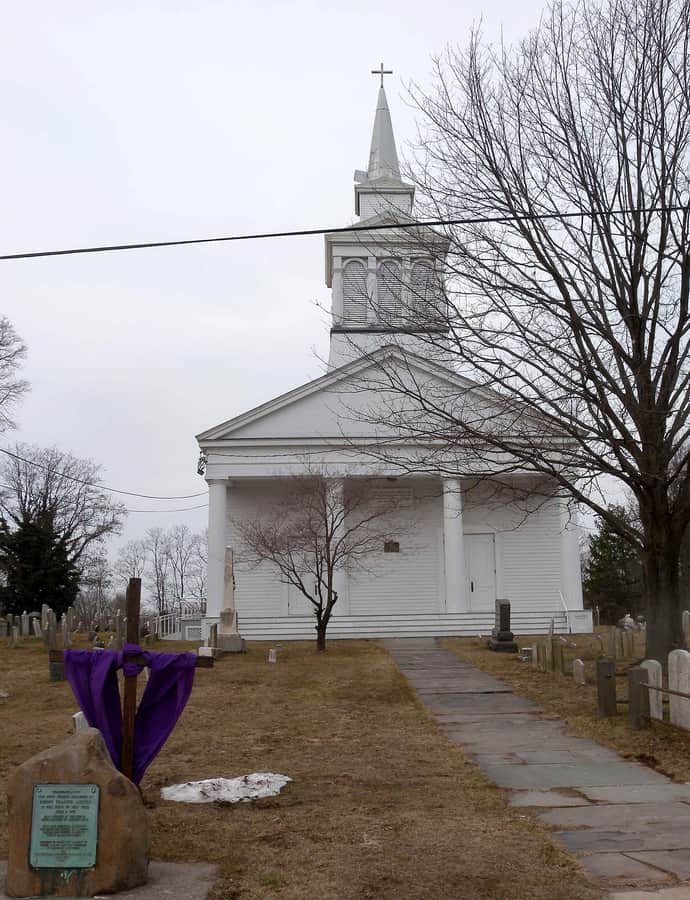
Immanuel Union Church

Gothic Revival

Immanuel Union Church

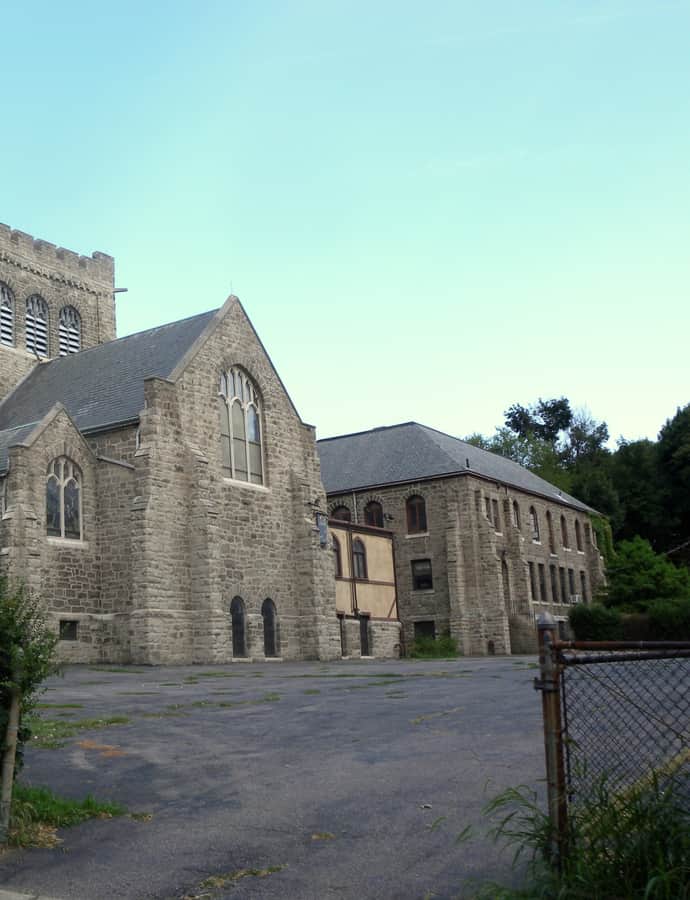
Immanuel Union Church is a High Victorian Gothic church on Staten Island's North Shore, individually listed on the National Register of Historic Places.

Photo: JERRYE & ROY KLOTZ, M.D. , CC BY-SA 4.0
Landmark

New Dorp Light

1856

The New Dorp Lighthouse is a decommissioned lighthouse at 25 Boyle Street in New Dorp, Staten Island, funded by Congress in 1852 and completed in 1856 to serve as a rear range light marking Swash Channel in Lower New York Bay. It was built by Richard Carlow, who also built the similar Chapel Hill and Point Comfort Range Lights in New Jersey around the same time. Ships were guided by bringing the New Dorp light 'in one' with the Chapel Hill Light to steer safely past West Bank.

Tompkinsville (Joseph H. Lyons) Pool

Art Deco

Tompkinsville (Joseph H. Lyons) Pool

1936

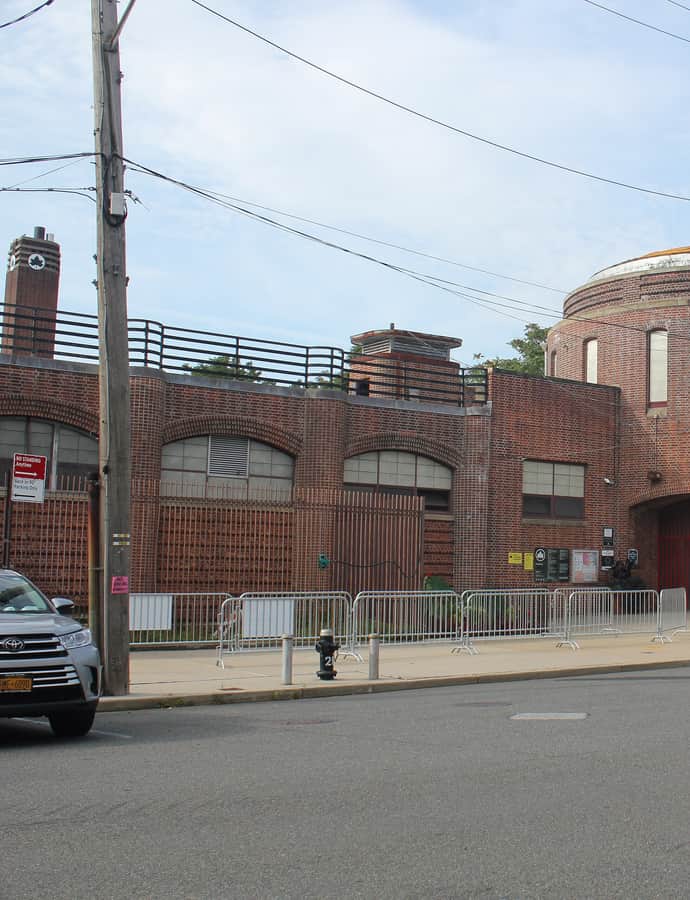
The Joseph H. Lyons Pool, also known as Tompkinsville Pool, is a 3.2-acre public swimming complex on Staten Island's North Shore next to New York Harbor, built in 1935–1936 as a Works Progress Administration project designed by Joseph L. Hautman. Opened July 7, 1936, it was the only WPA-era pool built on Staten Island, a Depression-era public works investment that gave the borough a major recreational amenity alongside jobs.

Photo: Epicgenius , CC BY-SA 4.0

Notable buildings

Worth a stop when you're nearby.

Dutch Colonial

Alice Austen House

1690

The Alice Austen House, known as Clear Comfort, stands at 2 Hylan Boulevard in Rosebank and was home for most of her life to Alice Austen, a photographer. Originally built in the 1690s/early 1700s as a one-room Dutch Colonial house on the shore of New York Harbor near the Narrows, it was remodeled and expanded repeatedly through the 1800s, most notably after Alice's grandfather, John Haggerty Austen, purchased and renamed it in 1844. It is now a museum administered by the volunteer group Friends of Alice Austen.

Dutch Colonial

Conference House

1675

Conference House, also known as Billop House, is a stone house built before 1680 by Captain Christopher Billopp in what is now Tottenville, overlooking Raritan Bay near Ward's Point. It is best known for hosting the Staten Island Peace Conference on September 11, 1776, when Billopp's grandson, Colonel Christopher Billop, welcomed a delegation attempting to negotiate a swift end to the American Revolutionary War.

Saint Andrew's Church

Romanesque Revival

Saint Andrew's Church

1872

The Church of St. Andrew stands at the corner of Arthur Kill and Old Mill Roads on the north side of Richmondtown, its congregation founded in 1708. The first church, built 1708–1712 and expanded in 1770, served as a British hospital during the American Revolutionary War before fires in 1867 and 1872 forced a rebuilding in fieldstone with red brick trim about 1872.

Photo: JERRYE & ROY KLOTZ MD , CC BY-SA 3.0

St. Alban's Episcopal Church

Gothic Revival

St. Alban's Episcopal Church

Richard M. Upjohn · 1865

St. Alban's Episcopal Church, an active Episcopal parish now at 76 St. Alban's Place in Eltingville, was built in 1865 as the Church of the Holy Comforter at what is today 3939 Richmond Avenue, designed by Richard Michell Upjohn. In 1873 the building was split in half, moved to its present site, and re-assembled and expanded. It took its current name in 1951 after absorbing the congregation of nearby St. Anne's Episcopal Church, Great Kills.

Photo: Dmadeo , CC BY-SA 3.0

Voorlezer's House

Dutch Colonial

Voorlezer's House

1695

The Voorlezer's House at 59 Arthur Kill Road is a clapboard frame house in Historic Richmond Town, long believed to be the oldest known schoolhouse in what is now the United States. It sits on land patented in 1680 and was traditionally dated to before 1696, though it was more likely built in the 1760s by Jacob Rezeau, whose family held the property from 1705. It later served as a private residence for over a century before the Staten Island Historical Society acquired and restored it.

Photo: Dmadeo , CC BY-SA 4.0

Hidden gems

Fine buildings that fewer people seek out.

364 Van Duzer Street House

Greek Revival

364 Van Duzer Street House

The 364 Van Duzer Street House is a Greek Revival frame house in Stapleton, built in 1835 by Robert M. Hazard, captain of the ferryboat Nautilus (owned by Daniel Tompkins) and postmaster of Tompkinsville. It's one of two similar historic houses on the block, both landmarked together in 1973.

Photo: Robert Haber , CC BY-SA 3.0

Renaissance Revival

Reformed Church on Staten Island, Sunday School Building, and Cemetery

The Reformed Church on Staten Island, a Dutch Reformed congregation founded in 1660, has stood at 54 Port Richmond Avenue since 1680. Its current brick church, set on a fieldstone foundation, was built in 1844 in the Greek Revival style, the fourth building on the site after the second church was destroyed by the British during the American Revolutionary War and a third was built in 1787.

Sailors' Snug Harbor

Greek Revival

Sailors' Snug Harbor

Martin E. Thompson · 1833

Snug Harbor is an 83-acre campus of more than two dozen buildings along the Kill Van Kull, built as Sailors' Snug Harbor, a retirement home for sailors, funded by Captain Robert Richard Randall's 1801 bequest. Delays over his will pushed the project to a new site, where Building C, designed by Martin E. Thompson, opened in 1833.

Photo: Dmadeo , CC BY-SA 4.0

Saint Paul's Memorial Church and Rectory

Landmark

Saint Paul's Memorial Church and Rectory

Edward Tuckerman Potter

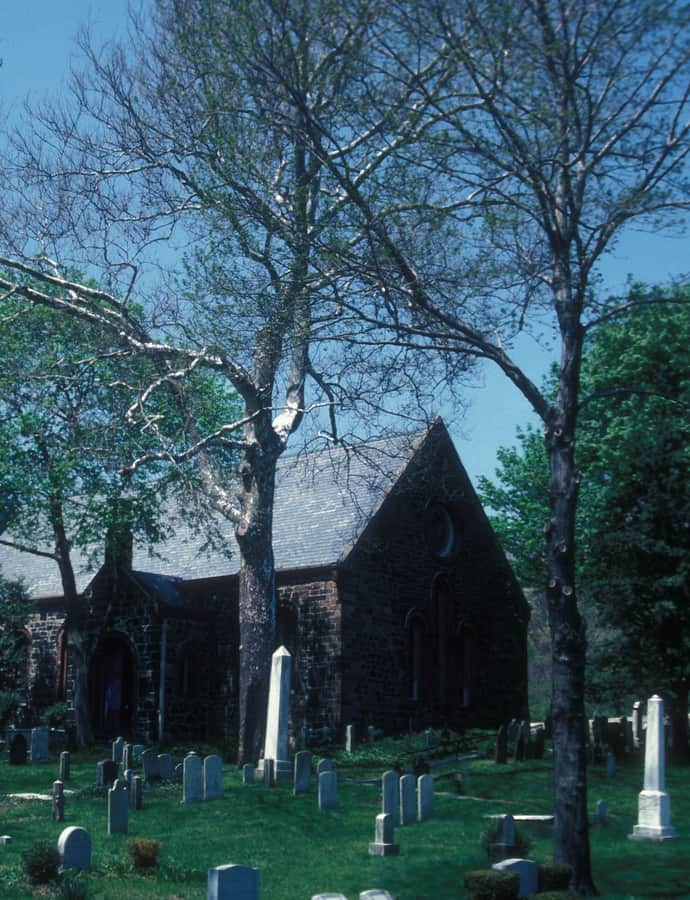
St. Paul's Memorial Church is an Anglo-Catholic Episcopal parish in Stapleton, built in 1866 of rough-faced Staten Island trap rock with brownstone trim and designed by Edward Tuckerman Potter. An auxiliary chapel followed in 1889, and the matching rectory is built of the same trap rock and brownstone.

Photo: Jim.henderson , CC0

Woodrow United Methodist Church

Italianate

Woodrow United Methodist Church

1842

Woodrow United Methodist Church, at 1075 Woodrow Road in Woodrow, is a wood-frame, clapboard-sided, temple-form Greek Revival church built in 1842.

Photo: Jim.henderson , Public domain