
City guide

architecture in Orlando.

3 buildings worth a detour, each with what to look for. Open them on the map, or walk them with the iPhone app, which collects each one you photograph.

Styles you'll see Shingle StyleNeoclassical

Landmarks

The buildings that define the city's architecture.

Shingle Style

Church Street Station

1889

Church Street Station began life as a working train depot, built in 1889 by the South Florida Railroad in a Shingle style rare for a commercial rail building. It served multiple railroads until 1926, when passenger service moved elsewhere, and the depot sat quietly until the 1970s, when it was redeveloped into a dinner-and-entertainment complex that became one of downtown Orlando's best-known destinations before Walt Disney World reshaped the region's tourism. The building is listed on the National Register of Historic Places and today anchors a retail and entertainment complex that also serves as a SunRail commuter stop.
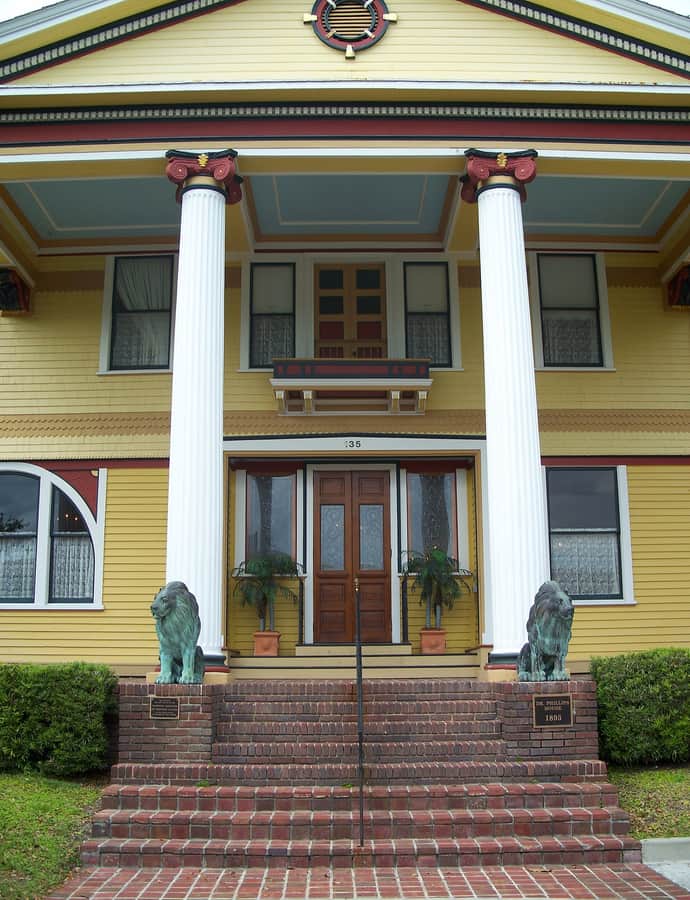
Dr. P. Phillips House

Shingle Style

Dr. P. Phillips House

The Dr. P. Phillips House, also known as the Peleg Peckham House, was built in 1893 at 135 Lucerne Circle Northeast as a wedding present from Colonel Peleg Peckham of Winter Park to his daughter. In 1912 it was purchased by Dr. Philip Phillips, a leading figure in Central Florida's citrus industry, who lived there until his death in 1959 and whose name now marks an entire Orlando neighborhood. The house was added to the National Register of Historic Places on July 10, 1979, and now operates as a banquet hall.

Photo: (Ebyabe) , CC BY 2.5

Notable buildings

Worth a stop when you're nearby.

St. George Antiochian Orthodox Church

Neoclassical

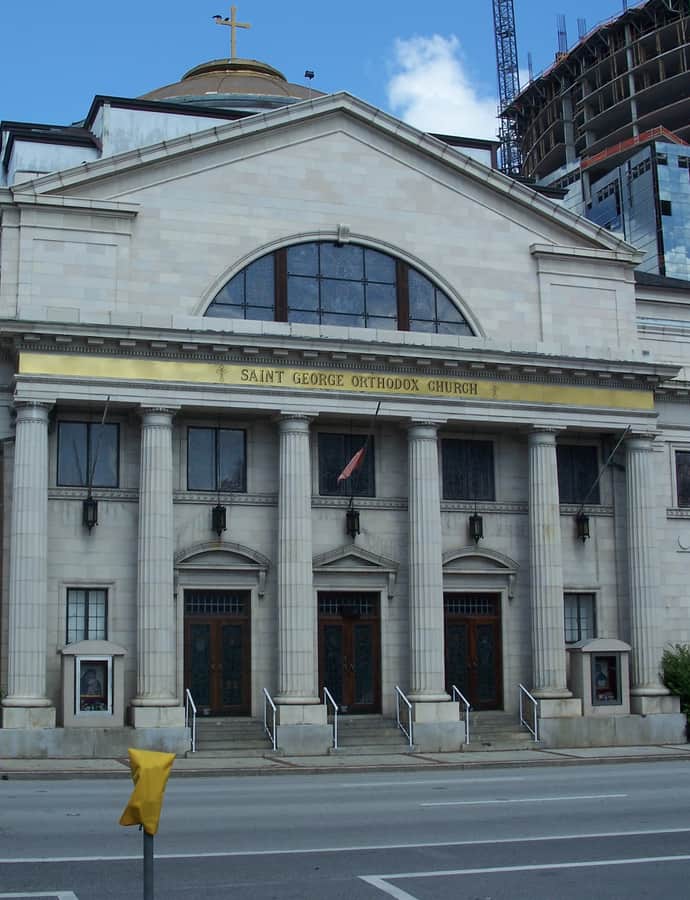
St. George Antiochian Orthodox Church

George Foote Dunham · 1926

Designed by architect George Foote Dunham and built in 1926, this Neoclassical building across from Lake Eola began as the First Church of Christ, Scientist. The congregation abandoned it in 1975, and it was acquired by Fr. John Hamatie and an Eastern Orthodox congregation, becoming St. George Antiochian Orthodox Church, now under the Antiochian Orthodox Christian Archdiocese of North America. It was added to the National Register of Historic Places on June 3, 1980.

Photo: (Ebyabe) , CC BY 2.5