
Detroit Naval Armory
- Architect
- William Buck Stratton
- Year
- 1930
- Style
- Art Deco
- City
- Detroit, MI
- Collection
- detroit deco
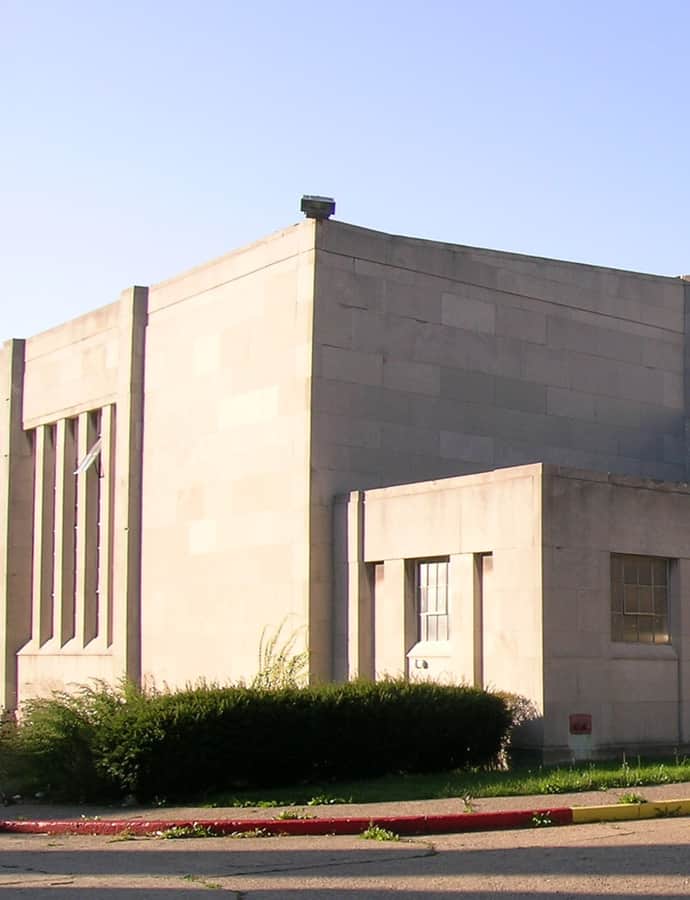

The Detroit Naval Armory, also known as the R. Thornton Brodhead Armory, stands at 7600 East Jefferson Avenue, designed by William Buck Stratton and completed in 1930 as Michigan's naval militia grew out of the reserve units first formed by several states in the 1880s. It was designated a Michigan State Historic Site in 1980 and listed on the National Register of Historic Places in 1994. The limestone building mixes Art Moderne and Art Deco influences across four sections: a vestibule, a drill hall, an office and penthouse section, and a company drill hall.
the building
Pewabic-tiled entrance. The East Jefferson entrance is heavily decorated with military and naval imagery rendered in Pewabic tiles, announcing the building's purpose before a visitor ever steps inside.
WPA nautical murals. Inside, the armory holds a large array of nautically themed WPA art by artists including John Tabaczuk, Edgar Yaeger, David Fredenthal, and Gustave Hildebrand, work commissioned under the era's federal arts programs.
The USS Yantic anchor. In front of the building, a semi-circular drive encircles a flagpole unveiled May 26, 1942, in honor of Captain R. Thornton Brodhead, alongside a large Navy anchor from the USS Yantic, a Civil War gunboat whose hull remains buried in a filled-in boat slip in nearby Gabriel Richard Park.
the style
Stratton's design blends Art Moderne and Art Deco influences in limestone, a pairing common to armories of the period that wanted both modern streamlining and monumental civic weight.
More on Art Decosignificance
The armory was designated a Michigan State Historic Site in 1980 and listed on the National Register of Historic Places in 1994, and carries the name of Captain R. Thornton Brodhead alongside a memorial anchor from the Civil War gunboat USS Yantic.
nearby
- St. Charles Borromeo Roman Catholic Church
- The Whittier
- The Kean
- Pilgrim and Puritan Apartment Complex
- Riverwalk Hotel Detroit
- Spiritual Israel Church and Its Army Temple