
Honolulu Museum of Art
- Architect
- Bertram Goodhue
- Year
- 1922
- Style
- Spanish Colonial Revival
- City
- Honolulu, HI
- Collection
- spanish colonial revival
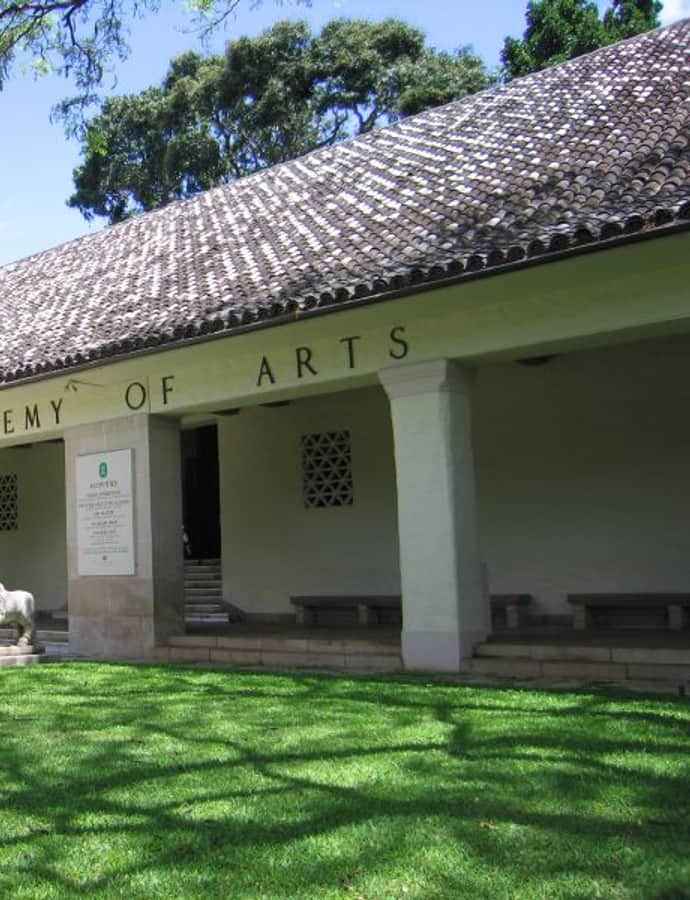

The Honolulu Museum of Art was founded in 1922 by Anna Rice Cooke and opened to the public on April 8, 1927, becoming the largest art museum in the state. Designed by Bertram Goodhue in a Mediterranean Revival idiom, it was built to hold one of the largest single collections of Asian and Pan-Pacific art in the United States. J. Carter Brown, longtime director of the National Gallery of Art, called it "the finest small museum in the United States."
the building
A growing collection. Since its 1927 opening the museum's holdings have grown from Anna Rice Cooke's founding gift to more than 55,000 works of art, anchored by an internationally renowned collection of Asian and Pan-Pacific art.
Museum campus. Beyond the galleries, the building complex houses an art school, an independent art house theatre, a café, and a museum shop, and in 2011 absorbed the collection and assets of The Contemporary Museum, taking the combined name Honolulu Museum of Art in 2012.
the style
Bertram Goodhue worked in a Mediterranean Revival style for the museum, giving the institution a street-facing presence suited to its founding as Hawaiʻi's premier art institution.
More on Spanish Colonial Revivalthe architect
Bertram Goodhue was a historically major American architect who designed the Honolulu Museum of Art, completed in 1922.
significance
The museum is listed on the National Register of Historic Places and carries OSM heritage=2 designation. It is accredited by the American Alliance of Museums and registered as a National and State Historical site.
nearby
- President William McKinley High School
- Hawaii State Capitol
- Washington Place
- Royal Brewery
- Cathedral Church of Saint Andrew, Honolulu
- ʻIolani Palace