City guide

architecture in Honolulu.

27 buildings worth a detour, each with what to look for. Open them on the map, or walk them with the iPhone app, which collects each one you photograph.

Landmarks

The buildings that define the city's architecture.

Alfred Hocking House

Queen Anne

Alfred Hocking House

Charles William Dickey; Edgar Allen Poe Newcomb · 1903

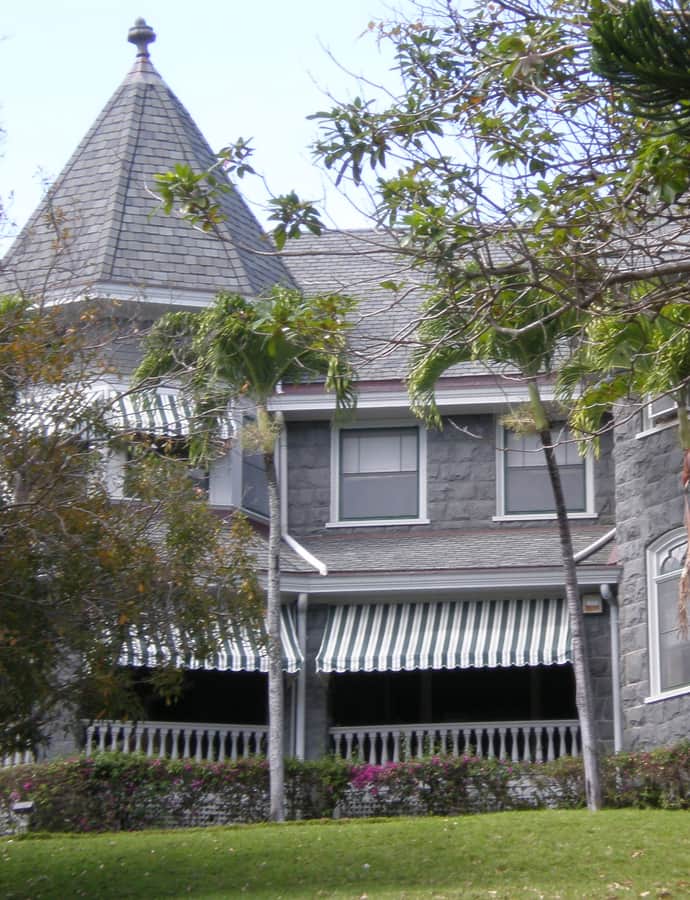
The Alfred Hocking House, now known as Graystones, was built in 1903 at 1302 Nehoa Street for Alfred Hocking, founder of the Honolulu Brewing and Malting Company. It was designed in Queen Anne style by E.A.P. Newcomb, a nationally known architect newly arrived in Hawaiʻi, working in partnership with the younger, well-connected local architect C.W. Dickey. It was listed on the Hawaiʻi and National Register of Historic Places in 1984.

Photo: Joel Bradshaw , Public domain
Aliiolani Hale

Renaissance Revival

Aliiolani Hale

Thomas Rowe

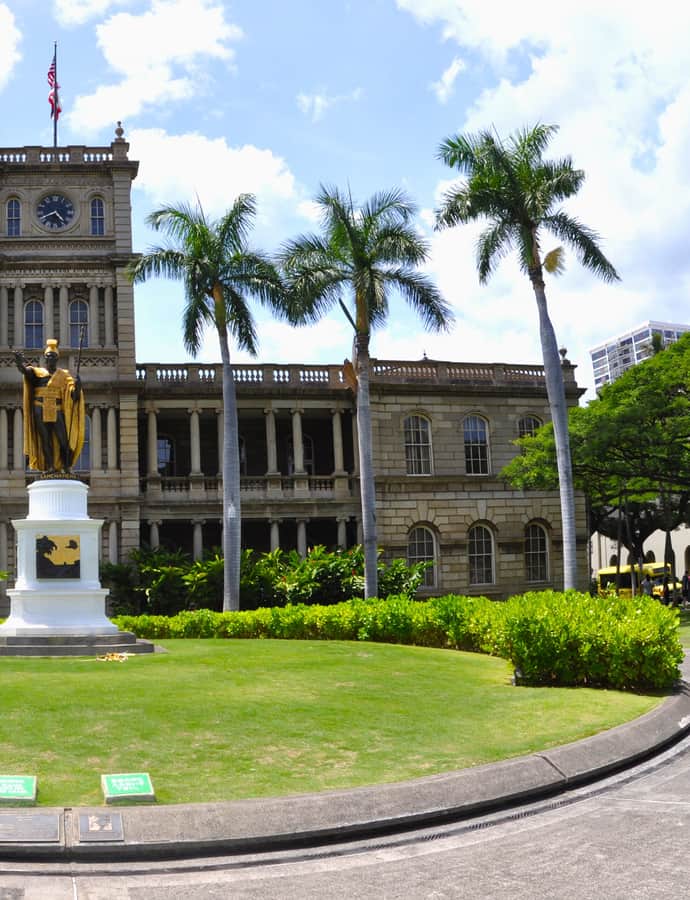
Aliʻiōlani Hale was designed by Australian architect Thomas Rowe in an Italian Renaissance Revival style, commissioned by King Kamehameha V as a royal palace before he redirected it into a much-needed government office building. Kamehameha V laid the cornerstone on February 19, 1872, and died before it was completed; the building was dedicated in 1874. Its name means "House of Heavenly Kings" in Hawaiian. It served as the seat of government for both the Kingdom of Hawaiʻi and the Republic of Hawaiʻi, and today houses the Hawaiʻi State Supreme Court.

Photo: Don Ramey Logan , CC BY-SA 3.0

Cathedral Basilica of Our Lady of Peace

Gothic Revival

Cathedral Basilica of Our Lady of Peace

1843

The Cathedral Basilica of Our Lady of Peace is the mother church and cathedral of the Diocese of Honolulu, its site dating to January 1828, when French Catholic missionaries erected the first Catholic church in Hawaii there under Apostolic prefect Alexis Bachelot. The missionaries had arrived from France in 1827 and secured a royal land grant from 14-year-old King Kamehameha III with help from Catholic Oahu governor Boki. Between 1829 and 1839, pressure from American Protestant missionaries and Kuhina Nui Kaʻahumanu led to a 'dark decade' in which Catholic priests were expelled and converts persecuted.

Photo: blahedo , CC BY-SA 2.5

Cathedral Church of Saint Andrew, Honolulu

Gothic Revival

Cathedral Church of Saint Andrew, Honolulu

William Slater

The Cathedral Church of Saint Andrew, commonly known as St. Andrew's Cathedral, was commissioned by King Kamehameha IV, a devout member of the Church of England who was inspired to build a place of worship in the Anglican tradition. The king died on the feast day of Saint Andrew in 1863, before ground was broken, and the cathedral was later completed in his memory. It is now the seat of the bishop of the Episcopal Diocese of Hawaii.

Photo: Xpixupload Camera location21° 18′ 34.2″ N, 157° 51′ 27.8″ W View this and other nearby images on: OpenStreetMap 21.309500; -157.857722 , Public domain

Cooper Apartments

Streamline Moderne

Cooper Apartments

1939

The Cooper Apartments, also known as Seaside Apartments, is a 1939 garden-court apartment building at 421-425 Seaside Avenue in Waikiki, built during the Great Depression by the Honolulu firm of Dahl & Conrad. It blends Streamline Moderne with an emerging tropical modern idiom, folding in Asian and South American vernacular touches. The building has been listed on the National Register of Historic Places since 2017.

Photo: AlohaFromHI , CC BY-SA 4.0

Dillingham Transportation Building

Renaissance Revival

Dillingham Transportation Building

The Dillingham Transportation Building was built in 1929 for Walter F. Dillingham, founder of the Hawaiian Dredging Company and operator of the Oahu Railway and Land Company established by his father, Benjamin Franklin Dillingham. It was designed in an Italian Renaissance Revival style by Los Angeles architect Lincoln Rogers, who also designed the Hawaii State Art Museum in 1928. The building was added to the National Register of Historic Places in 1979 and restored by Architects Hawaiʻi Ltd. in 1980.

Photo: Joel Bradshaw , Public domain
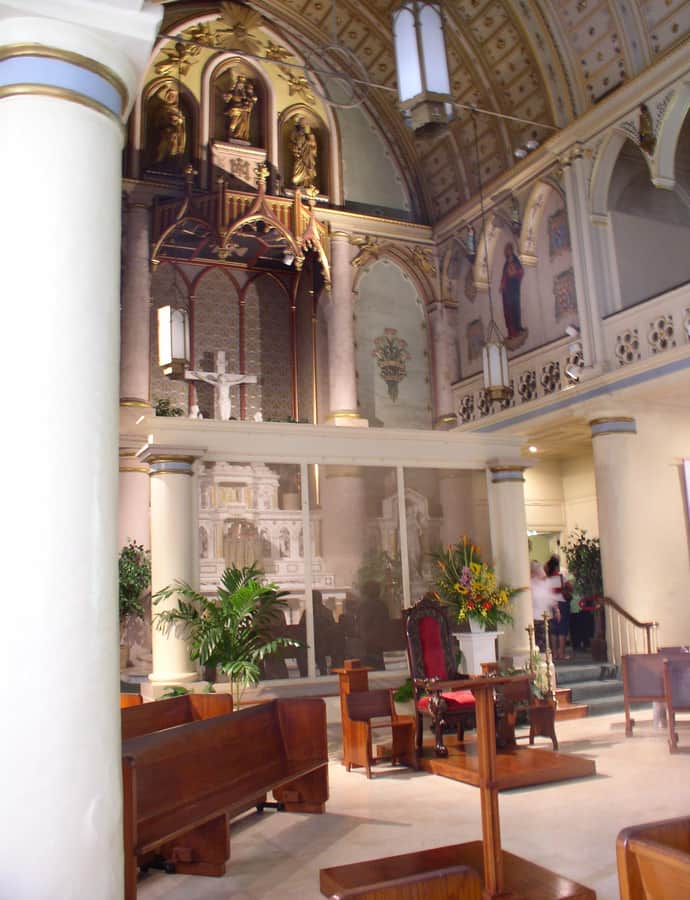
Hawaii State Capitol

Brutalism

Hawaii State Capitol

John Carl Warnecke · 1969

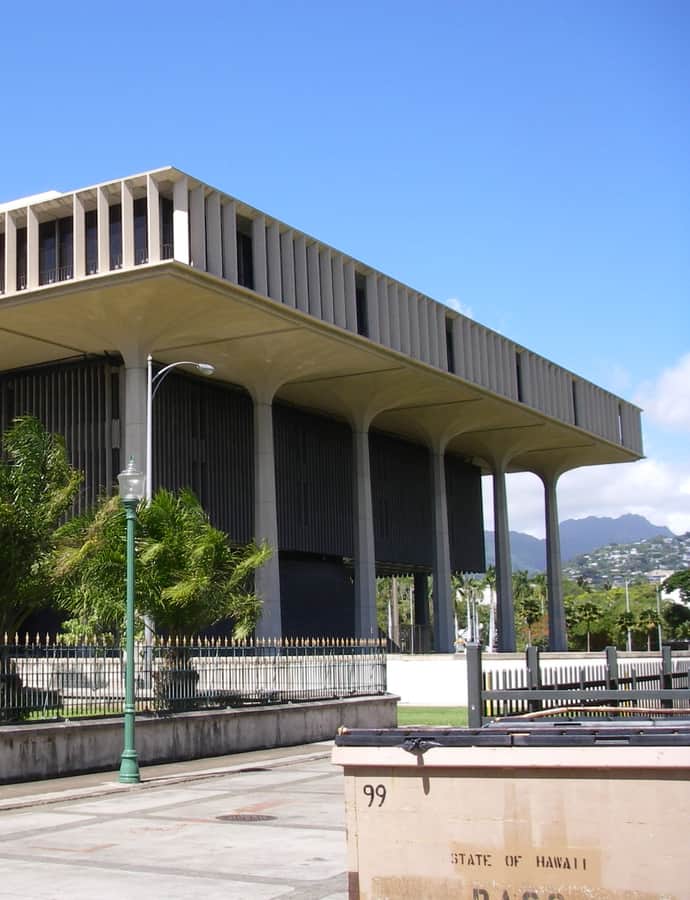
The Hawaii State Capitol, designed by John Carl Warnecke in a brutalist idiom, opened on March 15, 1969, replacing 'Iolani Palace as the seat of state government. It was commissioned and dedicated by John A. Burns, Hawaii's second governor, and today houses the twenty-five member Hawaii State Senate and fifty-one member Hawaii State House of Representatives, along with the governor, lieutenant governor, and legislative offices.

Photo: Xpixupload Camera location21° 18′ 24.34″ N, 157° 51′ 26.53″ W View this and other nearby images on: OpenStreetMap 21.306760; -157.857370 , Public domain

Hawaii Theatre

Art Deco

Hawaii Theatre

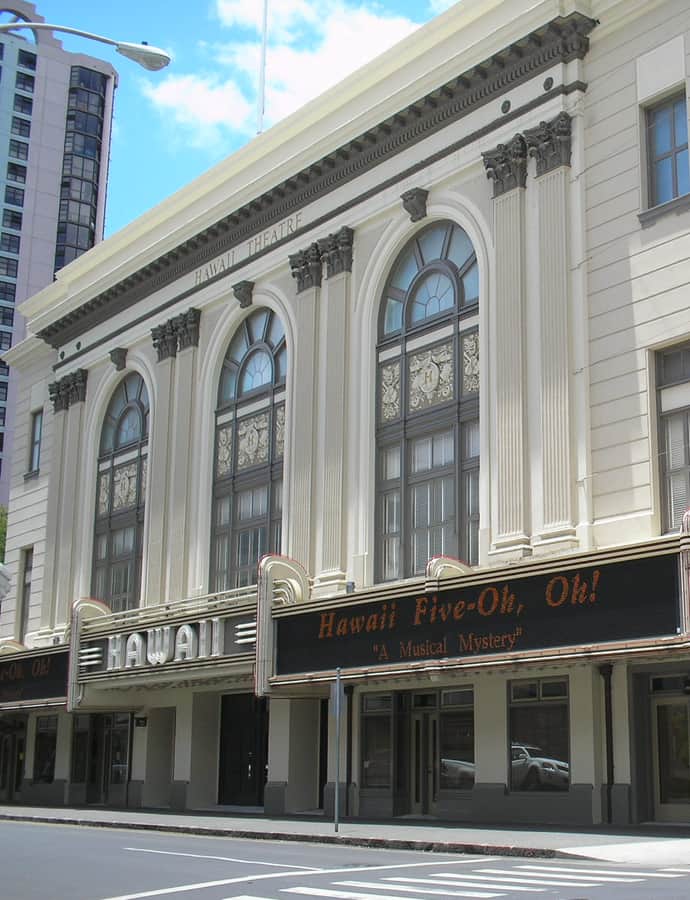
The Hawaii Theatre opened on September 6, 1922, at 1130 Bethel Street on the edge of Chinatown, built by Consolidated Amusement Company as its flagship venue. Local newspapers dubbed it "The Pride of the Pacific" and rated it the equal in opulence to any theatre in San Francisco or beyond. At 1,760 seats it was the largest and most ornate theatre in Hawaii at the time, and the company housed its offices in the building.

Photo: Joel Bradshaw , Public domain
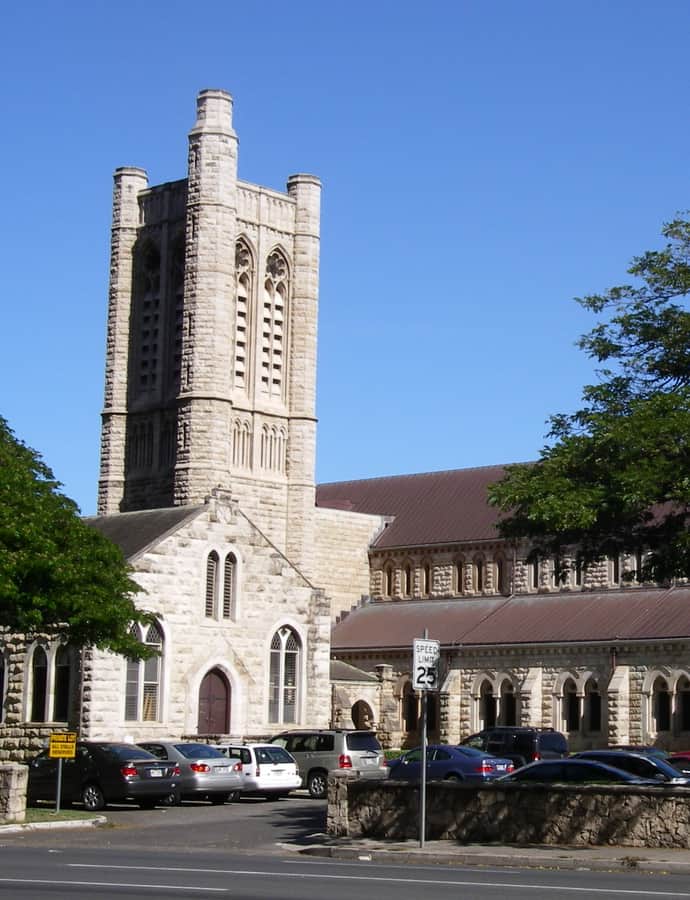
Honolulu Museum of Art

Spanish Colonial Revival

Honolulu Museum of Art

Bertram Goodhue · 1922

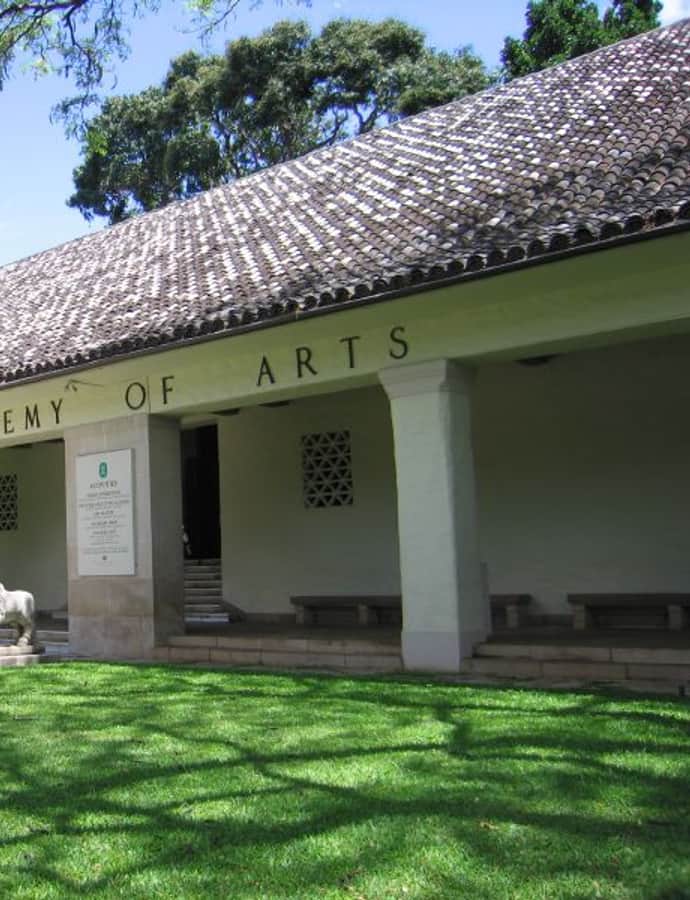
The Honolulu Museum of Art was founded in 1922 by Anna Rice Cooke and opened to the public on April 8, 1927, becoming the largest art museum in the state. Designed by Bertram Goodhue in a Mediterranean Revival idiom, it was built to hold one of the largest single collections of Asian and Pan-Pacific art in the United States. J. Carter Brown, longtime director of the National Gallery of Art, called it "the finest small museum in the United States."

Photo: LFL16 , CC BY-SA 2.0

ʻIolani Palace

Hawaiian architecture

ʻIolani Palace

1879

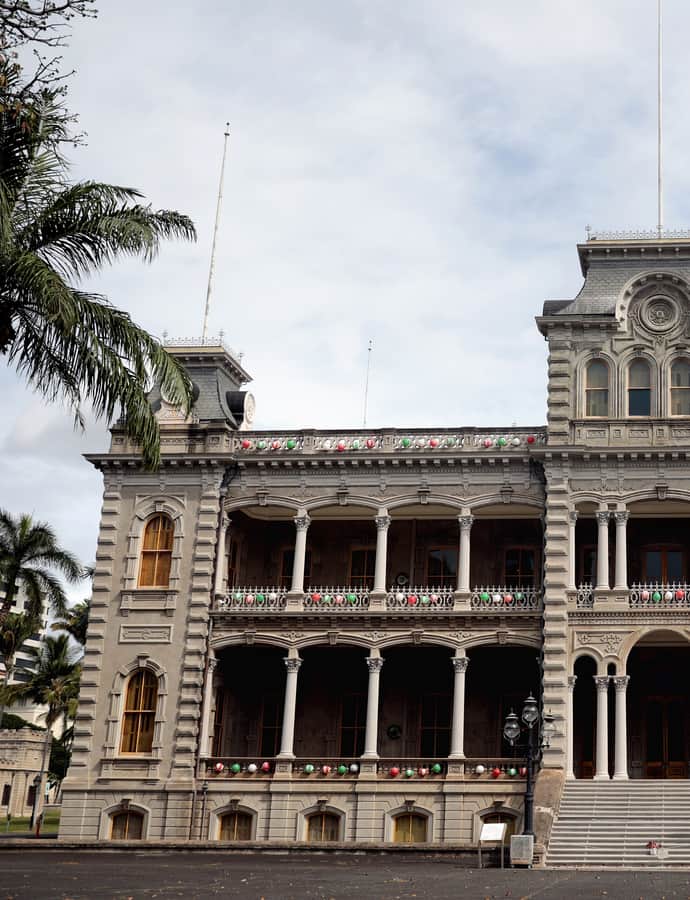
'Iolani Palace was the royal residence of the rulers of the Kingdom of Hawai'i, beginning with Kamehameha III under the Kamehameha Dynasty in 1845 and ending with Queen Lili'uokalani in 1893 under the Kalakaua Dynasty. Standing in the capitol district of downtown Honolulu, it is the only royal palace on U.S. soil. After the 1893 overthrow of the monarchy, it served as the capitol building for the Provisional Government, Republic, Territory, and State of Hawai'i until 1969, before being restored and opened to the public as a museum in 1978.

Photo: Gage Skidmore from Surprise, AZ, United States of America , CC BY-SA 2.0

Izumo Taishakyo Mission of Hawaii

Japanese Traditional

Izumo Taishakyo Mission of Hawaii

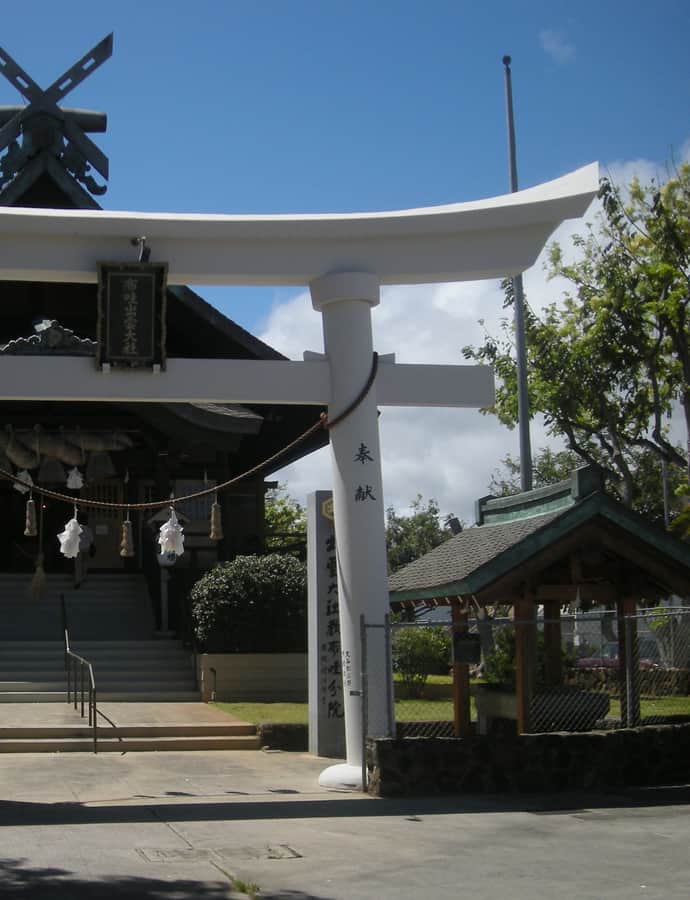
The Izumo Taishakyo Mission is a Shinto shrine in downtown Honolulu, one of the few active Shinto shrines in the United States. Founded in 1906 by Rev. Katsuyoshi Miyao with a temporary worship site near Aala Park, it grew from a temporary shrine building completed in 1907 into the permanent structure finished in 1922. Architect Hego Fuchino designed it and master carpenter Ichisaburo Takata built it, modeling the wooden A-frame on Shimane Prefecture's classical Izumo-taisha shrine.

Photo: Bittercup , CC BY-SA 3.0

Kaumakapili Church

Gothic Revival

Kaumakapili Church

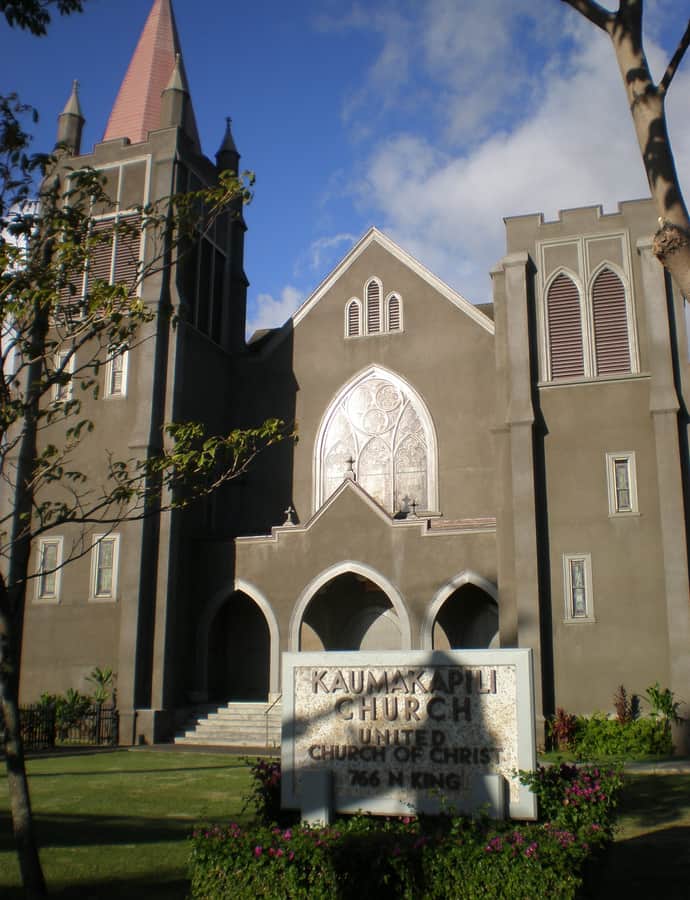
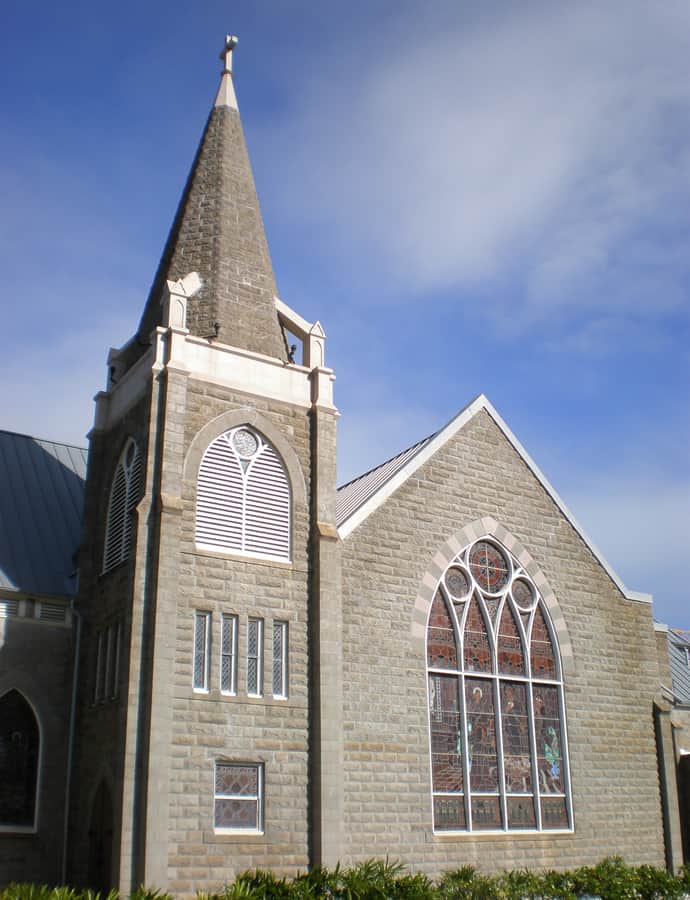
Kaumakapili Church, a Gothic Revival church at 766 North King Street in Kapalama, was originally founded on April 1, 1838, as a Protestant church for commoners, since the only existing church at the time, Kawaiahao Church, was primarily attended by Hawaiian nobility. Its second building, raised between 1881 and 1888 with two steeples, burned along with large areas of Chinatown during an attempt to control a bubonic plague outbreak. The current, third church on this site was begun in 1910 and dedicated in 1911.

Photo: Joel Bradshaw , Public domain
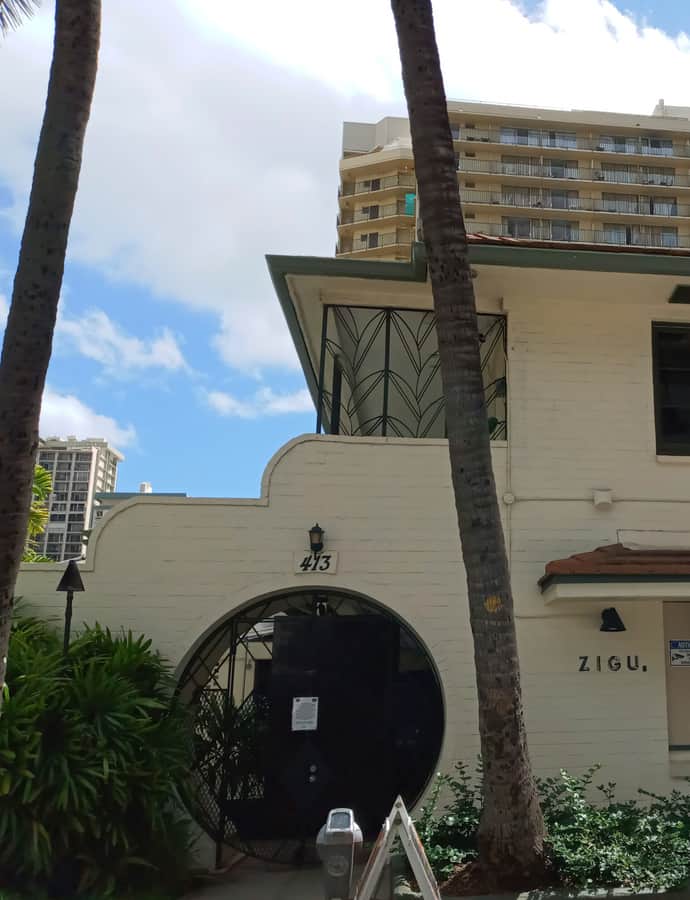
Mission Revival

President William McKinley High School

Louis Davis · 1865

President William McKinley High School traces its founding to 1865 as the Fort Street English Day School, making it one of the oldest secondary schools in Hawaii. It was later known as Honolulu High School before being renamed in 1907 in memorial to President William McKinley. Several of its buildings, designed by Louis Davis in Mission Revival style, are listed on the National Register of Historic Places.

Princess Ruth Ke’elikōlani Middle School

Neoclassical

Princess Ruth Ke’elikōlani Middle School

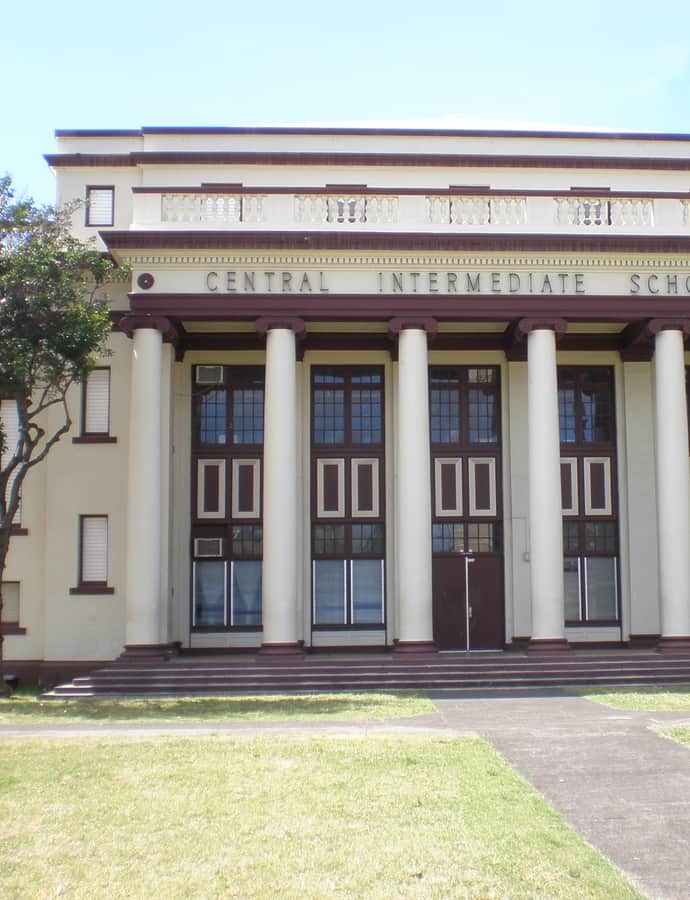
Princess Ruth Ke'elikolani Middle School occupies a historic Neoclassical building on the grounds of Keoua Hale, the palace built for Princess Ruth Ke'elikolani in 1878. After her death in 1883 and the death of her cousin Bernice Pauahi Bishop in 1884, the estate passed to the government for educational use. The site has since housed Honolulu High School, then Central Grammar School, before becoming the middle school known today.

Photo: Joel Bradshaw , Public domain
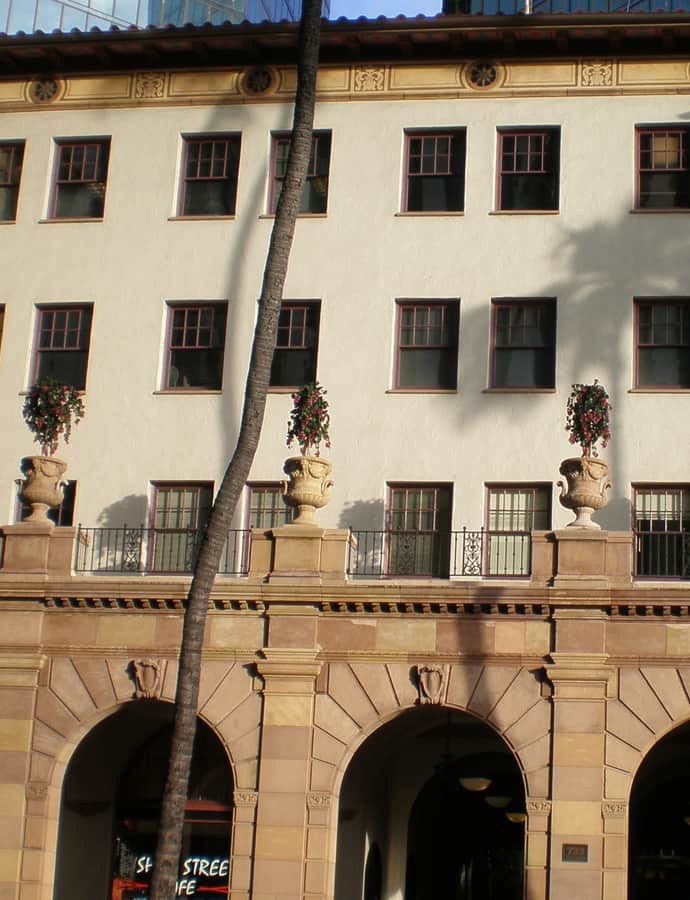
Royal Brewery

Romanesque Revival

Royal Brewery

1900

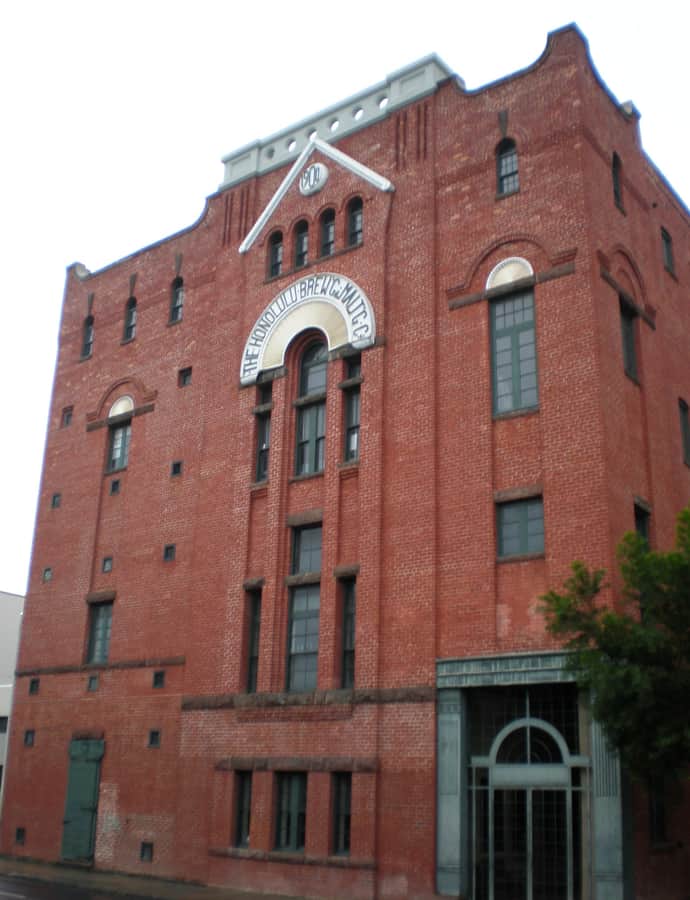
The Royal Brewery is the oldest surviving structure tied to brewing in Hawaii, designed in 1899 by New York architect Hermann Steinmann for the Honolulu Malting and Brewing Company in the then-fashionable Romanesque style. Its first beer, Primo, went into production in 1901. The brewery outlasted Prohibition, reopening under the American Brewing Company with Ambrew and then Royal beer, which stayed in nearly continuous production until 1962.

Photo: Joel Bradshaw , Public domain
Sacred Heart Church-Punahou

Gothic Revival

Sacred Heart Church-Punahou

1914

Sacred Heart Church-Punahou, at 1701 Wilder Avenue in Honolulu, was dedicated in 1914 in the Gothic Revival style, with its adjacent Bachelot Hall following in 1923 and a rectory added in 1927. The parish traces back to French priest Father Clement Evrard, who arrived in Honolulu in 1864 on the same ship as Father Damien and went on to found a mission in the city's Portuguese community before building the original Sacred Heart chapel. It was added to the National Register of Historic Places on February 6, 2001.

Photo: Joel Bradshaw , Public domain
Washington Place

Greek Revival

Washington Place

1847

Washington Place is a Greek Revival mansion built in 1847 by American sea captain John Dominis, who spent years voyaging across the Pacific to raise money for its construction; he was lost at sea before it was finished. The house became famous as the place where Queen Liliʻuokalani was arrested during the overthrow of the Hawaiian Kingdom, and it later served as the official residence of the governor of Hawaii. A new governor's residence was built behind it in 2008, on the same grounds.

Photo: CaesarGJ , Public domain

Notable buildings

Worth a stop when you're nearby.

Mid-Century Modern

Liljestrand House

Vladimir Ossipoff · 1952

The Liljestrand House at 3300 Tantalus Drive was designed by Vladimir Ossipoff for Dr. Howard and Betty Liljestrand, who bought the hillside site overlooking downtown Oahu in 1948 and completed the house in 1952. Described as perhaps Ossipoff's most intricate and most widely publicized domestic commission, it was featured in House Beautiful magazine as a 1958 Pace Setter House, drawing hundreds of visitors on organized weekly tours. It was listed on the National Register of Historic Places in 2008 and remains open for public tours.

Hidden gems

Fine buildings that fewer people seek out.

Church of the Crossroads

Art Deco

Church of the Crossroads

The Church of the Crossroads at 1212 University Avenue was designed in 1935 by architect Claude A. Stiehl, who blended Asian, European, and Hawaiian architectural features. The congregation was formed in 1923 as the first racially mixed Protestant congregation in the Territory of Hawaii, and the building's eclectic design reflects that mixed membership. It was listed on the National Register of Historic Places in 1992.

Photo: Joel Bradshaw , Public domain
Dr. Robert Faus House

Spanish Colonial Revival

Dr. Robert Faus House

Hart Wood

The Dr. Robert Faus House is a Spanish Colonial Revival residence in downtown Honolulu, designed by architect Hart Wood and listed on the National Register of Historic Places.

Photo: Joel Bradshaw , Public domain
Frederick Ohrt House

Spanish Colonial Revival

Frederick Ohrt House

Hart Wood

The Frederick Ohrt House is a Spanish Colonial Revival residence in downtown Honolulu, designed by architect Hart Wood and listed on the National Register of Historic Places.

Photo: Joel Bradshaw , Public domain
Georges de S. Canavarro House

Spanish Colonial Revival

Georges de S. Canavarro House

Hart Wood

The Georges de S. Canavarro House, also known as the Canavarro Castle, was built in 1924-1927 at 2756 Rooke Ave. for Georges de Souza Canavarro, son of the longtime Consul-General of Portugal in Hawaii, Antonio de Souza Canavarro. It was designed by Hart Wood, leader of a group of architects developing a style suited to the islands' climate and lifestyle, with a design inspired by Sicilian villas. It was listed on the National Register of Historic Places in 1980 as a fine example of the Mediterranean Revival style used for large estates of that era.

Photo: Joel Bradshaw , Public domain
Joseph W. Podmore Building

Richardsonian Romanesque

Joseph W. Podmore Building

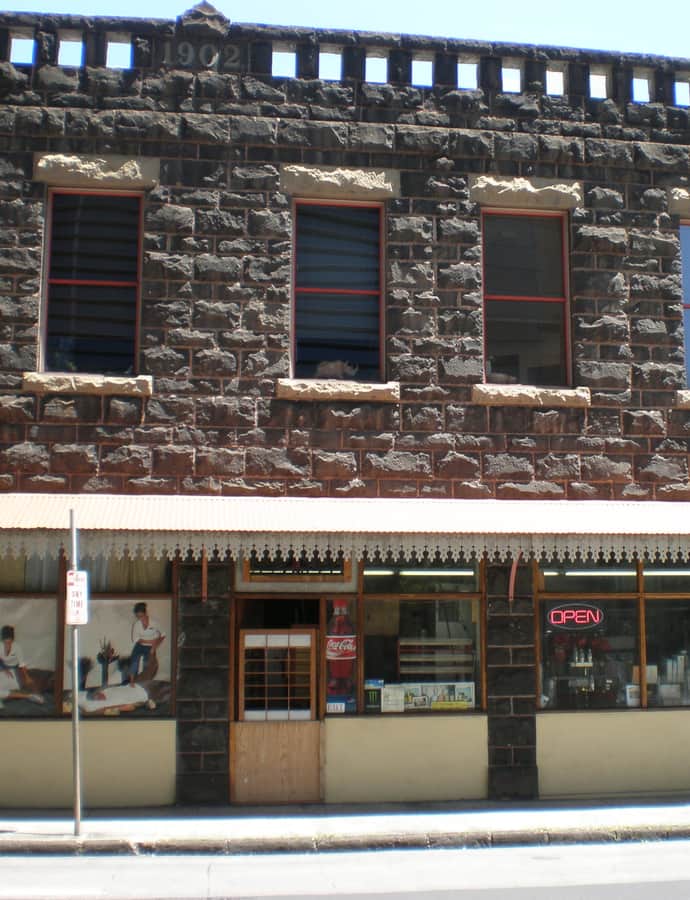
The Joseph W. Podmore Building stands at the corner of Merchant and Alakea streets in Honolulu, built in 1902 by Joseph W. Podmore, an English sailor who did business in the city in the early 1900s. He built it as rental space, first let to a tailor and a decorator on the ground floor and the Mercantile Printing Company upstairs. It was added to the National Register of Historic Places on 24 March 1983, by which time it was known locally for its tenant, the Bon-Bon Cafe.

Photo: Joel Bradshaw , Public domain
Kakaako Pumping Station

Richardsonian Romanesque

Kakaako Pumping Station

Oliver Green Traphagen

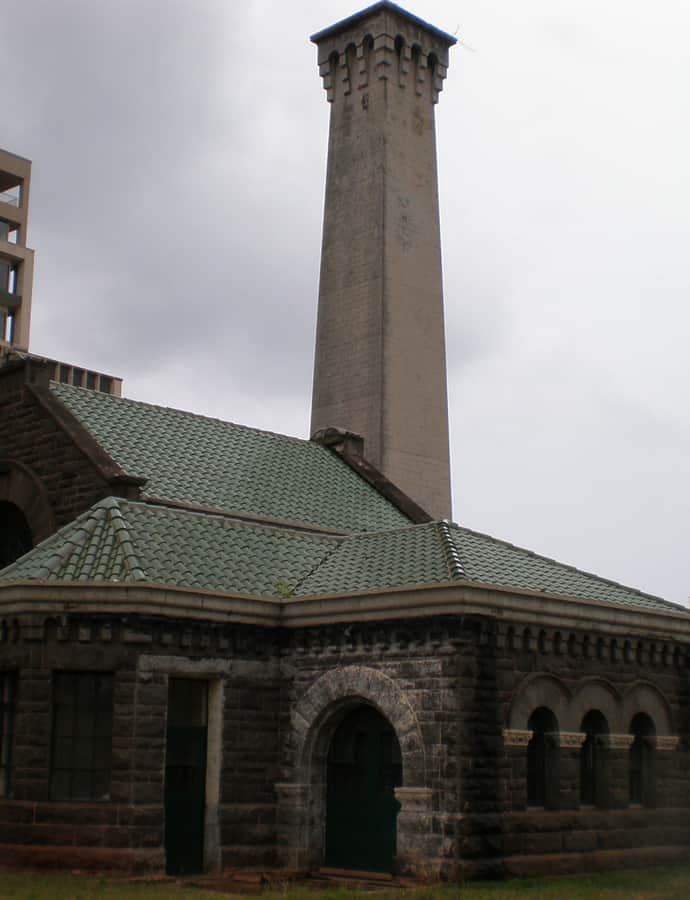
The Kakaako Pumping Station, built in 1900 in the Richardsonian Romanesque style, was Honolulu's first sewerage pumping station, designed to address the city's serious sanitation problems as it grew rapidly. Architect Oliver G. Traphagen sited it between Kewalo Basin and downtown at Ala Moana Boulevard and Keawe Street.

Photo: Joel Bradshaw , Public domain
King David Kalakaua Building

Spanish Colonial Revival

King David Kalakaua Building

York and Sawyer

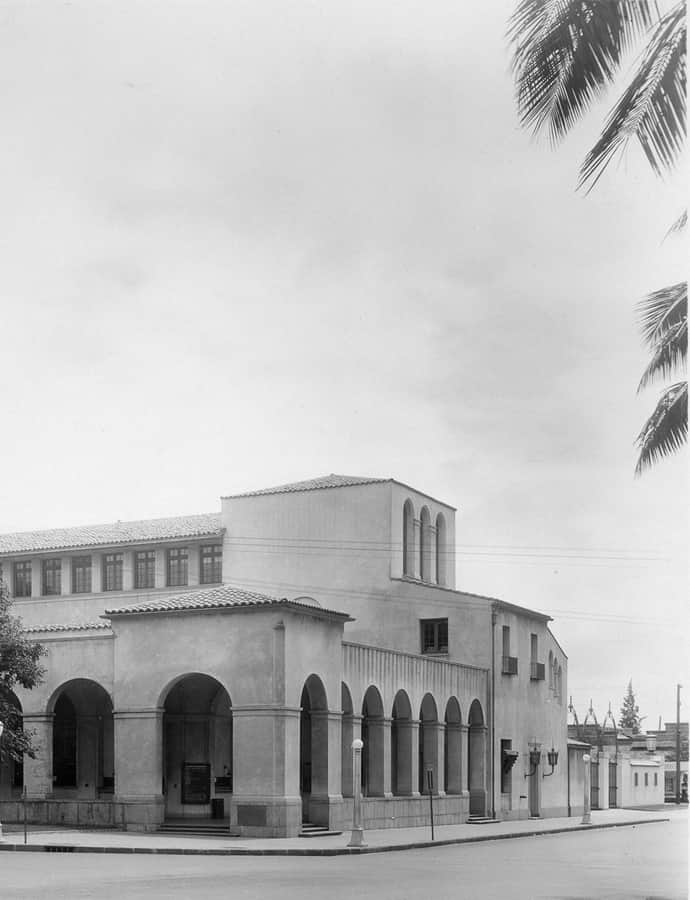
The King David Kalakaua Building, originally the U.S. Post Office, Customhouse, and Courthouse, was designed in 1918 and built from 1921 to 1922 in Mission/Spanish Revival style as the official seat of federal administration in the Territory and later state of Hawaii. An addition begun in 1929 opened in 1931. In December 2003 the federal government sold most of the building to the state of Hawaii for $32.5 million, and it was renamed for King David Kalakaua, the last king of the Hawaiian monarchy.

Photo: National Archives , Public domain

Palama Fire Station

Spanish Colonial Revival

Palama Fire Station

Oliver Green Traphagen

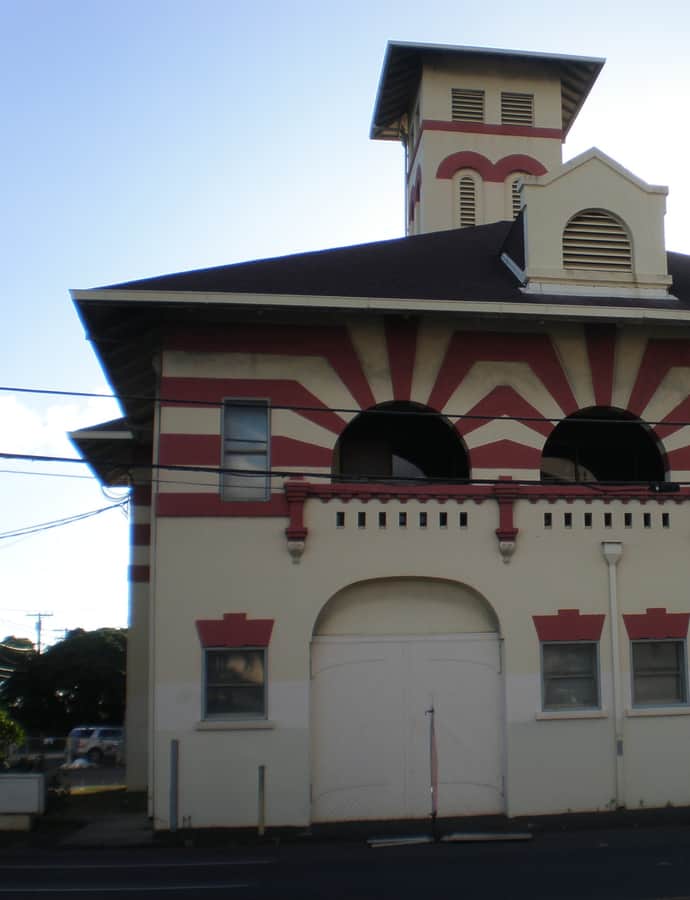
The Palama Fire Station in downtown Honolulu was designed by architect Oliver Green Traphagen in the Mediterranean Revival style. It is listed on the National Register of Historic Places.

Photo: Joel Bradshaw , Public domain
YWCA Building

Spanish Colonial Revival

YWCA Building

Julia Morgan

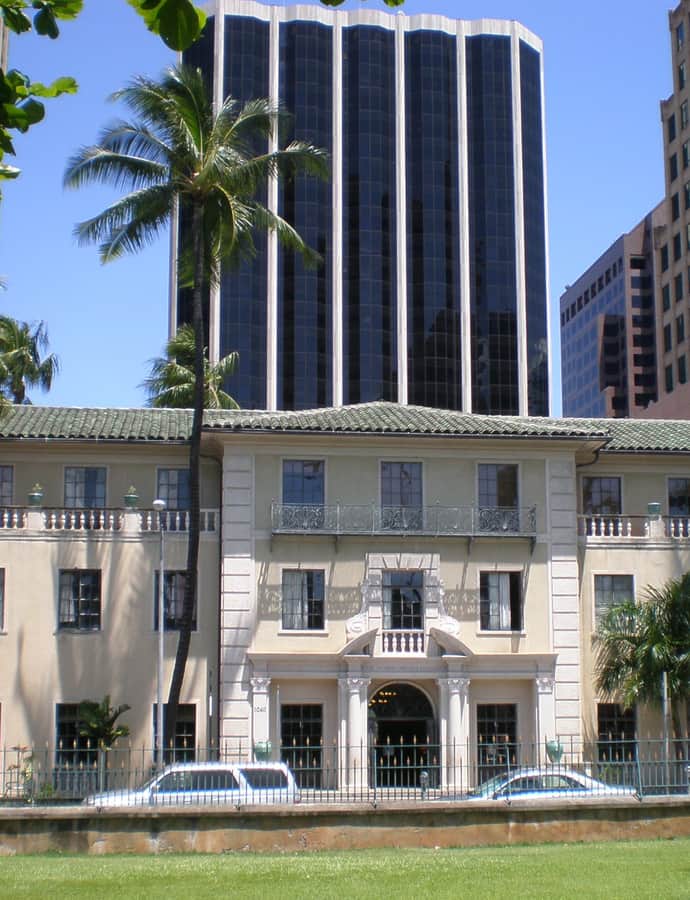
The YWCA Building at 1040 Richards Street, popularly called the Richards Street Y and now officially named Laniakea, was designed by San Francisco architect Julia Morgan, who considered it one of her favorites. The main building is three stories and faces Richards Street with a 165-foot frontage, connected by a two-story loggia to a smaller two-story rear unit with a large basement.

Photo: Joel Bradshaw , Public domain