
Ashland
- Architects
- Benjamin Henry Latrobe Thomas Lewinski
- Year
- 1811
- Style
- Italianate
- City
- Lexington, KY
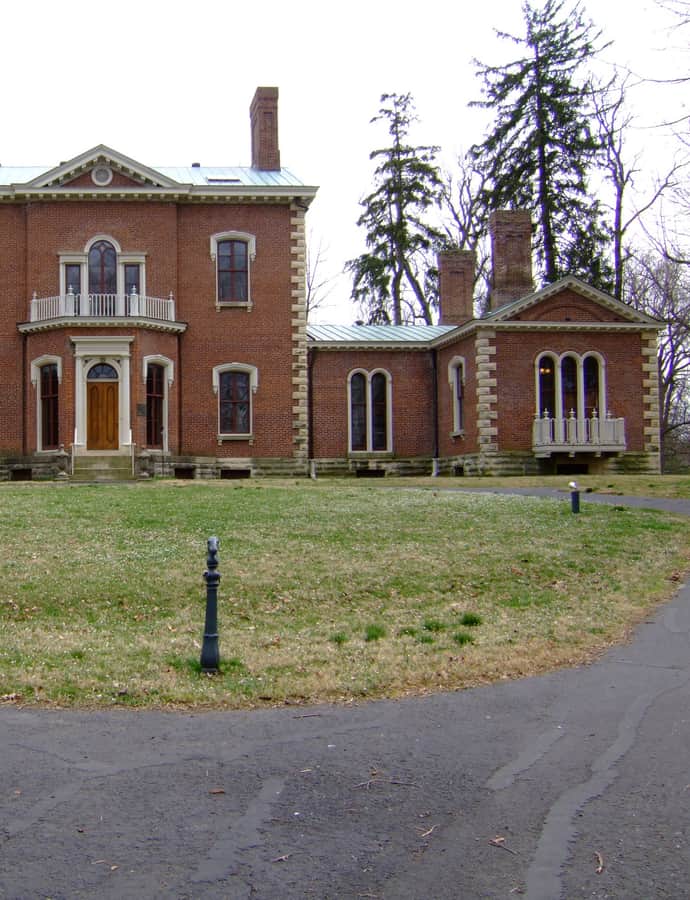

Ashland was the plantation home of Kentucky statesman Henry Clay, built starting in 1804 on land Clay began acquiring outside Lexington. Clay came to Lexington from Virginia in 1797 and grew into a major planter who enslaved 60 people and owned more than 600 acres; the estate's buildings were constructed by enslaved laborers, who also grew and harvested hemp, farmed livestock, and ran the household. Today Ashland is a National Historic Landmark and listed on the National Register of Historic Places.
the building
Built by enslaved labor. The estate's buildings were constructed by enslaved people, who also grew and harvested hemp, farmed livestock, and cooked and cleaned for the Clay family. Among them were Aaron and Charlotte Dupuy and their children Charles and Mary Ann.
The Dupuy freedom suit. When Clay's congressional term began in 1810, he took Aaron and Charlotte Dupuy and their children to Washington, D.C., where they were held for nearly two decades. In 1829, Charlotte Dupuy sued Henry Clay for her freedom and that of her two children — 28 years before the more famous Dred Scott case.
Namesake of the Ashland Stakes. The Ashland Stakes, a Thoroughbred horse race at Keeneland Race Course, has run annually since the track opened in 1936 and was named for the historically important estate.
the style
Ashland is described in Italianate architecture terms, reflecting the grand estate massing and ornament of Henry Clay's plantation house.
More on Italianatethe architect
Ashland is associated with Benjamin Henry Latrobe and Thomas Lewinski, though the surviving facts do not detail their individual roles or other work.
significance
Ashland is a registered National Historic Landmark and is listed on the National Register of Historic Places.
nearby
- Second Presbyterian Church
- Pope Villa
- Lexington Dry Goods Company Building
- F. W. Woolworth Building
- Walter Warfield Building
- Fayette National Bank Building