City guide

architecture in Mobile.

17 buildings worth a detour, each with what to look for. Open them on the map, or walk them with the iPhone app, which collects each one you photograph.

Landmarks

The buildings that define the city's architecture.

Barton Academy

Greek Revival

Barton Academy

James Gallier · 1852

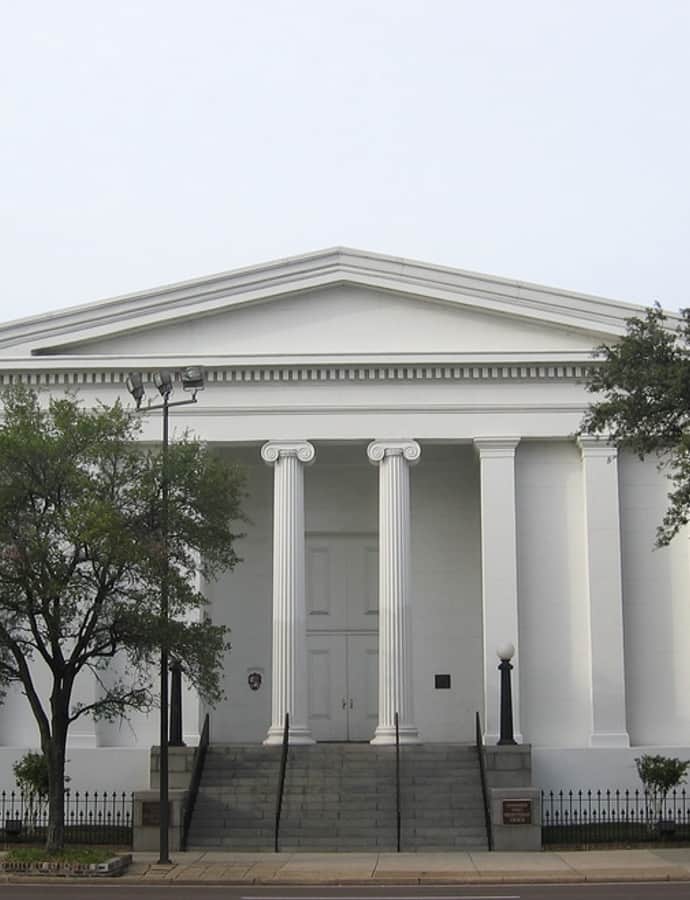
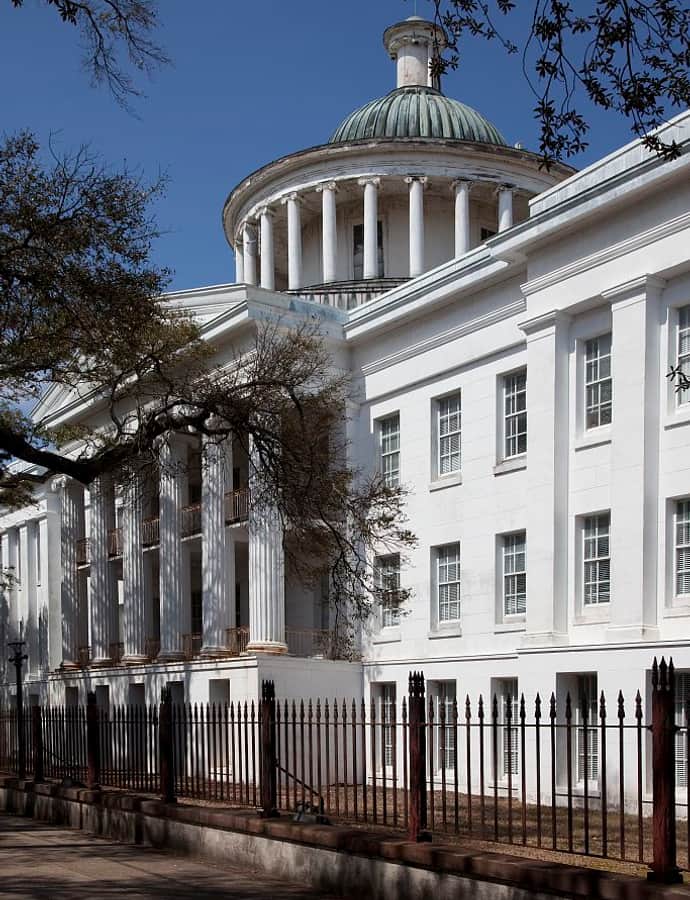
Barton Academy was built between 1836 and 1839 on Government Street as the first public school in the state of Alabama. It was designed by architects James H. Dakin, Charles B. Dakin, and James Gallier, Sr., who also designed the nearby Government Street Presbyterian Church. The building is named for Willoughby Barton, the Alabama state legislator whose 1826 act created the Board of School Commissioners of Mobile County.

Photo: Carol M. Highsmith , Public domain
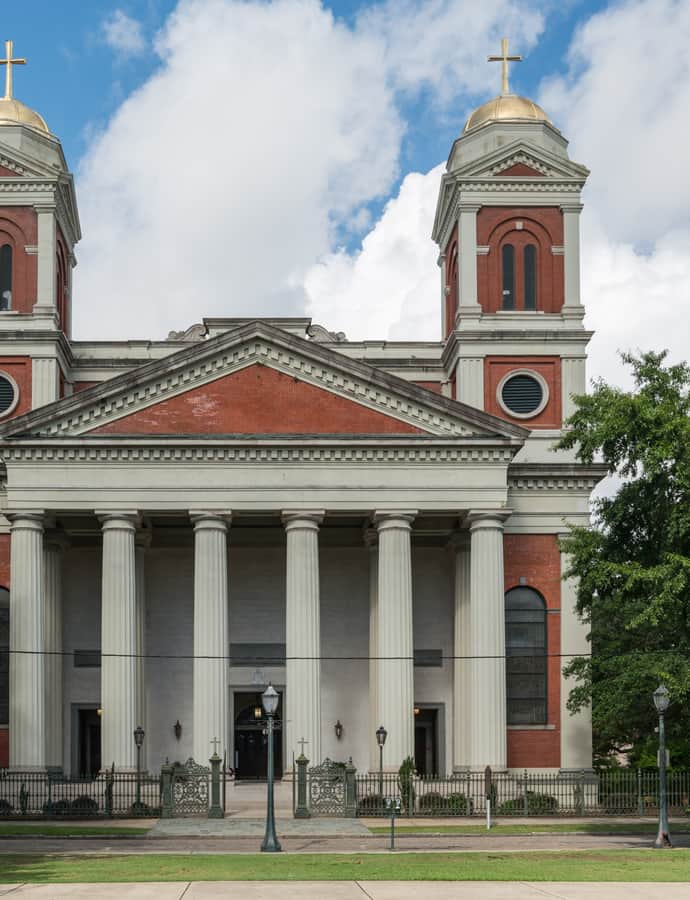
Cathedral Basilica of the Immaculate Conception

Greek Revival

Cathedral Basilica of the Immaculate Conception

1850

The Cathedral Basilica of the Immaculate Conception is the Greek Revival seat of the Archbishop of the Archdiocese of Mobile, dating to 1850 and named for Mary under her title Our Lady of the Immaculate Conception. Mobile's Cathedral Parish traces back to July 20, 1703, when it was established by Bishop Jean-Baptiste de la Croix de Chevrières de Saint-Vallier, who named Father Roulleaux de La Vente as first pastor at the French settlement's Fort Louis de la Louisiane — the first parish established on the Gulf Coast.

Photo: DXR , CC BY-SA 4.0

Christ Church Cathedral

Greek Revival

Christ Church Cathedral

1838

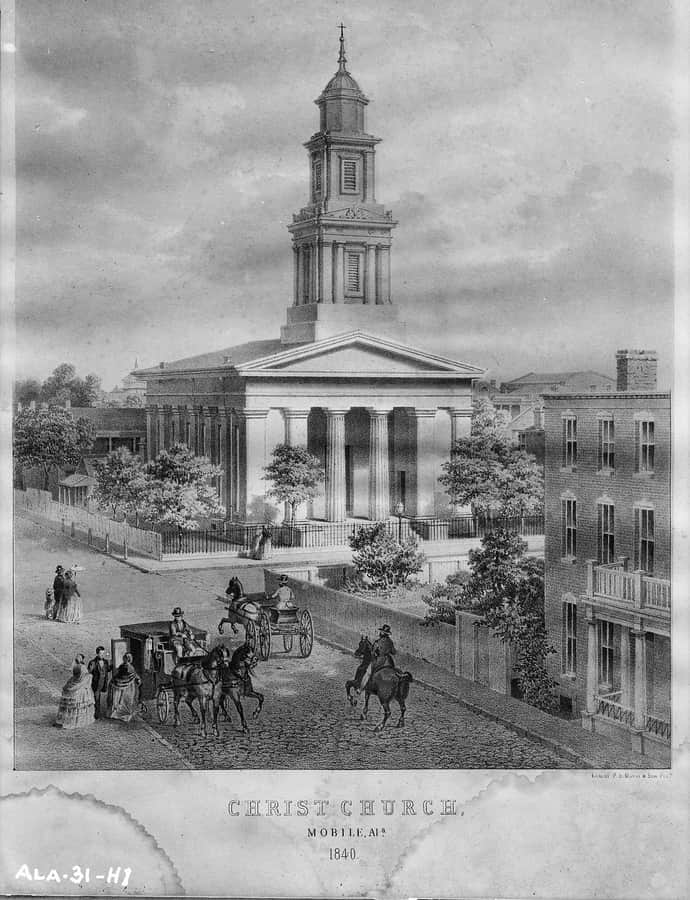
Christ Church Cathedral was established in 1823 as the first Episcopal congregation in Mobile and in Alabama, growing out of Anglican services once held at Fort Charlotte during the British occupation of the city. The cornerstone of the current Greek Revival building was laid in 1838, with construction finished in 1840, and it became the cathedral of the Episcopal Diocese of the Central Gulf Coast in 2005.

Photo: Lithography of P. S. Duval & Son. ; Reproduction: E. W. Russell , Public domain

Government Street Presbyterian Church

Greek Revival

Government Street Presbyterian Church

James Gallier · 1836

Government Street Presbyterian Church is one of the oldest and least-altered Greek Revival church buildings in the United States, designed by James Gallier Sr., James H. Dakin, and Charles Dakin — the same trio behind Barton Academy four blocks to the west. The congregation organized in 1831 and bought its corner lot at Government and Jackson Street for $10,000 in spring 1835. Construction of the brick edifice began February 13, 1836, financed largely by local millionaire and church trustee Henry Hitchcock.

Photo: Altairisfar , Public domain

Joseph Jossen House

Queen Anne

Joseph Jossen House

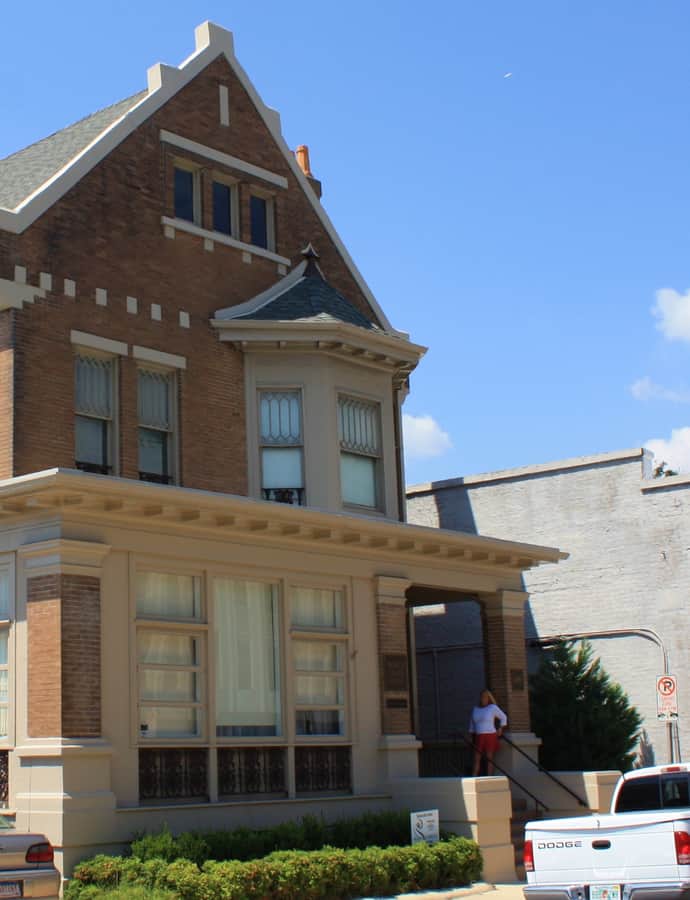
The Joseph Jossen House, also known as the World Trade Building, is a 2 1/2-story brick Queen Anne house built in 1906 for Joseph Jossen, the local agent for the F.W. Cook Brewing Company of Evansville, Indiana. Jossen established the Mobile distribution branch at 19 South Commerce Street in 1884 and was also involved in the general liquor trade. The house was later adapted for reuse as the local international trade center.

Photo: Altairisfar , Public domain

Most Pure Heart of Mary Catholic Church

Neoclassical

Most Pure Heart of Mary Catholic Church

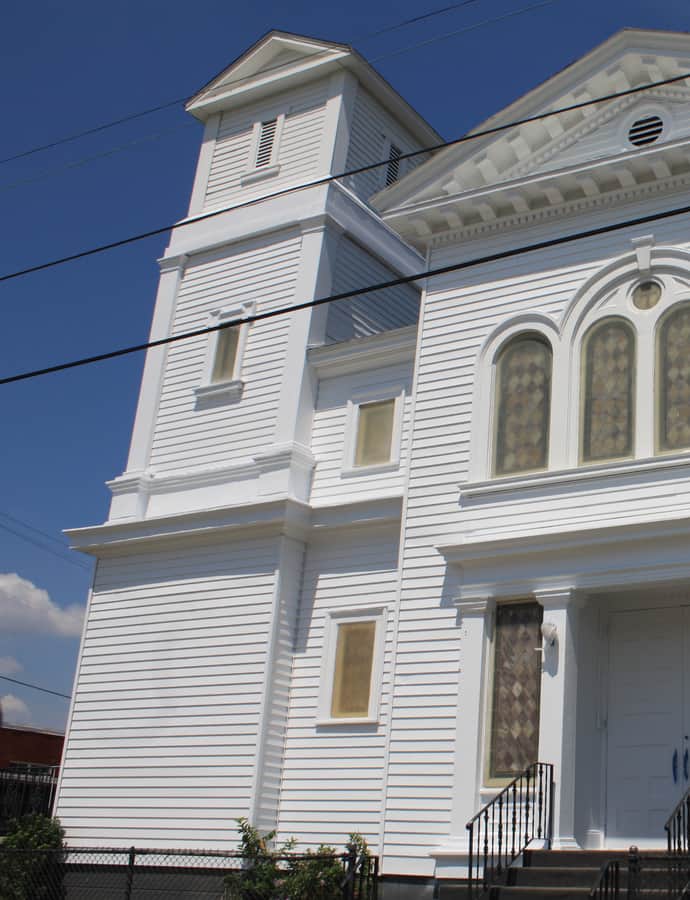
Most Pure Heart of Mary Catholic Church began as a mission founded in 1899 by the Society of St. Joseph of the Sacred Heart to serve Mobile's Creoles of African descent, with Frs. Joseph St. Laurent and Louis Pastorelli as its first Josephite priests. The church building was completed and dedicated in 1908, and the parish became a center of Black Catholic life in Mobile, with its clergy and congregation later active in the Civil Rights Movement.

Photo: Altairisfar , Public domain

Oakleigh Historic Complex

Greek Revival

Oakleigh Historic Complex

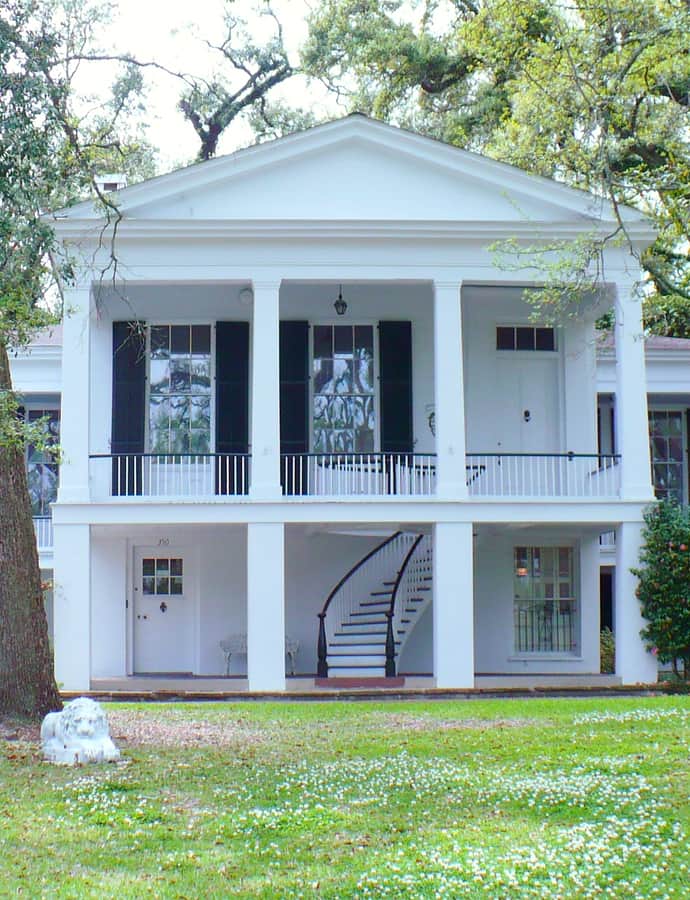
Oakleigh is a c. 1833 Greek Revival house museum built by James W. Roper, a brick mason and dry goods merchant and cotton factor from James City County, Virginia, on 33 acres of woodland west of Mobile. Roper chose the site for its valuable clay pit and operated a Water Street brickyard downtown, on the present-day site of the RSA Battle House Tower. The house is now the centerpiece of the Oakleigh Historic Complex, which also includes a working-class raised cottage, Union Barracks, and a modern archives building, within the Oakleigh Garden Historic District named for the estate.

Photo: Altairisfar , Public domain

Old City Hall

Renaissance Revival

Old City Hall

Old City Hall, also known as the Southern Market, is a historic complex of adjoining buildings built from 1855 to 1857 to serve as both a city hall and a marketplace; it now houses the History Museum of Mobile. The city planned it in 1854 as its principal marketplace for vegetables, meat, and fish, then in February 1855 decided it would also hold municipal offices. Architect Thomas Simmons James, a Mobile architect originally from Virginia, designed the initial building phase.

Photo: Altairisfar , Public domain

Pincus Building

Queen Anne

Pincus Building

Rudolph Benz · 1891

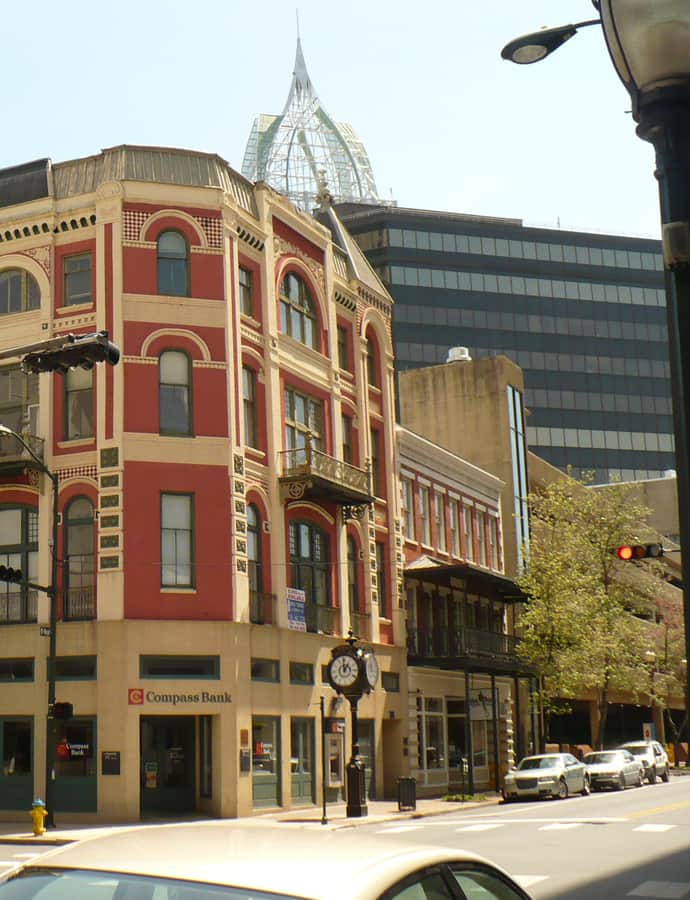
The Pincus Building, also known as the Zadek Building, is a four-story brick Queen Anne commercial building designed by local architect Rudolph Benz and completed in 1891. It first housed the Zadek Jewelry Company. The original design featured a round corner tower with a spire, removed by the 1940s, and the first-floor exterior details have since been simplified.

Photo: Altairisfar , Public domain

RSA Battle House Tower

Postmodernism

RSA Battle House Tower

Tvsdesign · 2007

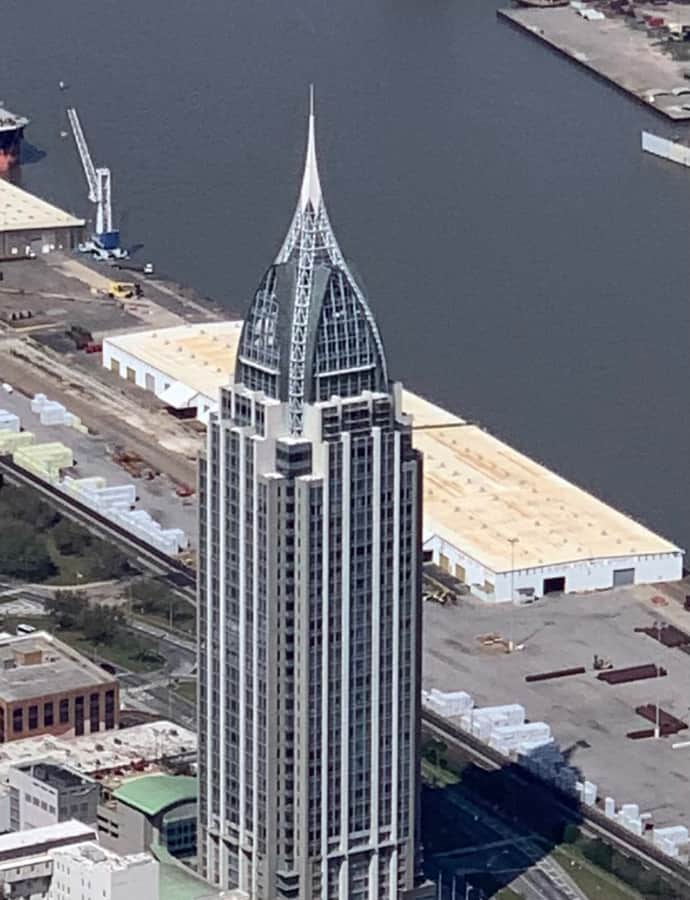
The RSA Battle House Tower is Alabama's tallest building, rising 745 feet above downtown Mobile and finished with its spire in 2006. Designed by Tvsdesign in a postmodern idiom and completed in 2007, it is owned by the Retirement Systems of Alabama and stands as the tallest building on the Gulf Coast outside Houston. It's named for the neighboring Battle House Hotel, which was restored and folded into the tower complex, and it took the title of Alabama's tallest from the RSA Trustmark Building in Mobile and the Shipt Tower in Birmingham.

Photo: Devin Morris , CC BY-SA 4.0

Scottish Rite Temple

Egyptian Revival

Scottish Rite Temple

George Bigelow Rogers · 1922

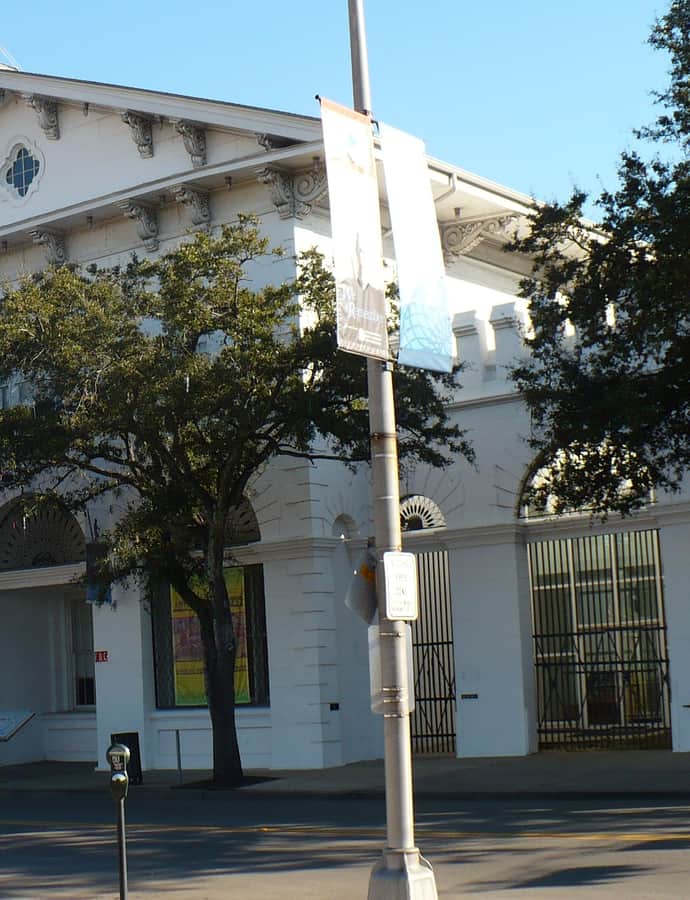
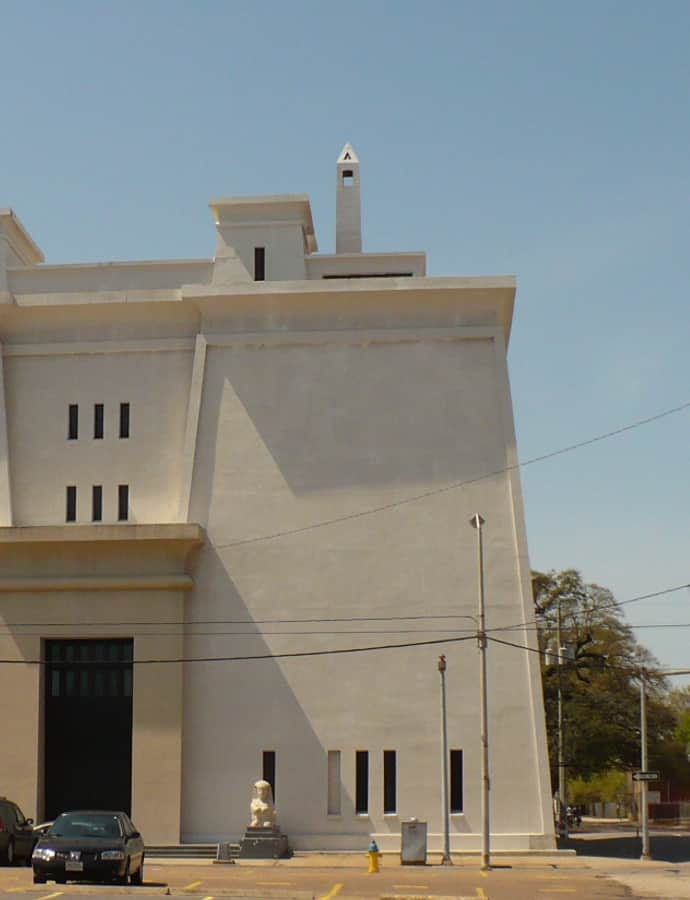
The Scottish Rite Temple, also known as The Temple Downtown, was built in 1922 as the meeting place for the Ancient and Accepted Scottish Rite of Freemasonry in Mobile. Local architect George Bigelow Rogers, who designed many of the city's buildings during this period, gave it an Egyptian Revival facade unlike anything else in the city. The cornerstone was laid on November 30, 1921, and the building was sold in 1996 to a private citizen and reopened as a banqueting venue.

Photo: Altairisfar , Public domain

Notable buildings

Worth a stop when you're nearby.

Bishop Portier House

Creole architecture

Bishop Portier House

1834

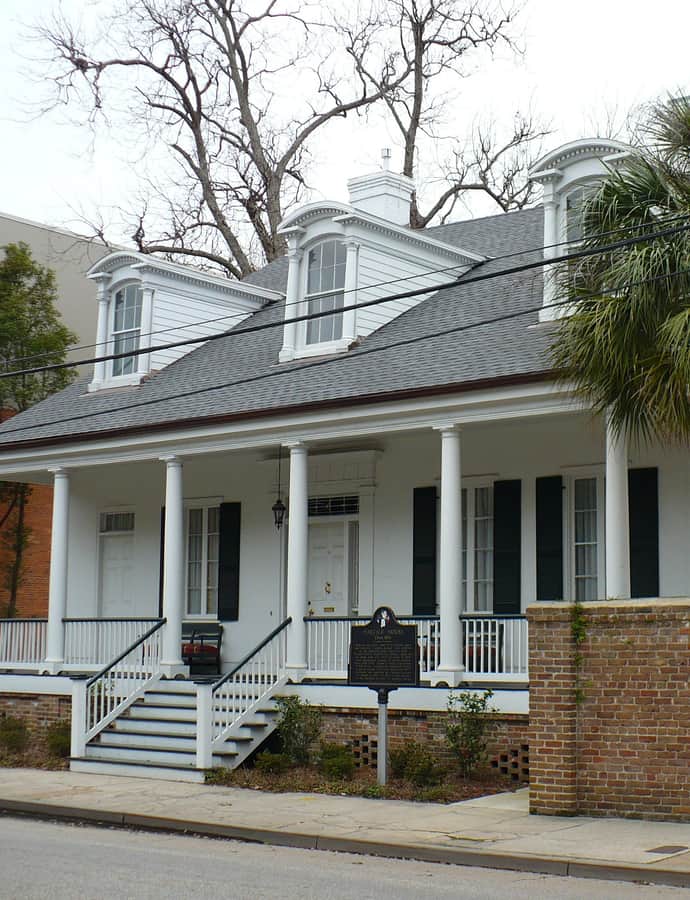
The Bishop Portier House, built around 1834, is named for Michael Portier, Mobile's first Roman Catholic bishop, who lived there from 1834 until his death in 1859. It sits diagonally across from the Cathedral of the Immaculate Conception facing Cathedral Square, and is considered one of Mobile's best surviving examples of a Creole cottage with neoclassical details.

Photo: Altairisfar , Public domain

Raphael Semmes House

Federal

Raphael Semmes House

The Raphael Semmes House, also known as the Horta-Semmes House, is an 1858 brick townhouse at 804 Government Street built and designed by its first owner, Peter Horta, in Federal and Greek Revival styles. It is best known as the 1871-1877 home of Raphael Semmes, captain of the Confederate States Navy commerce raider CSS Alabama, and was added to the National Register of Historic Places on February 26, 1970.

Photo: Altairisfar , Public domain

Saint Vincent de Paul

Gothic Revival

Saint Vincent de Paul

1874

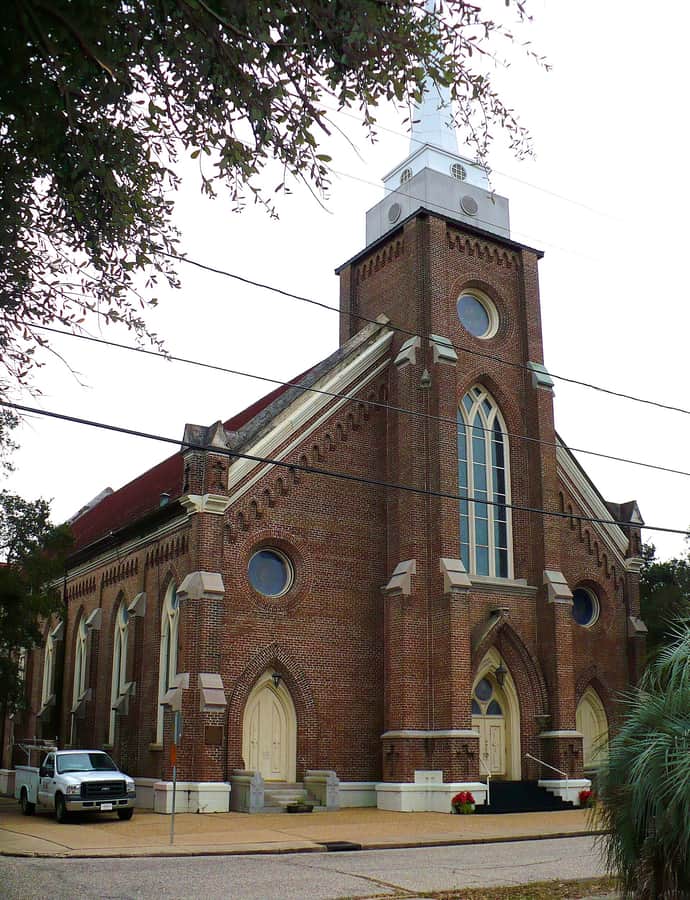
St. Vincent de Paul Catholic Church, now Prince of Peace Catholic Church, was designed by local architect James H. Hutchisson in the Gothic Revival style and built in 1874, dedicated on January 21, 1877. It replaced an earlier 1847 frame church that had burned, and it was individually listed on the National Register of Historic Places on April 24, 1992.

Photo: Altairisfar , Public domain

The Battle House Hotel

Landmark

The Battle House Hotel

Frank Mills Andrews · 1852

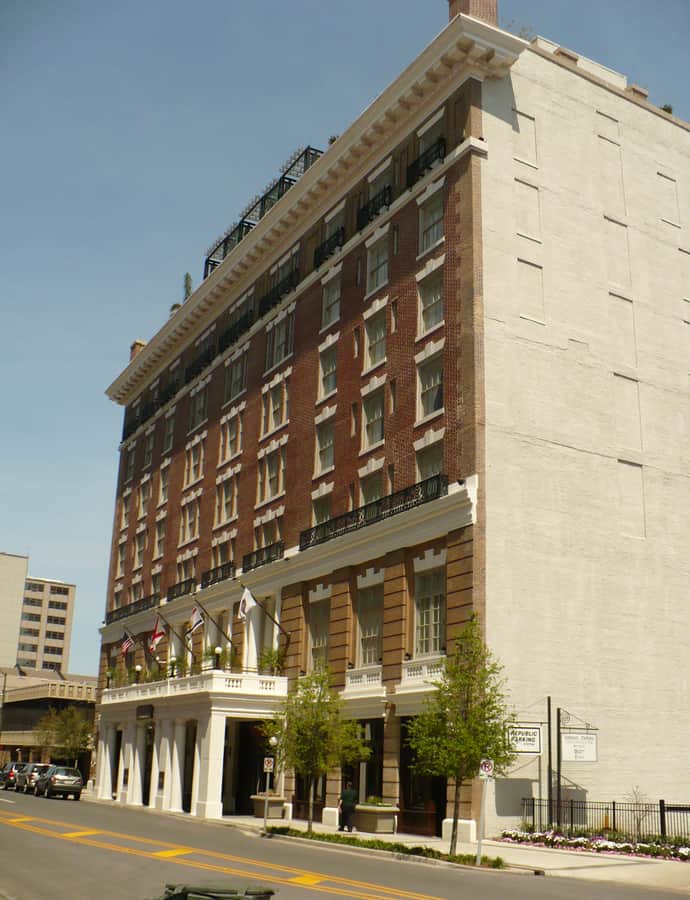
The Battle House Hotel's current building went up in 1908, the second hotel of that name on the site after the original 1852 Battle House burned in 1905. Designed with the involvement of architect Frank Mills Andrews, it is one of the earliest steel frame structures in Alabama and is individually listed on the National Register of Historic Places.

Photo: Altairisfar , Public domain

Hidden gems

Fine buildings that fewer people seek out.

Caldwell School

Colonial Revival

Caldwell School

1887

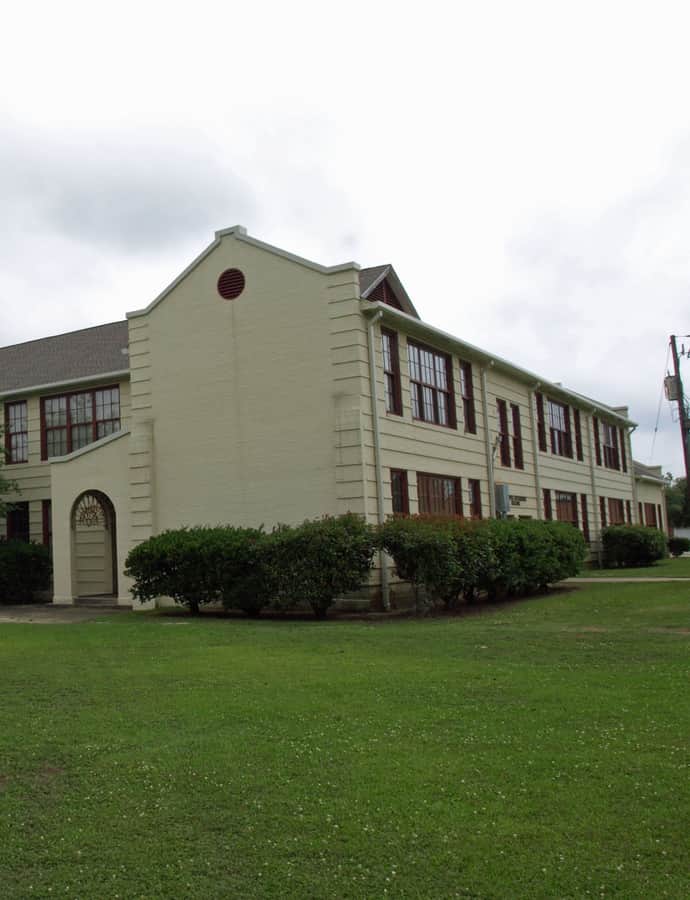
The Caldwell School traces to 1887, when it was founded as the Broad Street Academy, the first public high school for African Americans in Mobile, with William A. Caldwell as its first principal. The original building was demolished and rebuilt in 1947, after which it reopened as an African American elementary school and was renamed Caldwell School in honor of its founding principal.

Photo: Chris Pruitt , CC BY-SA 3.0

National African American Archives and Museum

Neoclassical

National African American Archives and Museum

George Bigelow Rogers

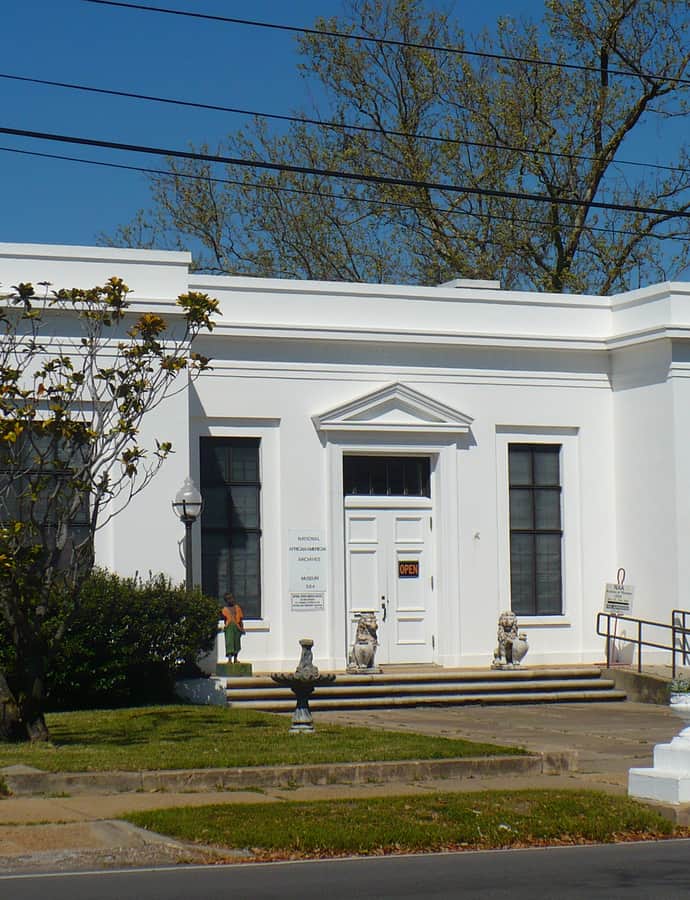
Built in 1931 as the Davis Avenue Branch of the Mobile Public Library, this Neoclassical building was the lone library African Americans in Mobile County could use during segregation. Designed by architect George Bigelow Rogers and built for $26,000, it was modeled after the Ben May Main Library on a smaller scale, with the local Black community collecting used books and raising funds for it. From the early 1990s to about 2015 it served as the National African American Archives and Museum.

Photo: Altairisfar , Public domain