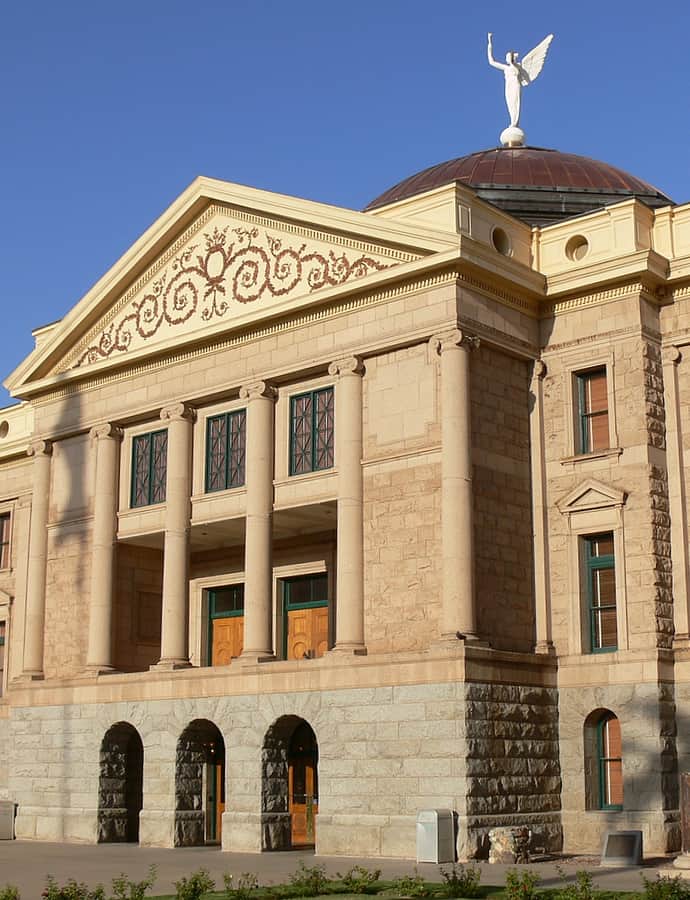
Arizona State Capitol
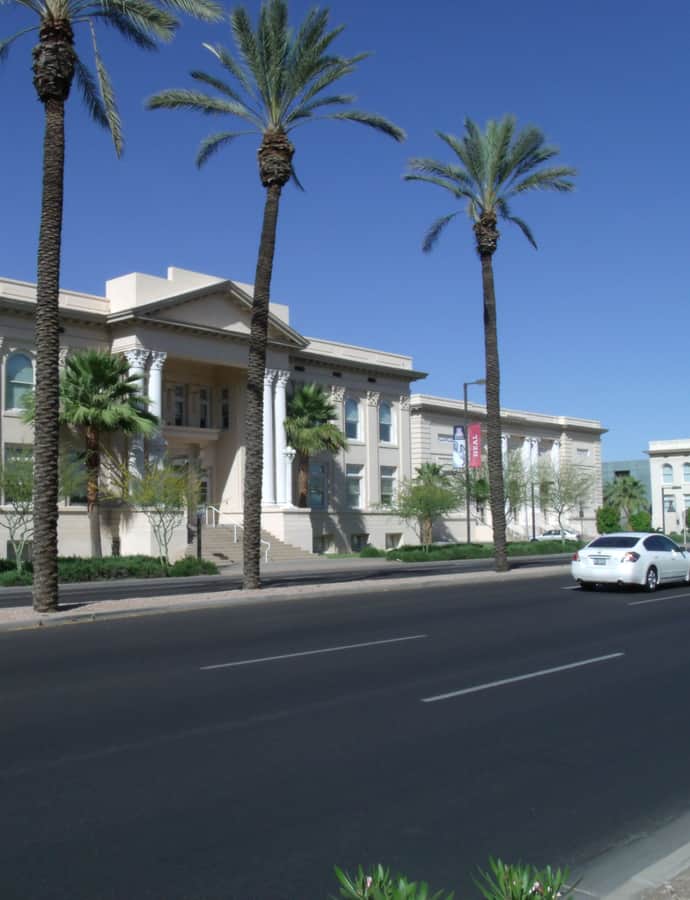
The Arizona State Capitol was completed in 1901 to a Neoclassical design by James Riely Gordon.
Read more about Arizona State CapitolSee it on the map
Photo: unknown, CC BY 2.5
City guide
49 buildings worth a detour, each with what to look for. Open them on the map, or walk them with the iPhone app, which collects each one you photograph.
The buildings that define the city's architecture.
The Arizona State Capitol was completed in 1901 to a Neoclassical design by James Riely Gordon.
Read more about Arizona State CapitolSee it on the map
Photo: unknown, CC BY 2.5
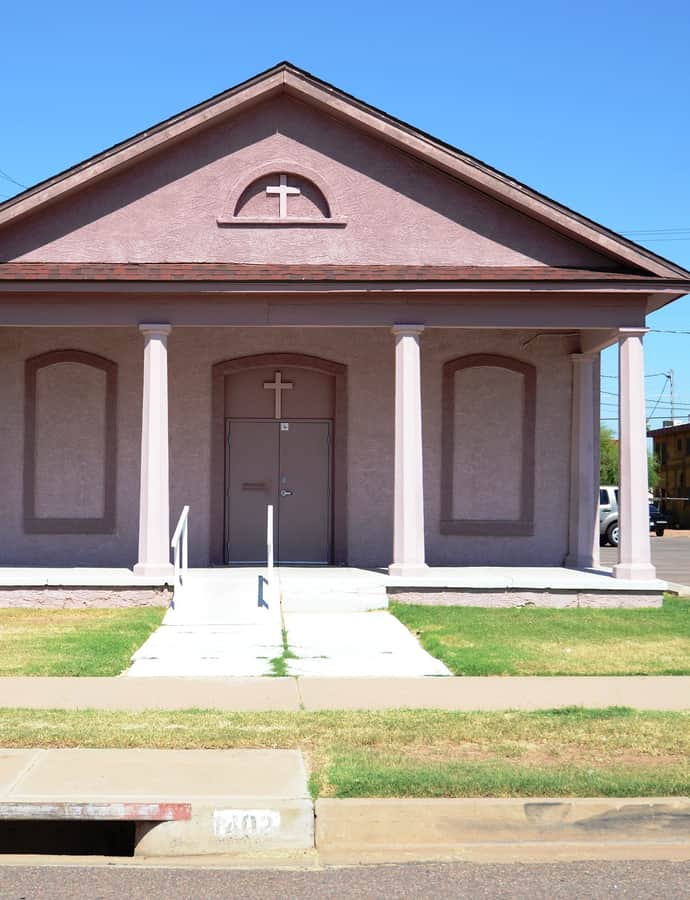
Bethlehem Baptist Church dates to 1920 and is built in the Colonial Revival style.
Read more about Bethlehem Baptist ChurchSee it on the map
Photo: Kabugenyo, CC BY-SA 3.0
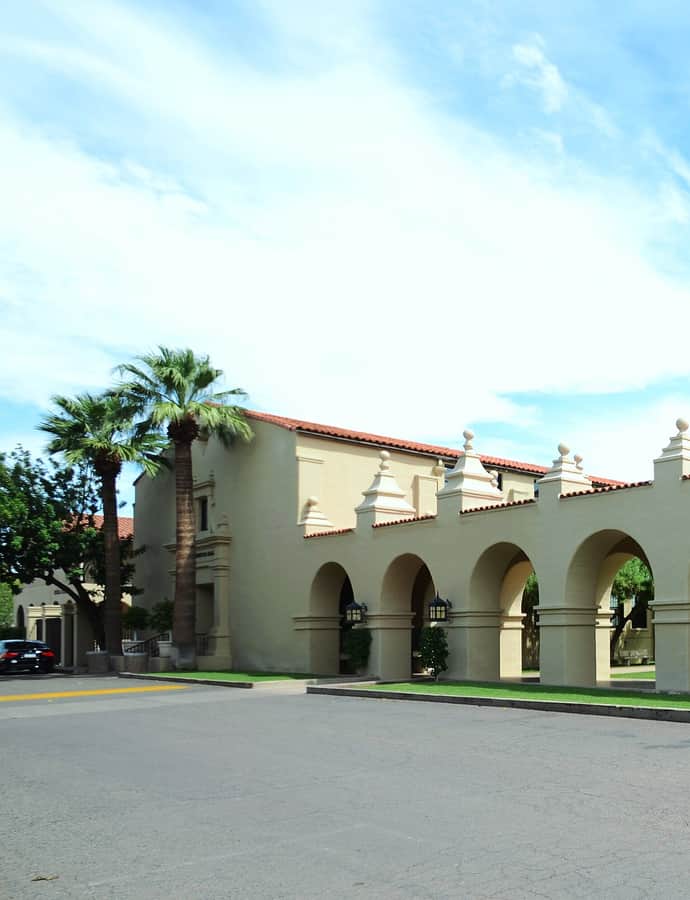
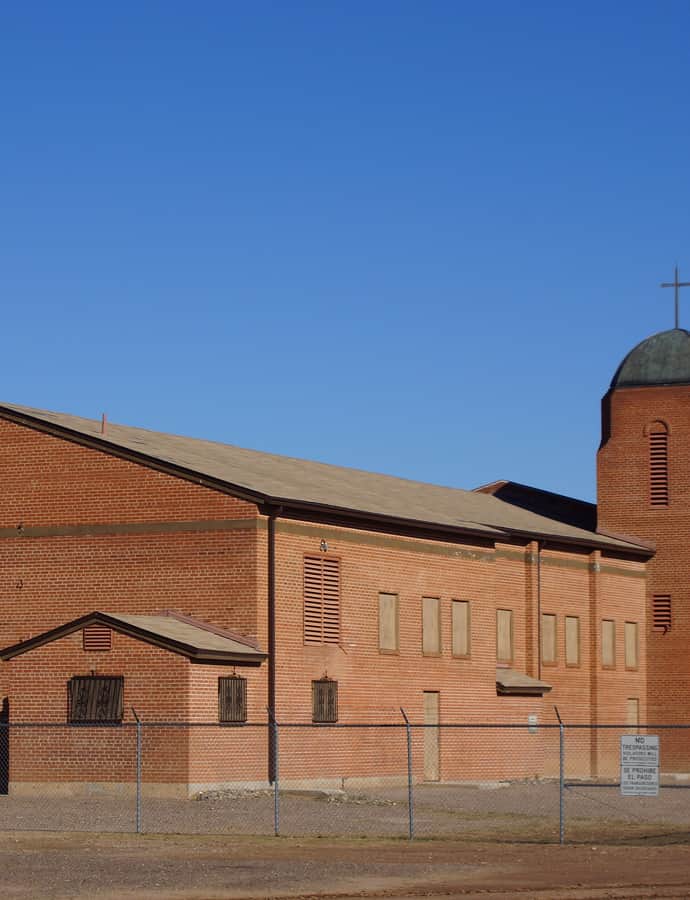
Brophy College Chapel was designed by the firm Lescher & Mahoney in the Spanish Colonial Revival style.
Read more about Brophy College ChapelSee it on the map
Photo: Kabugenyo, CC BY-SA 3.0
Landmark
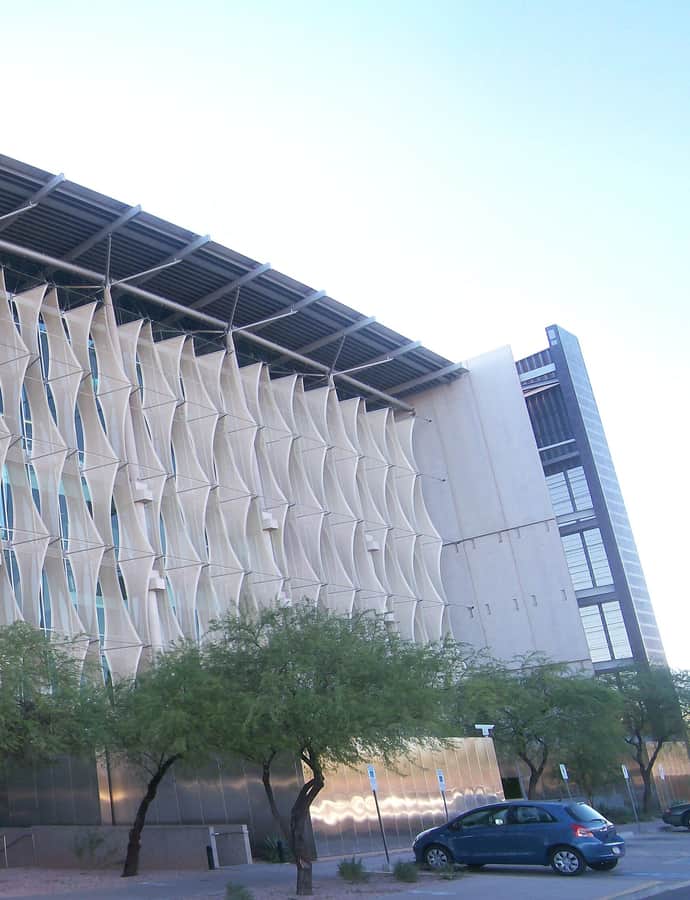
The Burton Barr Central Library in downtown Phoenix was designed by Will Bruder, a nationally noted architect, and is recognized for its distinctive design as the city's central library.
Read more about Burton Barr Central LibrarySee it on the map
Photo: Cygnusloop99, CC BY-SA 3.0
Landmark
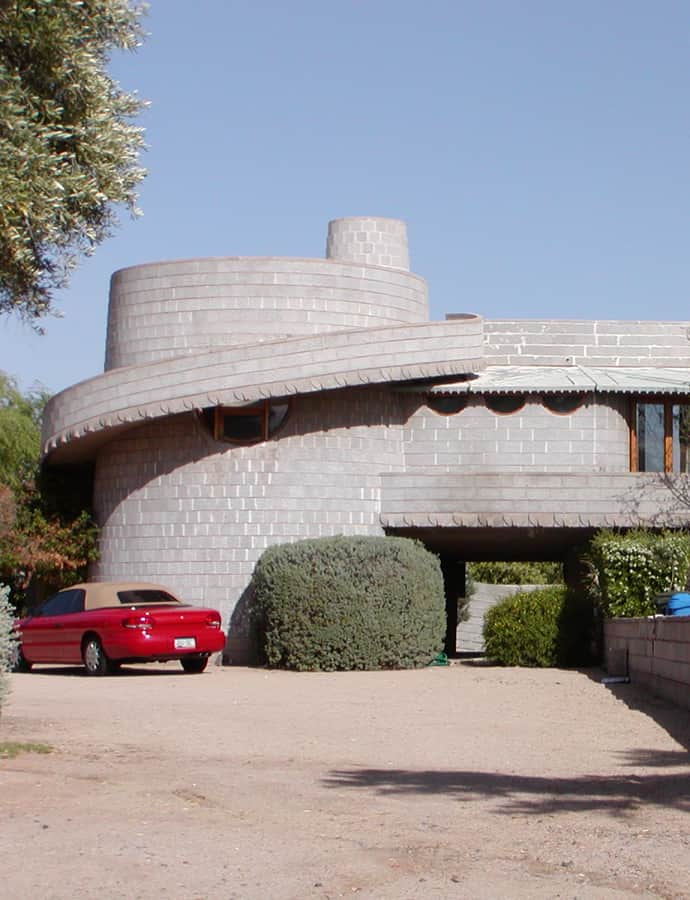
The David & Gladys Wright House is a spiral house completed in 1952, designed by Frank Lloyd Wright for his son David and daughter-in-law Gladys.
Read more about David & Gladys Wright HouseSee it on the map
Photo: Lockley, CC0
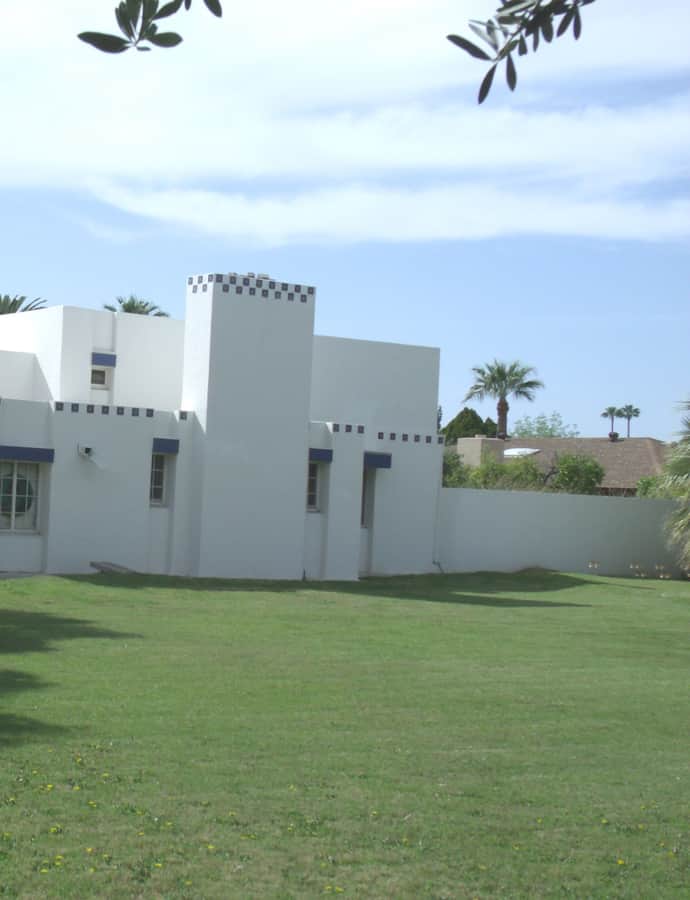
The David Morgan-Earl A. Bronson House is a Pueblo Revival Style house completed in 1927 and designed by Albert Chase McArthur, an architect associated with Frank Lloyd Wright and the Arizona Biltmore.
Read more about David Morgan-Earl A. Bronson HouseSee it on the map
Photo: Tony the Marine, CC BY-SA 3.0
Landmark
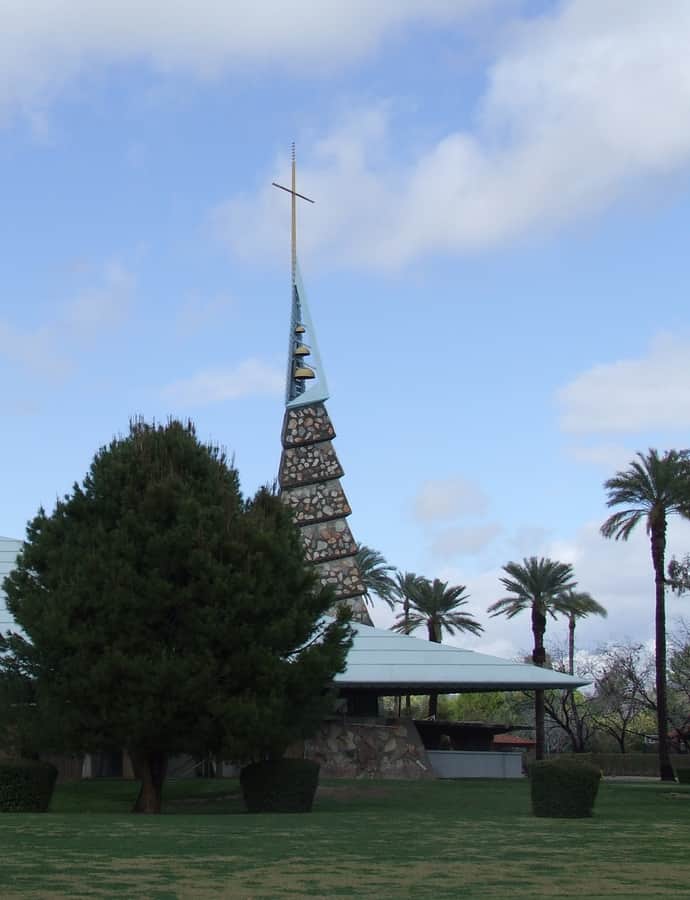
First Christian Church is a Frank Lloyd Wright-designed church, part of the body of ecclesiastical work in which Wright is noted for typological experimentation.
Read more about First Christian ChurchSee it on the map
Photo: Jaydec (Transferred by Arch2all/Originally uploaded by Jaydec), CC BY-SA 3.0
Landmark
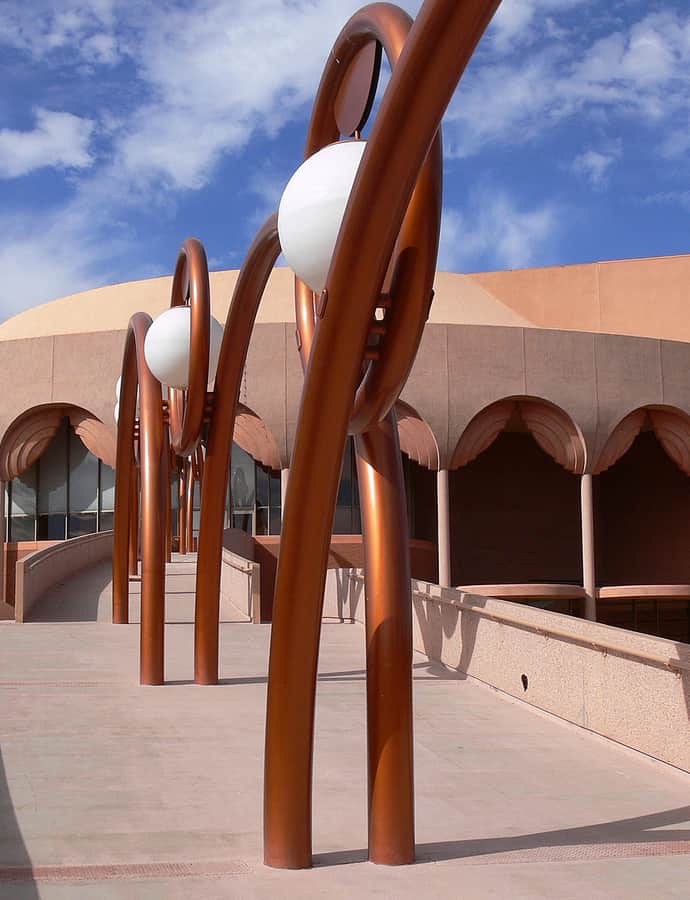
Grady Gammage Memorial Auditorium was completed in 1964 to a design by Frank Lloyd Wright, and it is widely retold as Wright's last public commission.
Read more about Gammage Memorial AuditoriumSee it on the map
Photo: Wars, CC BY 2.5
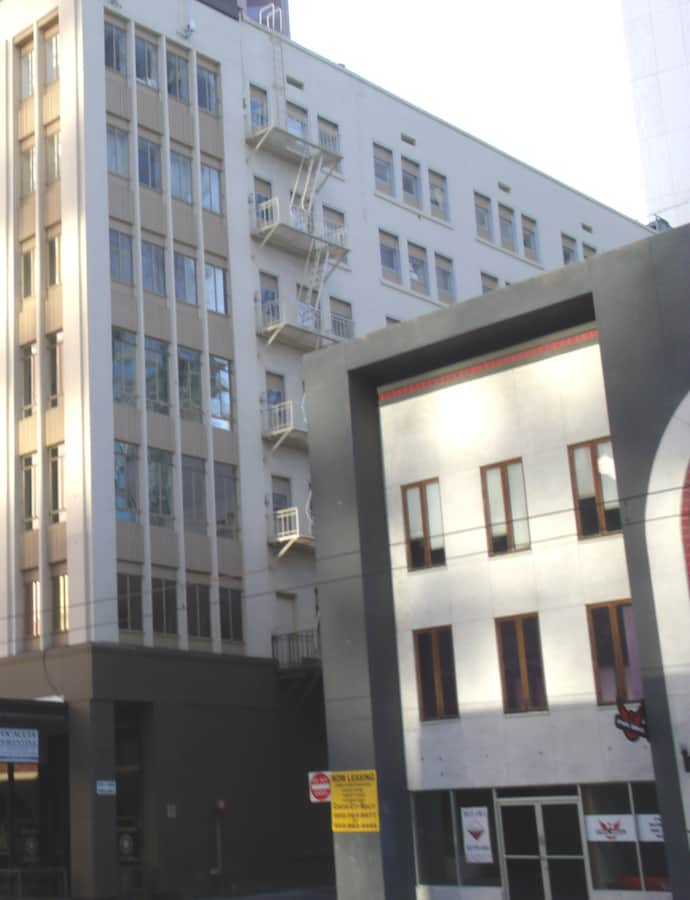
The Heard Building is a downtown Phoenix commercial building in the Chicago School style, an idiom rarely seen in the city's early commercial architecture.
Read more about Heard BuildingSee it on the map
Photo: Tony the Marine, CC BY-SA 3.0
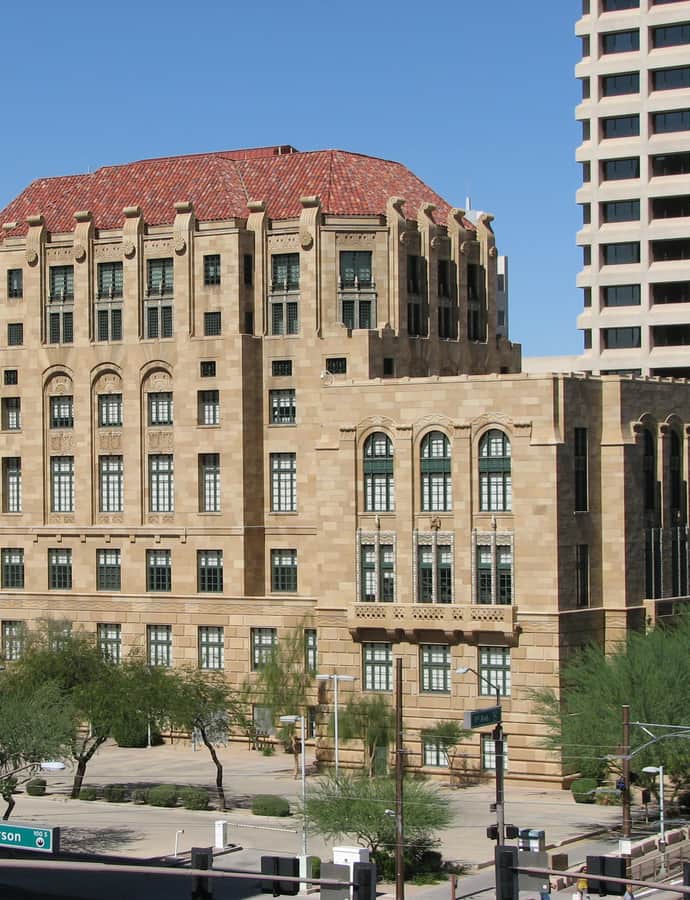
The Maricopa County Courthouse was designed by Edward Fairfax Neild, Sr. in the Mission Revival style.
Read more about Maricopa County CourthouseSee it on the map
Photo: Zeb Micelli, CC0
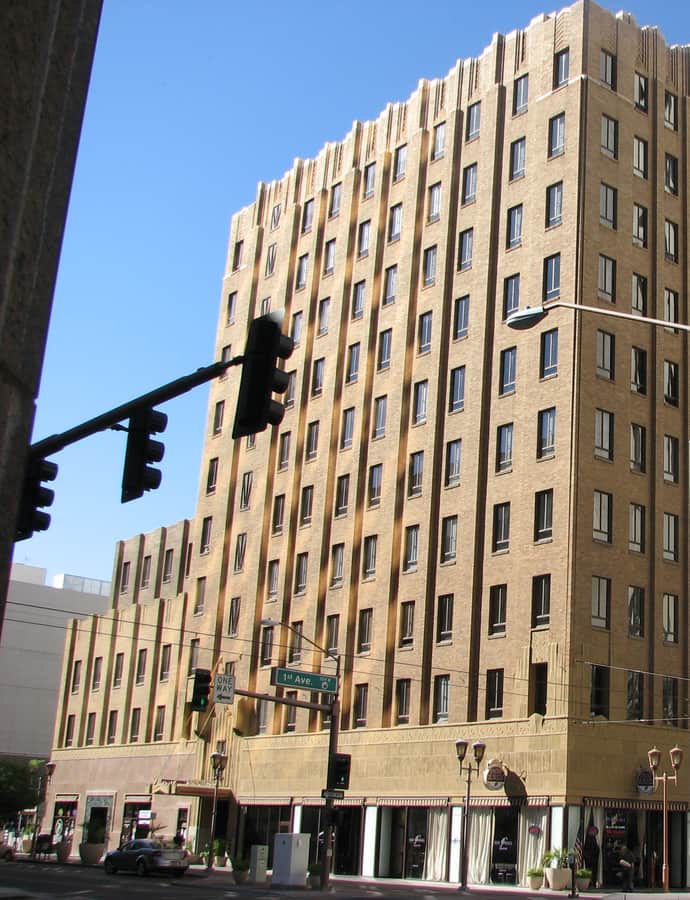
Orpheum Lofts is a downtown Phoenix building designed by Lescher & Mahoney, a prominent regional architecture firm, in the Moderne style.
Read more about Orpheum LoftsSee it on the map
Photo: Zeb Micelli, CC0
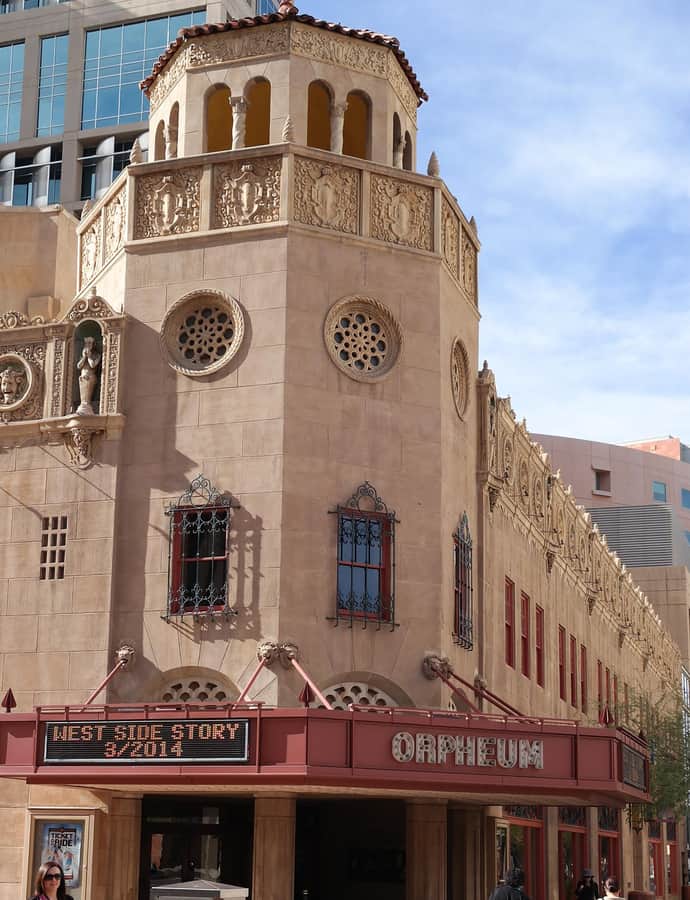
The Orpheum Theatre, in downtown Phoenix, opened in 1929 to a Mediterranean Revival design by the firm Lescher & Mahoney.
Read more about Orpheum TheatreSee it on the map
Photo: Visitor7, CC BY-SA 3.0
Landmark
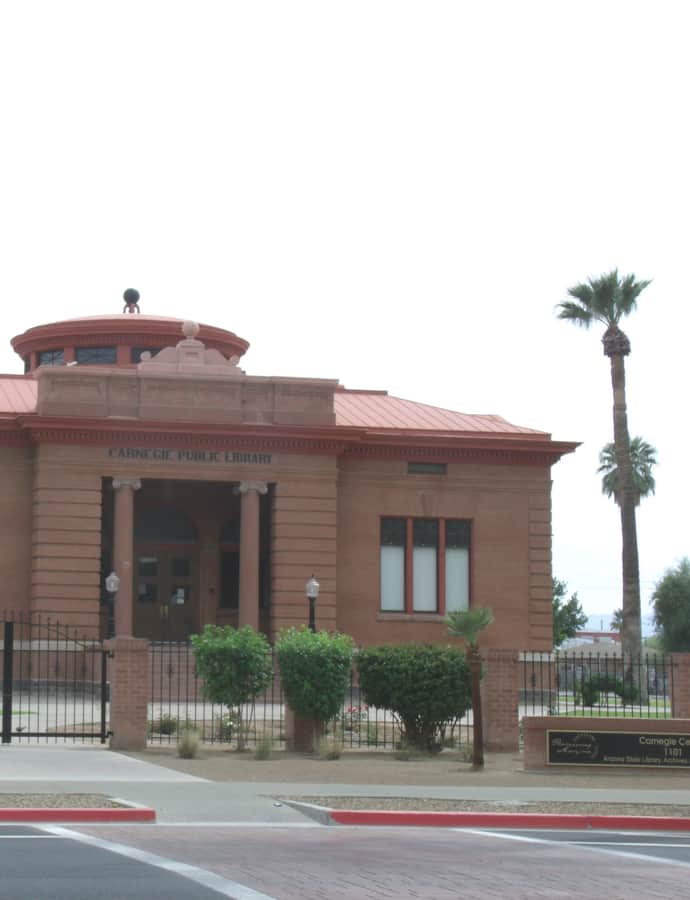
The Phoenix Carnegie Library and Library Park in downtown Phoenix was designed by James M. Creighton, described as a notable local architect.
Read more about Phoenix Carnegie Library and Library ParkSee it on the map
Photo: Tony the Marine, CC BY-SA 3.0
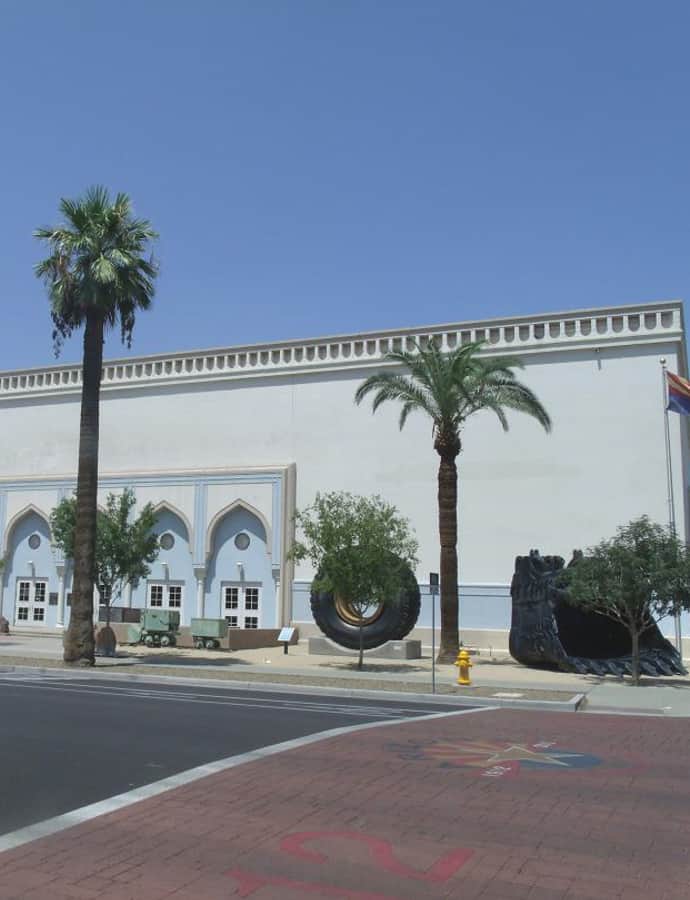
The Polly Rosenbaum Building is a Moorish Revival landmark designed by the regional architecture firm Lescher & Mahoney.
Read more about Polly Rosenbaum BuildingSee it on the map
Photo: Tony the Marine, CC BY-SA 3.0
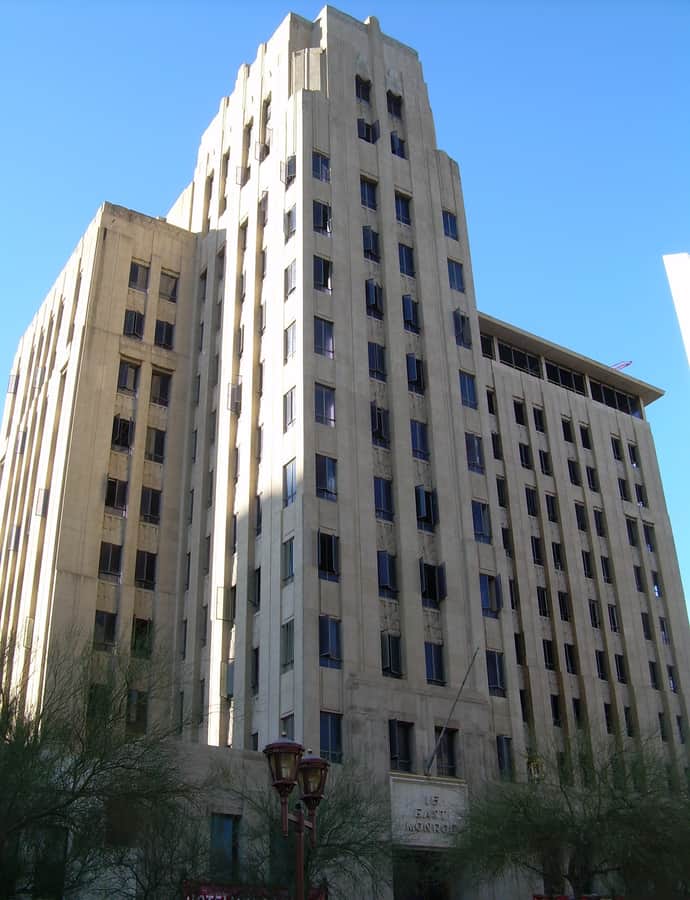
The Professional Building is a downtown Phoenix office building completed in 1932 and designed by Morgan, Walls & Clements, a notable Southwest architecture firm.
Read more about Professional BuildingSee it on the map
Photo: JCordova, Public domain
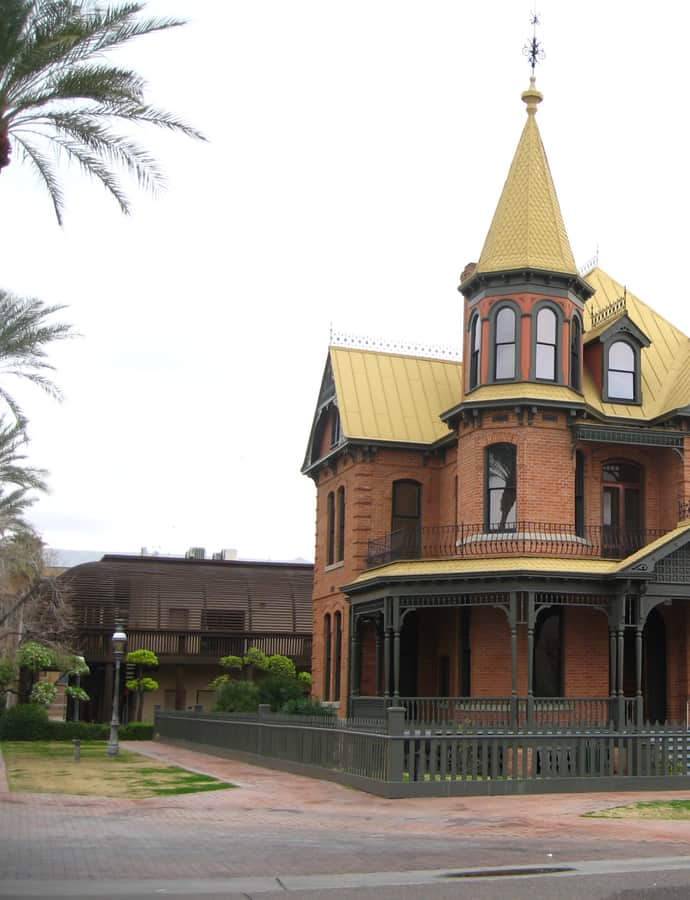
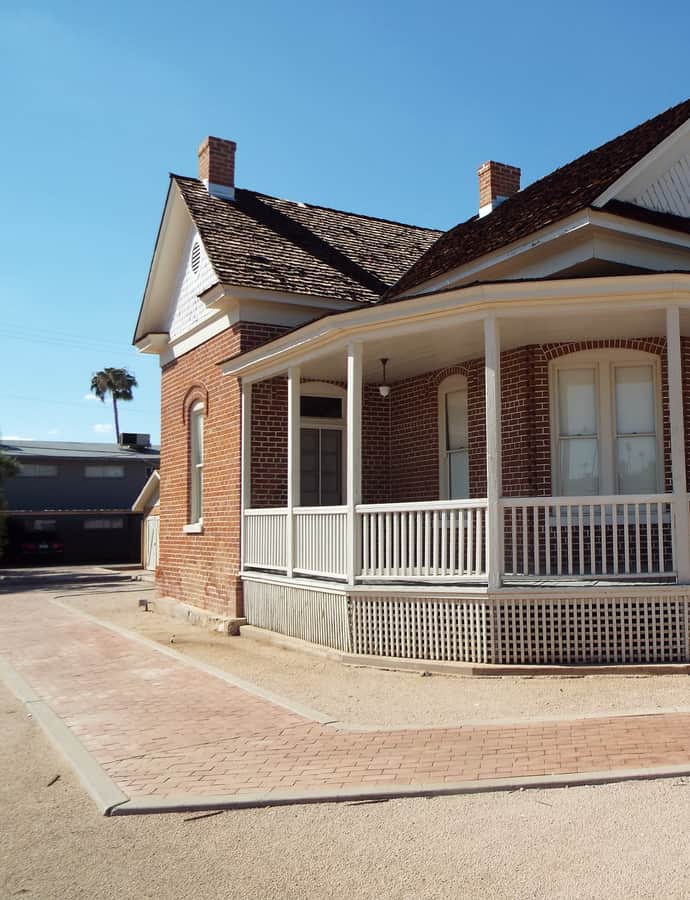
The Rosson House, in downtown Phoenix, was completed in 1895 to a Stick style design by George Franklin Barber, a rare specimen of that style in the city.
Read more about Rosson HouseSee it on the map
Photo: Photograph by Greg O'Beirne, CC BY 2.5
Sacred Heart Church was designed by Albert Braun, a regional church architect, and completed in 1954 in a modern architectural style.
Read more about Sacred Heart ChurchSee it on the map
Photo: Chris English, CC BY-SA 3.0
The Sandra Day O'Connor United States Courthouse is a downtown federal courthouse designed by Richard Meier, a Pritzker Prize-winning architect.
Read more about Sandra Day O'Connor United States CourthouseSee it on the map
The Sirrine House is a Queen Anne-style residence, individually listed on the National Register of Historic Places.
Read more about Sirrine HouseSee it on the map
Photo: Marine 69-71, CC BY-SA 4.0
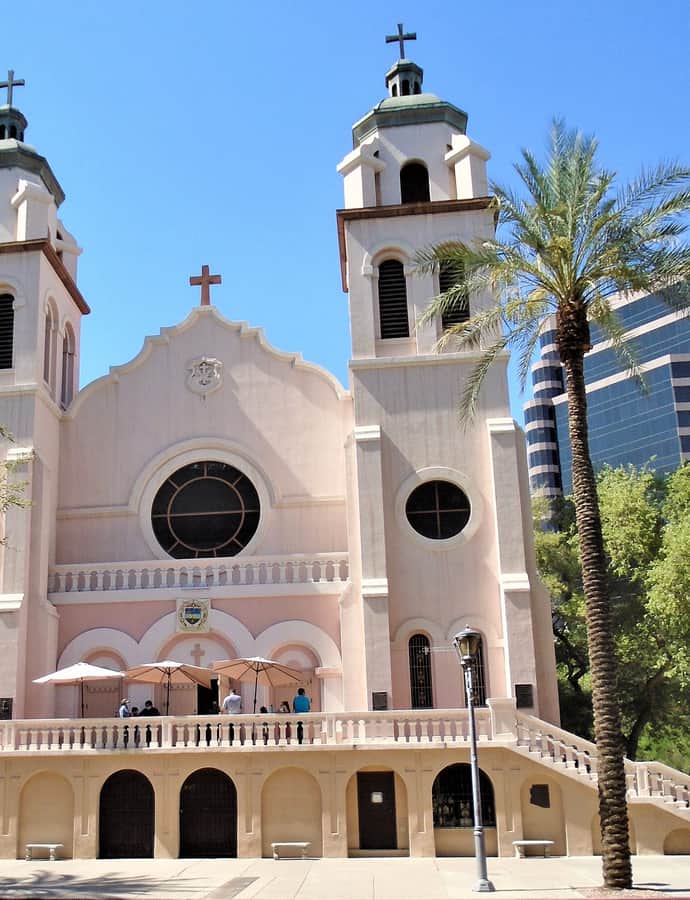
St. Mary's Basilica, in downtown Phoenix, was completed in 1881 in the Spanish Colonial Revival style.
Read more about St. Mary's BasilicaSee it on the map
Photo: Beyond My Ken, CC BY-SA 4.0
The Sun Mercantile Building is a downtown Chicago School commercial building carrying a dual historic designation: it is listed on the National Register of Historic Places and also carries an OSM heritage=yes designation, a combination…
Read more about Sun Mercantile BuildingSee it on the map
Photo: Cygnusloop99, CC BY-SA 3.0
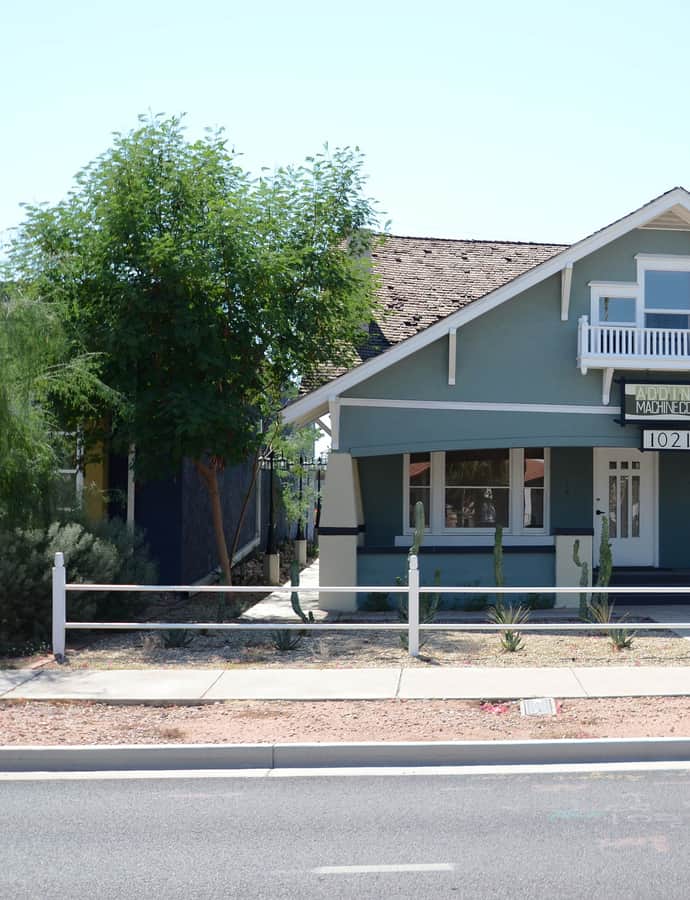
The Swindall Tourist Inn is a bungalow-style building listed on the National Register of Historic Places.
Read more about Swindall Tourist InnSee it on the map
Photo: Kabugenyo, CC BY-SA 3.0
Landmark
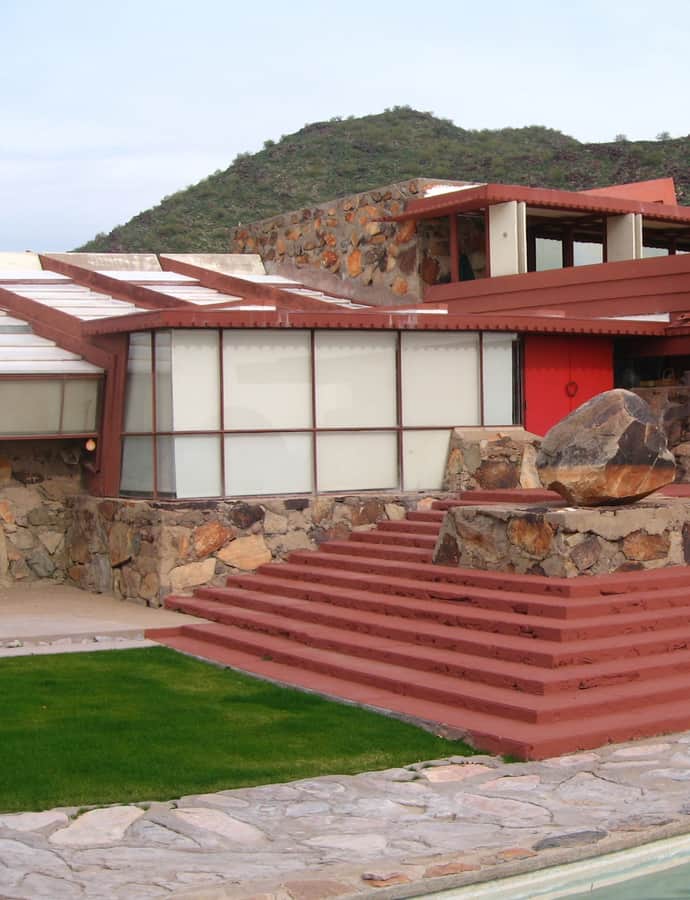
Taliesin West, in Scottsdale, was built in 1937 as Frank Lloyd Wright's winter home and studio.
Read more about Taliesin WestSee it on the map
Photo: Photograph by Greg O'Beirne, CC BY 2.5
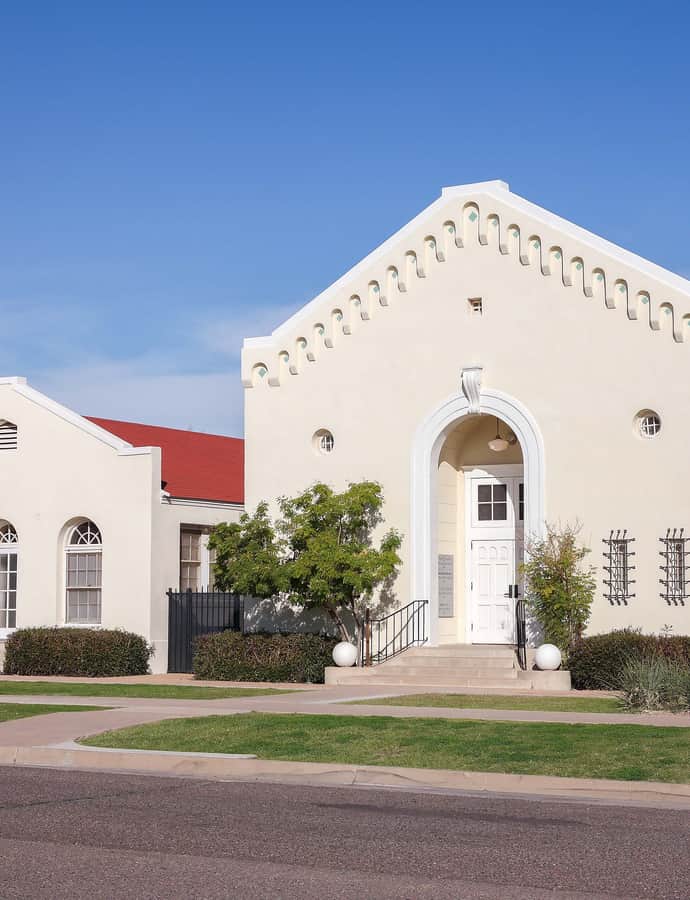
Temple Beth Israel is a downtown Mission Revival landmark designed by the regional architecture firm Lescher & Mahoney.
Read more about Temple Beth IsraelSee it on the map
Photo: Visitor7, CC BY-SA 3.0
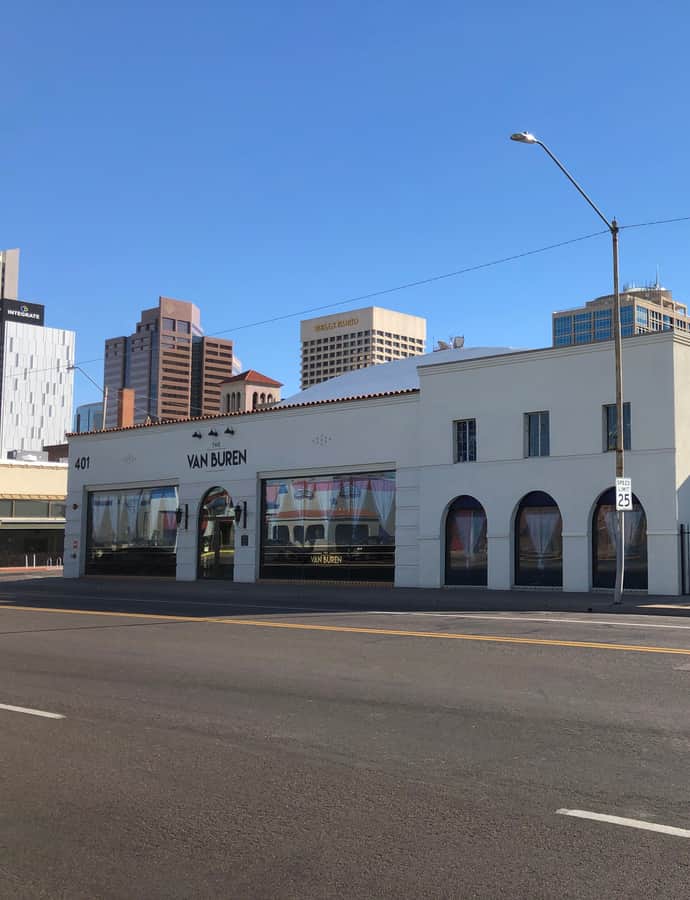
The Van Buren is a downtown hotel completed in 1930 and designed by the regional firm Lescher & Mahoney in a baroque revival and Spanish Colonial Revival idiom.
Read more about The Van BurenSee it on the map
Photo: Dmadeo, CC BY-SA 4.0
Worth a stop when you're nearby.
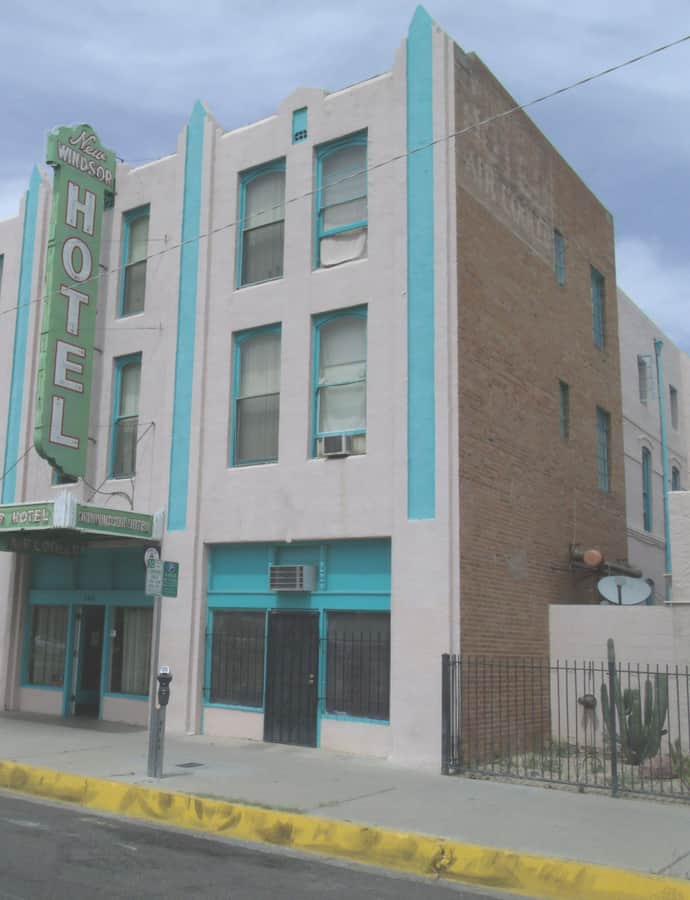
The 6th Avenue Hotel-Windsor Hotel is a downtown Phoenix hotel built in the Moderne style.
Read more about 6th Avenue Hotel-Windsor HotelSee it on the map
Photo: Tony the Marine, CC BY-SA 3.0
Notable building
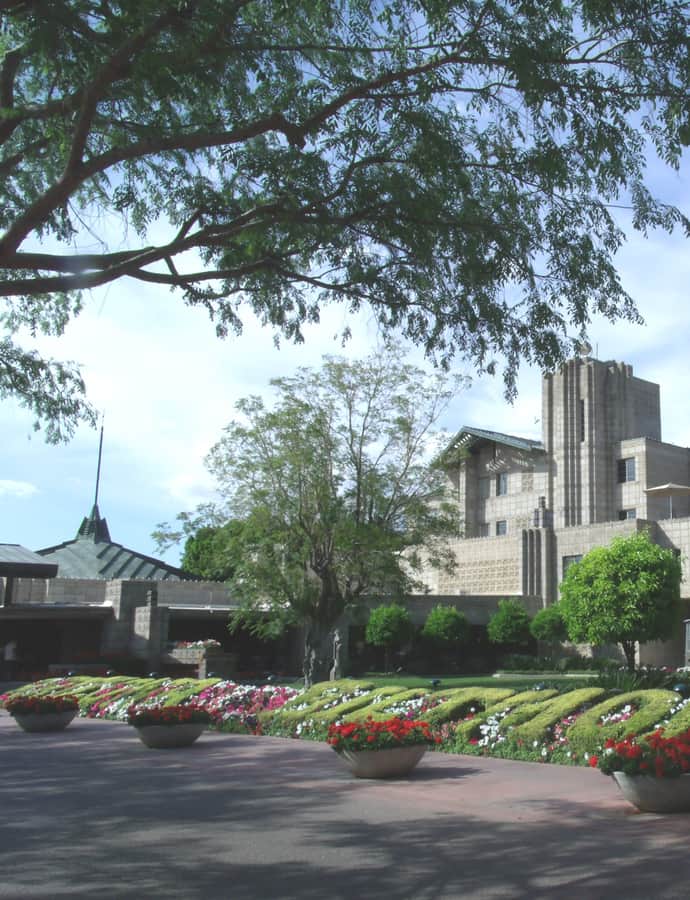
The Arizona Biltmore Hotel opened in 1929, designed by Albert Chase McArthur, an architect associated with Frank Lloyd Wright's studio.
Read more about Arizona Biltmore HotelSee it on the map
Photo: Tony the Marine, CC BY-SA 3.0
The Hotel San Carlos is a downtown Phoenix hotel built in the Renaissance Revival style.
Notable building
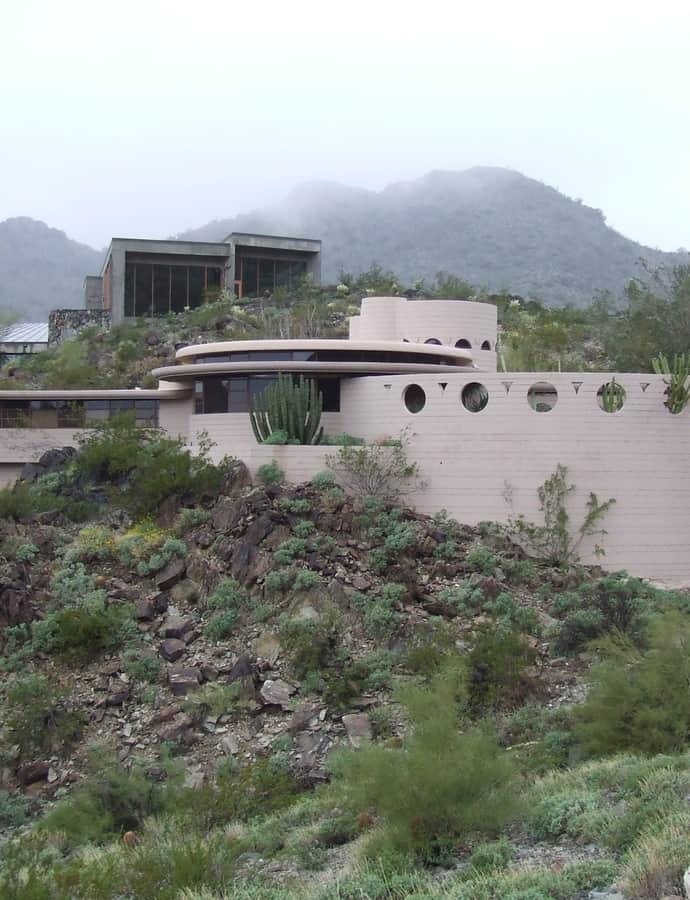
The Norman Lykes House was designed by Frank Lloyd Wright in 1967, placing it among the last residential designs Wright produced.
Read more about Norman Lykes HouseSee it on the map
Photo: Jaydec, CC BY-SA 3.0
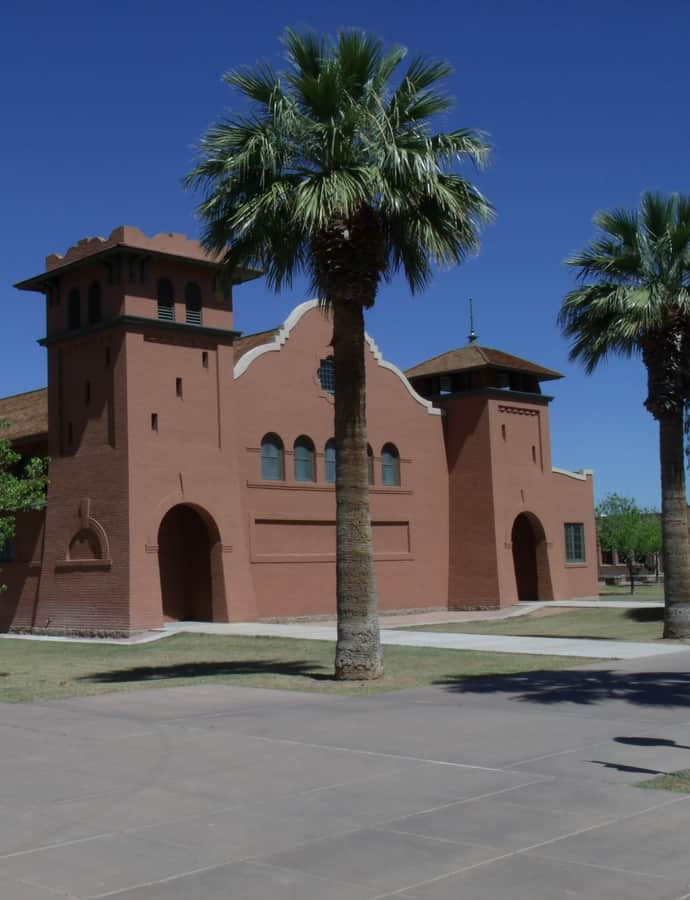
Phoenix Indian School dates to 1891 and is built in the Spanish Colonial Revival style.
Read more about Phoenix Indian SchoolSee it on the map
Photo: Tony the Marine, CC BY-SA 3.0
Phoenix Union High School was built in 1895 in downtown Phoenix in the Neoclassical style.
Read more about Phoenix Union High SchoolSee it on the map
Photo: Tony the Marine, CC BY-SA 3.0
Notable building
The Rose Pauson House was designed by Frank Lloyd Wright as a desert-scheme residence in Arizona, and it carries a well-documented story as one of his Arizona house designs.
Notable building
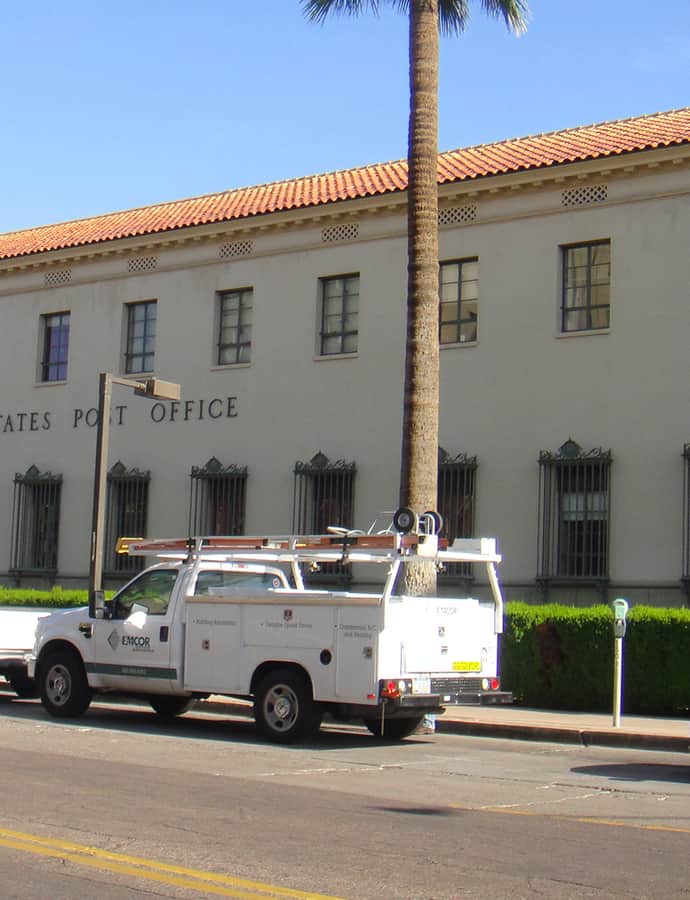
The United States Post Office in downtown Phoenix was designed by the firm Lescher & Mahoney.
Read more about United States Post Office (Phoenix, Arizona)See it on the map
Photo: Cygnusloop99, CC BY-SA 3.0
The Wrigley Mansion was designed by architect Earl Theodore Heitschmidt in the Spanish Colonial Revival style for the Wrigley family, and it is listed on the National Register of Historic Places.
Read more about Wrigley MansionSee it on the map
Photo: Pamla J. Eisenberg from Anaheim, CA USA, CC BY-SA 2.0
Fine buildings that fewer people seek out.
Beadley House No. 11 is an International Style building individually listed on the National Register of Historic Places.
Read more about Beadley House No. 11See it on the map
Photo: Marine 69-71, CC BY-SA 4.0
The Edward L. Jones House is a Pueblo Revival home in Scottsdale, completed in 1932 and individually listed on the National Register of Historic Places.
Read more about Edward L. Jones HouseSee it on the map
Photo: Tony the Marine, Public domain
First Church of Christ, Scientist, in downtown Phoenix was designed by Fitzhugh & Byron in the Neoclassical style.
Read more about First Church of Christ, ScientistSee it on the map
Photo: Kabugenyo, CC BY-SA 3.0
First Presbyterian Church in downtown Phoenix was built in the Spanish Colonial Revival style.
Read more about First Presbyterian ChurchSee it on the map
Photo: Tony the Marine, CC BY-SA 3.0
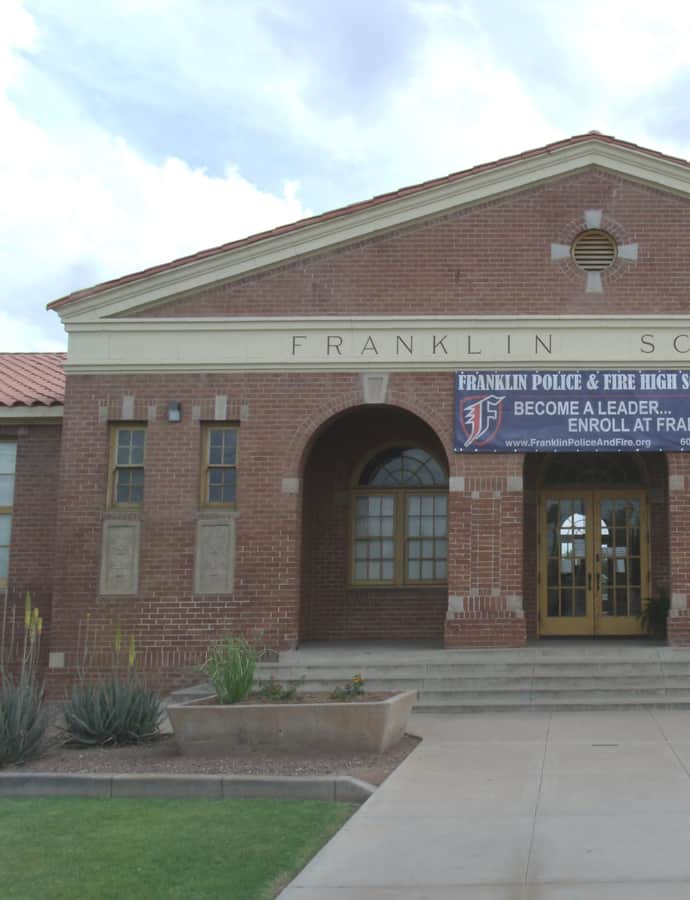
Franklin Police and Fire High School, dating to 2007, was built in the Renaissance Revival style.
Read more about Franklin Police and Fire High SchoolSee it on the map
Photo: Tony the Marine, CC BY-SA 3.0
The Hurley Building is an Art Deco commercial building in downtown Phoenix, listed on the National Register of Historic Places, with its Art Deco facade still visible from the street.
Read more about Hurley BuildingSee it on the map
Photo: Tony the Marine, CC BY-SA 3.0
modern
The Jorgine Boomer House was designed by Frank Lloyd Wright in 1953 in a modern architectural style.
Read more about Jorgine Boomer HouseSee it on the map
Photo: Cygnusloop99, CC BY-SA 3.0
Kenilworth Elementary School is a Neoclassical school building in downtown Phoenix, listed on the National Register of Historic Places.
Read more about Kenilworth Elementary SchoolSee it on the map
Photo: Kabugenyo, CC BY-SA 3.0
The Louis J. Bohn and Gertrude Lee House is a Pueblo Revival residence completed in 1929, individually listed on the National Register of Historic Places.
Read more about Louis J. Bohn and Gertrude Lee HouseSee it on the map
Photo: Kabugenyo, CC BY-SA 3.0
Monroe School in downtown Phoenix was built in the Neoclassical style.
Read more about Monroe SchoolSee it on the map
Photo: Beyond My Ken, CC BY-SA 4.0
The Rose Eisendrath House is a Pueblo Revival residence completed in 1930, individually listed on the National Register of Historic Places.
Read more about Rose Eisendrath HouseSee it on the map
Photo: Jon Roanhaus, CC BY-SA 3.0
Hidden gem
The Security Building is a downtown Phoenix commercial building designed by architect Claud Wilbur Beelman, listed on the National Register of Historic Places.
Read more about Security BuildingSee it on the map
Photo: Tony the Marine, CC BY-SA 3.0
The Squaw Peak Inn is a Pueblo Revival building completed in 1929, individually listed on the National Register of Historic Places.
Read more about Squaw Peak InnSee it on the map
Photo: Tony the Marine, CC BY-SA 3.0
Webster Auditorium is a Pueblo Revival building in Scottsdale, completed in 1939 and individually listed on the National Register of Historic Places.
Read more about Webster AuditoriumSee it on the map
Photo: Tony the Marine, CC BY-SA 3.0