
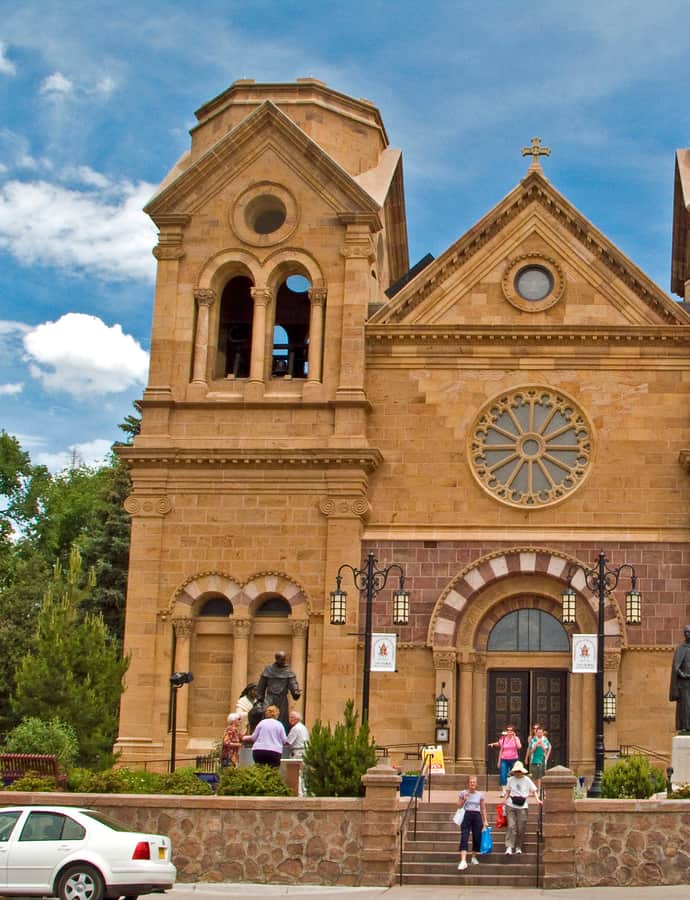
Cathedral Basilica of Saint Francis of Assisi
The Cathedral Basilica of Saint Francis of Assisi, on the Plaza, was completed in 1869 in the Romanesque Revival style and holds basilica status.
Photo: John Fowler from Placitas, NM, USA , CC BY 2.0
City guide
22 buildings worth a detour, each with what to look for. Open them on the map, or walk them with the iPhone app, which collects each one you photograph.
The buildings that define the city's architecture.
The Cathedral Basilica of Saint Francis of Assisi, on the Plaza, was completed in 1869 in the Romanesque Revival style and holds basilica status.
Photo: John Fowler from Placitas, NM, USA , CC BY 2.0
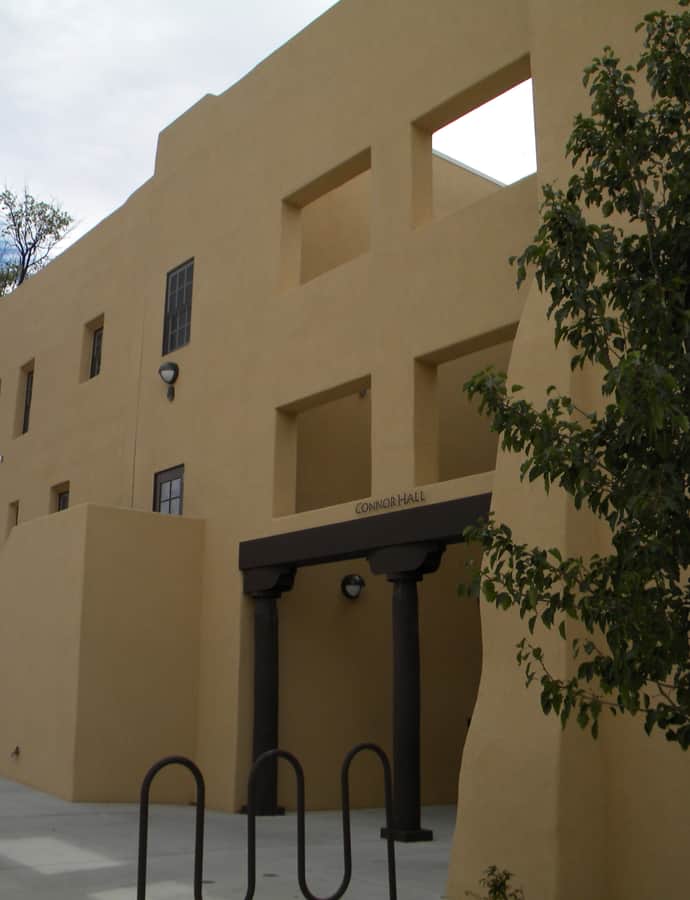
Connor Hall was built in 1927, designed by architect George M. Williamson in the Pueblo Revival style. It is individually listed on the National Register of Historic Places.
Photo: Nickmanpow , CC BY-SA 3.0
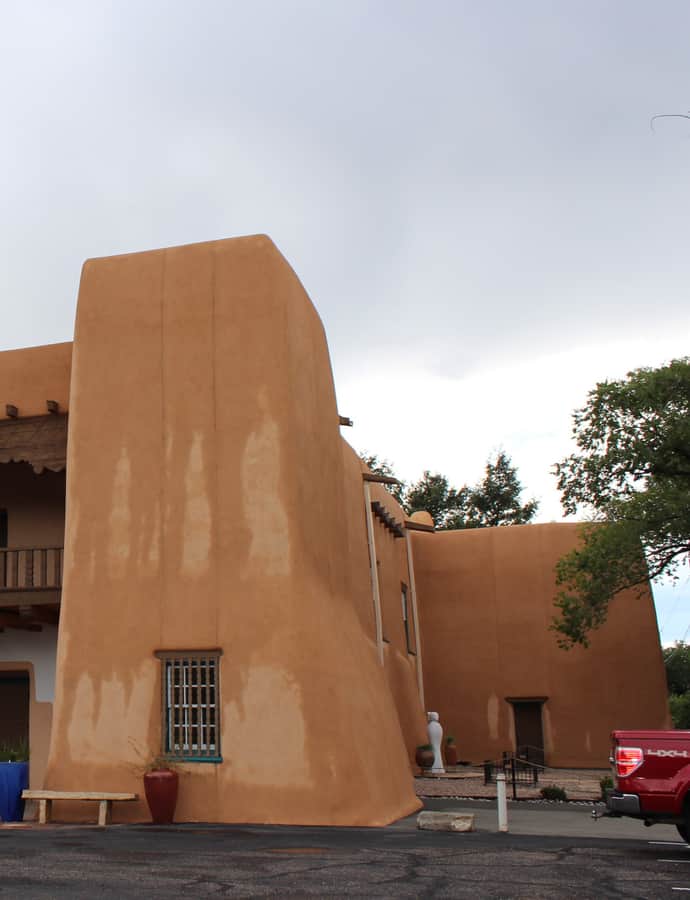
Cristo Rey Church was completed in 1940, designed by Santa Fe architect John Gaw Meem in the Pueblo Revival style.
Photo: MARELBU , CC BY 3.0
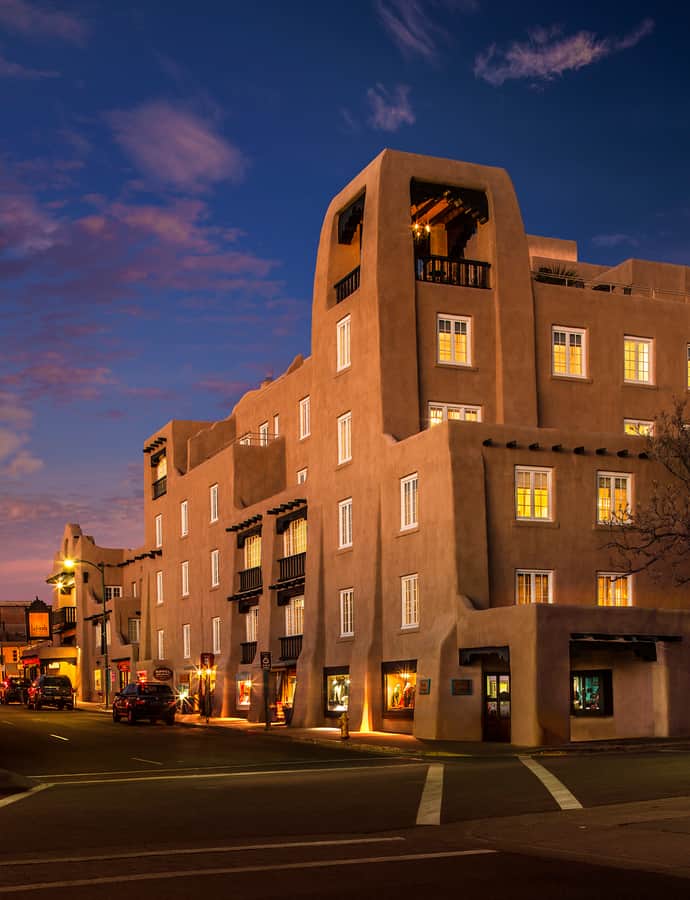
La Fonda on the Plaza is a historic Santa Fe hotel on the Plaza, designed by architect Isaac Rapp in the Pueblo Revival style.
Photo: Atakra , CC0
The Laboratory of Anthropology Director's Residence was designed by John Gaw Meem in 1930 in the Pueblo Revival style. It is listed on the National Register of Historic Places and the New Mexico State Register of Cultural Properties.
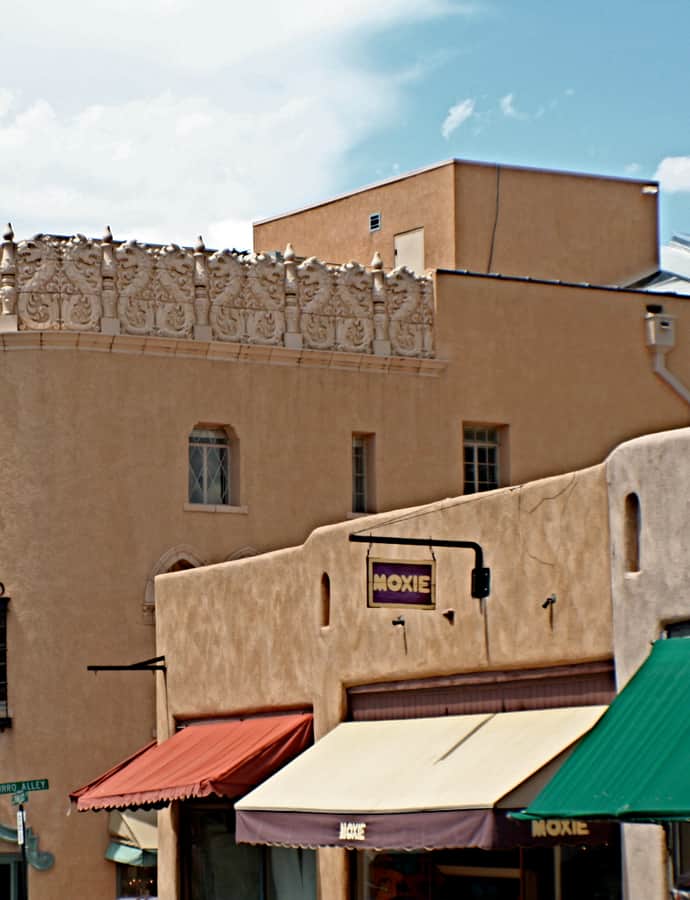
The Lensic Theater, on the Plaza, opened in 1931, designed by the Boller Brothers in the Moorish Revival style.
Photo: Asaavedra32 , CC BY-SA 3.0
The National Park Service Southwest Regional Office was designed by Cecil J. Doty and completed in 1939, fusing National Park Service rustic design with Pueblo Revival form. It is a National Historic Landmark, listed on the National Register of Historic Places and the New Mexico State Register of Cultural Properties.
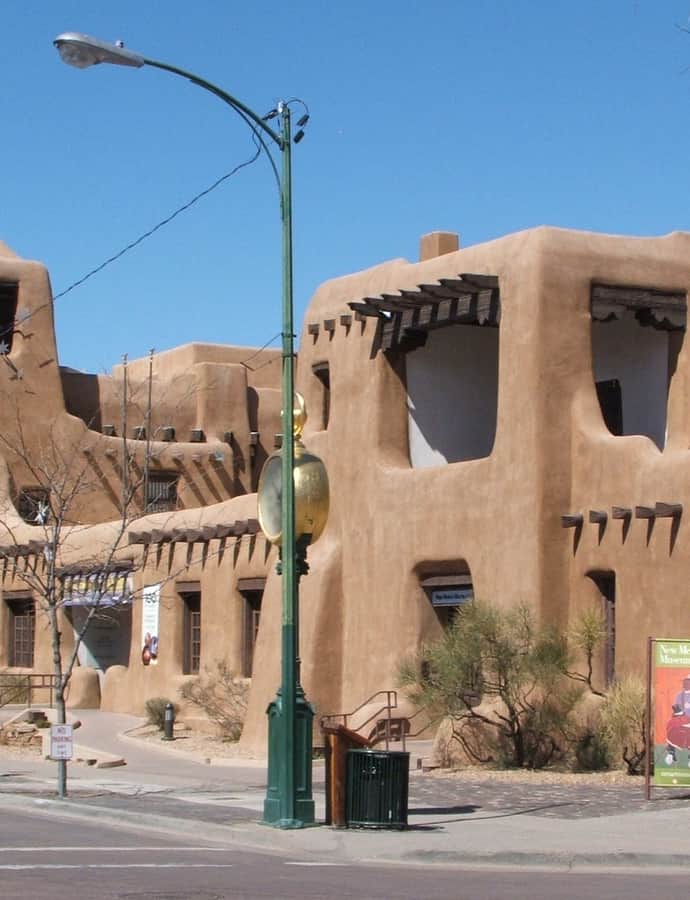
The New Mexico Museum of Art was completed in 1917 on the Plaza, designed by architect Isaac Rapp in the Pueblo Revival style, an early exemplar of the style.
Photo: PerryPlanet , Public domain
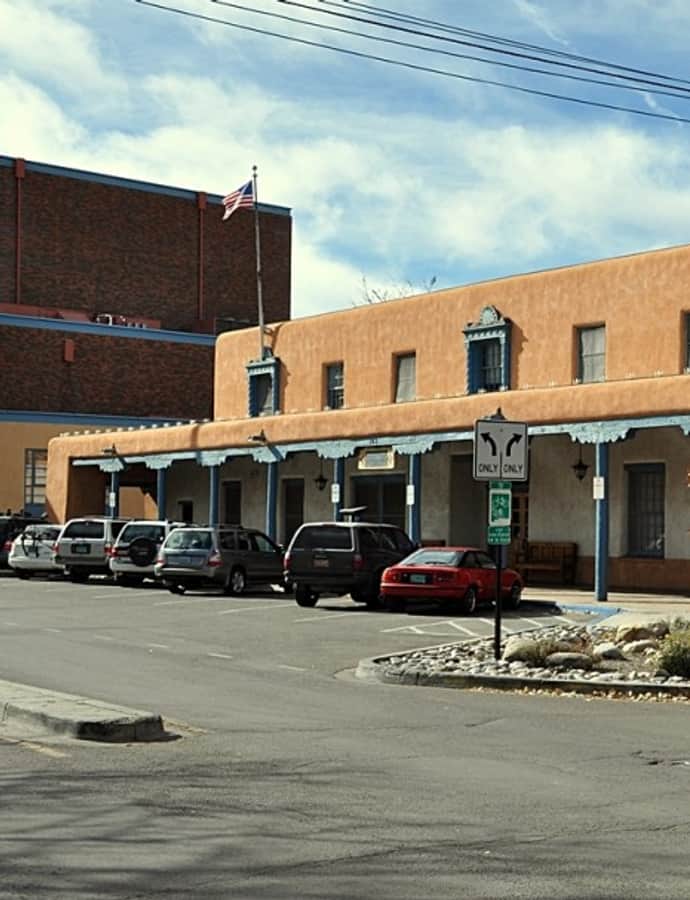
The Old Santa Fe County Courthouse, on the plaza, was designed by John Gaw Meem in 1939 in the Pueblo Revival style.
Photo: Unknown authorUnknown author , CC BY-SA 4.0
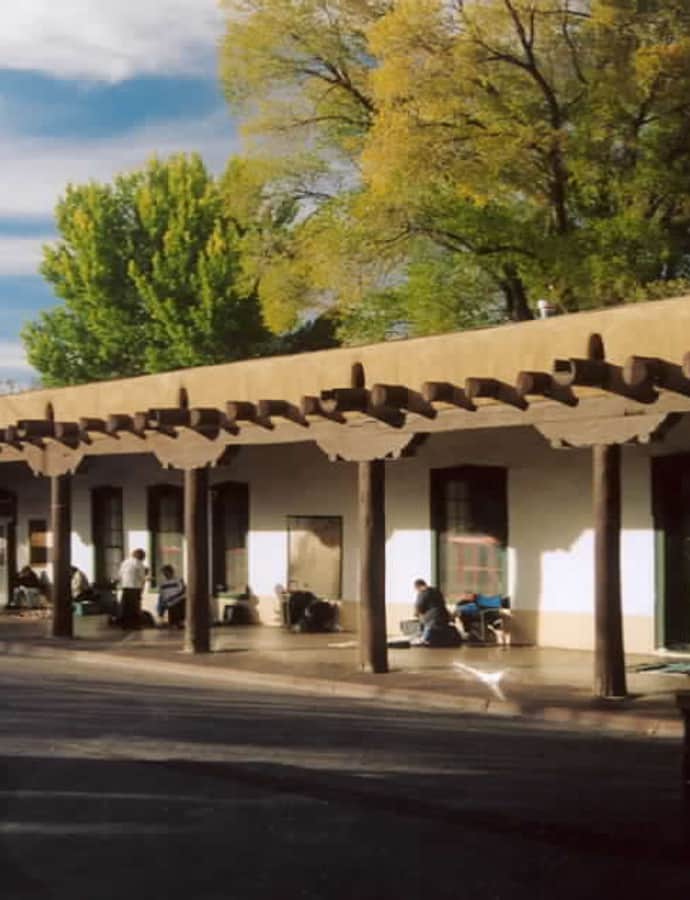
The Palace of the Governors sits on the plaza and is built in the Spanish Colonial Revival style, with elements also described as Pueblo Revival. It holds a rare triple designation: National Historic Landmark, National Register of Historic Places listing, and National Treasure status.
Photo: unknown , CC BY-SA 3.0
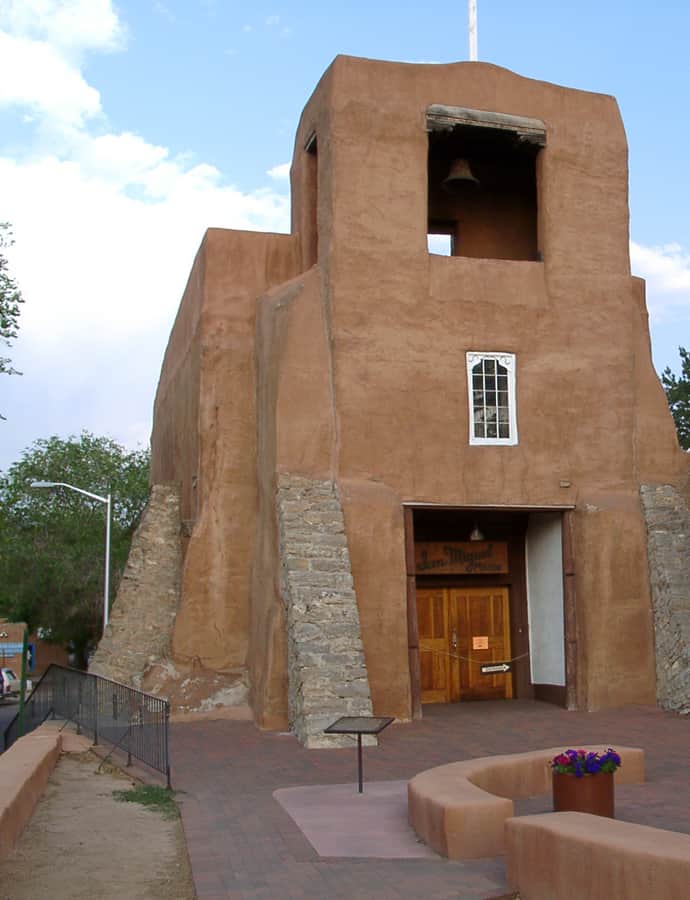
San Miguel Mission, on the Plaza, has adobe walls dating to about 1610, making it one of the oldest church structures in the continental United States. Built in the Spanish Colonial mission adobe style, it survived the Pueblo Revolt of 1680 and was rebuilt in 1710.
Photo: unknown , CC BY-SA 3.0
The Santa Fe Indian School dates to 1890 and was designed in the Pueblo Revival style by John Gaw Meem, the architect most closely identified with defining that style in the region.
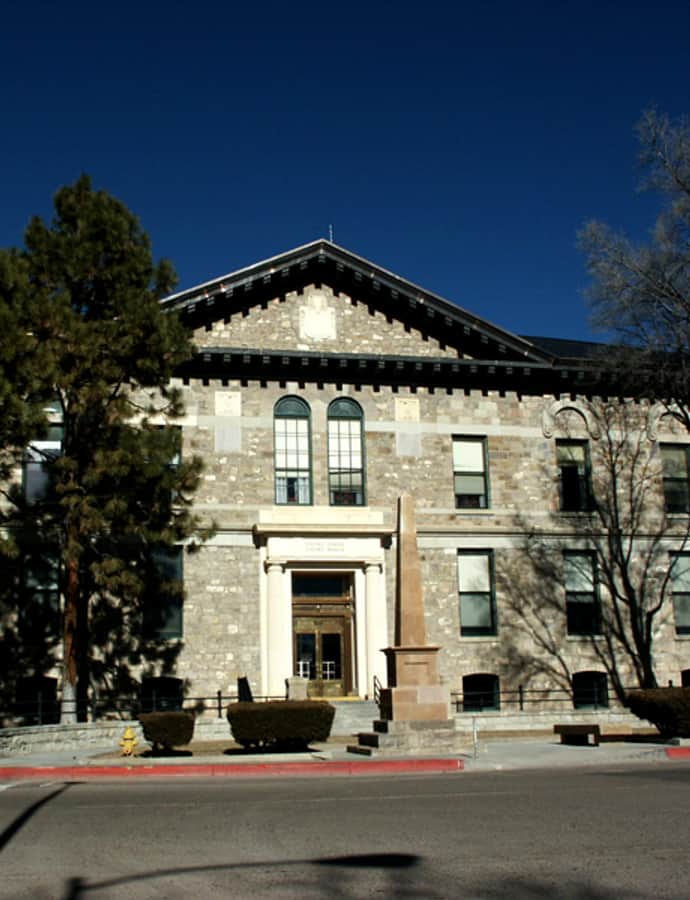
The Santiago E. Campos United States Courthouse, on the plaza, was designed by Ammi B. Young in the Greek Revival style. It is listed on the National Register of Historic Places and the New Mexico State Register of Cultural Properties.
Photo: Photo by camerafiend. , CC BY-SA 3.0
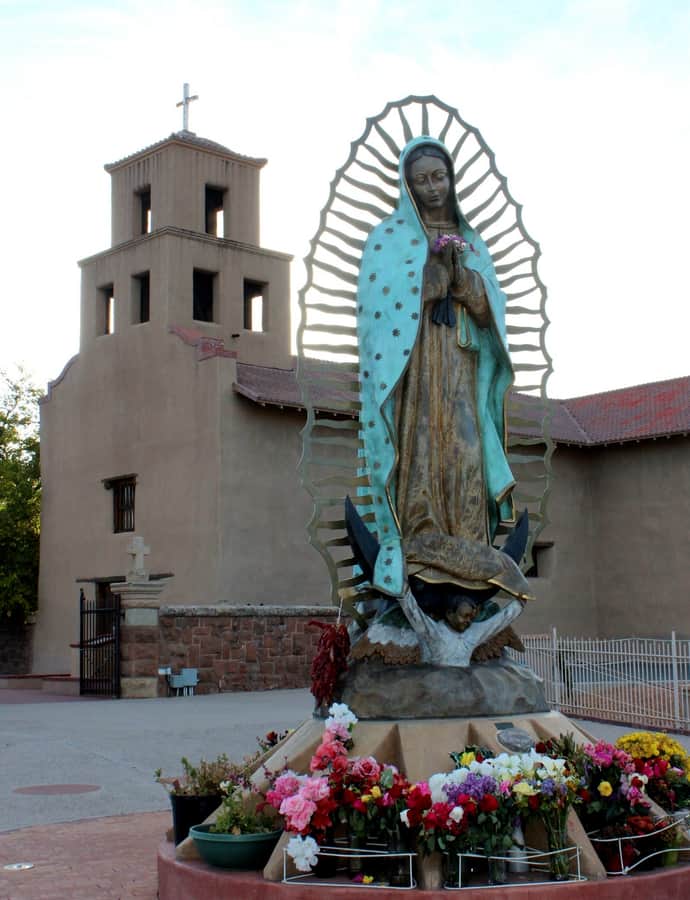
The Santuario de Guadalupe, near the plaza, was built by Franciscan missionaries between roughly 1776 and 1795 as an adobe mission church. It is the oldest shrine in the United States dedicated to Our Lady of Guadalupe.
Photo: MARELBU , CC BY 3.0
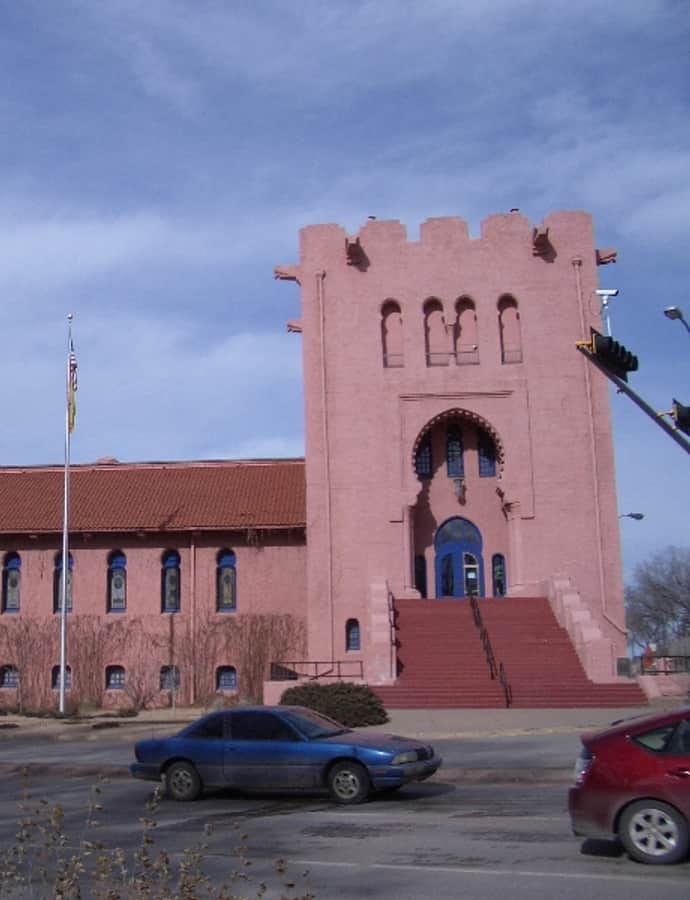
The Scottish Rite Masonic Center, on the plaza, was designed by Sumner Hunt and completed in 1911 in the Moorish Revival style. It is listed on the National Register of Historic Places and the New Mexico State Register of Cultural Properties.
Photo: No machine-readable author provided. Barsov~commonswiki assumed (based on copyright claims). , Public domain
Worth a stop when you're nearby.
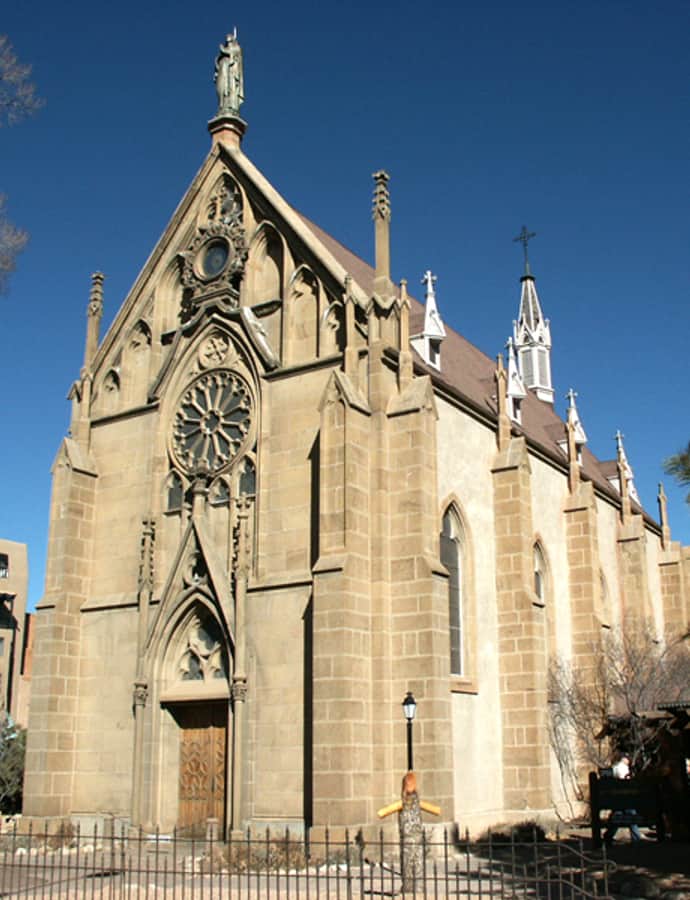
Loretto Chapel, on the Plaza, is a rare Gothic Revival church in a Santa Fe streetscape otherwise dominated by adobe, Pueblo, and Territorial styles. It was designed by French architect Antoine Mouly, who also worked on the Cathedral Basilica of St. Francis, and completed by his son Projectus Mouly after Antoine's death.
Photo: User:Camerafiend , CC BY-SA 3.0
Landmark
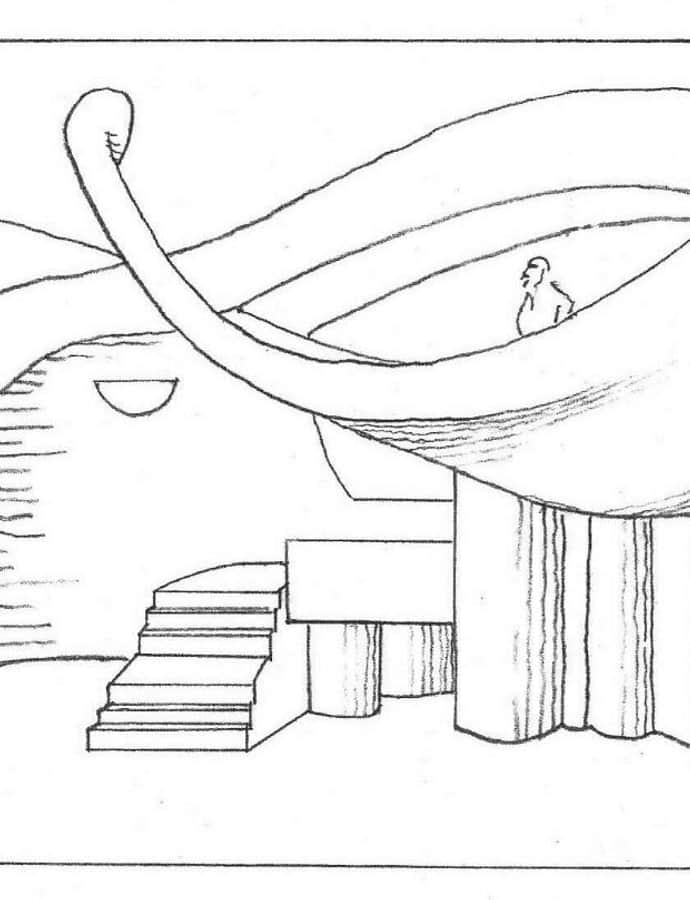
The Paolo Soleri Amphitheater was completed in 1970 and designed by Paolo Soleri, a visionary architect known for experimental structures.
Photo: Trout7000 , CC BY-SA 3.0
Landmark
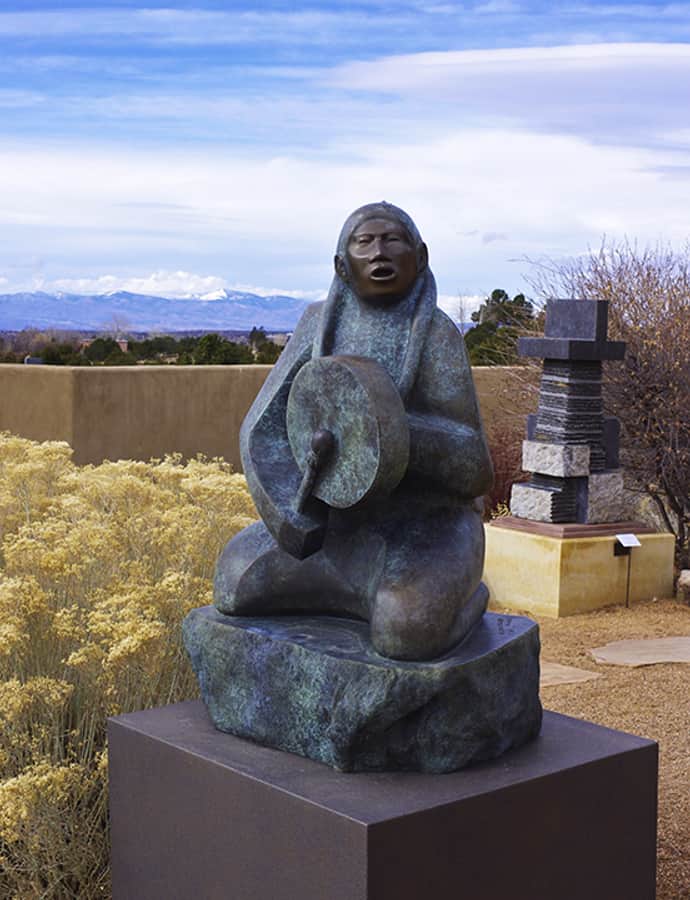
The Wheelwright Museum of the American Indian was completed in 1937, designed by William Penhallow Henderson, and built in the form of a traditional Navajo forked-pole hogan, an unusual choice for a museum building. It was founded by Mary Cabot Wheelwright together with Navajo medicine man Hastiin Klah to preserve Navajo ceremonial knowledge, a mission the hogan-form building was built to embody. The museum is listed on the National Register of Historic Places and the New Mexico State Register of Cultural Properties.
Photo: BFS Man from Webster, TX, USA , CC BY 2.0
Fine buildings that fewer people seek out.
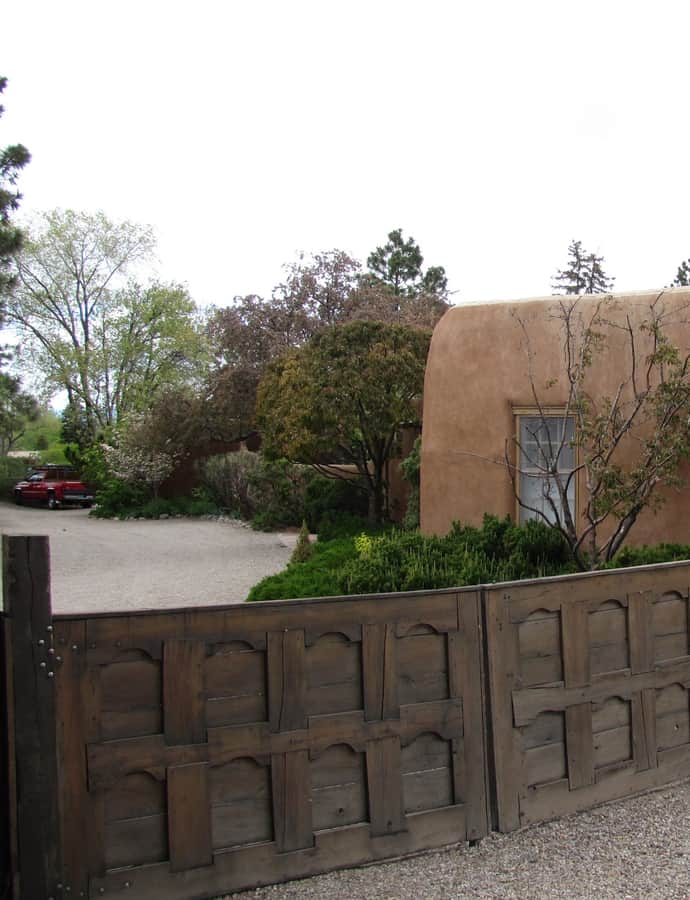
The Carlos Vierra House was completed in 1920 in the Pueblo Revival style. Carlos Vierra, an artist, designed and built the house himself, and it is individually listed on the National Register of Historic Places.
Photo: John Phelan , CC BY 3.0
The Dodge-Bailey House was completed in 1940 and designed by John Gaw Meem, drawing on both Pueblo Revival and Territorial Revival styles. It is individually listed on the National Register of Historic Places and the New Mexico State Register of Cultural Properties.
The Laboratory of Anthropology was completed in 1927 and designed by John Gaw Meem in the Pueblo Revival style. It is individually listed on the National Register of Historic Places and the New Mexico State Register of Cultural Properties.
Landmark
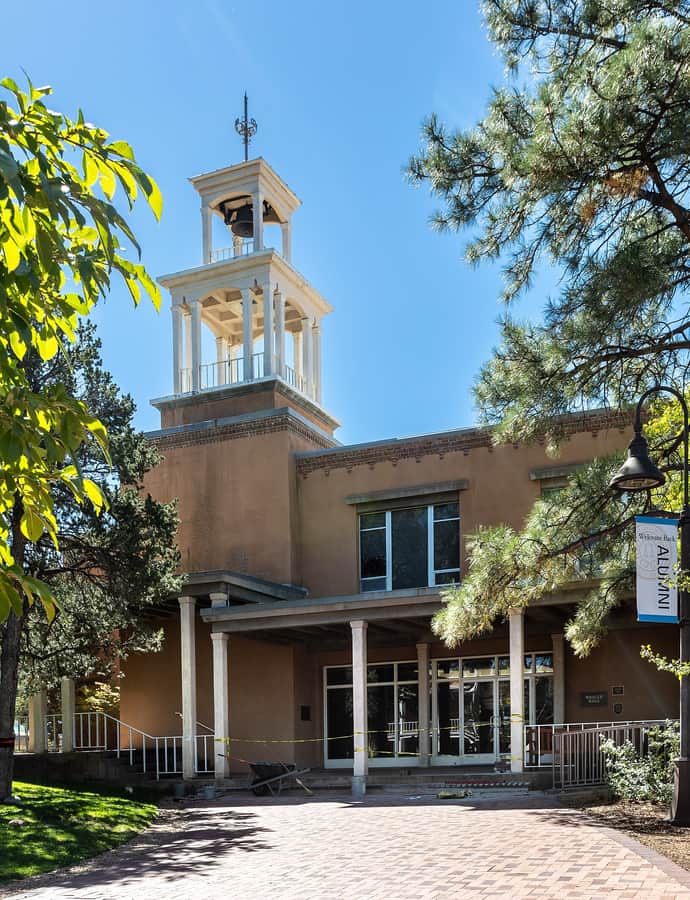
St. John's College, Santa Fe has grounds designed by landscape architect Garrett Eckbo in 1964. The campus is listed on the National Register of Historic Places and the New Mexico State Register of Cultural Properties.
Photo: Kenneth C. Zirkel , CC BY 4.0
.jpg)

.jpg)


_-_panoramio.jpg)


.jpg)

