
Toledo Museum of Art
- Architects
- Frank Gehry Kazuyo Sejima Ryue Nishizawa
- Year
- 1901
- City
- Toledo, OH
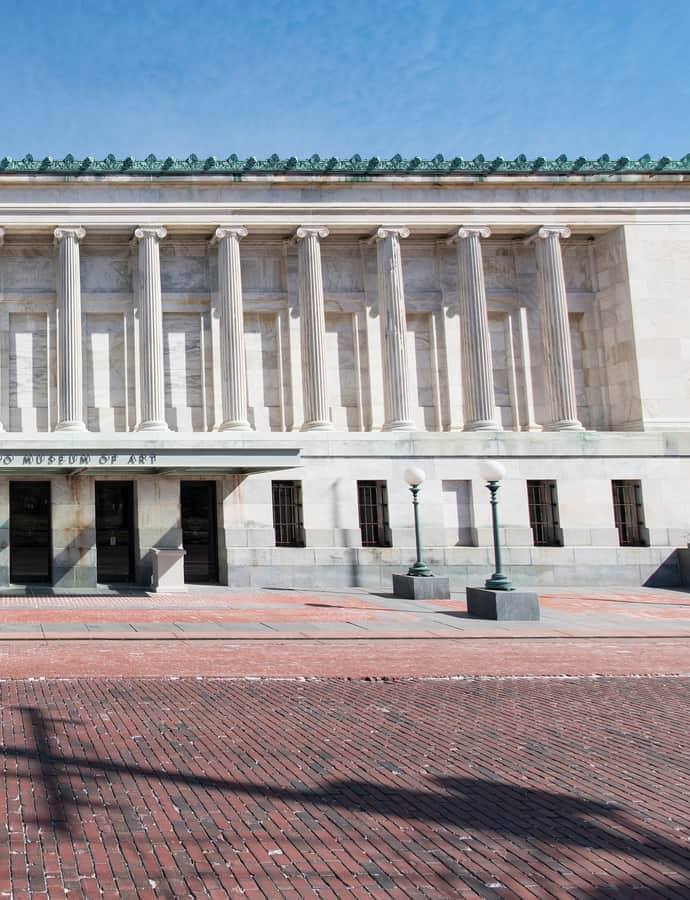

The Toledo Museum of Art, founded by Toledo glassmaker Edward Drummond Libbey in 1901, houses more than 30,000 objects across 45 galleries covering 280,000 square feet on a 40-acre campus, currently in the midst of a multiyear expansion. The museum moved to its present Old West End location in 1912, into a Greek Revival building designed by Edward B. Green and Harry W. Wachter, which was subsequently expanded in the 1920s and 1930s, with further additions in the 1990s and in 2006. Later work by internationally significant architects Frank Gehry and SANAA's Kazuyo Sejima and Ryue Nishizawa extended the campus into the 21st century. The museum draws about 380,000 visitors a year and was voted America's favorite museum by readers of the visual arts website Modern Art Notes in 2010.
the building
A century of additions. The main Greek Revival building, completed in 1912, was expanded twice more in the 1920s and 1930s, and the campus grew further with additions in the 1990s and in 2006 — a building history that spans from Edward B. Green and Harry W. Wachter's original design to later work by Frank Gehry and SANAA.
The Peristyle. Among the main building's 4½ acres of floor space on two levels is a 1,750-seat Peristyle concert hall, alongside a 176-seat lecture hall, fifteen classroom studios, a café, and a gift shop.
the architect
The original 1912 building was designed by Edward B. Green and Harry W. Wachter in the Greek Revival style. The museum's later expansions include work by Frank Gehry and by SANAA architects Kazuyo Sejima and Ryue Nishizawa, both internationally recognized designers.
significance
The museum was voted America's favorite museum by readers of the visual arts website Modern Art Notes in 2010, and it draws approximately 380,000 visitors annually.
nearby
- Center for the Visual Arts
- Toledo Museum of Art Glass Pavilion
- First Church of Christ, Scientist
- Ashland Avenue Baptist Church
- St. Patrick's Catholic Church
- Rosary Cathedral