
Belmont Apartments
The Belmont Apartments is an Art Deco apartment building in downtown Tulsa, listed on the National Register of Historic Places.
City guide
19 buildings worth a detour, each with what to look for. Open them on the map, or walk them with the iPhone app, which collects each one you photograph.
The buildings that define the city's architecture.
The Belmont Apartments is an Art Deco apartment building in downtown Tulsa, listed on the National Register of Historic Places.
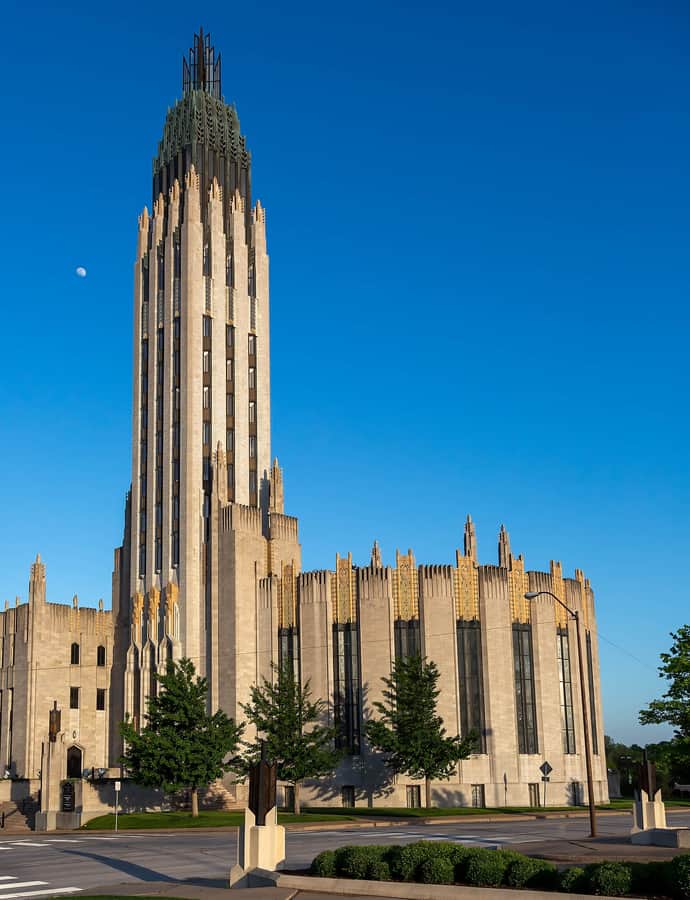
Boston Avenue Methodist Church is a National Historic Landmark and a National Register of Historic Places listed place in downtown Tulsa, designed by architect Bruce Goff in the Art Deco style.
Photo: David Brossard , CC BY-SA 2.0
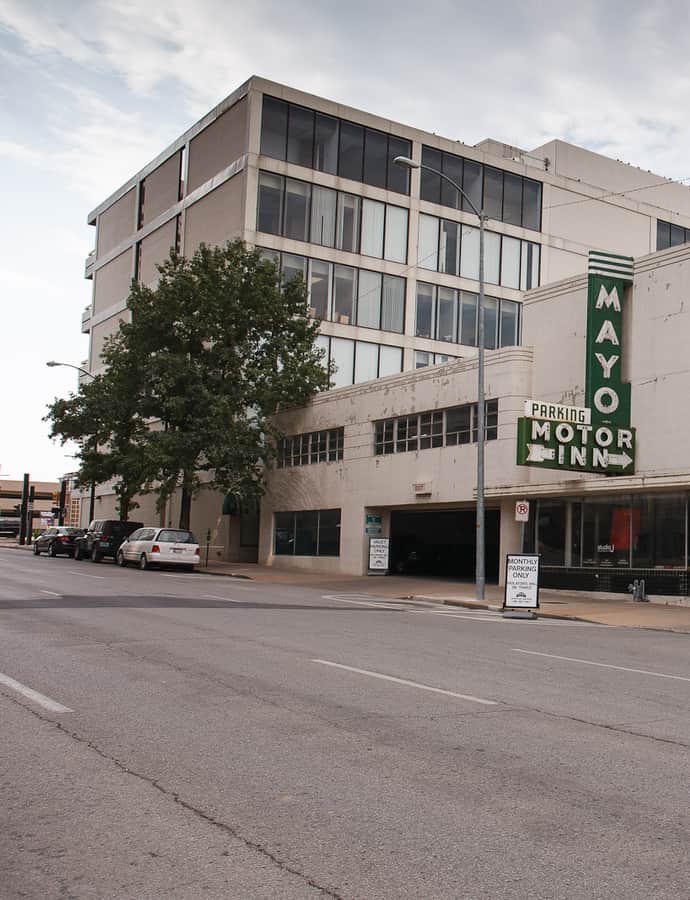
The Mayo Motor Inn is a 1952 motor inn in downtown Tulsa, built in the Moderne style. It is listed on the National Register of Historic Places.
Photo: W. R. Oswald , CC BY-SA 3.0
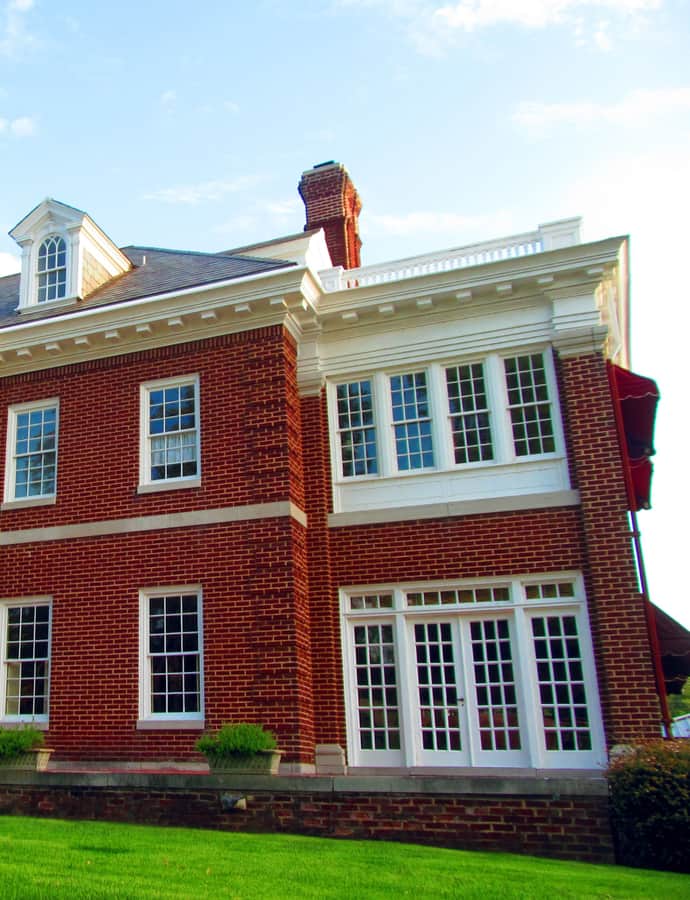
Moore Manor is a Colonial Revival house listed on the National Register of Historic Places.
Photo: Sarah J Malerich , CC BY-SA 3.0
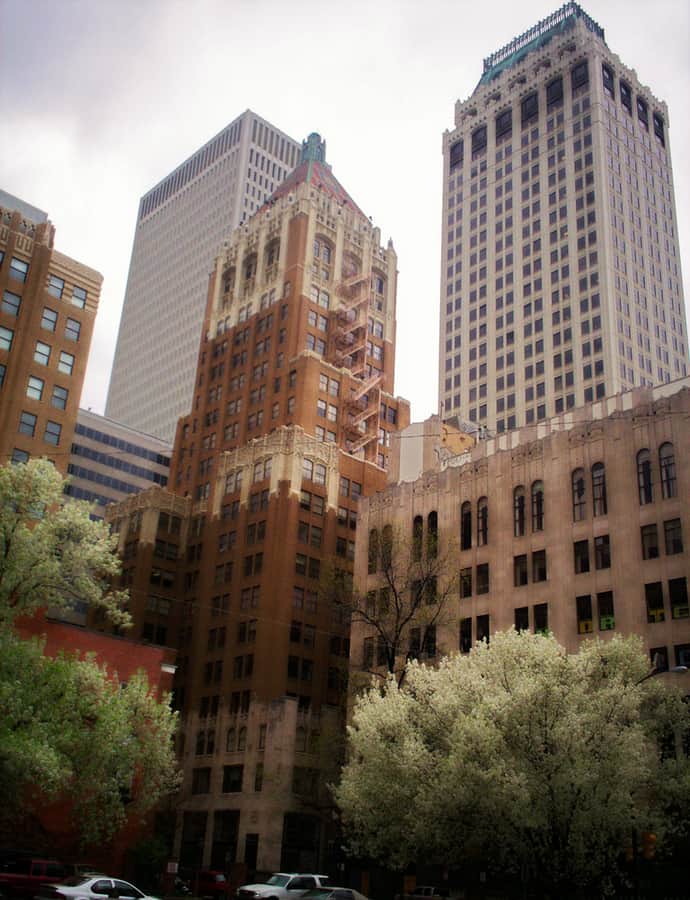
The Philtower Building is a 24-story downtown Tulsa skyscraper completed in 1928, designed by architect Edward Buehler Delk in a Gothic Revival style with Art Deco terra cotta ornament. It was built by oil magnate Waite Phillips as part of his Philtower/Philcade downtown development, and is a contributing property to a National Register of Historic Places listed place.
Photo: jordanmac101 , CC BY 2.0
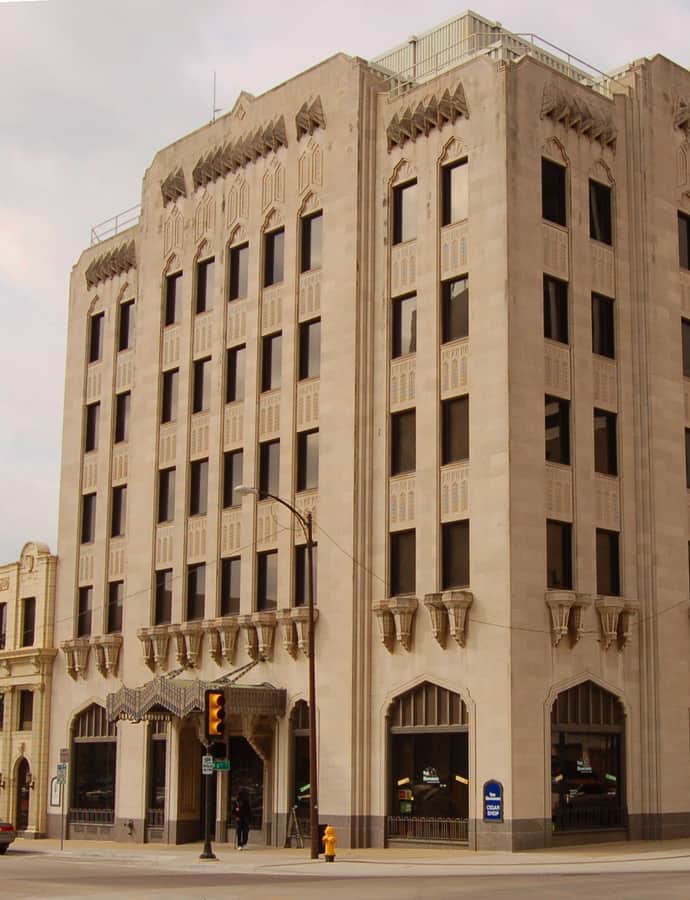
The Public Service of Oklahoma Building is a 1929 Art Deco utility building in downtown Tulsa, listed on the National Register of Historic Places.
Photo: David Stapleton (Dsmdgold) , CC BY-SA 3.0
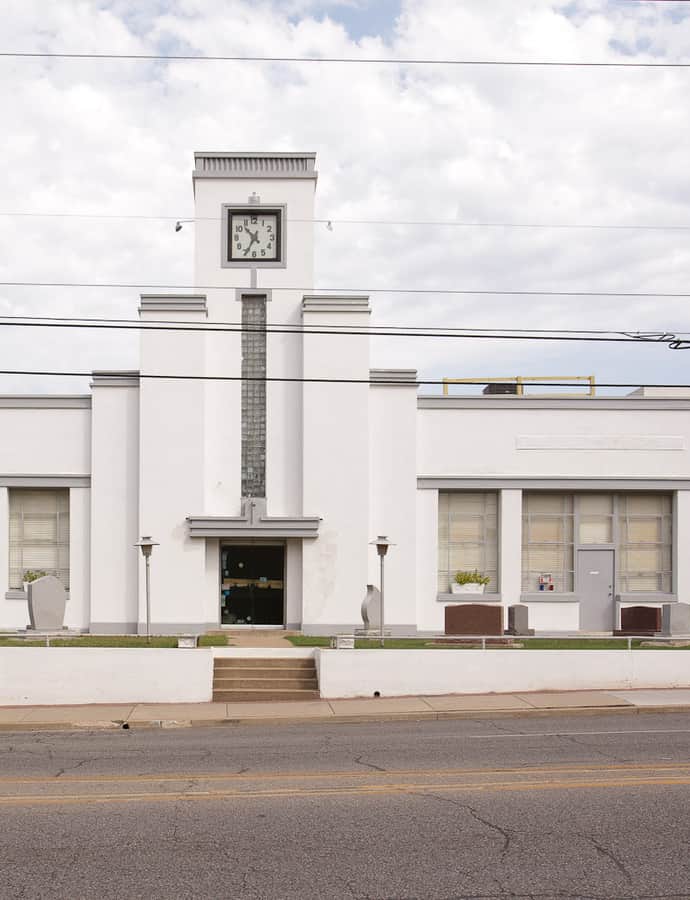
The Tulsa Monument Company building dates to 1937 and is listed on the National Register of Historic Places. It was built in the Moderne style, giving a small commercial building the streamlined look that was fashionable for American storefronts in the late 1930s.
Photo: W. R. Oswald , CC BY-SA 3.0
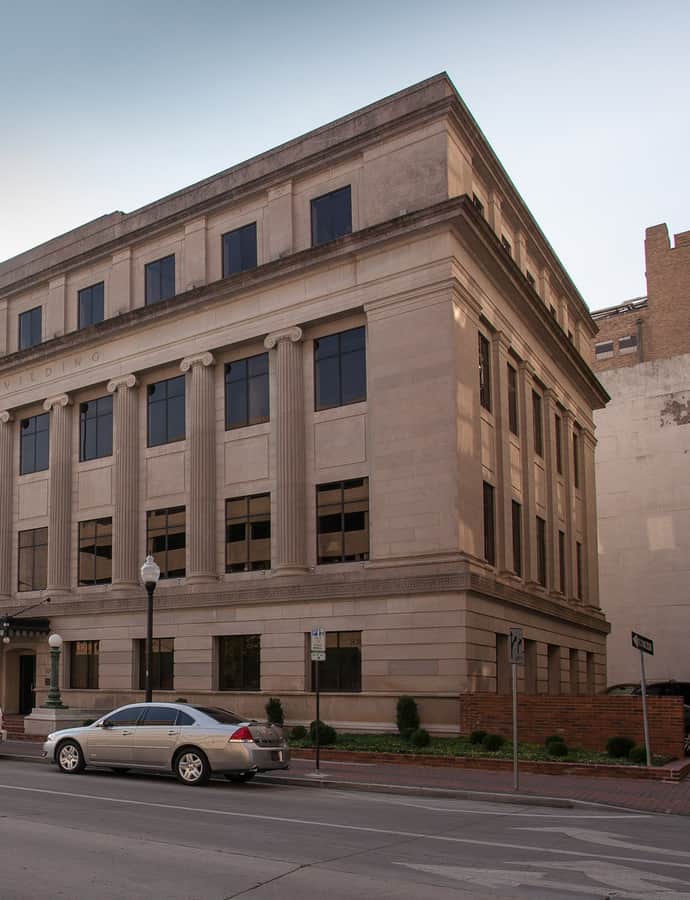
The Tulsa Municipal Building is a 1917 Neoclassical civic building in downtown Tulsa, listed on the National Register of Historic Places.
Photo: W. R. Oswald , CC BY-SA 3.0
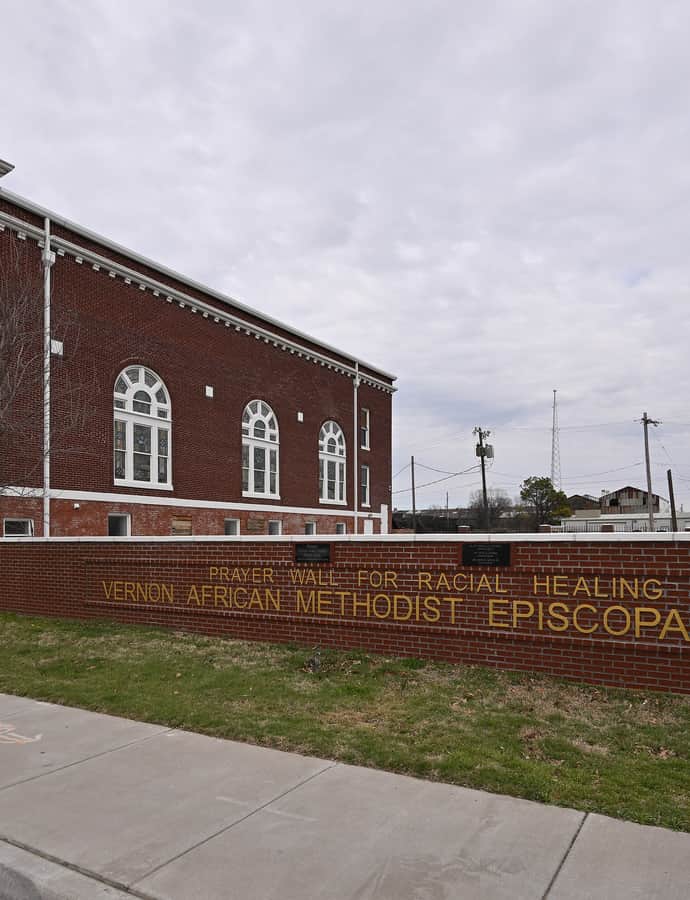
Vernon A.M.E. Church is a Neoclassical church building listed on the National Register of Historic Places, its columned facade giving a Tulsa congregation a formal civic presence on the street.
Photo: G. Edward Johnson , CC BY 4.0
The William G. Skelly House is a Neoclassical residence listed on the National Register of Historic Places, named for oil magnate William G. Skelly.
Worth a stop when you're nearby.
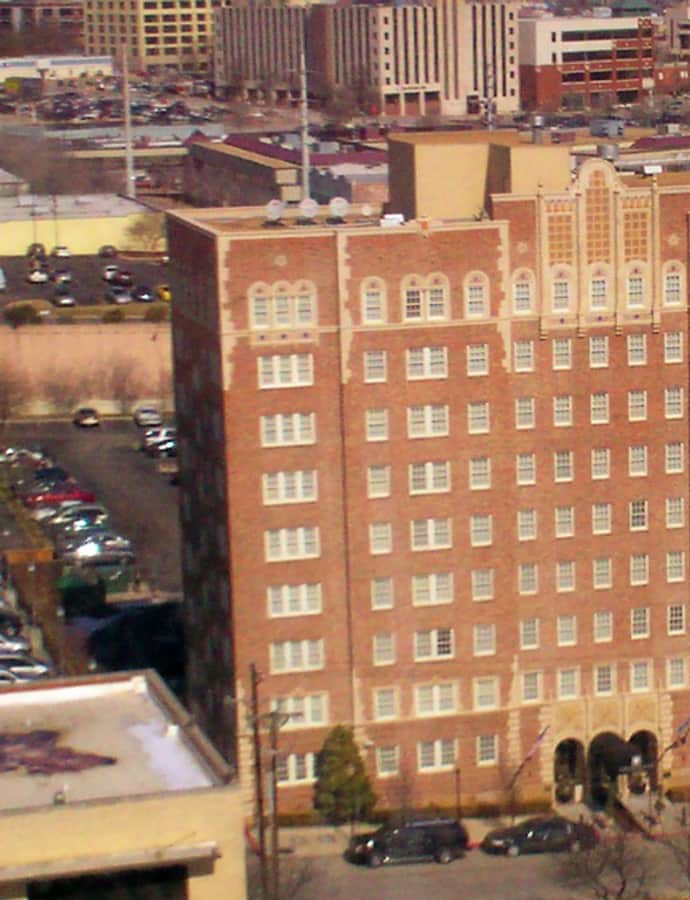
The Ambassador Hotel opened in 1929 in downtown Tulsa, designed by Nelle Peters in the Mission Revival style. It is listed on the National Register of Historic Places and carries an OSM heritage designation.
Photo: jordanmac101 , CC BY 2.0
Landmark
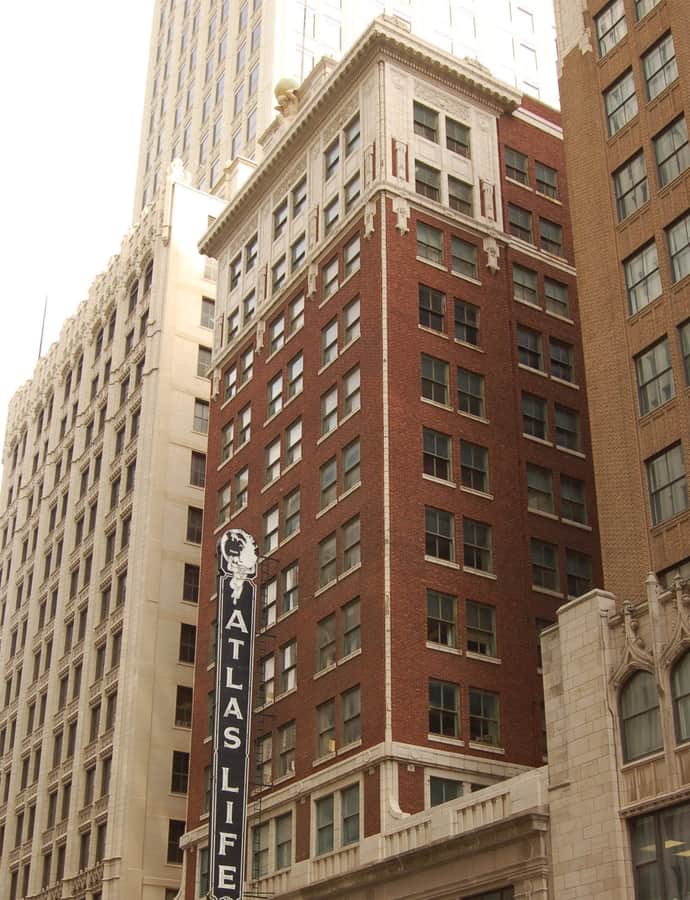
The Atlas Life Building in downtown Tulsa was designed by the firm Rush, Endacott and Rush. Its rooftop ATLAS sign is a recognizable downtown landmark, and the building was later adaptively reused as a boutique hotel while retaining its historic facade. It is listed on the National Register of Historic Places and carries an OSM heritage designation.
Photo: David Stapleton (Dsmdgold) , CC BY-SA 3.0
Landmark
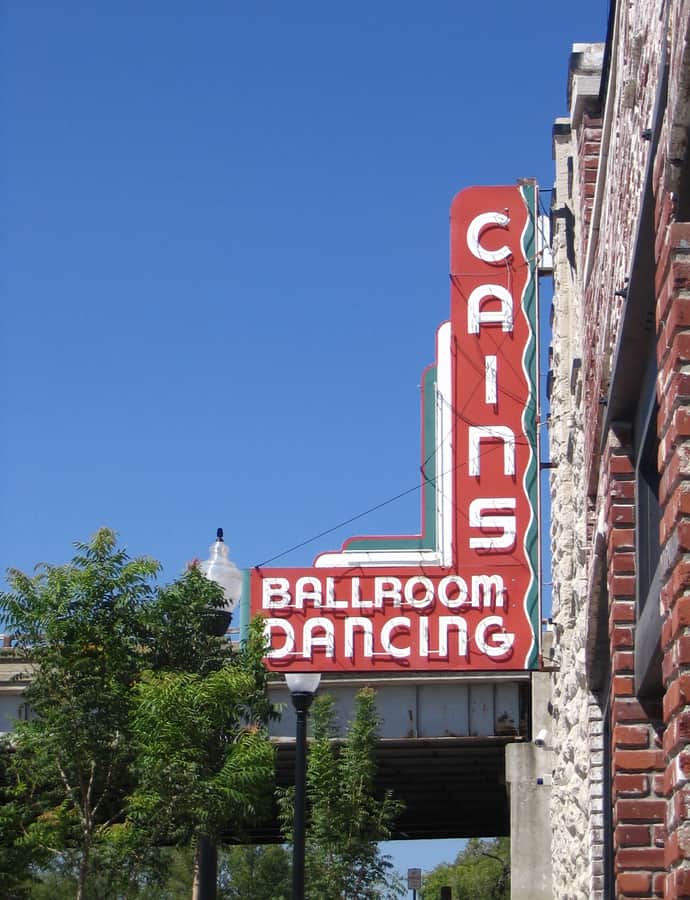
Cain's Ballroom is a National Register of Historic Places listed venue that became home to Bob Wills and the Texas Playboys' Western Swing radio broadcasts starting in the 1930s, and later hosted the Sex Pistols' famous 1978 U.S. show, cementing its status as a leading American roots-music venue for decades.
Photo: NMajdan , CC BY-SA 3.0
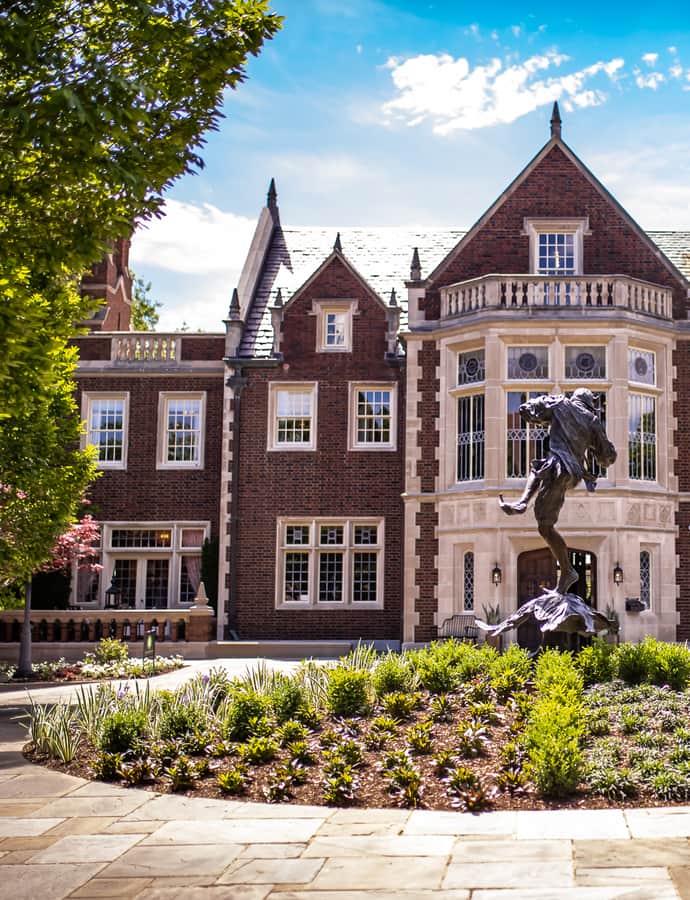
Harwelden Mansion was built in 1923 to a design by the firm Wight and Wight in the Tudor Revival style. It is listed on the National Register of Historic Places.
Photo: Teresaknox , CC BY-SA 4.0
Landmark
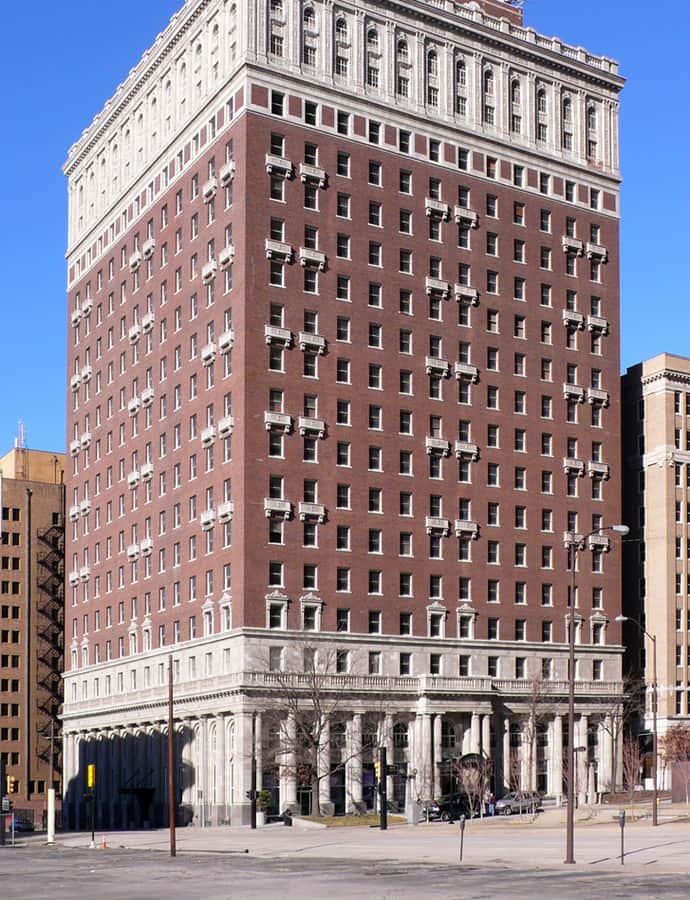
The Mayo Hotel opened in 1925 during Tulsa's oil boom as the tallest building in Oklahoma, designed by architect George Winkler. It later stood vacant for decades before a landmark restoration returned it to use as a hotel. It is listed on the National Register of Historic Places.
Photo: Camerafiend at English Wikipedia , CC BY-SA 3.0
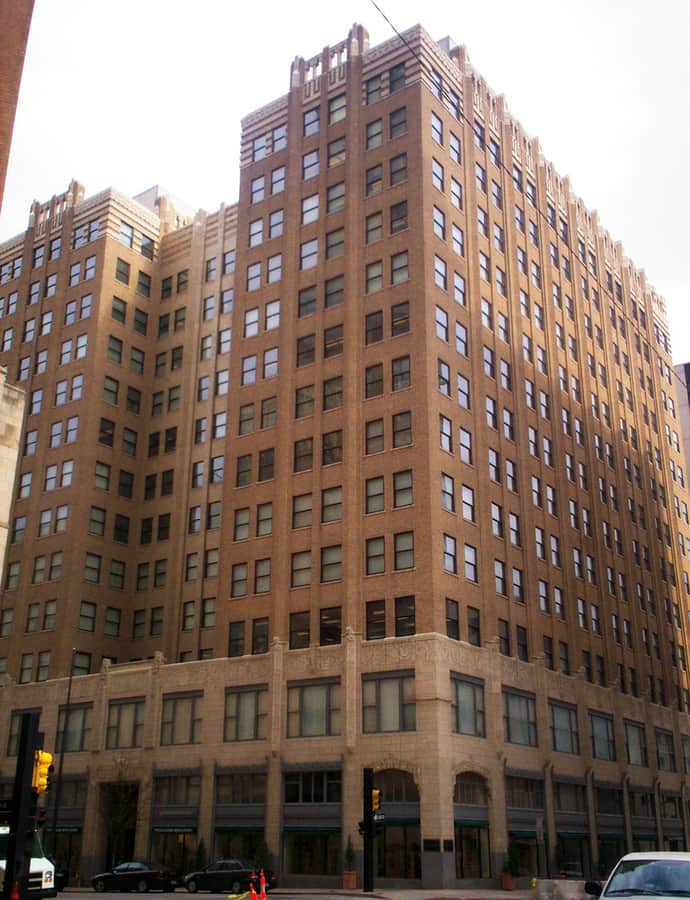
The Philcade Building opened in 1931 in downtown Tulsa, built by oil magnate Waite Phillips as a companion building to his earlier Philtower next door. Both towers were designed by architect Edward Buehler Delk, who also designed Kansas City's Country Club Plaza, and the Philcade is known for its ornate Art Deco arcade lobby.
Photo: Jordan MacDonald from Broken Arrow, Oklahoma, U.S.A. , CC BY 2.0
Landmark
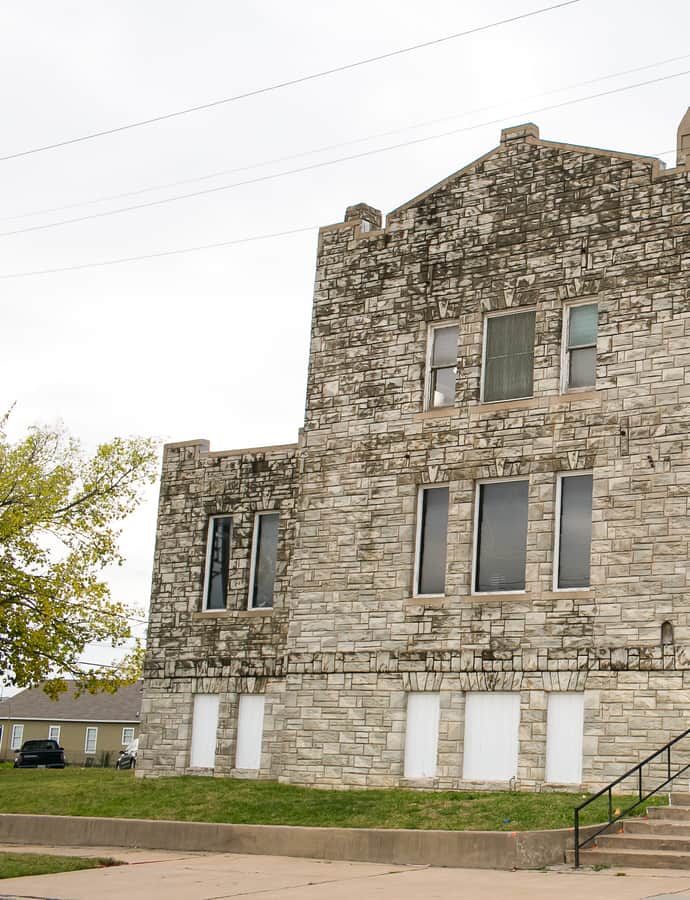
The Church Studio began life as a church building before Leon Russell converted it into his recording studio and made it the headquarters of Shelter Records. The music produced there helped define what became known as the 'Tulsa Sound,' and the building has since been restored and reopened as a music-heritage site.
Photo: Teresaknox , CC BY-SA 4.0
Mayan Revival architecture
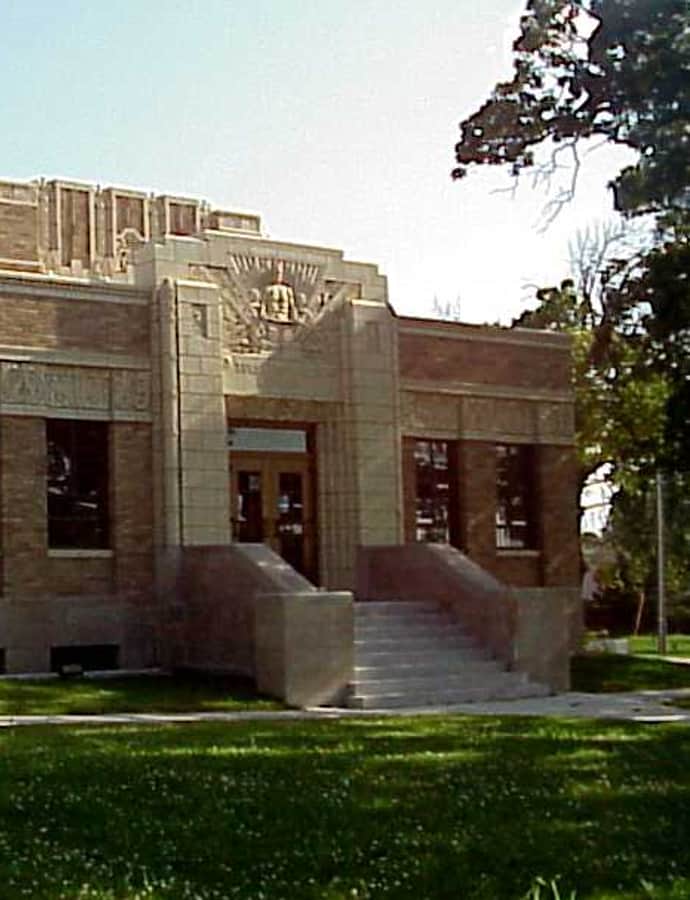
The Tulsa Fire Alarm Building is a rare local example of Mayan Revival architecture, a style seldom used for civic buildings of its kind. It is listed on the National Register of Historic Places, recognition of both its unusual style and its surviving presence downtown.
Photo: David Stapleton (Dsmdgold) , CC BY-SA 3.0
Fine buildings that fewer people seek out.
Completed in 1927 in downtown Tulsa, the Tulsa Club Building was designed by Bruce Goff in the Art Deco style.


