
Grasse Mount
- Style
- Georgian
- City
- Burlington, VT
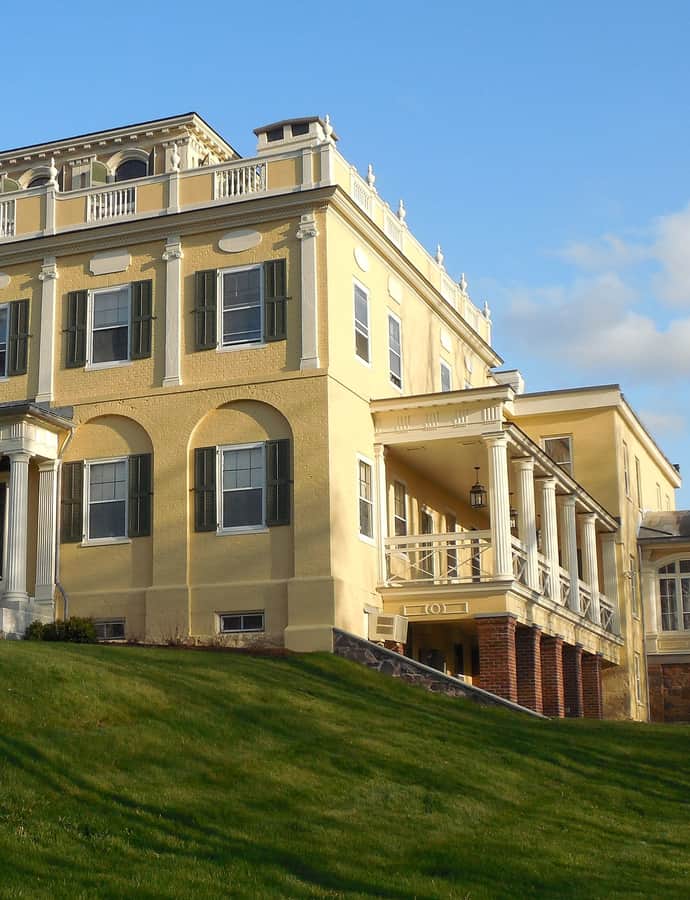

Grasse Mount, also known as the Thaddeus Tuttle House, is a Georgian mansion at 411 Main Street built in 1804 for local merchant Captain Thaddeus Tuttle, designed by architect and surveyor John Johnson and constructed by carpenter Abram Stevens. Tuttle lost his fortune by 1824 and sold the property to Vermont Governor Cornelius Van Ness. It takes its name from French Admiral François Joseph Paul de Grasse and is now a University of Vermont campus building.
the building
A merchant's fortune, then a governor's. Tuttle built the house in 1804 on land he acquired from Ira Allen, founder of UVM, who later claimed he had been swindled out of it while abroad negotiating arms purchases for the Vermont militia. By 1824 Tuttle himself had lost his fortune and sold the mansion to Governor Cornelius Van Ness.
Builders. The house was designed by John Johnson, an architect and surveyor, and built by carpenter Abram Stevens in 1804, work that predates the University of Vermont's later absorption of the property into its campus.
the style
Grasse Mount is claimed as Georgian architecture, and its facade symmetry is visible from Main Street, a hallmark of the style's disciplined, balanced proportions.
More on Georgiansignificance
Grasse Mount was added to the National Register of Historic Places on April 11, 1973, and today functions as a campus building of the University of Vermont.
nearby
- Daniel Webster Robinson House
- Morrill Hall
- Billings Library
- Ira Allen Chapel
- Fletcher Free Library
- First Methodist Church of Burlington