City guide

architecture in Burlington.

20 buildings worth a detour, each with what to look for. Open them on the map, or walk them with the iPhone app, which collects each one you photograph.

Landmarks

The buildings that define the city's architecture.

Apartment Building at 27 and 31 Peru Street and 29 Johnson Street

Queen Anne

Apartment Building at 27 and 31 Peru Street and 29 Johnson Street

1889

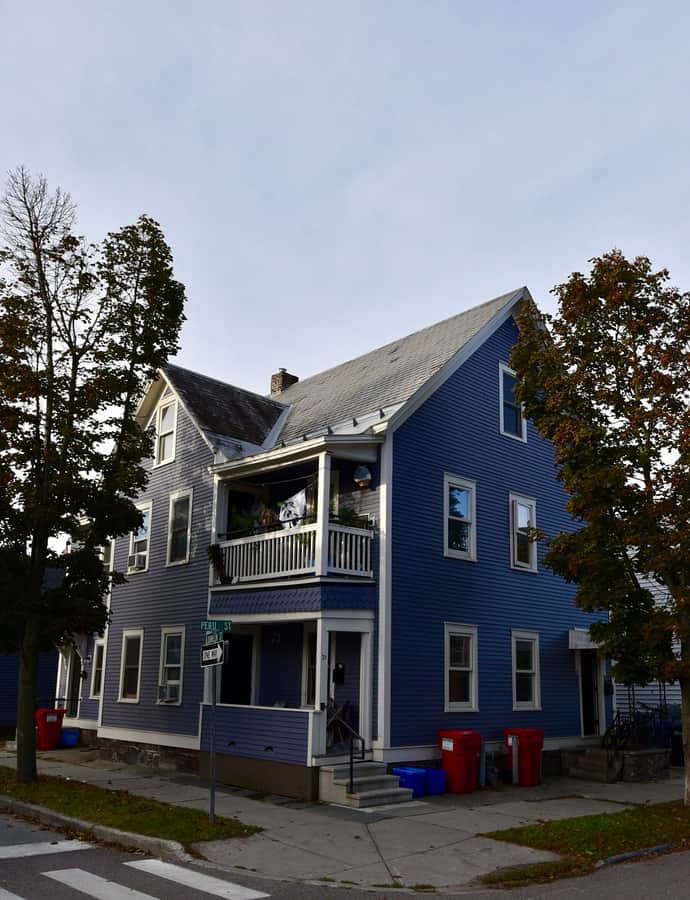
The Apartment Building at 27 and 31 Peru Street and 29 Johnson Street is a historic multiunit residential building in Burlington's Old North End, built about 1889 as a good local example of vernacular Queen Anne Victorian architecture. It was listed on the National Register of Historic Places in 2014.

Photo: Jim Roberts , CC BY-SA 4.0
Cathedral of Saint Joseph

Baroque Revival

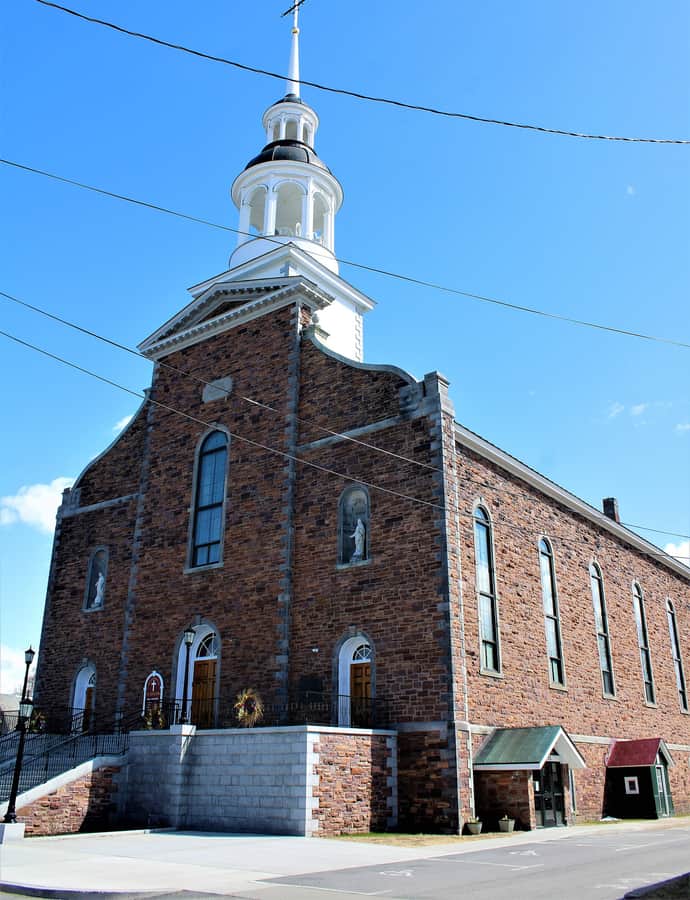
Cathedral of Saint Joseph

1887

The Cathedral of Saint Joseph, seat of the Catholic Diocese of Burlington, grew out of St. Joseph's parish, established in 1850 as the first French Canadian parish in the United States on land donated by Col. Archibald Hyde. The present building was designed in 1883 by Rev. Joseph Michaud, a self-taught architect from Montreal who drew inspiration from the Chapel of the Palace of Versailles, with the cornerstone laid July 4, 1884, and four years of construction to follow.

Photo: Farragutful , CC BY-SA 4.0

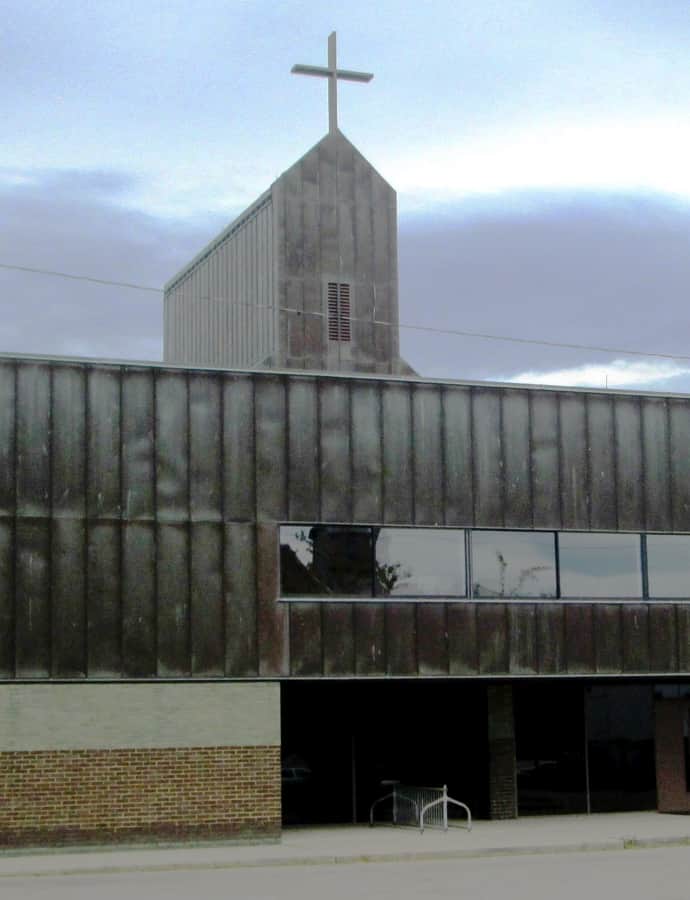
Cathedral of the Immaculate Conception

Contemporary Modern

Cathedral of the Immaculate Conception

Edward Larrabee Barnes · 1977

The Cathedral of the Immaculate Conception at 20 Pine Street was the former cathedral church of the Catholic Diocese of Burlington, with its 1977 building designed by Edward Larrabee Barnes in a modern idiom. In 2018 the diocese announced the building would no longer serve as a Catholic church, and after sitting vacant it was demolished between June and September 2025.

Photo: Beyond My Ken , CC BY-SA 4.0

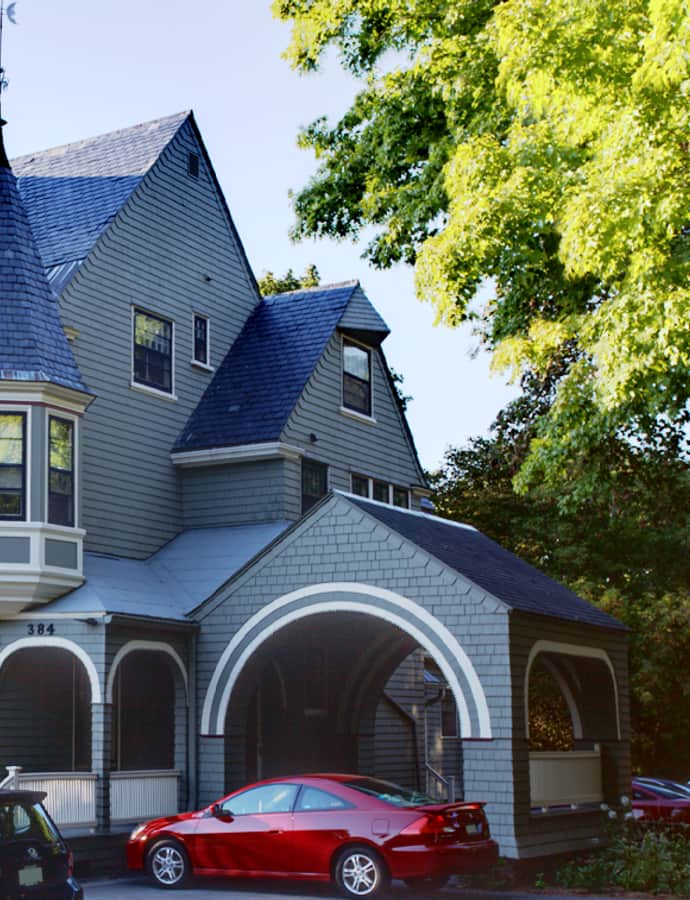
Daniel Webster Robinson House

Shingle Style

Daniel Webster Robinson House

Peabody and Stearns

The Daniel Webster Robinson House at 384-388 Main Street was designed by the Boston firm Peabody and Stearns and built in 1885-1886 for prepared lumber magnate Daniel Webster Robinson. Since 1931 it has housed the Alpha Iota chapter of the Alpha Chi Omega sorority affiliated with the University of Vermont, and it was listed on the National Register of Historic Places in 1982.

Photo: jdpf; cropped by Beyond My Ken (talk) 01:41, 24 October 2013 (UTC) , CC BY-SA 3.0

First Baptist Church

Renaissance Revival

First Baptist Church

John Stevens

The First Baptist Church at 81 St. Paul Street was built in 1864 to a design by Boston architect John Stevens and is a significant example of early Italianate ecclesiastical architecture in Vermont. It was added to the National Register of Historic Places in 2001.

Photo: Beyond My Ken , CC BY-SA 4.0

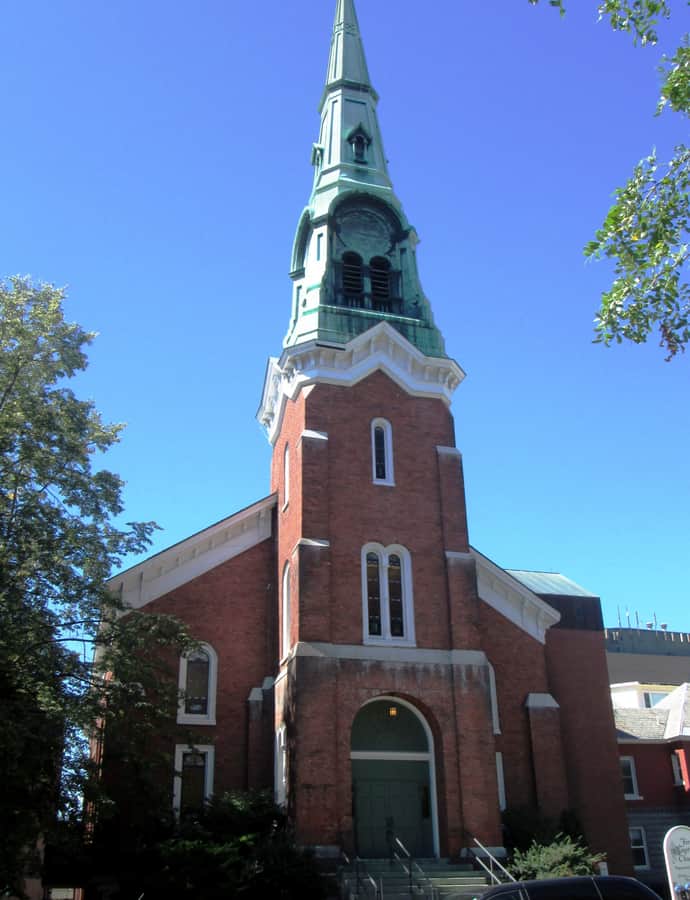
First Methodist Church of Burlington

Romanesque Revival

First Methodist Church of Burlington

Alexander Rice Esty

The First Methodist Church of Burlington, at 21 Buell Street, was built in 1869 to a design by Alexander R. Esty and is the city's only example of ecclesiastical Romanesque Revival architecture. It was listed on the National Register of Historic Places in 1978.

Photo: Beyond My Ken , CC BY-SA 4.0

Fletcher Free Library

Beaux-Arts

Fletcher Free Library

The Fletcher Free Library at 235 College Street is Burlington's public library, built in 1901-04 in the Beaux-Arts style with funding from Andrew Carnegie, making it the first of Vermont's four Carnegie libraries. It was listed on the National Register of Historic Places in 1976.

Photo: Mfwills , CC BY-SA 3.0

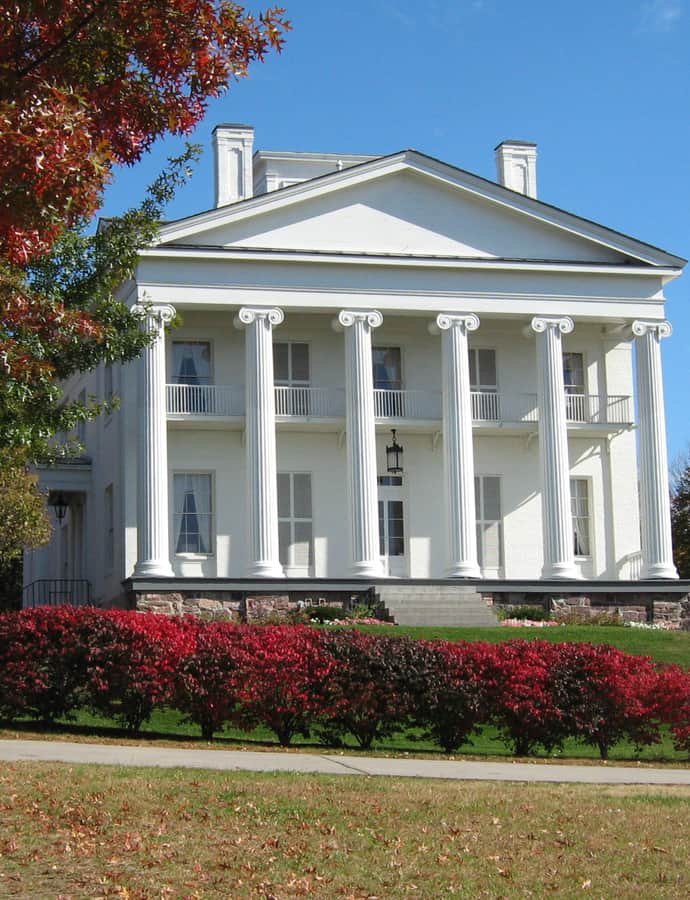
Follett House

Greek Revival

Follett House

Ammi B. Young

The Follett House at 63 College Street was built in 1840 for a prominent local businessman and is the last surviving grand 19th-century lakeside mansion in Burlington, ranked among the state's finest examples of Greek Revival architecture. It was listed on the National Register of Historic Places in 1972 and has held commercial and institutional uses since 1885.

Photo: Mfwills , CC BY-SA 3.0

Grasse Mount

Georgian

Grasse Mount

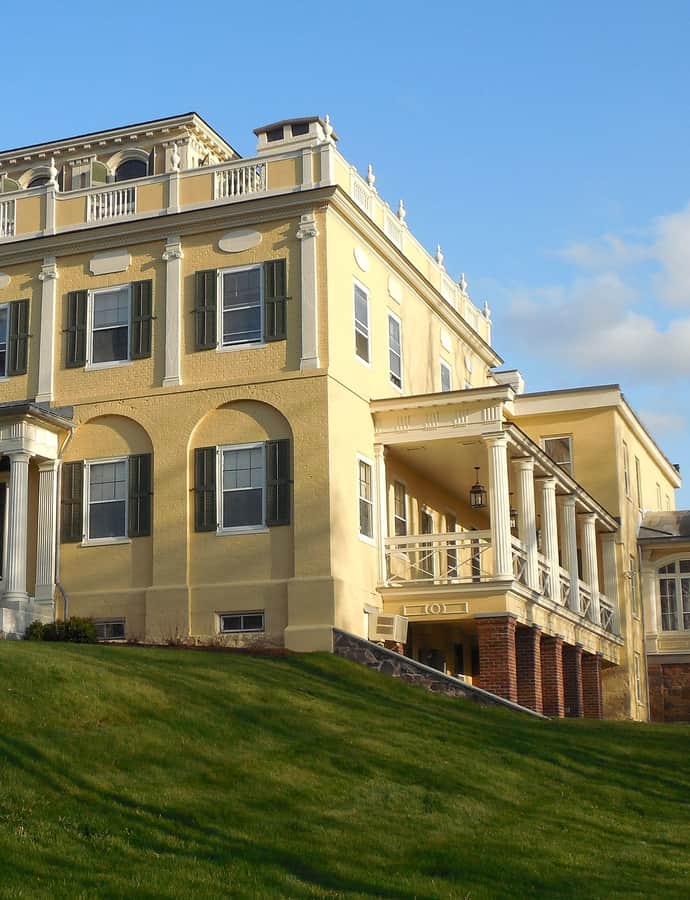
Grasse Mount, also known as the Thaddeus Tuttle House, is a Georgian mansion at 411 Main Street built in 1804 for local merchant Captain Thaddeus Tuttle, designed by architect and surveyor John Johnson and constructed by carpenter Abram Stevens. Tuttle lost his fortune by 1824 and sold the property to Vermont Governor Cornelius Van Ness. It takes its name from French Admiral François Joseph Paul de Grasse and is now a University of Vermont campus building.

Photo: Niranjan Arminius , CC BY-SA 4.0

Georgian

Ira Allen Chapel

named for the university's founder Ira Allen (brother of Ethan Allen); has served as UVM's chapel and principal auditorium for a century."

Ira Allen Chapel is a Georgian Revival brick chapel at the University of Vermont, named for the university's founder Ira Allen, brother of Ethan Allen. For a century it has served as UVM's chapel and principal auditorium.

Moran Municipal Generation Station

Mid-Century Modern

Moran Municipal Generation Station

1955

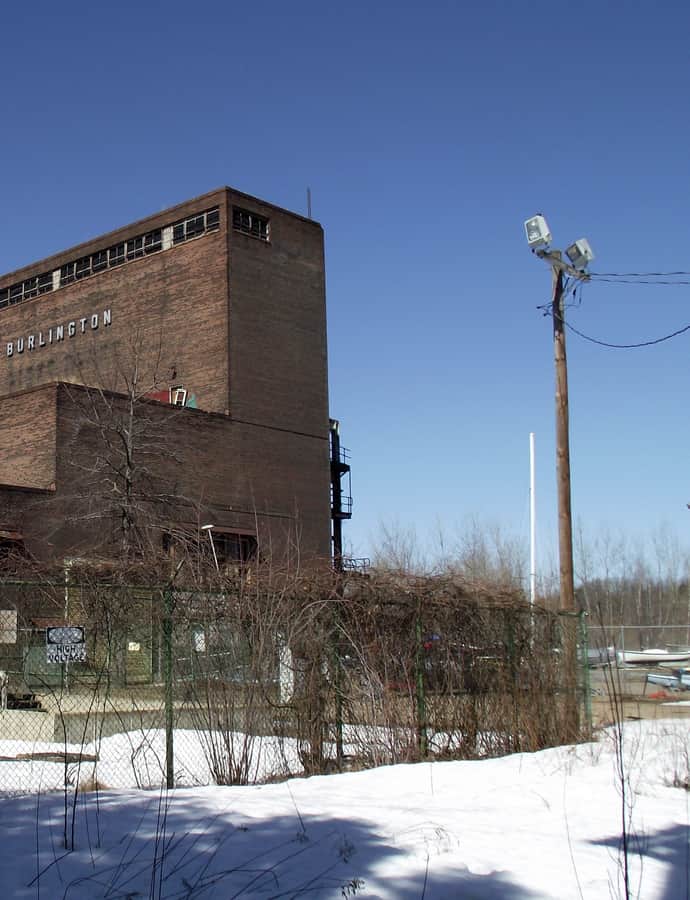
The Moran Municipal Generation Station is a former 30-megawatt power plant at 475 Lake Street on the Burlington waterfront, built by the Burlington Electric Department from 1952 to 1955 after a series of power shortages made a new plant a critical civic need. Named for Burlington mayor J.E. Moran, who supported the project, it was decommissioned in 1986 and has stood largely vacant since, now slated for redevelopment for year-round public use.

Photo: Mfwills , CC BY-SA 3.0

Morrill Hall

Neoclassical

Morrill Hall

1906

Morrill Hall is a Neoclassical building on the University of Vermont's University Green, at the corner of Main Street and University Place, constructed in 1906-07 with a $60,000 state appropriation to house UVM's Agriculture Department and Agricultural Experiment Station. It is named for U.S. Senator Justin Smith Morrill, author of the Morrill Land-Grant Acts of 1862 and 1890 that created the American land-grant universities, who also served as a UVM trustee from 1865 to 1898.

Photo: Niranjan Arminius , CC BY-SA 4.0

United States Post Office and Customhouse

Beaux-Arts

United States Post Office and Customhouse

James Knox Taylor

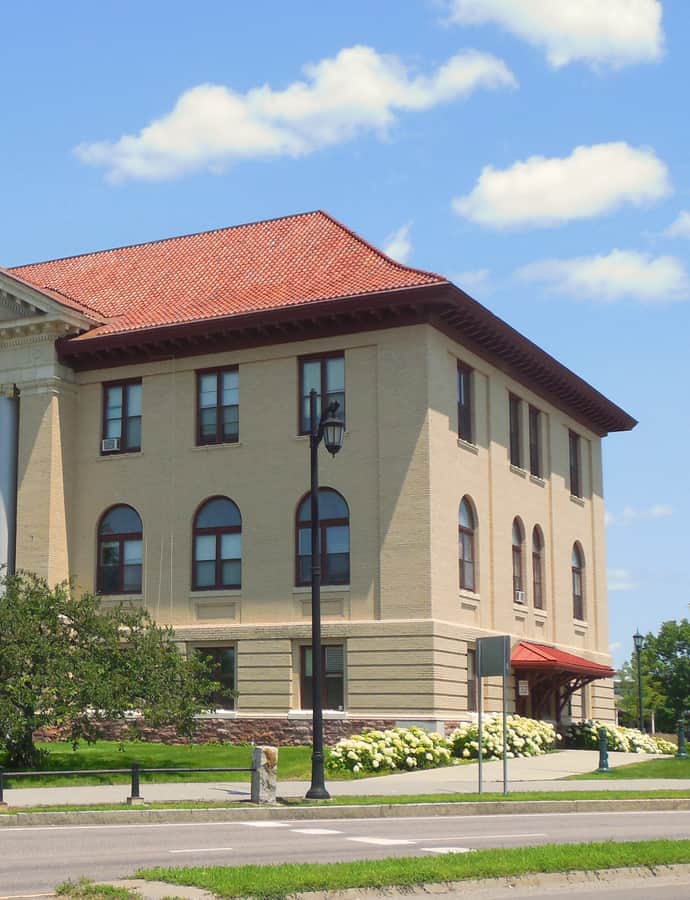
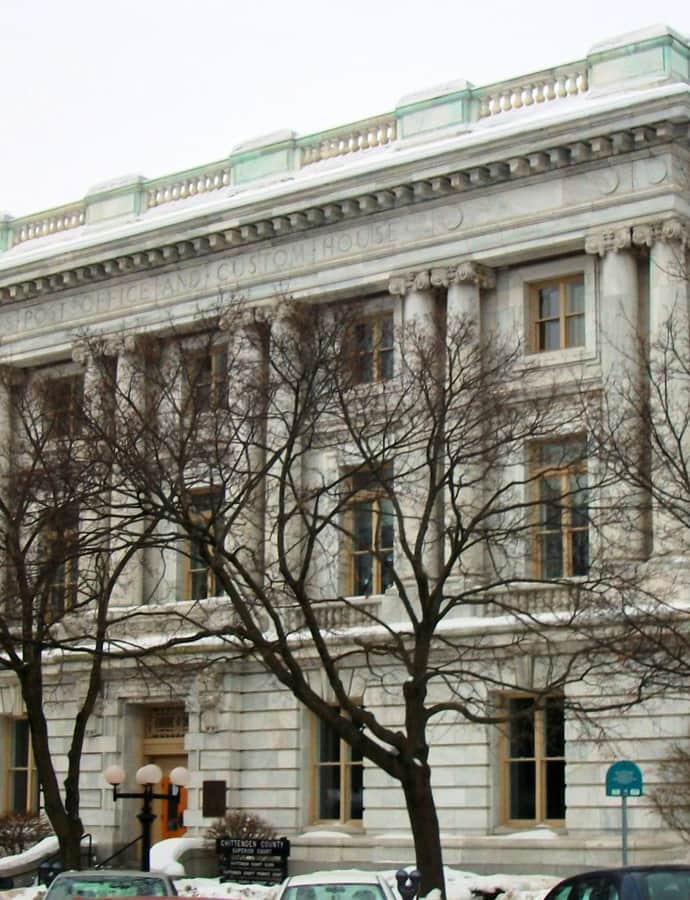
Now the Chittenden County Superior Courthouse, this building at 175 Main Street was built in 1906 as the U.S. Post Office and Custom House, designed by James Knox Taylor, Supervising Architect of the U.S. Treasury. It later served as the Smith-Goldberg U.S. Army Reserve Center before becoming the county courthouse after the previous courthouse burned down in 1982.

Photo: Doug Kerr from Albany, New York, United States , CC BY-SA 2.0

Notable buildings

Worth a stop when you're nearby.

Billings Library

Richardsonian Romanesque

Billings Library

Henry Hobson Richardson · 1883

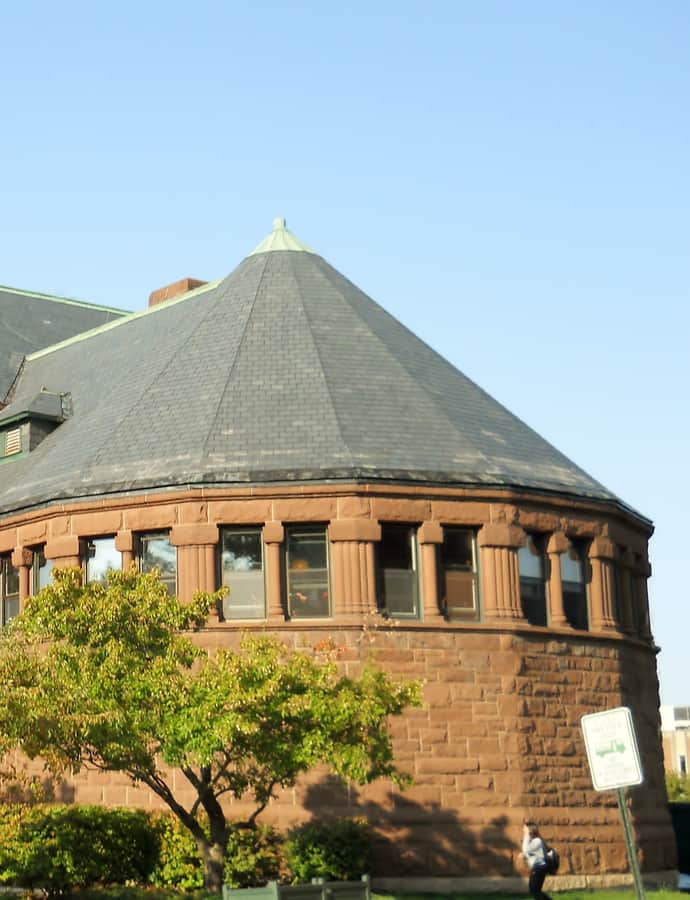
Billings Memorial Library, an academic library at the University of Vermont, was built in 1883 and designed by American architect Henry Hobson Richardson to resemble the Winn Library in Woburn, Massachusetts. It was donated to UVM by Frederick H. Billings of Woodstock and has been central to campus life since opening in 1885.

Photo: Jonathan Leo Connor (Gopats92) , CC BY-SA 3.0

Ethan Allen Homestead

Landmark

Ethan Allen Homestead

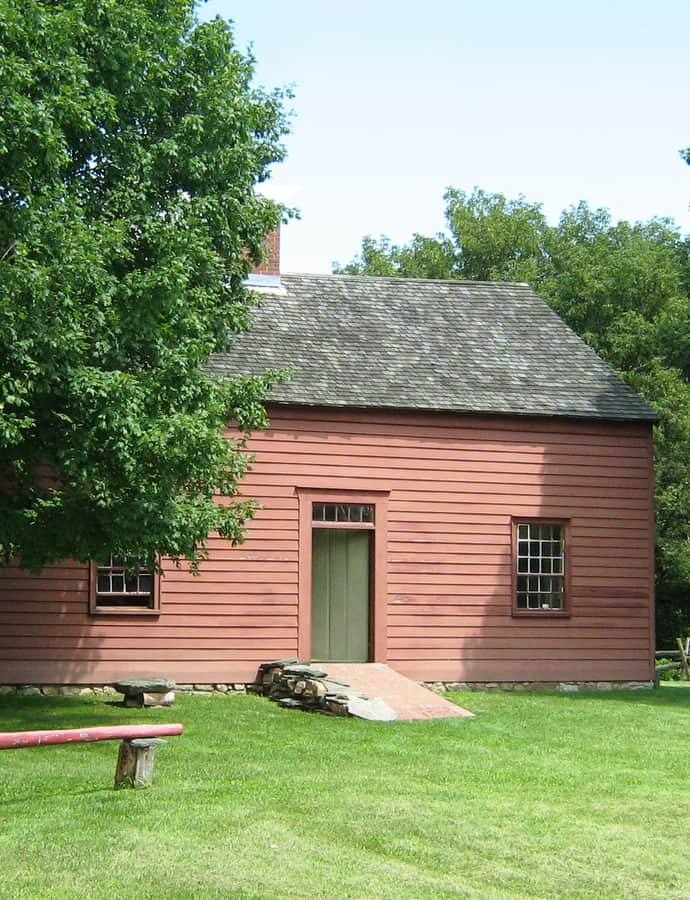
The Ethan Allen Homestead is a historic house museum built about 1787 by Ethan Allen, leader of the Green Mountain Boys and the man who captured Fort Ticonderoga in 1775. It's the only surviving residence of his in Vermont, and he likely built it on his 1,400-acre farm in the Winooski River valley only a few years before his death in 1789. It was listed on the National Register of Historic Places in 1986.

Photo: Mfwills; cropped by Beyond My Ken (talk) 02:11, 24 October 2013 (UTC) , CC BY-SA 3.0

Howard Mortuary Chapel

Gothic Revival

Howard Mortuary Chapel

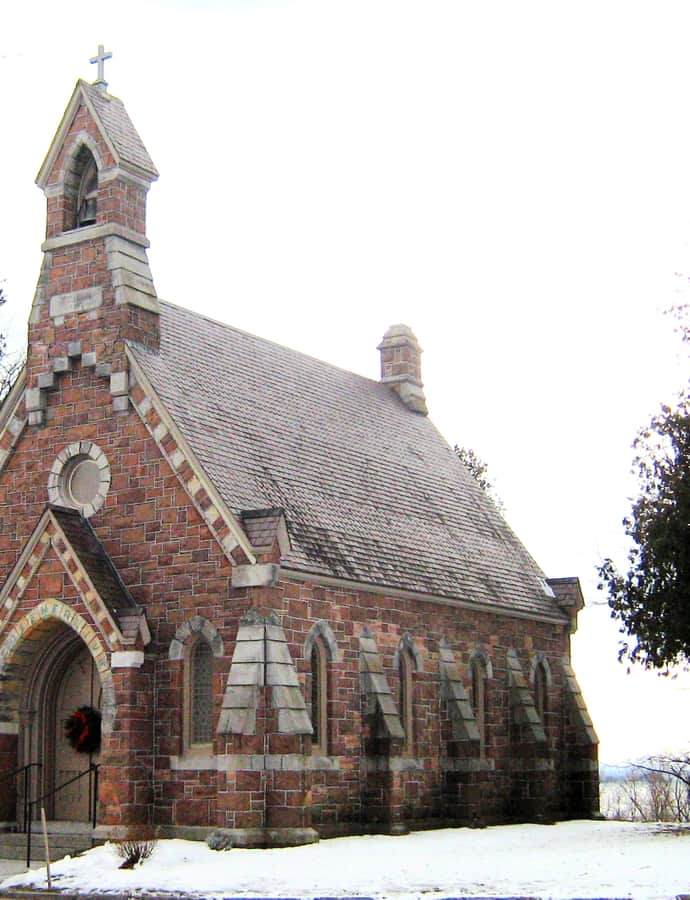
The Howard Mortuary Chapel is a High Victorian Gothic chapel at 455 North Avenue on the grounds of Lakeview Cemetery, built in 1882 by architect Alfred Benjamin Fisher on cemetery grounds laid out by E. C. Ryer in 1871. It was given to the City of Burlington by Hannah Louisa Howard, daughter of hotelier John Howard, and was added to the National Register of Historic Places in 1999.

Photo: Mfwills; cropped by Beyond My Ken (talk) 23:49, 24 October 2013 (UTC) , CC BY-SA 3.0

Hidden gems

Fine buildings that fewer people seek out.

House at 44 Front Street

Queen Anne

House at 44 Front Street

1892

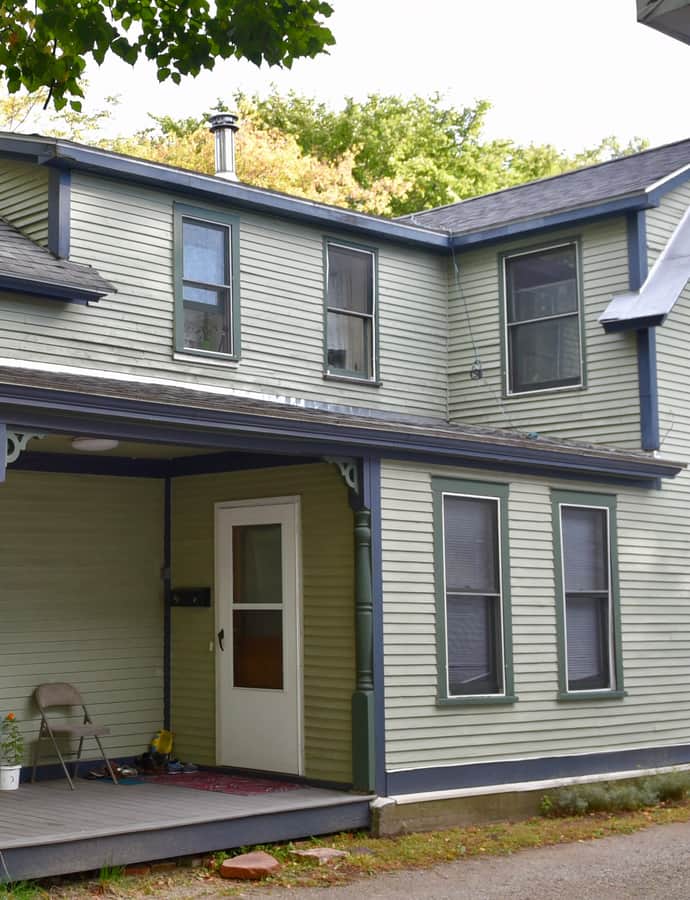
The house at 44 Front Street is a well-preserved vernacular Queen Anne Revival home in Burlington's Old North End, built about 1860 and significantly altered in 1892. It represents two periods of the city's 19th-century growth and was listed on the National Register of Historic Places in 2008.

Photo: Jim Roberts , CC BY-SA 4.0
LeFerriere House

Queen Anne

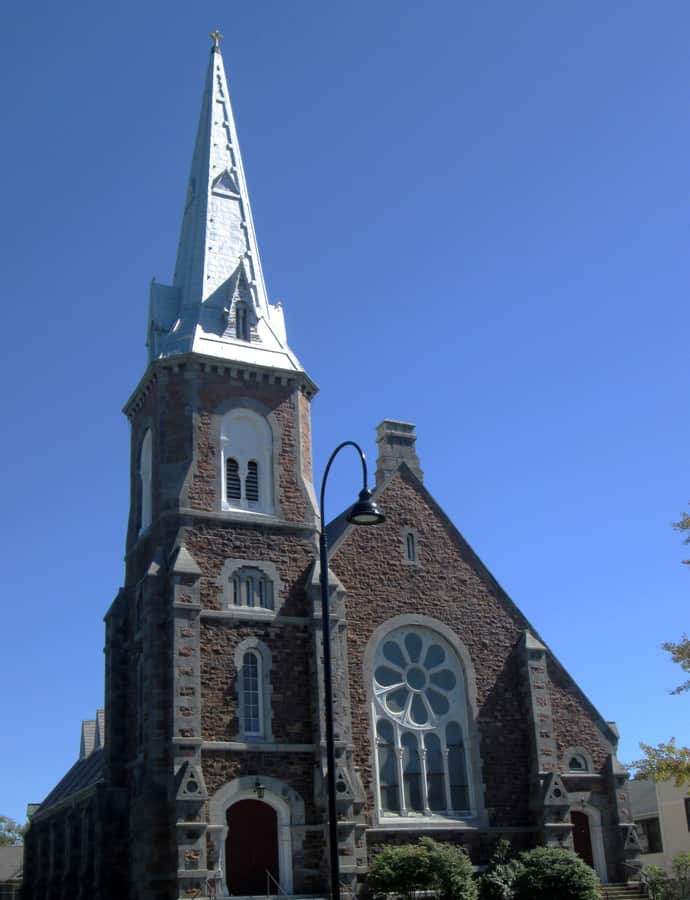
LeFerriere House

1888

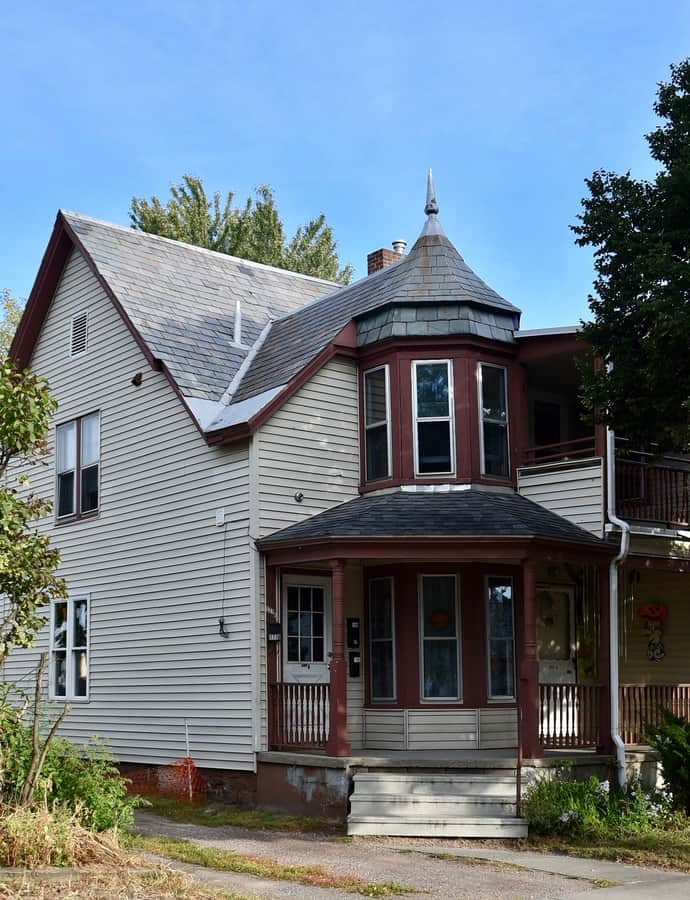
The LeFerriere House is a historic worker's house at 171-173 Intervale Avenue, built about 1888 in Burlington's Old North End as a distinctive vernacular take on Queen Anne architecture. It was listed on the National Register of Historic Places in 2008 as the LeFarriere House.

Photo: Jim Roberts , CC BY-SA 4.0
Roberge-Desautels Apartment House

Queen Anne

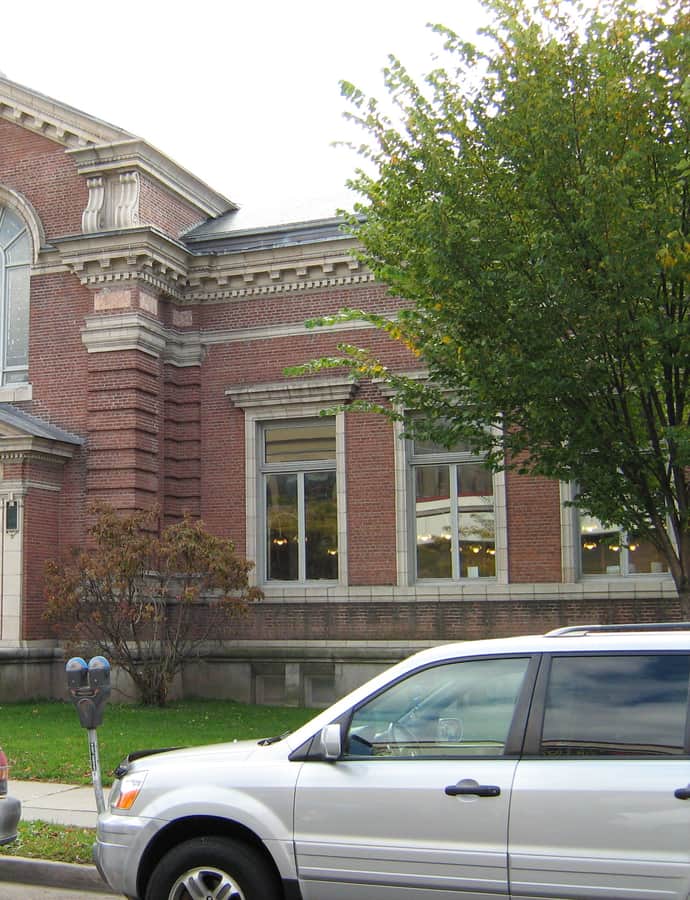
Roberge-Desautels Apartment House

1900

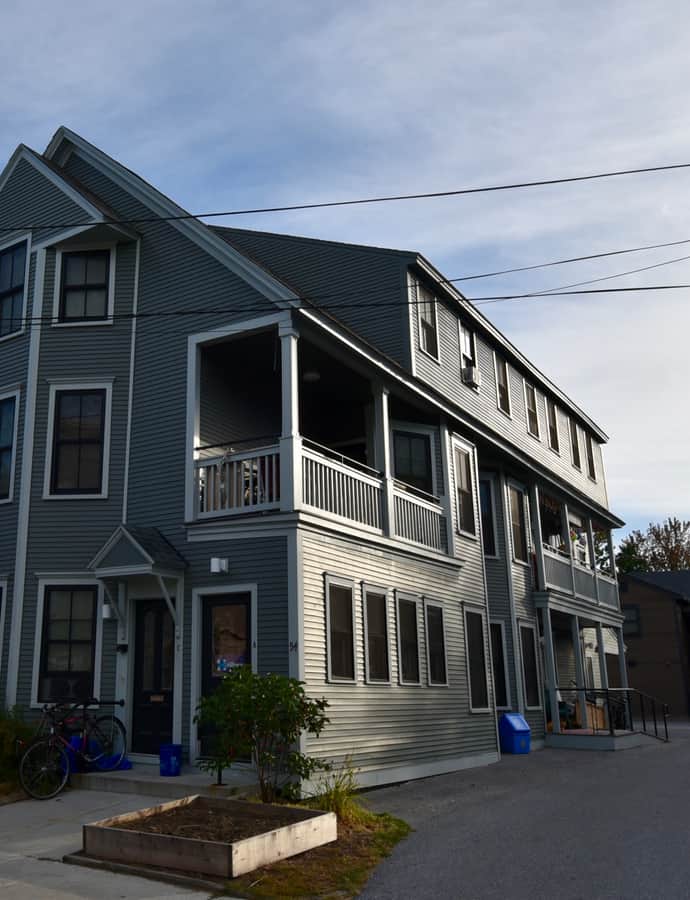
The Roberge-Desautels Apartment House is a multi-unit residence at 54 North Champlain Street, built about 1900 during a boom driven by Burlington's demand for workers in its lumber-related industries. A well-preserved example of a Queen Anne style apartment house, it was listed on the National Register of Historic Places in 2014.

Photo: Jim Roberts , CC BY-SA 4.0