
Broad Street Market
- Style
- Neoclassical
- City
- Harrisburg, PA
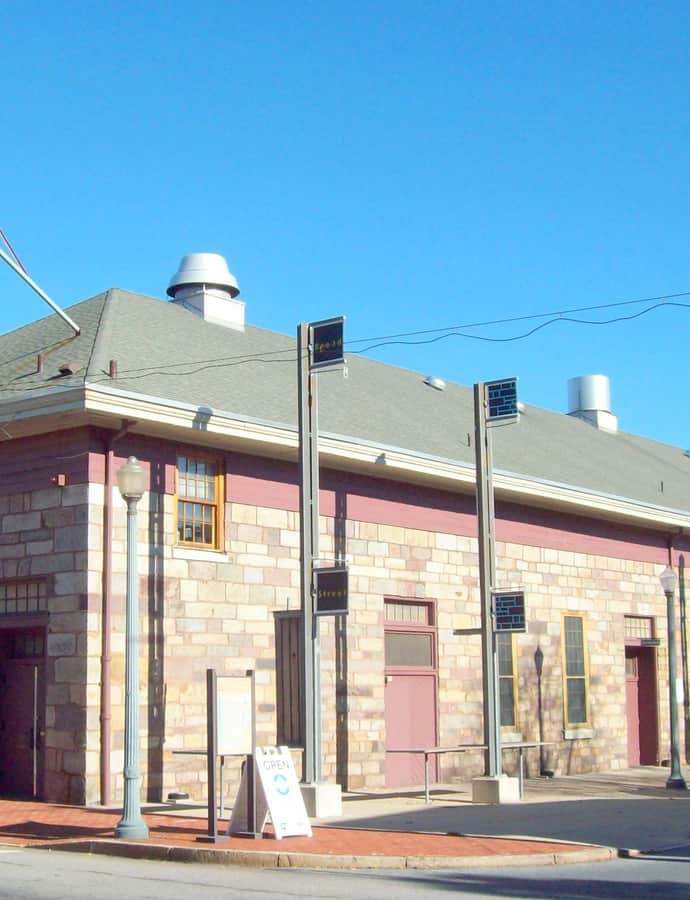

The Broad Street Market opened in 1863 in what is now Harrisburg's Midtown neighborhood, established on Broad Street (today Verbeke Street) by the Verbeke family. William K. Verbeke incorporated the West Harrisburg Market Company in 1860, and the market that grew from it is today one of the oldest continuously operating farmers markets in the country.
the building
Two market houses. The market is actually two separate structures: the older Stone Market house, completed in 1863 as the 'West Harrisburg Market House,' and the Brick Market house, built between 1874 and 1878. A wooden frame wing connected the Stone Building to Capitol Street alley from 1869 until it was destroyed in 1976-1977.
Feeding Camp Curtin's soldiers. During the Civil War, the market helped feed the roughly 300,000 Union soldiers who mustered through nearby Camp Curtin, tying the building's early commercial life to the city's role as a mustering point.
City ownership and restoration. Ownership passed to the City of Harrisburg in 1979, which operated the market until 1996 through a city-appointed agency. In 1996 the city completed a $2.5 million award-winning restoration of the market complex.
the style
The market's facade is identified with Neoclassicism, giving a civic-market building the kind of formal, symmetrical dignity more often reserved for public institutions.
More on Neoclassicalsignificance
The Broad Street Market is individually listed on the National Register of Historic Places and is recognized as one of the oldest continuously operating farmers markets in the country.
nearby
- Cathedral of Saint Patrick
- Pennsylvania State Capitol
- St. Stephen's Episcopal Cathedral
- Sheffield Apartments
- William Donaldson House
- Kunkel Building