
Pavilion for Japanese Art
- Architect
- Bruce Goff
- Year
- 1988
- Style
- expressionist
- City
- Los Angeles, CA
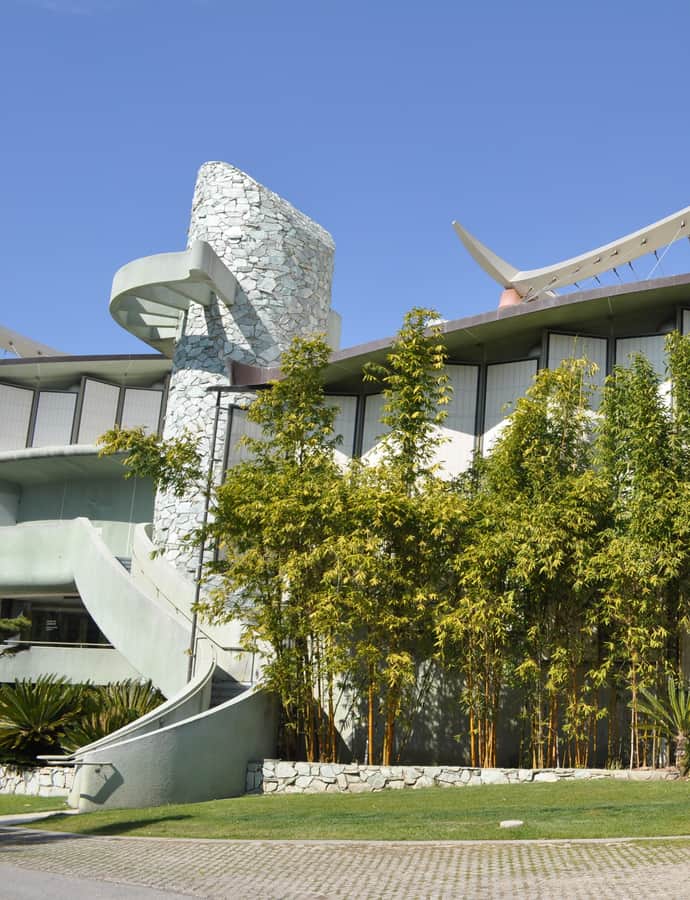

The Pavilion for Japanese Art houses the Los Angeles County Museum of Art's collection of Japanese works spanning roughly 3000 BC to the 20th century, in a building designed in 1988 by the expressionist architect Bruce Goff. The collection ranges across archaeological artifacts, Buddhist and Shinto sculpture, ceramics, lacquerware, textiles, cloisonné, and armor, displayed across six levels.
the building
The print gallery. The Helen and Felix Juda Gallery rotates its display of Japanese woodblock prints every three months, drawing on works from the Edo (1615-1868), Meiji (1868-1912), Taisho (1912-1926), and Showa (1926-1989) periods.
Screens and scrolls. The Pavilion's East Wing shows a rotating selection of Edo-period screens and hanging scrolls, including work from the Rimpa, ukiyo-e, and Maruyama-Shijo schools alongside spontaneous paintings by Zen monks.
the style
Goff designed the pavilion in an expressionist mode, giving the building a distinctive sculptural form that sets it apart from the rest of the LACMA campus.
the architect
Bruce Goff was known for highly original, unconventional designs that broke from architectural convention; the Pavilion for Japanese Art, completed in 1988, reflects his experimental approach to structure and form.
nearby
- May Company Building
- Johnie's Coffee Shop
- Security-First National Bank
- E. Clem Wilson Building
- Saban Theatre
- Heinsbergen Decorating Company Building