
Orpheum Theater
- Architect
- G. Albert Lansburgh
- Style
- Beaux-Arts
- City
- New Orleans, LA
- Collection
- the french quarter
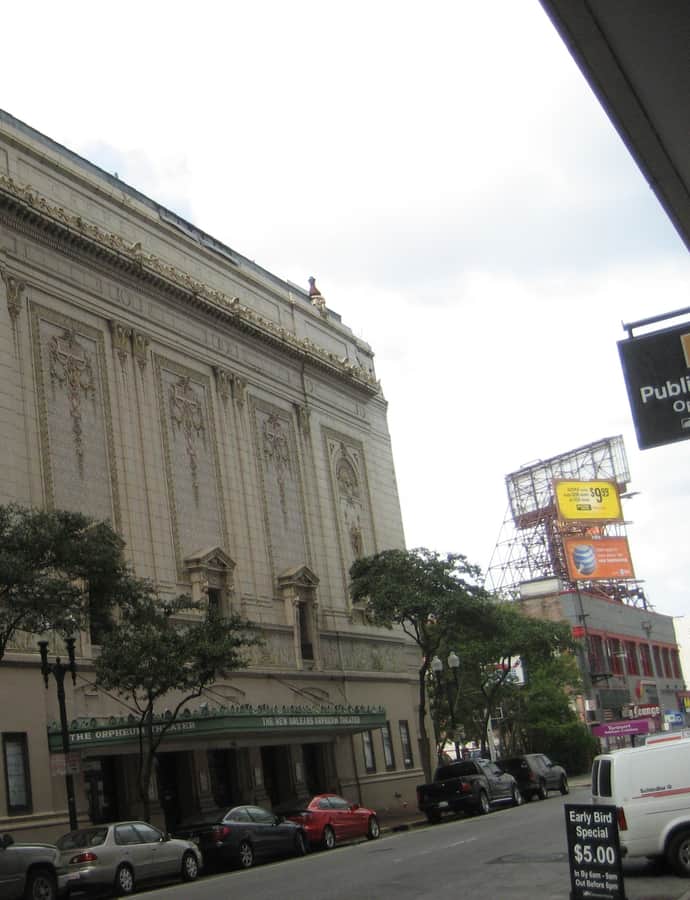

The Orpheum Theater opened for vaudeville in 1921, three years after G. Albert Lansburgh designed the 1918 building in the Beaux-Arts style. Known also as the RKO Orpheum, its 1,500-seat auditorium was built as a 'vertical hall,' engineered for perfect sight lines and acoustics in an age before amplification. Listed on the National Register of Historic Places in 1982, it stands in the Central Business District.
the building
Vertical hall acoustics. The Orpheum was constructed as a 'vertical hall,' a design meant to give vaudeville audiences perfect sight lines and acoustics without the benefit of amplifiers or modern lighting — a quality musicians would later prize for its acoustical purity.
From demolition list to orchestra hall. Slated for demolition in 1983, the theater was instead bought by the New Orleans Philharmonic Symphony Orchestra and given a $3 million renovation, becoming the orchestra's home until its financial collapse in 1991. New owners then made it home to the newly formed Louisiana Philharmonic Orchestra.
the style
Lansburgh, a noted theater architect, designed the Orpheum in the Beaux-Arts style, giving the 1,500-seat vaudeville house a grand civic presence in the Central Business District.
More on Beaux-Artsthe architect
G. Albert Lansburgh was a noted theater architect; the Orpheum, built in 1918 and opened in 1921, is among his Beaux-Arts theater designs.
significance
The Orpheum Theater was listed on the National Register of Historic Places in 1982 and again as part of the New Orleans Lower Central Business District listing in 1991. It is also designated a New Orleans Historical Landmark. The theater was severely damaged in 2005.
nearby
- Shell Building
- Immaculate Conception Church
- Saenger Theatre
- Latter & Blum Building
- Texaco Building
- Hancock Whitney Center