
AT&T Corporate Headquarters Building (later Sony Plaza, now 550 Madison Avenue)
- Architects
- Philip Johnson John Burgee
- Year
- 1984
- Style
- Postmodernism
- City
- Manhattan, NY
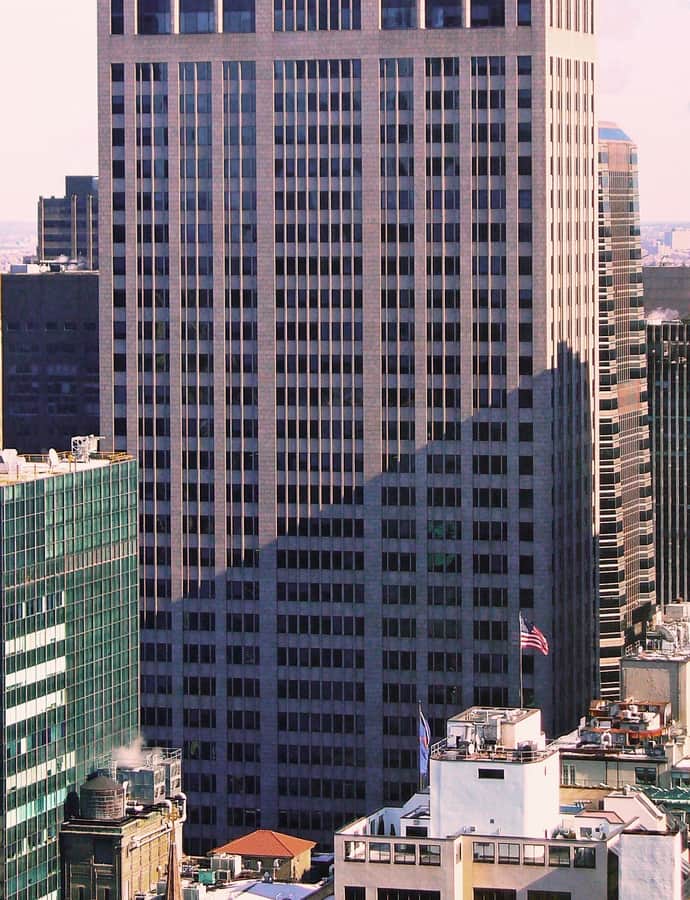

550 Madison Avenue was completed in 1984 as the corporate headquarters of AT&T, designed by Philip Johnson and John Burgee with associate architect Simmons Architects. The 647-foot, 37-story tower is clad in pink granite and became one of the most talked-about buildings in America for openly breaking with the glass-box modernism that had defined corporate towers for decades. AT&T later sold the building, and it became the American headquarters of Sony before taking its current address as its name.
the building
The Chippendale top. The building's signature is its broken pediment at the roofline, an open scroll-like notch that gave the tower its nickname and became the emblem of the postmodern break from flat modernist rooflines.
The entrance arch. A large entrance arch faces east toward Madison Avenue, flanked by arcades of smaller flat arches, giving the base a monumental, almost civic scale before the tower rises above it.
The atrium and zoning. A pedestrian atrium ran through the middle of the block between 55th and 56th Streets. Its presence let the building rise higher without setbacks under the city's zoning code, though the atrium was later replaced with a plaza and a shorter annex in the early 2020s.
the style
550 Madison Avenue is named as a leading example of postmodern architecture, and its granite facade and broken-pediment top were an explicit rejection of the glass curtain wall that had defined corporate headquarters since the 1950s. The building's Chippendale-style top became one of the most recognized symbols of the postmodern movement in American skyscraper design.
More on Postmodernismthe architect
Philip Johnson designed the building with his partner John Burgee. Johnson had built his reputation as a champion of modernist glass architecture before becoming, with this building, one of postmodernism's most visible practitioners.
significance
The building is a New York City Individual Landmark (LP-02600), designated July 31, 2018.
nearby
- 689 Fifth Avenue
- St. Regis Hotel
- 19 East 54th Street
- Bonwit Teller Building
- 432 Park Avenue
- William H. and Ada S. Moore House