
John Bowne House
- Year
- 1661
- Style
- Colonial
- City
- Queens, NY
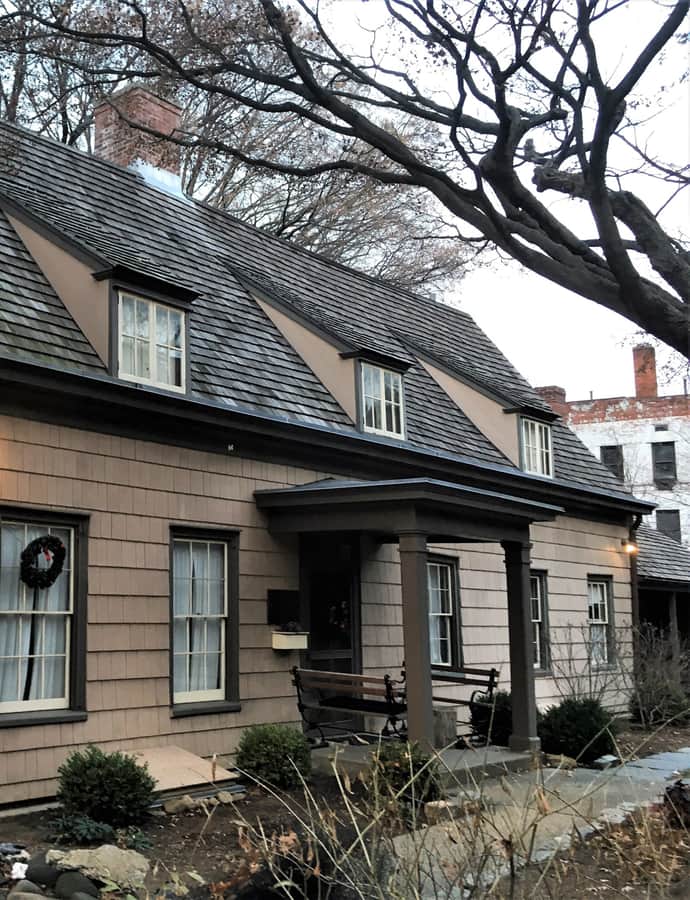

Built around 1661 in Flushing, the John Bowne House is one of the oldest surviving houses in New York City and is known for its role in establishing religious tolerance in America. In 1662 it was the site of a Quaker meeting that led to owner John Bowne's arrest by Peter Stuyvesant, Dutch Director-General of New Netherland. Bowne's successful appeal to the Dutch West India Company set a precedent for religious freedom later echoed in constitutional guarantees.
the building
Saltbox form. The house is a wood-frame Anglo-Dutch Colonial saltbox, notable for its steeply pitched roof with three dormers, a form that has survived largely intact since the 17th century.
the style
Its Anglo-Dutch Colonial saltbox construction, with a steeply pitched roof and dormers, reflects the building traditions of Flushing's earliest English and Dutch settlers.
significance
Listed on the National Register of Historic Places and designated a New York City Landmark, the house is tied to a lineage of descendants active in abolitionist causes, including great-grandson Robert Bowne, an early founder of the Manumission Society of New York in 1784, and later family members documented as Underground Railroad conductors.
nearby
- Flushing High School
- RKO Keith's Theater
- St. George's Church
- Rego Park Jewish Center
- Ridgewood Savings Bank, Forest Hills Branch
- Reformed Church of Newtown