
Portland Breakwater Light
- Architect
- Thomas Ustick Walter
- Year
- 1855
- City
- Portland, ME
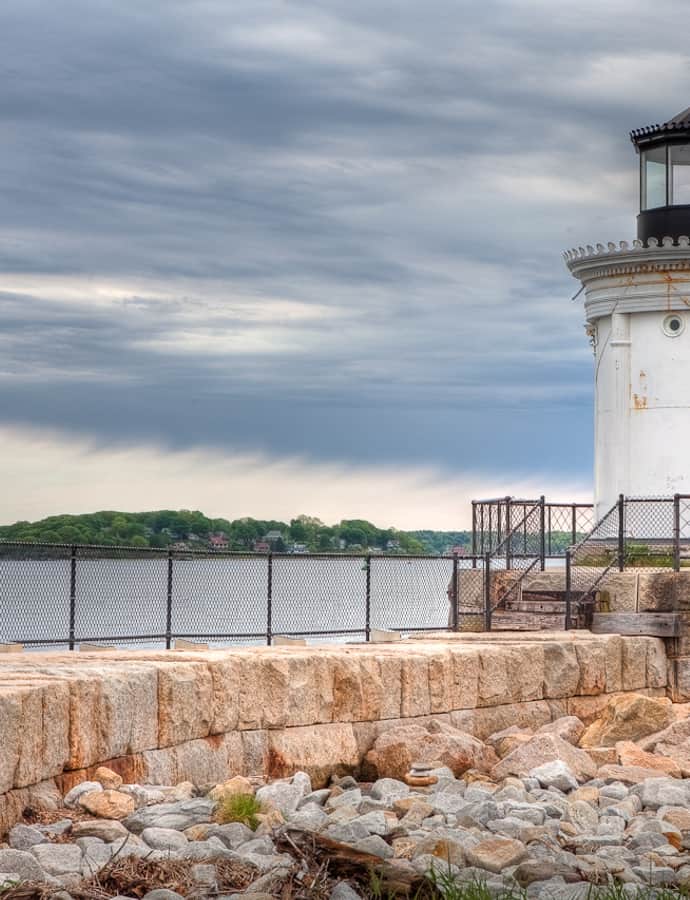

Portland Breakwater Light, nicknamed Bug Light, is a small lighthouse in South Portland first built in wood in 1855 and rebuilt in cast iron in 1875 at the end of an extended breakwater. Its design was inspired by the Choragic Monument of Lysicrates in Athens, a form made familiar through engravings, and it was the work of Thomas U. Walter, best known as the architect of the U.S. Capitol's east and west wings and its current dome. During World War II, shipyards built by the New England Shipbuilding Corporation filled in the breakwater around it to produce Liberty Ships.
the building
Cast-iron construction. The 1875 lighthouse is built of curved cast-iron plates, with the seams between them disguised by six decorative Corinthian columns, turning a functional iron shell into a miniature classical monument.
Choragic Monument model. Walter based the design on the Choragic Monument of Lysicrates in Athens, a form popularized through engravings, giving a working aid to navigation the silhouette of an ancient Greek commemorative structure.
Absorbed by wartime shipyards. During World War II the New England Shipbuilding Corporation built two shipyards producing Liberty Ships next to the light, and landfill for the yards slowly absorbed the breakwater the lighthouse once guarded.
the architect
Thomas U. Walter is most noted as the designer of the U.S. Capitol's east and west wings and its current dome. Portland Breakwater Light is a small-scale departure from that career of national civic monuments, applying the same classical vocabulary to a working harbor light.
significance
Individually listed on the National Register of Historic Places. The lighthouse was decommissioned after the breakwater it stood on was reduced by wartime shipyard landfill.
nearby
- United States Customhouse
- Portland Observatory
- Cathedral of the Immaculate Conception
- Portland City Hall
- Wadsworth-Longfellow House
- Victoria Mansion