City guide

architecture in Portland.

9 buildings worth a detour, each with what to look for. Open them on the map, or walk them with the iPhone app, which collects each one you photograph.

Landmarks

The buildings that define the city's architecture.

Portland Breakwater Light

Landmark

Portland Breakwater Light

Thomas Ustick Walter · 1855

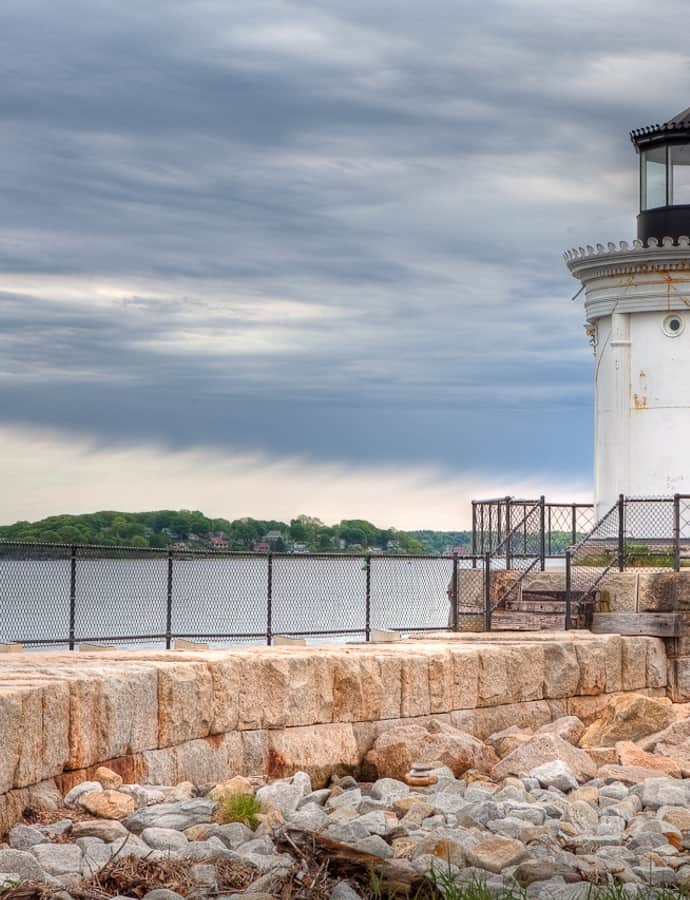
Portland Breakwater Light, nicknamed Bug Light, is a small lighthouse in South Portland first built in wood in 1855 and rebuilt in cast iron in 1875 at the end of an extended breakwater. Its design was inspired by the Choragic Monument of Lysicrates in Athens, a form made familiar through engravings, and it was the work of Thomas U. Walter, best known as the architect of the U.S. Capitol's east and west wings and its current dome. During World War II, shipyards built by the New England Shipbuilding Corporation filled in the breakwater around it to produce Liberty Ships.

Photo: Roger H. Goun from Brentwood, NH, USA , CC BY 2.0
Landmark

Portland City Hall

Carrère and Hastings · 1909

Portland City Hall is the fourth city hall built in Portland, constructed between 1909 and 1912 at 389 Congress Street on a prominent rise that anchors a cluster of civic buildings at the eastern end of downtown. It was designed by Carrère and Hastings, a nationally significant Beaux-Arts firm, and was listed on the National Register of Historic Places in 1973.

Victoria Mansion

Italianate

Victoria Mansion

Henry Austin

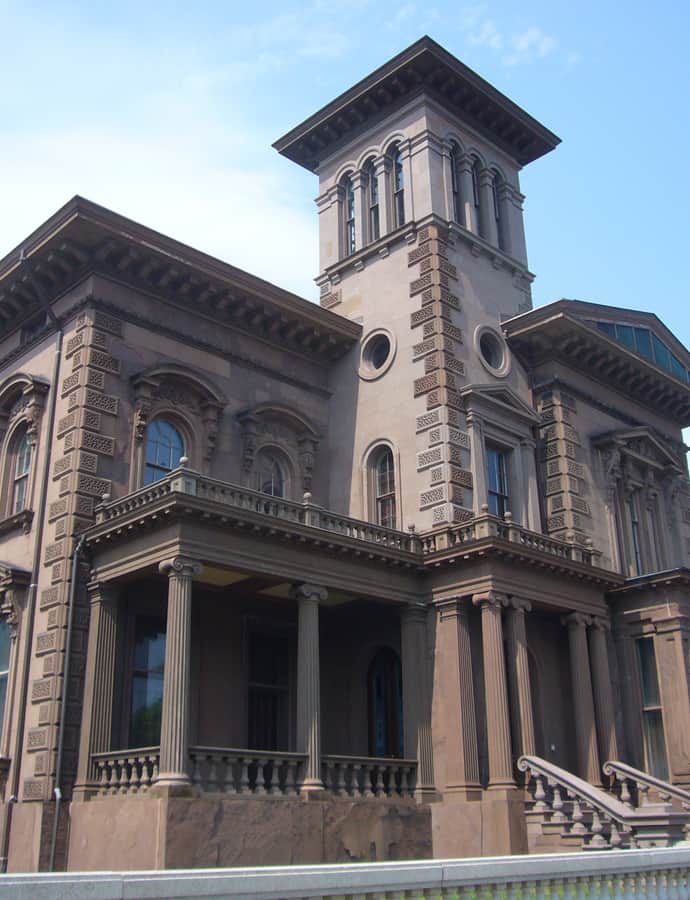
Victoria Mansion, also known as the Morse-Libby House, was completed in 1860 as a summer home for hotelier Ruggles Sylvester Morse, who made his fortune running hotels in New York, Boston, and New Orleans before bringing that money back to his home state. Designed by New Haven architect Henry Austin, the brownstone Italianate villa is considered one of the finest and least-altered examples of its kind in the United States. It was declared a National Historic Landmark in 1971 for its architectural significance.

Photo: Staib at English Wikipedia , CC BY-SA 3.0

Notable buildings

Worth a stop when you're nearby.

Cathedral of the Immaculate Conception

Gothic Revival

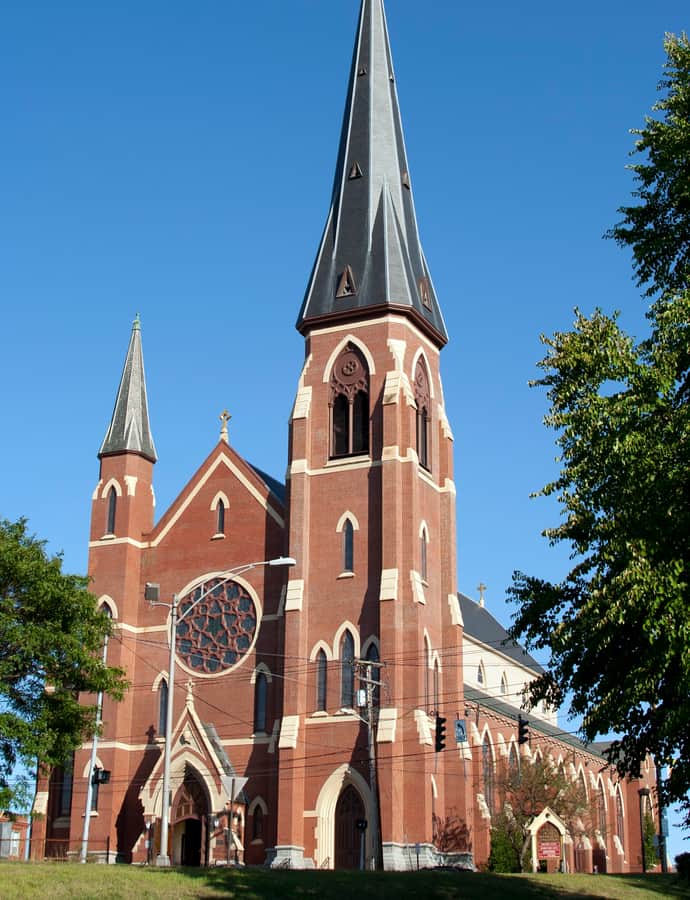
Cathedral of the Immaculate Conception

Patrick Charles Keely · 1869

The Cathedral of the Immaculate Conception is a Gothic Revival cathedral on Cumberland Avenue, built between 1866 and 1869 to serve as seat of the Diocese of Portland. Designed by Patrick Charles Keely, a prolific church architect, it was until 2023 the tallest building in Portland, before being surpassed by 201 Federal Street. It was listed on the National Register of Historic Places in 1985.

Photo: Richard Diekema , CC BY-SA 3.0

John Calvin Stevens House

Shingle Style

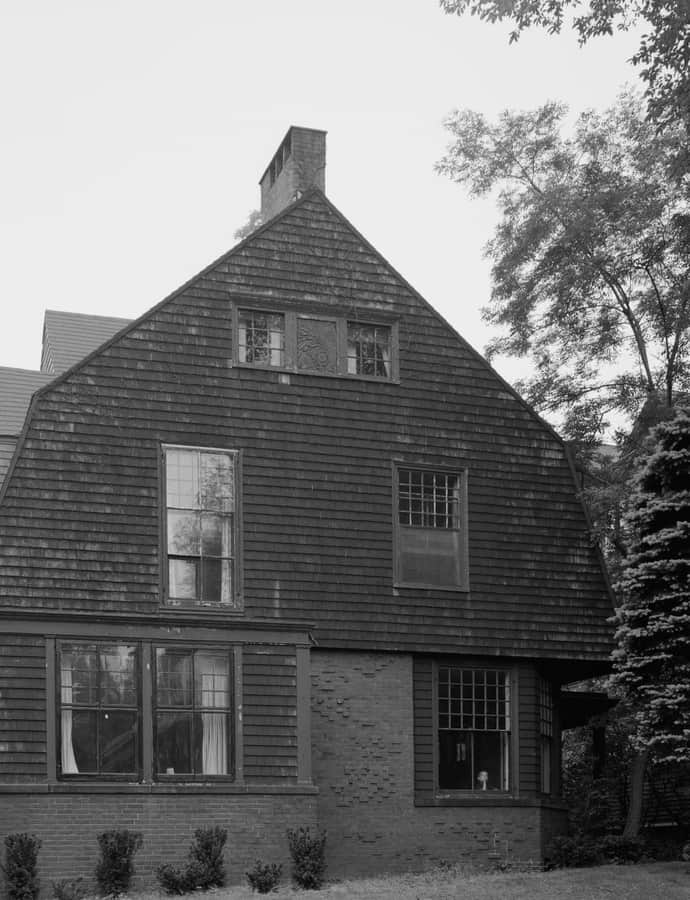
John Calvin Stevens House

John Calvin Stevens

The John Calvin Stevens House at 52 Bowdoin Street in the West End was built in 1884 as the home of architect John Calvin Stevens and became one of Portland's earliest examples of Shingle style architecture. Stevens prominently used the house to promote the style, and it was listed on the National Register of Historic Places in 1973.

Photo: Jack Boucher , Public domain

Neal S. Dow House

Federal

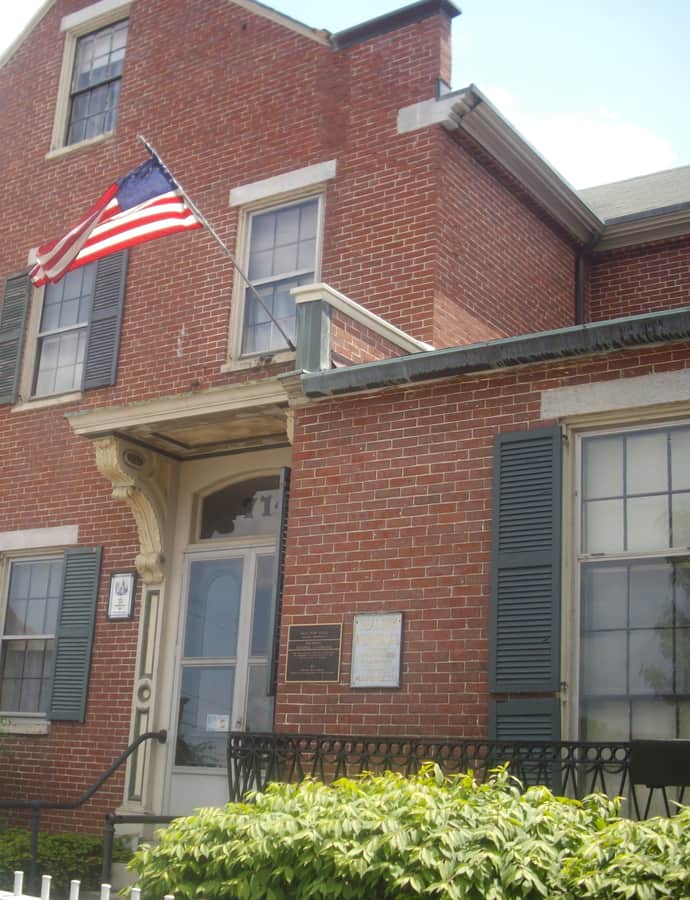
Neal S. Dow House

The Neal Dow House at 714 Congress Street was built in 1829 for politician and prohibitionist Neal Dow (1804-1897), who authored the first prohibition law passed by the Maine legislature in 1851. Dow was an internationally known temperance activist, and the house was a center of that activism during his lifetime. It was later designated a National Historic Landmark for its association with him and now serves as headquarters of the Maine chapter of the Women's Christian Temperance Union.

Photo: Thomas.macmillan , Public domain

Landmark

Portland Observatory

1807

The Portland Observatory is a historic maritime signal tower at 138 Congress Street on Munjoy Hill, built in 1807 and the only known surviving tower of its type in the United States. Captain Lemuel Moody organized its construction to solve a problem for merchants: Portland's harbor is sheltered by numerous islands, so incoming ships were not visible from the wharfs. Using a telescope and signal flags, the tower allowed two-way communication between ship and shore hours before a vessel reached the docks.

United States Customhouse

Landmark

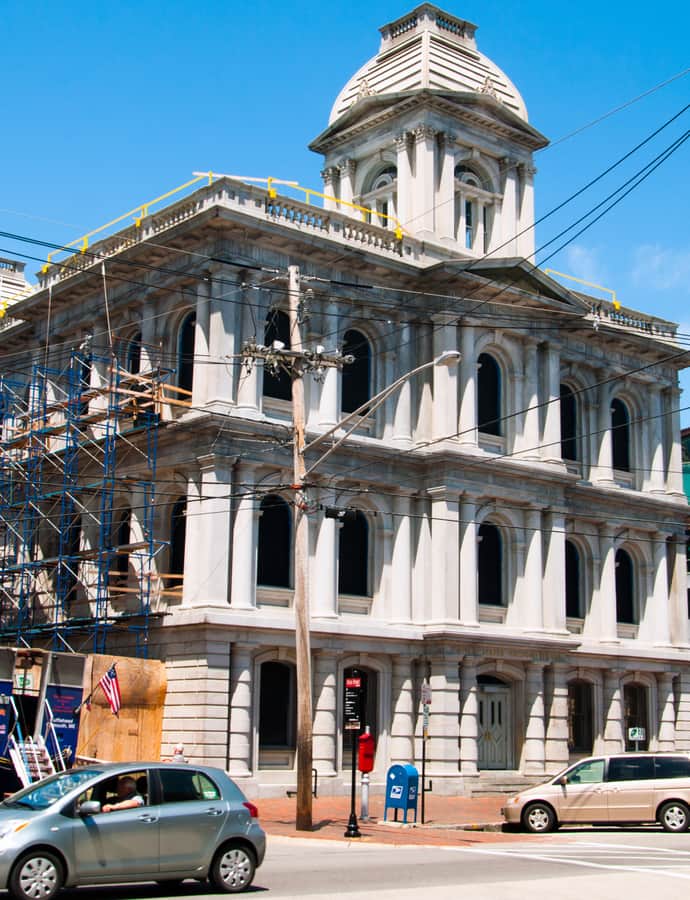
United States Customhouse

Alfred B. Mullet · 1872

The United States Custom House at 312 Fore Street was built from 1867 to 1872 to house Portland's Customs Service offices, replacing the Exchange Building lost in the Great Fire of July 4, 1866. By 1866 Portland's customs business was collecting $900,000 annually, making it one of the country's most significant seaports, and the federal government responded with a monumental facade near the waterfront. It was designed by Alfred B. Mullett, Supervising Architect of the U.S. Treasury from 1865 to 1874, and was listed on the National Register of Historic Places in 1973.

Photo: Dirk Ingo Franke , CC BY 3.0

Wadsworth-Longfellow House

Landmark

Wadsworth-Longfellow House

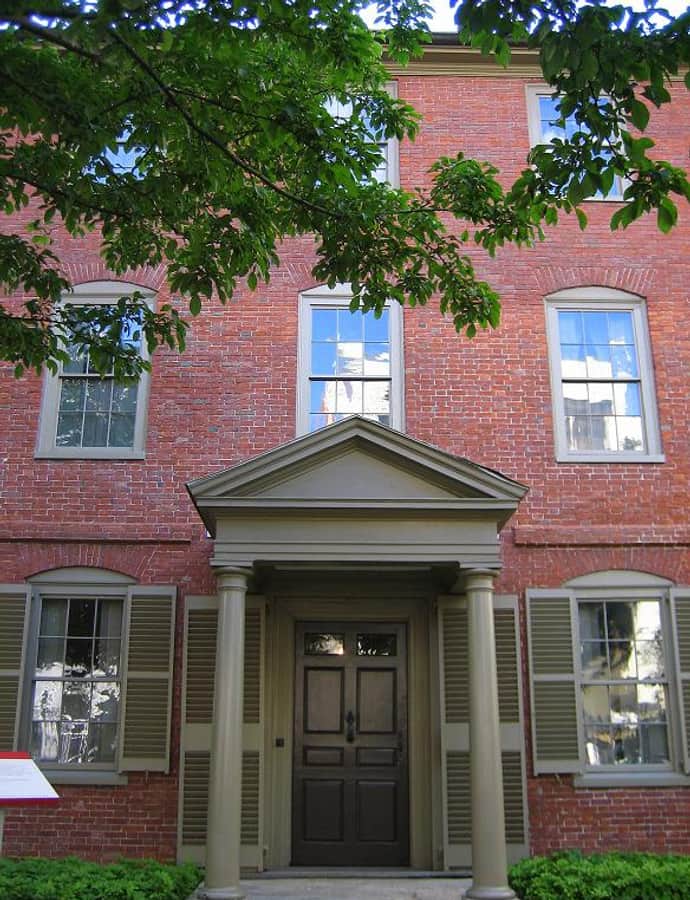
The Wadsworth-Longfellow House at 489 Congress Street is the oldest standing structure on the Portland peninsula and the childhood home of poet Henry Wadsworth Longfellow. Revolutionary War General Peleg Wadsworth built the house between 1785 and 1786 as the first wholly brick dwelling in Portland, raising ten children there before retiring to Hiram, Maine, in 1807. It has been operated as a house museum by the Maine Historical Society since 1901.

Photo: Brian Adler 10:43, 26 June 2007 (UTC) , Public domain