
Henry B. Plant Museum
- Architect
- J. A. Wood
- Style
- Moorish / Mudéjar
- City
- Tampa, FL
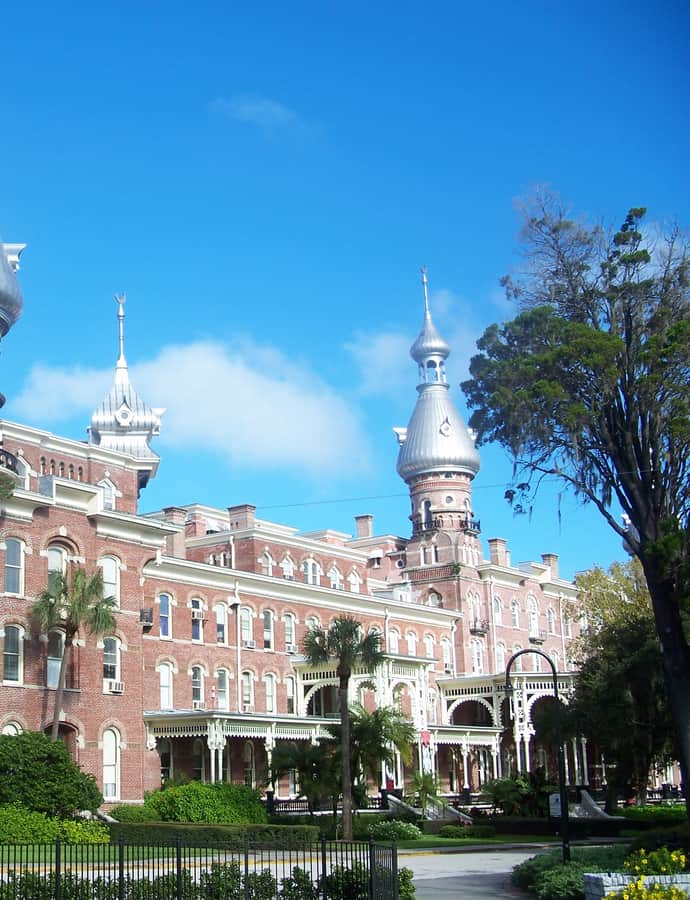

The Henry B. Plant Museum occupies the south wing of Plant Hall on the University of Tampa campus, in a building railroad magnate Henry B. Plant raised as the Tampa Bay Hotel — a 511-room resort that opened on February 5, 1891, at the terminus of Plant's own rail line. Architect J. A. Wood gave it a Moorish Revival profile that still anchors downtown Tampa. Today the museum is run as a historic house, with exhibits arranged to reflect how the hotel actually looked and functioned for its Gilded Age guests.
the building
A hotel built to end a rail line. Plant built the Tampa Bay Hotel to give travelers on his Plant System railroad somewhere spectacular to arrive. The 511-room hotel opened February 5, 1891, near the terminus of the line Plant himself had forged and owned, turning the depot stop into a destination in its own right.
Historic House Museum setup. Rather than a conventional gallery, the Plant Museum is arranged in the Historic House Museum style: artifacts are displayed to reflect their original placement and use within the hotel, letting visitors read the rooms the way Gilded Age guests would have encountered them.
War-era guest register. The exhibits trace the hotel's use during the Spanish–American War, when the resort's Gilded Age tourist trade gave way to a very different kind of occupant, alongside the elite lifestyle of its original clientele.
the style
J. A. Wood designed the Tampa Bay Hotel in the Moorish Revival mode, giving the building its silver minarets and unmistakable street presence — a rare and exceptional specimen of the style for the region.
More on Moorish / Mudéjarthe architect
J. A. Wood also designed the Old Hillsborough County Courthouse (1892) in Tampa, plus the Oglethorpe Hotel and the Mahoney-McGarvey House in Brunswick, Georgia, placing the Tampa Bay Hotel among a body of civic and hospitality work across Florida and Georgia.
significance
The building is a designated National Historic Landmark and is listed on the National Register of Historic Places.
nearby
- Hutchinson House
- Tampa City Hall
- Anderson–Frank House
- Tampa Theatre
- Sacred Heart Catholic Church
- Leiman House