
National Museum of African American History and Culture
- Architects
- David Adjaye Phil Freelon
- Year
- 2003
- Style
- Postmodernism
- City
- Washington, DC
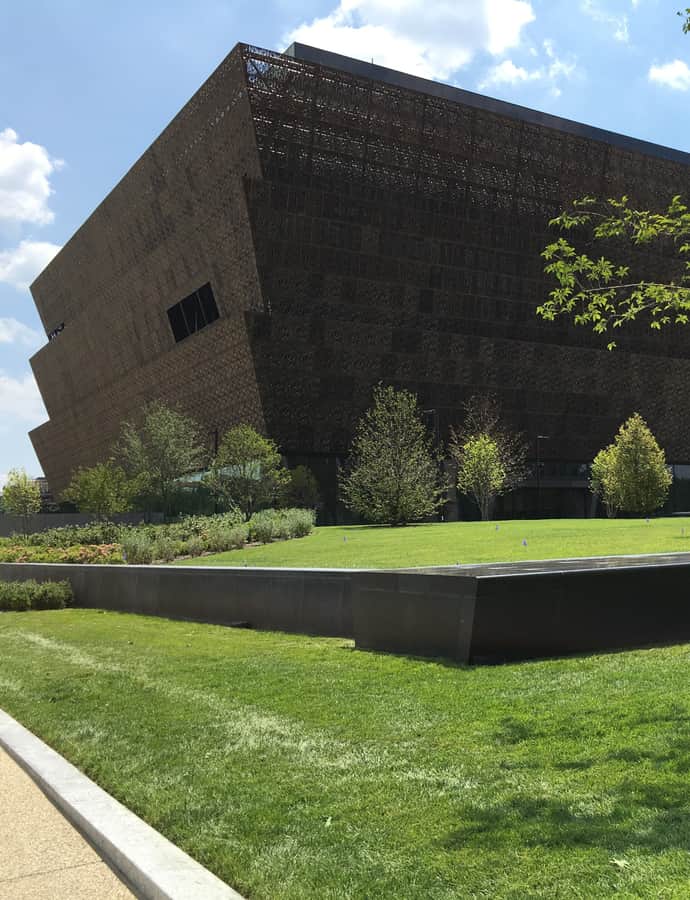

Efforts to build a federal museum of African American history trace back to 1915, but the modern push began in the 1970s and only led to authorization in 2003, after a legislative campaign that started in 1988. A design by the team of Freelon Group, Adjaye Associates, and Davis Brody Bond was chosen in 2009; construction ran from 2012 to 2016, and the museum opened on the National Mall in a ceremony led by President Barack Obama. Colloquially known as the Blacksonian, it is now the world's largest museum dedicated to African American history and culture.
the building
The corona facade. The building is wrapped in a distinctive latticework corona, a facade treatment highly visible from the Mall and the street that marks a clear departure from the stone classicism of its Smithsonian neighbors.
A collection mostly in storage. The museum holds more than 40,000 objects, but only about 3,500 are on display at any time, a small fraction of the collection assembled to tell the fuller story of African American history and culture.
the style
The museum's Postmodernism is expressed through its corona lattice, a facade treatment distinct enough to be considered a typological innovation among the Mall's museum buildings.
More on Postmodernismthe architect
The design was created by the team of David Adjaye and Phil Freelon working with Davis Brody Bond, whose joint submission was selected in 2009 over competing entries for the museum's National Mall site.
significance
The NMAAHC is the world's largest museum dedicated to African American history and culture. In 2022 it drew 1,092,552 visitors, making it the second most-visited Smithsonian museum and the eighth most-visited museum in the United States that year.
nearby
- U.S. Capitol Gatehouses and Gateposts
- Department of Labor Building
- Washington Monument
- Andrew W. Mellon Auditorium
- Herbert C. Hoover Building
- Jamie L. Whitten Building