
Grand Opera House
- Architect
- Thomas Dixon
- Style
- Second Empire
- City
- Wilmington, DE
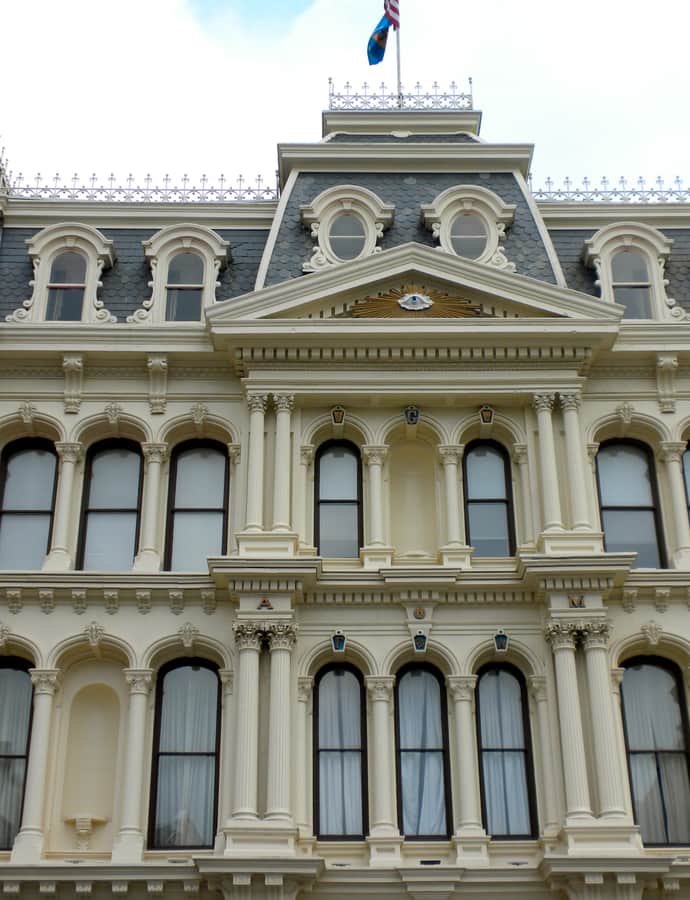

The Grand Opera House, also known as The Grand or Masonic Hall and Grand Theater, is a 1,208-seat performing arts theater built in 1871 by the Delaware Grand Lodge of Masons as a combined Masonic Temple and auditorium, at a construction cost of $100,000. Baltimore architect Thomas Dixon designed the four-story building in the Second Empire style, working Masonic symbolism directly into its cast-iron facade. Performers from Ethel Barrymore to "Buffalo Bill" Cody to John Philip Sousa played the Grand over its long performing history.
the building
Masonic cast-iron facade. Thomas Dixon's cast-iron facade incorporates symbolism from Freemasonry, including a central pediment containing an Eye of Providence, fusing the building's role as a Masonic Temple with its public face as a theater.
From opera to movies and back. The Grand hosted operas, symphonies, Victorian melodramas, minstrel shows, burlesque, and vaudeville before spending most of the twentieth century as a Warner Brothers movie theater from 1930 until it closed in 1967. It reopened four years later and returned to classical programming, partnering with the Delaware Symphony Orchestra, OperaDelaware, and the First State Ballet Theatre.
the style
Thomas Dixon designed the Grand in the Second Empire style, giving a Masonic Temple and public auditorium the mansarded formality of the style while weaving Masonic emblems, including an Eye of Providence, into its cast-iron facade.
More on Second Empirethe architect
Thomas Dixon was a Baltimore architect who designed the Grand Opera House, completed in 1871.
significance
The Grand Opera House is listed on the National Register of Historic Places.
nearby
- Wilmington Savings Fund Society Building
- F. W. Woolworth Building
- Govatos'/McVey Building
- Max Keil Building
- Henry Townsend Building
- Delaware Trust Building