City guide

architecture in Annapolis.

5 buildings worth a detour, each with what to look for. Open them on the map, or walk them with the iPhone app, which collects each one you photograph.

Styles you'll see Beaux-ArtsGeorgianNeoclassical

Landmarks

The buildings that define the city's architecture.

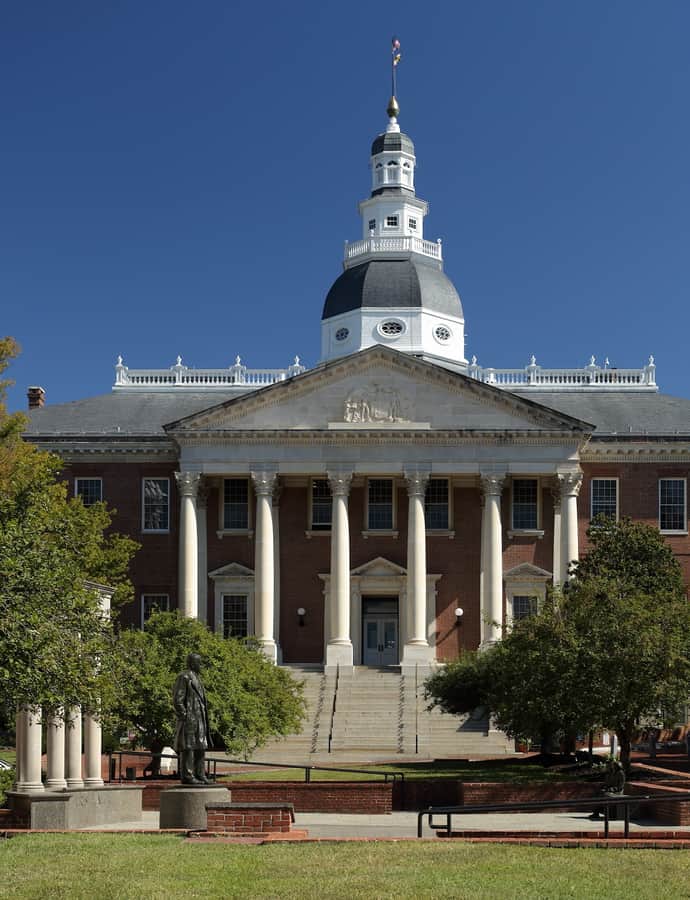
Maryland State House

Neoclassical

Maryland State House

Joseph Horatio Anderson · 1772

The Maryland State House is the oldest U.S. state capitol still in continuous legislative use, begun in 1772 to a design by architect Joseph Horatio Anderson but not finished until 1797 because the American Revolutionary War interrupted construction. From November 1783 to August 1784 it served as the capitol of the United States Congress of the Confederation, and it was here that George Washington resigned his military commission and Congress ratified the Treaty of Paris ending the war. It is the third statehouse to stand on this site inside State Circle.

Photo: Martin Falbisoner , CC BY-SA 3.0
Notable buildings

Worth a stop when you're nearby.

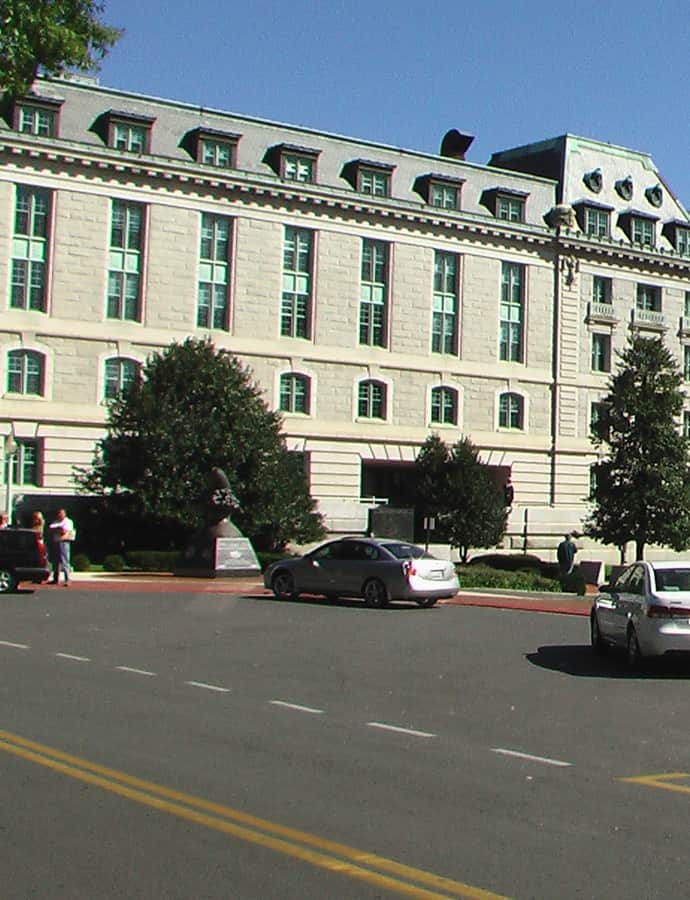
Bancroft Hall

Beaux-Arts

Bancroft Hall

Ernest Flagg · 1907

Bancroft Hall is said to be the largest contiguous set of academic dormitories in the United States, housing the entire brigade of 4,400 midshipmen at the Naval Academy in some 1,700 rooms across 4.8 miles of corridors and 33 acres of floor space. Designed by architect Ernest Flagg in the Beaux-Arts style, its central rotunda and first two wings were built in 1901-06; it is named for George Bancroft, former U.S. Secretary of the Navy and historian.

Photo: David Shapinsky for PINGNews/Shapinsky MultiMedia from Washington, D.C., United States , CC BY-SA 2.0

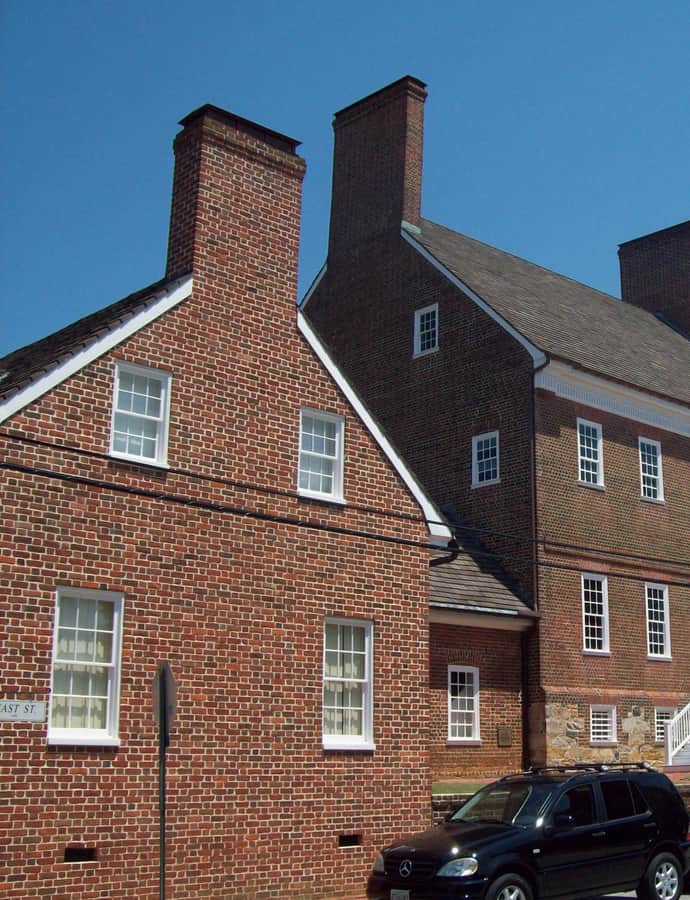
Brice House

Georgian

Brice House

William Buckland · 1766

The Brice House is one of three similar preserved 18th-century Georgian brick mansions in Annapolis, alongside the Hammond-Harwood and William Paca houses, sharing their five-part plan of a central block with flanking pavilions connected by hyphens. It was built in 1766 for James Brice, who served as Mayor of Annapolis and acting Governor of Maryland, and remained in the Brice family until 1874.

Photo: Pubdog (talk) , Public domain

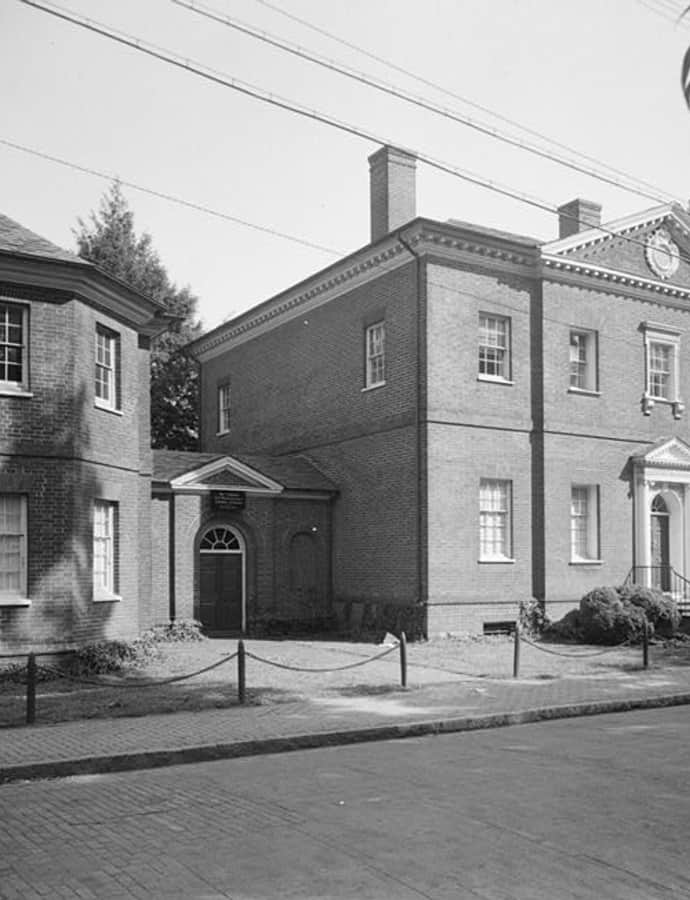
Hammond–Harwood House

Georgian

Hammond–Harwood House

William Buckland · 1774

The Hammond-Harwood House, built in 1774 at 19 Maryland Avenue, is one of the premier surviving colonial houses from the British colonial period in America and one of the only works of colonial academic architecture designed principally from a plate in Andrea Palladio's I Quattro Libri dell'Architettura. Architect William Buckland designed it in 1773-74 for wealthy farmer Matthias Hammond of Anne Arundel County, modeling it on the Villa Pisani in Montagnana, Italy.

Photo: E. H. Pickering, Photographer , Public domain