
Brandegee Estate
- Year
- 1894
- Style
- Renaissance Revival
- City
- Boston, MA
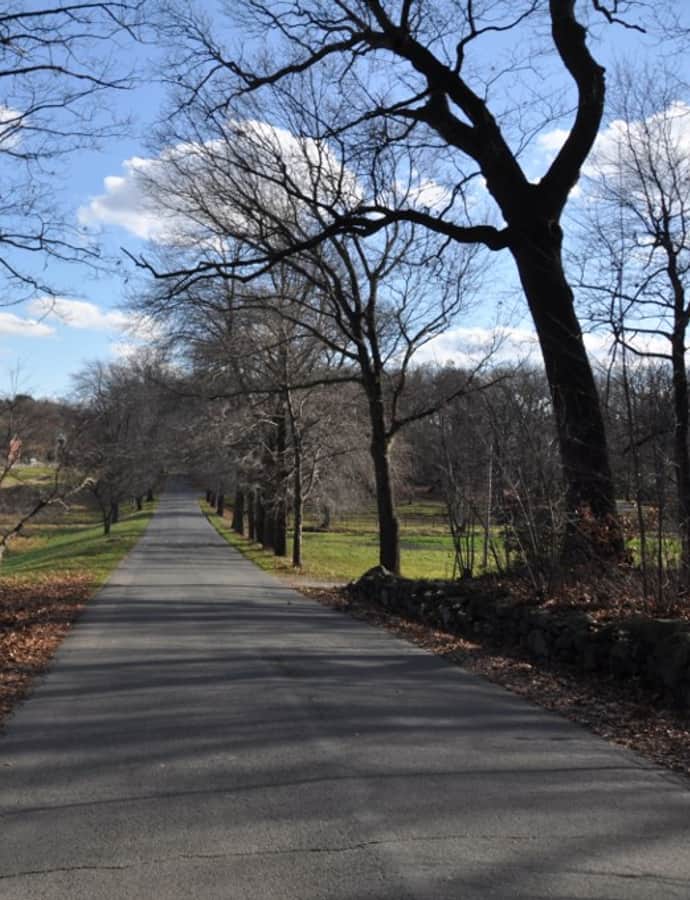

The Brandegee Estate straddles the town line between Brookline and Jamaica Plain, developed at the turn of the twentieth century by Mary (Pratt) Sprague, a direct descendant of early Boston settler Joseph Weld. Its Renaissance Revival mansion was designed by the firm Little, Browne & Moore, with grounds laid out by the landscape architect Charles A. Platt, and it takes its present name from Sprague's second husband, Edward Brandegee.
the building
Grounds and outbuildings. The estate centers on the main house and a formal garden, with a cluster of service buildings, including stables, at its eastern end; to the south, Allandale Farm — the last working farm in Boston — separates the property from Allandale Street.
the style
The mansion is built in the Renaissance Revival style, developed at the turn of the twentieth century.
More on Renaissance Revivalthe architect
The mansion was designed by the firm Little, Browne & Moore, with landscaping laid out by Charles A. Platt.
significance
The estate was listed on the National Register of Historic Places in 1985, and remains one of the largest essentially intact estate properties in either Brookline or Boston.
nearby
- George R. Minot House
- Perkins Estate
- Adams-Nervine Asylum
- Ebenezer Heath House
- First Church of Jamaica Plain
- Theodore Parker Unitarian Universalist Church