
Circular Congregational Church
- Architect
- Robert Mills
- Year
- 1870
- Style
- Greek Revival
- City
- Charleston, SC
- Collections
- antebellum charlestonthe holy city's steeples
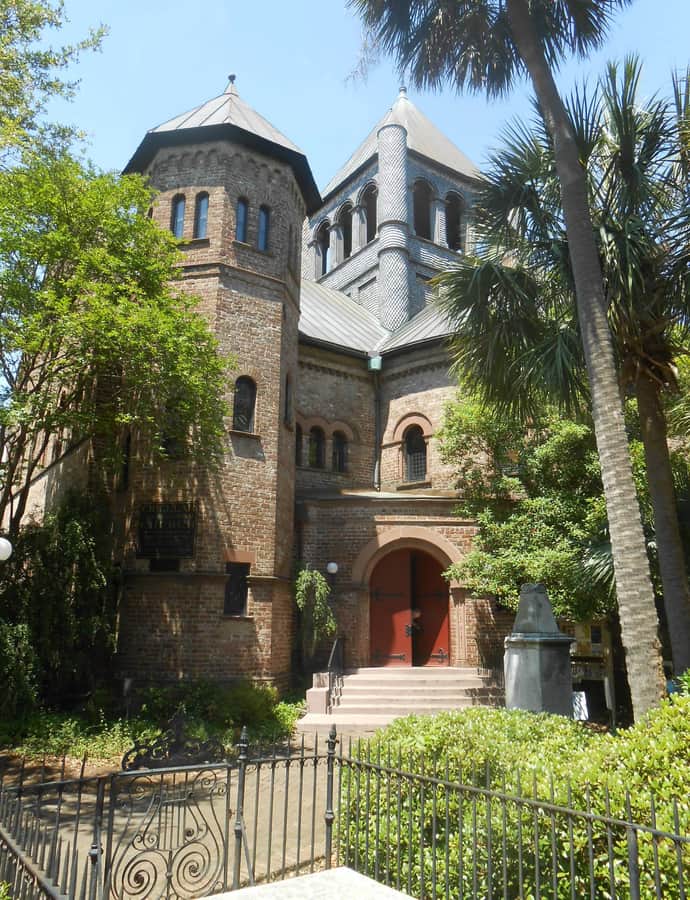

The Circular Congregational Church serves a congregation founded between 1680 and 1685 by English Congregationalists, Scots Presbyterians, and French Huguenots among Charleston's original settlers, making it one of the city's oldest. Its sanctuary at 150 Meeting Street stands on the exact site of the congregation's first Meeting House, from which Meeting Street took its name. The church's Parish House is a highly significant Greek Revival work by Robert Mills and is separately recognized as a National Historic Landmark.
the building
Naming Meeting Street. The street now known as Meeting Street was originally called Meeting House Street, named for the congregation's colonial-era Meeting House on this site, later shortened to its present form.
the style
The congregation's Parish House, rather than the main sanctuary, carries the architectural distinction: a Greek Revival design by Robert Mills significant enough to earn National Historic Landmark status on its own.
More on Greek Revivalsignificance
The Parish House of the Circular Congregational Church is recognized as a U.S. National Historic Landmark for its Greek Revival design by Robert Mills.
nearby
- Dock Street Theatre
- Powder Magazine
- City Market
- St. Philip's Episcopal Church
- Fireproof Building
- Hibernian Hall