
The Fillmore Detroit
- Architect
- C. Howard Crane
- Year
- 1925
- Style
- Beaux-Arts
- City
- Detroit, MI
- Collection
- gilded age detroit
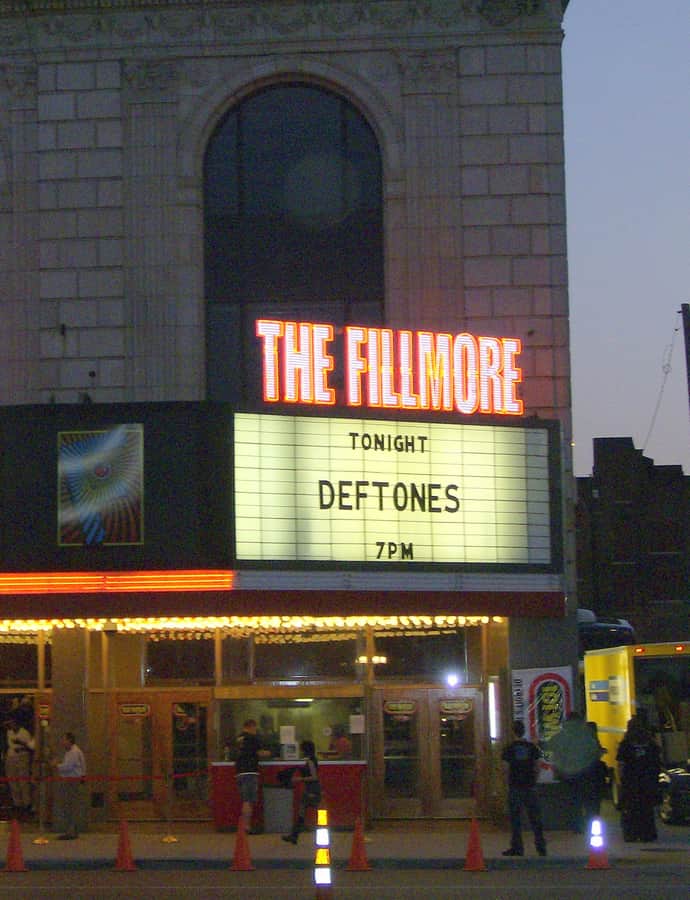

The Fillmore Detroit opened in 1925 as the Francis Palms Building, built by the Palms Realty Company and named for Francis Palms, a First French Empire native who arrived in Detroit in 1832 and made his fortune in real estate. Designed by C. Howard Crane in the Beaux-Arts style, it operated for most of its history as the State Theatre before its current run as a Live Nation-operated concert venue, standing in the Detroit Theatre District along Woodward Avenue near the Fox Theatre.
the building
Grand Lobby and three tiers. The venue centers on a Grand Lobby leading into a theatre with three levels of seating, the layout that has carried it from its 1925 opening as a movie palace through its present life as a concert hall.
State Bar & Grill. The State Bar & Grill occupies its own separate entrance off the theatre, letting it operate on nights when the main hall isn't hosting a show.
Built on a demolished predecessor. The site previously held the Central Theatre, later renamed the Grand Circus Theatre from 1913 to 1923; that building was torn down to make way for the 1925 construction.
the style
Crane designed the building in the Beaux-Arts style, giving the Francis Palms Building — and the State Theatre that operated inside it for decades — a formal, classically derived civic presence on Woodward Avenue.
More on Beaux-Artsthe architect
C. Howard Crane, named in the record as its architect, worked as a theater architect; the Fillmore Detroit is one of his Detroit theater designs.
significance
The building was listed on the National Register of Historic Places in 1982. It hosts the Detroit Music Awards each April and continues to operate as a Live Nation concert venue under the Fillmore name.
nearby
- Women's City Club
- Fox Theatre
- Central United Methodist Church
- Kales Building
- Park Avenue House
- Film Exchange Building