City guide

architecture in Hartford.

16 buildings worth a detour, each with what to look for. Open them on the map, or walk them with the iPhone app, which collects each one you photograph.

Landmarks

The buildings that define the city's architecture.

Cathedral of St. Joseph

Landmark

Cathedral of St. Joseph

Eggers & Higgins · 1962

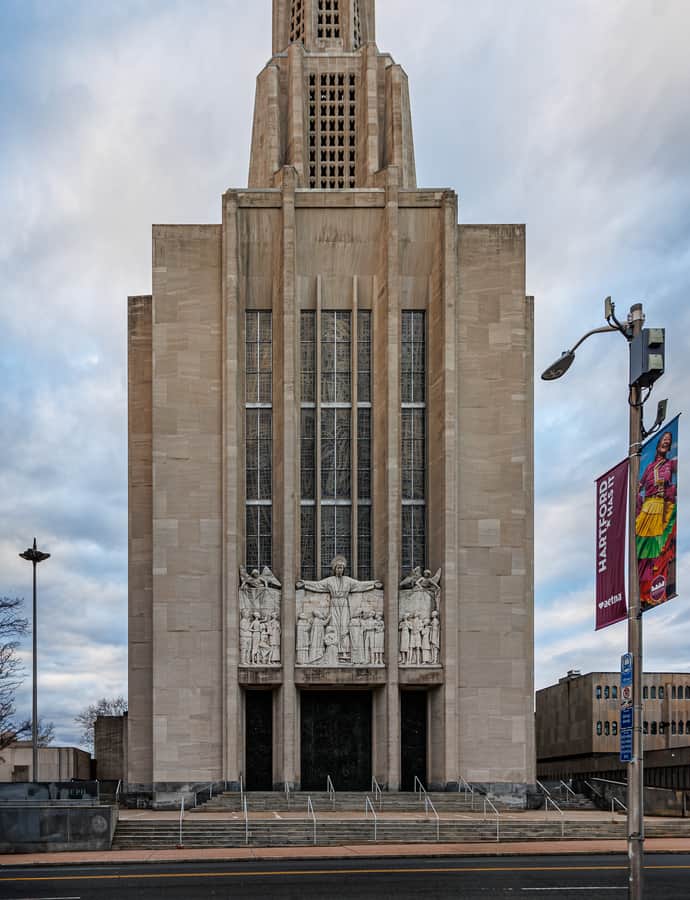
The Cathedral of St. Joseph is the mother church and seat of the Archdiocese of Hartford, dedicated on May 15, 1962. It was designed by the firm Eggers & Higgins and rises on Farmington Avenue on the site of the first cathedral, which had burned down in 1956. With capacity for about 1,750 people, not counting its two side chapels, its prominent modern spire is visible from I-84 and much of downtown.

Photo: Kenneth C. Zirkel , CC BY 4.0
Christ Church Cathedral

Gothic Revival

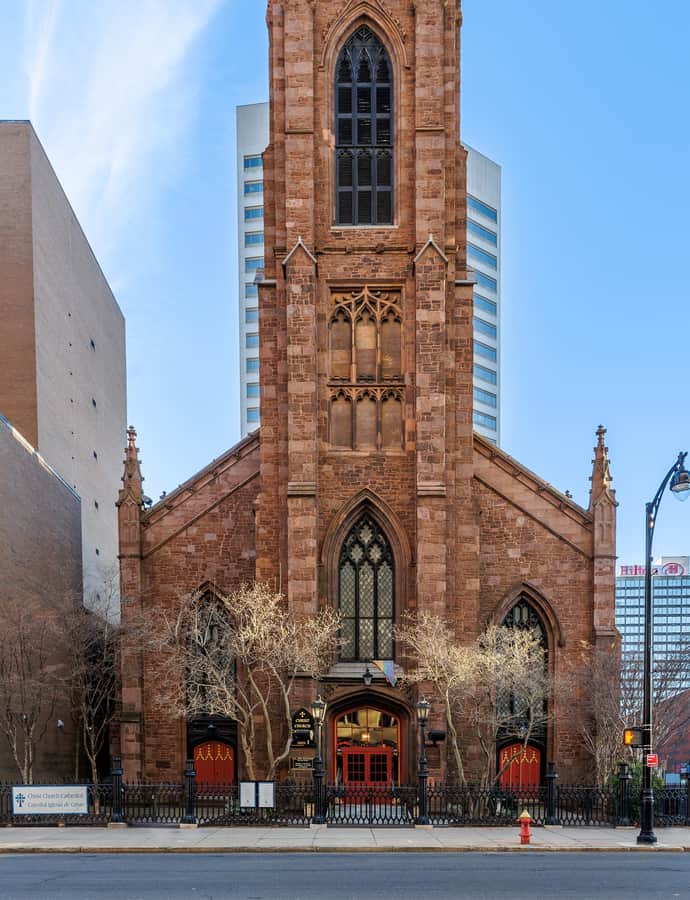
Christ Church Cathedral

Ithiel Town · 1827

Christ Church Cathedral, at 955 Main Street in downtown Hartford, was built in the 1820s to a design by Ithiel Town and completed in 1827. It is one of the earliest known examples of Gothic Revival architecture in the United States and serves as the cathedral church of the Episcopal Diocese of Connecticut, whose offices sit next door at 45 Church Street.

Photo: Kenneth C. Zirkel , CC BY 4.0
Landmark

Colt Armory

The Colt Armory was built beginning in 1855 by Samuel Colt as a firearms manufacturing complex on a 260-acre riverside site, part of what is now the Coltsville Historic District, a National Historic Landmark District slated to become Coltsville National Historical Park. Low, flood-prone meadows were reclaimed with a 2-mile dike, and Colt built his mansion, Armsmear, on a hill overlooking the works the following year.

Connecticut State Capitol

Eastlake

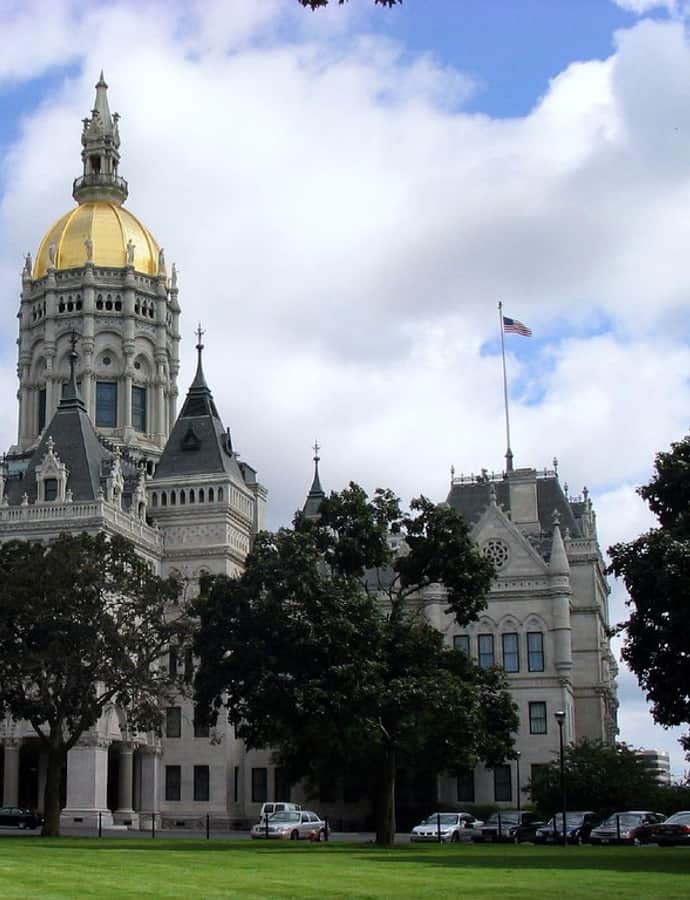
Connecticut State Capitol

Richard M. Upjohn

The Connecticut State Capitol, sited north of Capitol Avenue and south of Bushnell Park, is the third capitol building the state has used since the American Revolution. It houses the General Assembly — the State Senate and House of Representatives — as well as the office of the Governor. Its construction settled a long rivalry between Hartford and New Haven over which city would be sole state capital.

Photo: jglazer75 , CC BY 2.0

Goodwin Hotel

Queen Anne

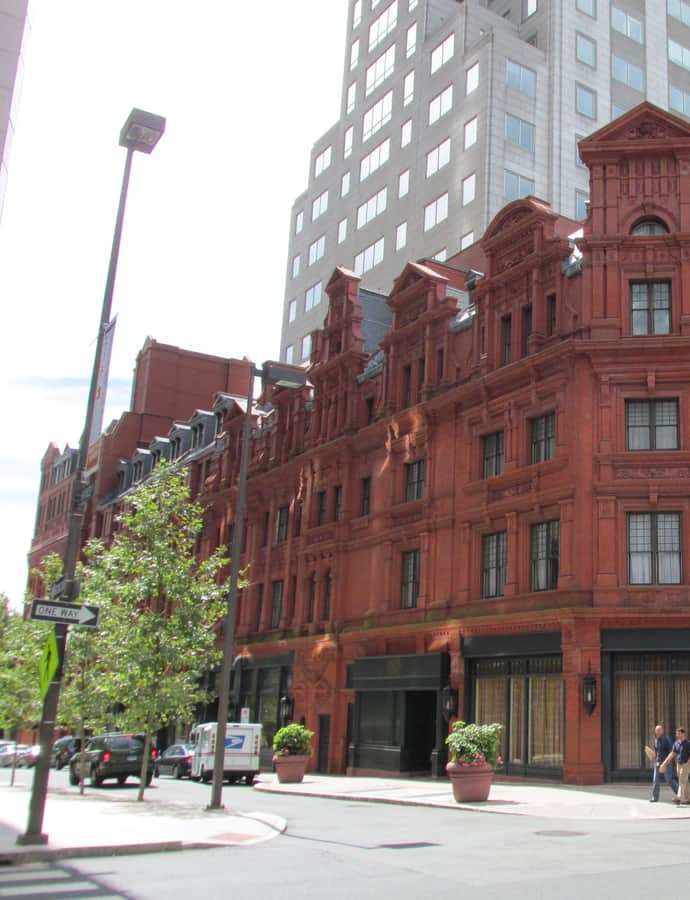
Goodwin Hotel

Francis H. Kimball · 1989

The Goodwin Hotel began as an apartment building developed by brothers James J. Goodwin and Rev. Francis Goodwin, opening in 1881 with a design by Francis Kimball modeled on buildings Rev. Goodwin had seen under construction in England. Its distinctive English Queen Anne terracotta facade made it a prestigious address — J.P. Morgan stayed there during visits to his native city. Expanded in 1891 and 1900, the building's Arts and Crafts interior was gutted in 1985–1986 so its preserved facade could anchor the new Goodwin Square office tower, completed in 1989.

Photo: John Phelan , CC BY-SA 3.0

Municipal Building

Beaux-Arts

Municipal Building

Davis & Brooks

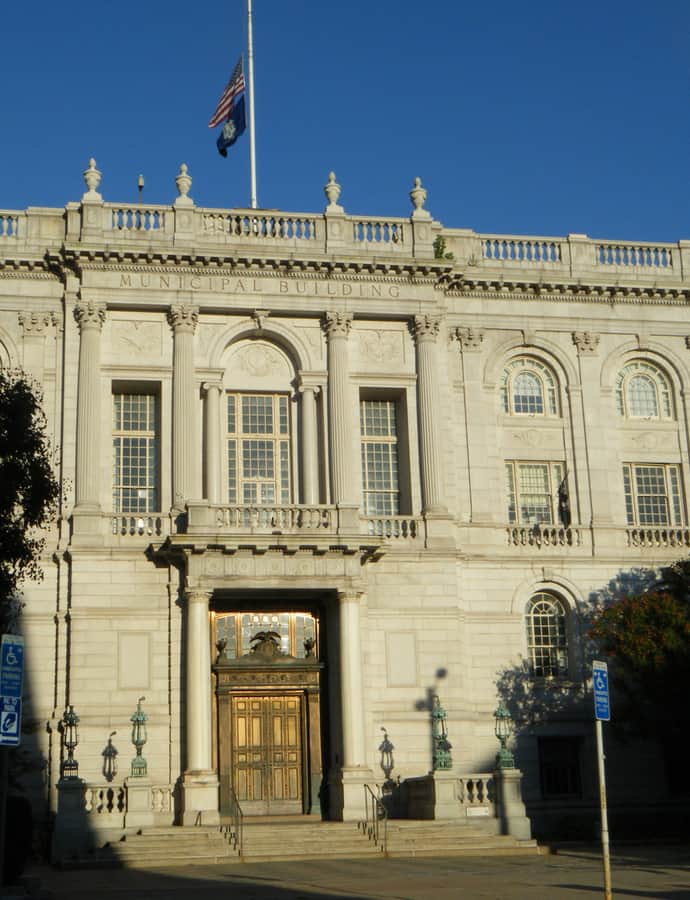
The Hartford Municipal Building, also known as Hartford City Hall, is a Beaux-Arts structure at 550 Main Street completed in 1915 — the third building to serve as the city's seat of government. It followed an 1827 Greek Revival city hall and a stint in the 1796 Old State House, replaced after Connecticut's new State Capitol freed up that building. The winning design came from a competition, with land for the site donated by J. Pierpont Morgan.

Photo: Grondemar , CC BY-SA 3.0

Old State House

Federal

Old State House

Charles Bulfinch · 1796

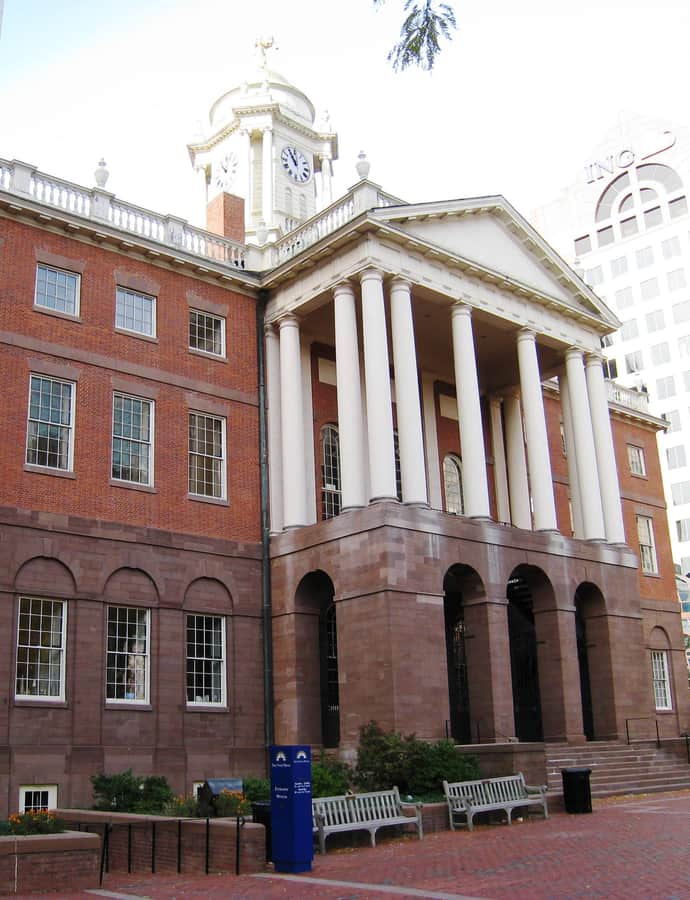
The Old State House was completed in 1796 to a design generally credited to Charles Bulfinch, his first public building. It served as the seat of Connecticut's government and is now managed by the Office of Legislative Management of the Connecticut General Assembly. Built entirely of American materials, it stands as one of Hartford's earliest surviving works of Federal architecture and a National Historic Landmark.

Photo: Charles Bulfinch (1763-1844), architect. , Public domain

Southern New England Telephone Company Building

Art Deco

Southern New England Telephone Company Building

1931

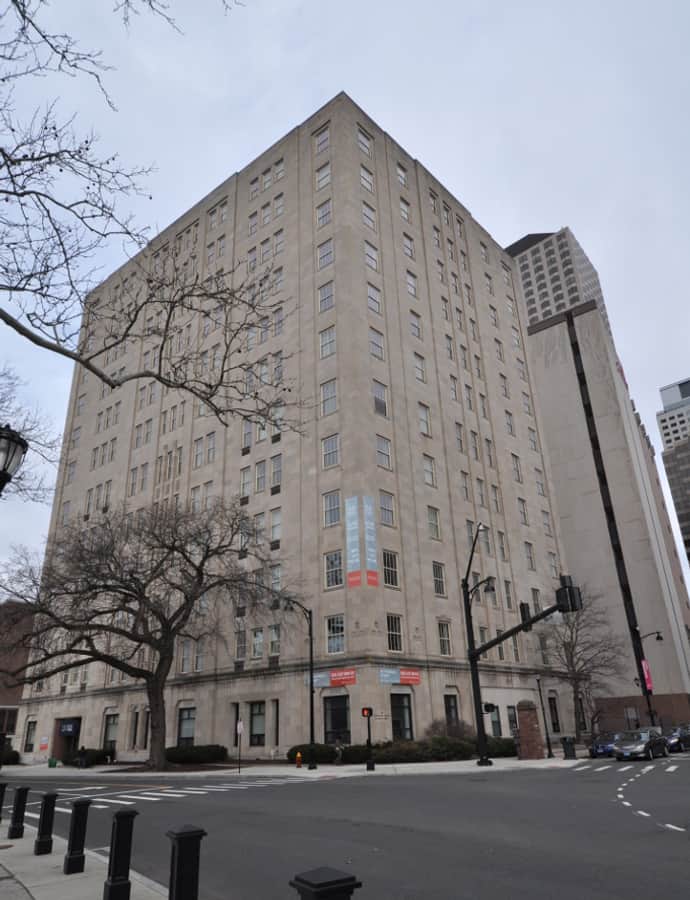
The Southern New England Telephone Company Building at 55 Trumbull Street is a twelve-story Art Deco office building built in 1931 for the telephone company, which occupied it into the 1990s. Overlooking Bushnell Park at the northwest corner of Jewell and Trumbull Streets, it is now mainly residential and was listed on the National Register of Historic Places in 2004.

Photo: Magicpiano , CC BY-SA 4.0

Travelers Tower

Neoclassical

Travelers Tower

Donn Barber · 1919

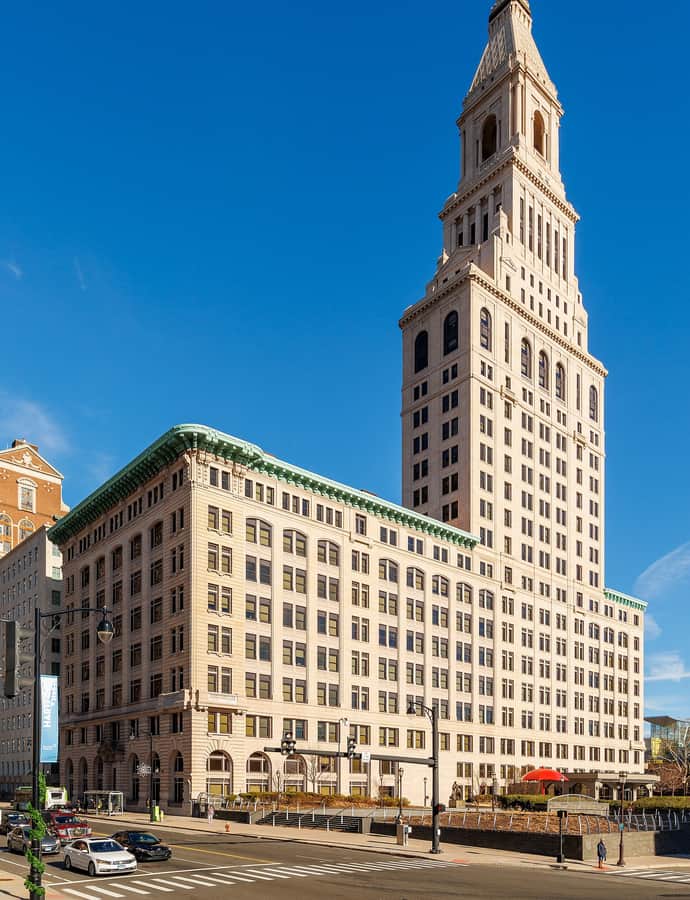
Travelers Tower is a 24-story, 527-foot skyscraper in downtown Hartford, completed in 1919 as the fourth headquarters of Travelers Insurance Company. Designed by Donn Barber, it was the seventh tallest building in the world at completion and remained the tallest in New England until Boston's Prudential Tower opened in 1964, and the tallest in Connecticut until City Place I in 1984. It is still the second tallest building in Hartford.

Photo: Kenneth C. Zirkel , CC BY 4.0
Wadsworth Atheneum Museum of Art

Gothic Revival

Wadsworth Atheneum Museum of Art

Ithiel Town; Alexander Jackson Davis; Benjamin Wistar Morris; Henry Austin · 1844

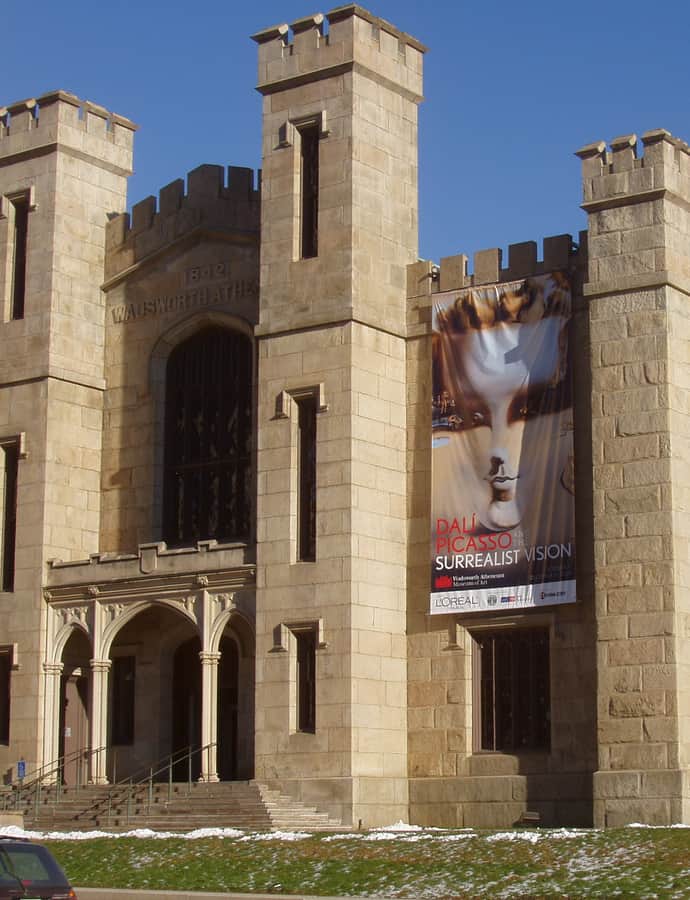
Founded in 1842 and opened in 1844, the Wadsworth Atheneum is the oldest continually operating public art museum in the United States. It was built on the site of Daniel Wadsworth's family home in downtown Hartford, designed by Alexander Jackson Davis and Ithiel Town as a castle-like Gothic Revival building. With 75,000 square feet of exhibition space, it is the largest art museum in Connecticut, holding collections spanning European Baroque art, ancient Egyptian and Classical bronzes, French and American Impressionism, Hudson River School landscapes, and early American decorative arts.

Photo: Daderot at English Wikipedia , CC BY-SA 3.0

Notable buildings

Worth a stop when you're nearby.

Cheney Building

Landmark

Cheney Building

Henry Hobson Richardson

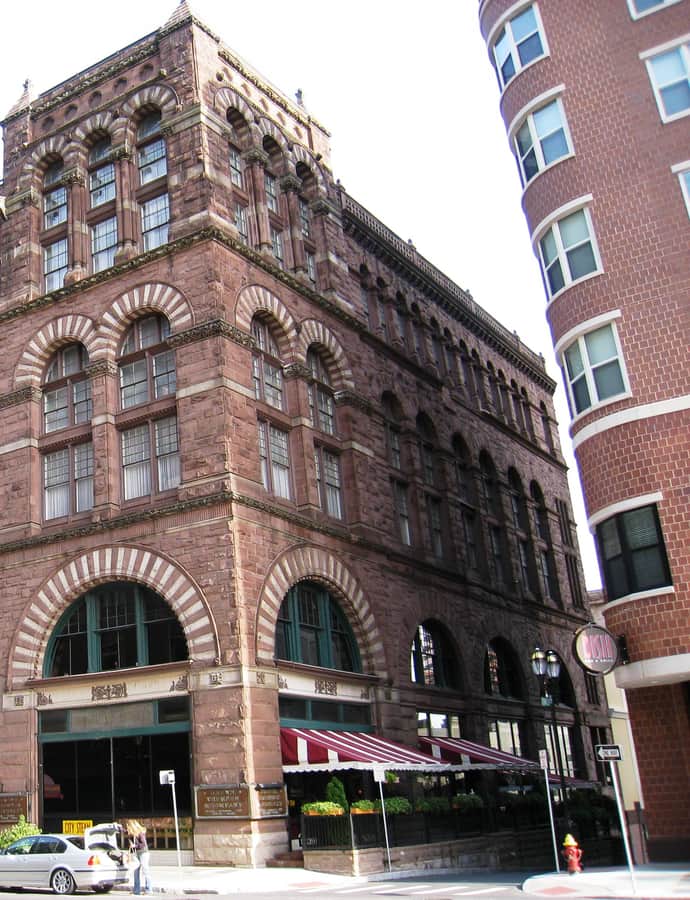
The R. and F. Cheney Building, also known as the Brown Thomson Building, is a commercial building at 942 Main Street designed by H. H. Richardson and constructed in 1875–1876 for the Cheney Brothers silk manufacturers of Manchester, Connecticut. It originally held five small shops on the ground floor with offices and apartments above, and later housed Brown Thomson's department store and then G. Fox and Company.

Photo: H. H. Richardson (1838–1886), architect , Public domain

Church of the Good Shepherd and Parish House

Gothic

Church of the Good Shepherd and Parish House

Edward Tuckerman Potter

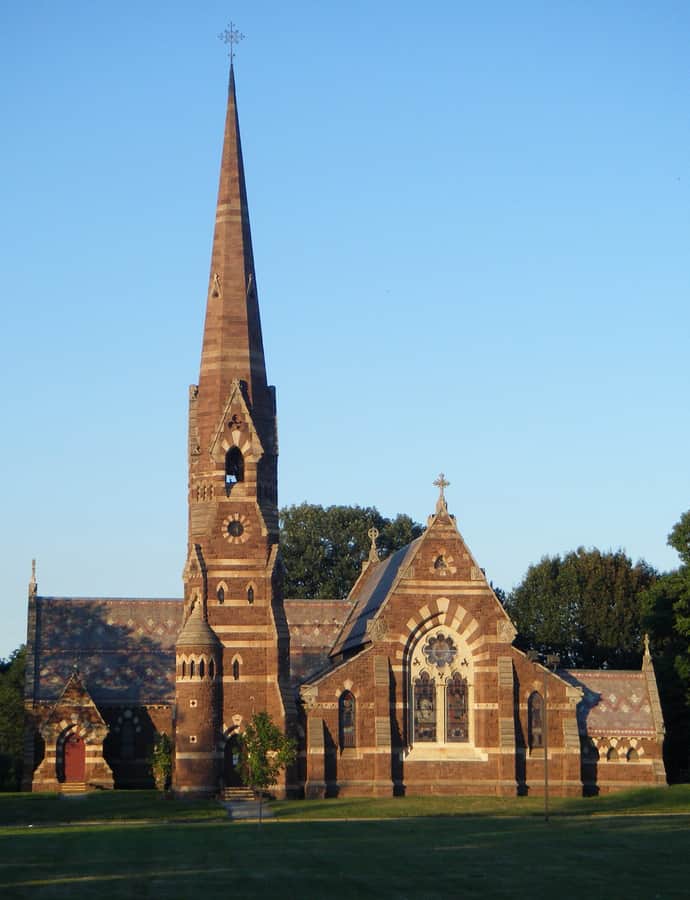
The Church of the Good Shepherd and Parish House is an Episcopal church at 155 Wyllys Street, commissioned by Elizabeth Jarvis Colt, widow of Samuel Colt, and completed in 1867 as a memorial to Samuel Colt and his family. It was designed by Edward Tuckerman Potter and sits in Hartford's Coltsville area, built of Portland brownstone and Ohio sandstone in a roughly T-shaped Gothic Revival plan.

Photo: –Grondemar , CC BY-SA 3.0

Hartford Club

Colonial Revival

Hartford Club

Andrews, Jaques & Rantoul

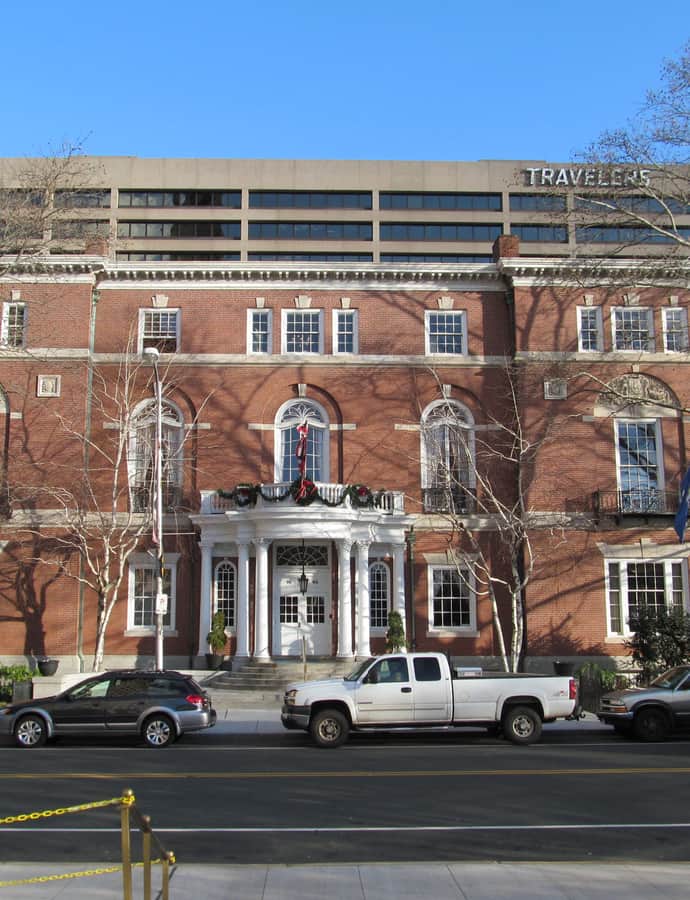
The Hartford Club is a private club at 46 Prospect Street, founded in 1873 as a union of local men's clubs amalgamated due to financial troubles. Its present clubhouse was designed in 1901 by Robert D. Andrews of Andrews, Jaques & Rantoul, completed in 1903, and opened on January 1, 1908, standing across from Travelers Tower and one block south of the Old State House.

Photo: John Phelan , CC BY 3.0

Polish National Home

Art Deco

Polish National Home

Henry F. Ludorf

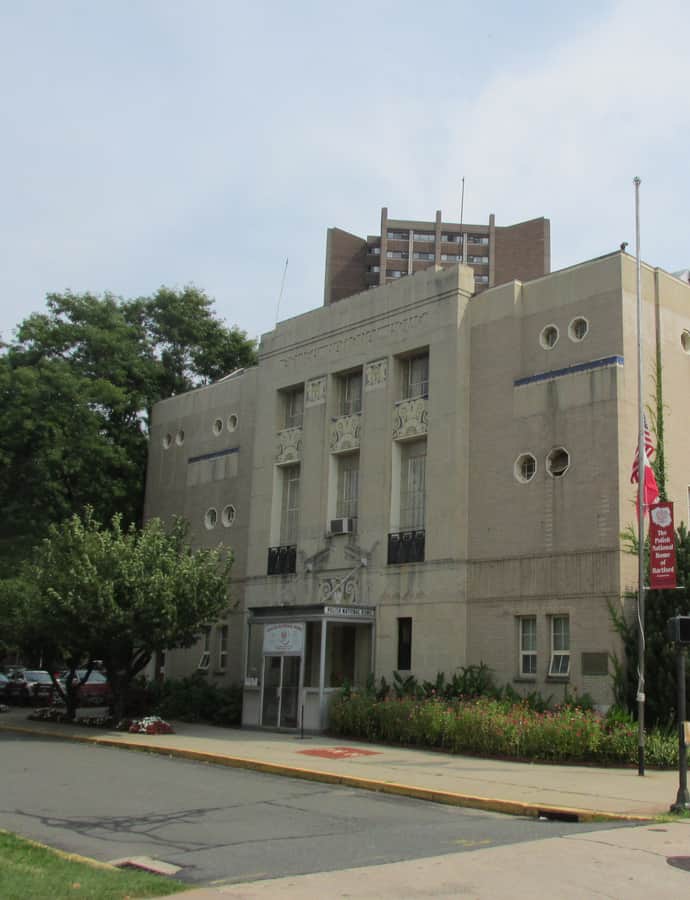
The Polish National Home at 60 Charter Oak Avenue is an Art Deco building designed by Polish-American architect Henry Ludorf and built in 1930 for the Polish National Home Corporation, serving Hartford's Polish immigrant community that had settled the southeast side since 1889.

Photo: John Phelan , CC BY-SA 3.0

Hidden gems

Fine buildings that fewer people seek out.

Engine Company 6 Fire Station

Streamline Moderne

Engine Company 6 Fire Station

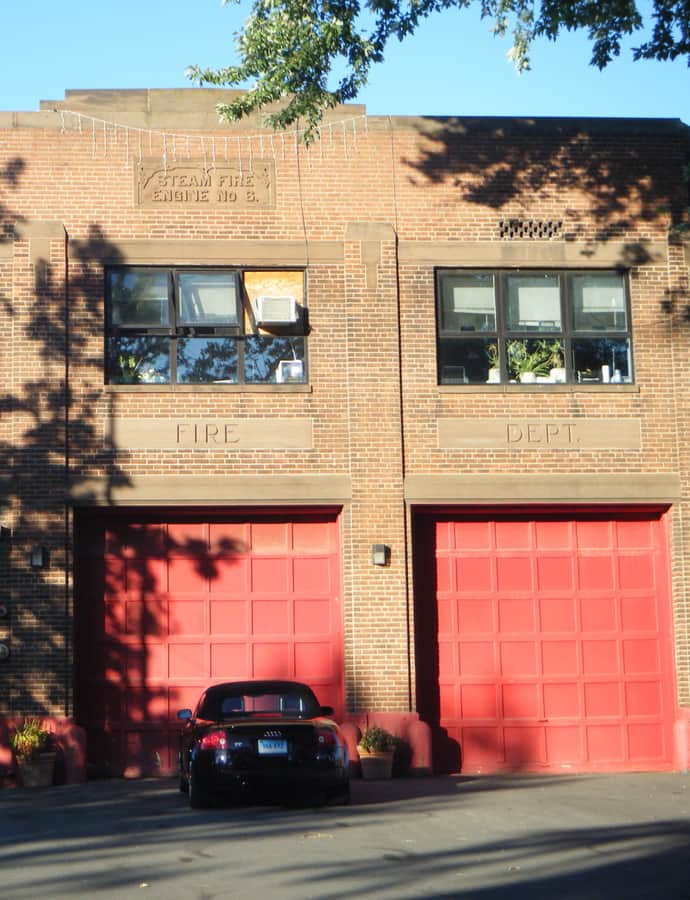
The Engine Company 6 Fire Station at 34 Huyshope Avenue was built in 1937 as a Moderne-style firehouse, serving until 1984 and now housing a homeless shelter.

Photo: –Grondemar , CC BY-SA 3.0

Union Baptist Church

Gothic

Union Baptist Church

Henry Martyn Congdon · 1871

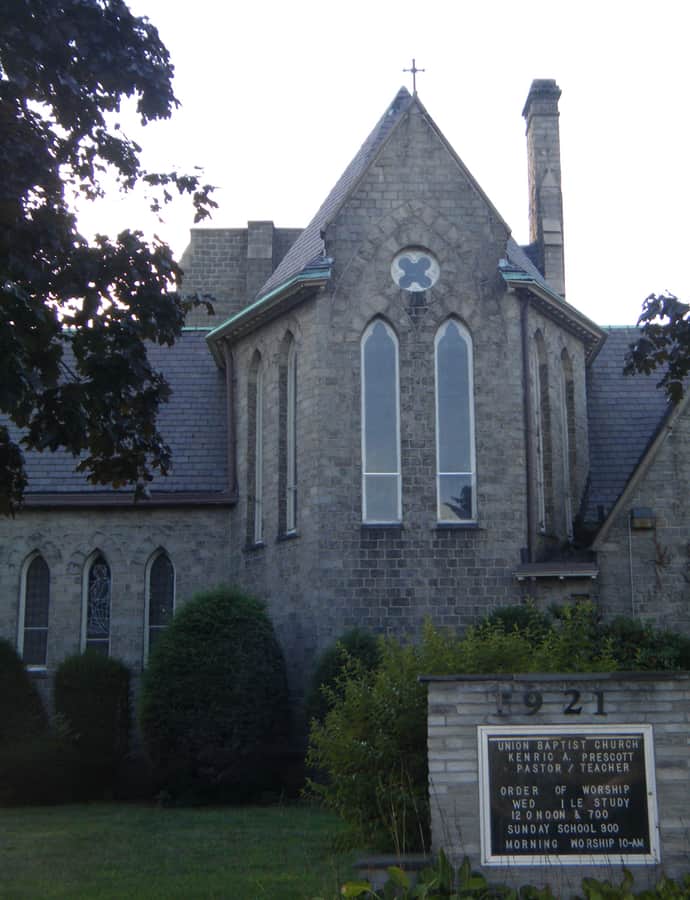
Union Baptist Church at 1913 and 1921 Main Street was built in 1871 as St. Thomas Episcopal Church, designed by Henry Martyn Congdon in Early English Gothic stone. It has long been home to an African-American Baptist congregation whose pastor, Rev. John C. Jackson, played a significant role in advancing civil rights in Connecticut.

Photo: –Grondemar , CC BY-SA 3.0