City guide

architecture in Savannah.

21 buildings worth a detour, each with what to look for. Open them on the map, or walk them with the iPhone app, which collects each one you photograph.

Landmarks

The buildings that define the city's architecture.

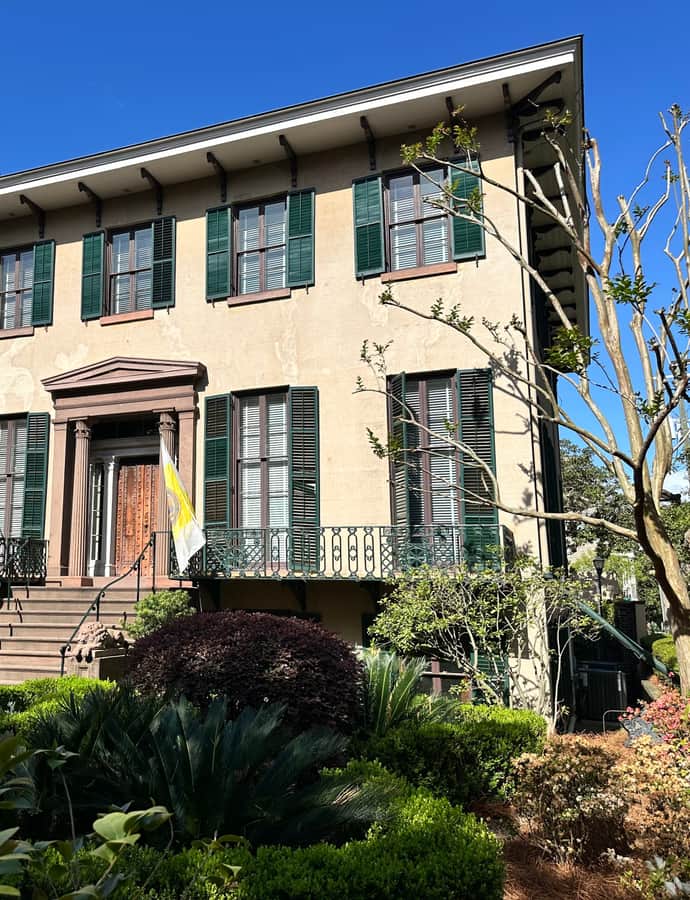
Andrew Low House

Landmark

Andrew Low House

John S. Norris · 1849

John S. Norris built the Andrew Low House in 1849 at 329 Abercorn Street facing Lafayette Square, where it remains the square's oldest building. Andrew Low inherited the house when his uncle died and maintained it as his American residence with his wife, Mary Cowper Stiles. He was also the father-in-law of Juliette Gordon Low, founder of the Girl Scouts of the USA.

Photo: Fuzheado , CC BY-SA 4.0
Cathedral of St. John the Baptist

Gothic Revival

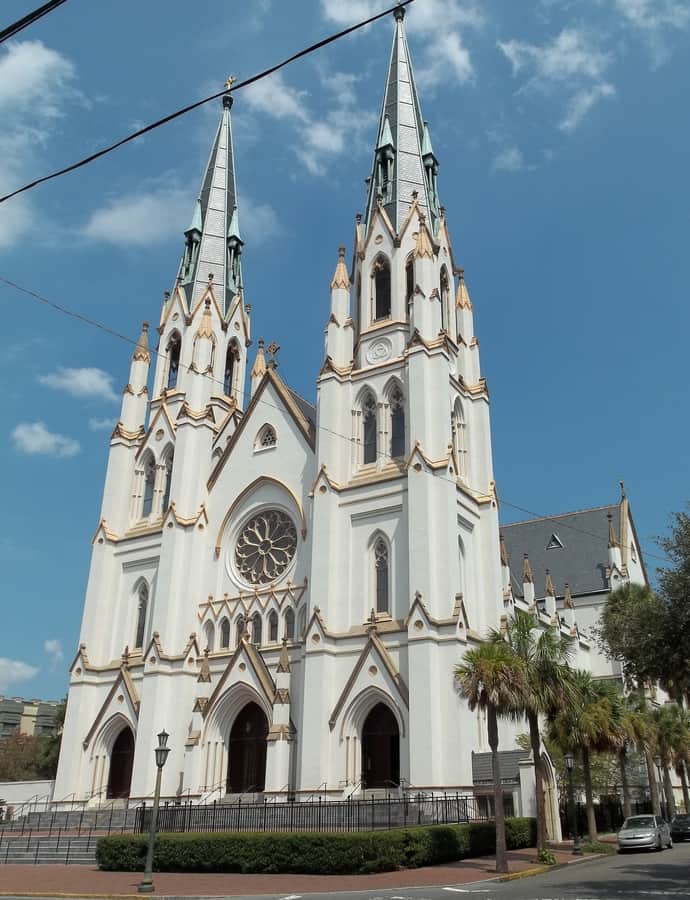
Cathedral of St. John the Baptist

Ephraim Francis Baldwin · 1873

The Cathedral Basilica of St. John the Baptist, at 222 East Harris Street near Lafayette Square, is the mother church of the Roman Catholic Diocese of Savannah. Designed by Ephraim Francis Baldwin and completed in 1873 in the Gothic Revival style, it traces its roots to Savannah's first Catholics — refugees from the French Revolution and the Haitian Revolution who arrived in the late 18th century after Georgia's 1732 colonial charter, which had barred Catholics outright, was overridden by the 1788 ratification of the U.S. Constitution.

Photo: Ebyabe , CC BY-SA 3.0

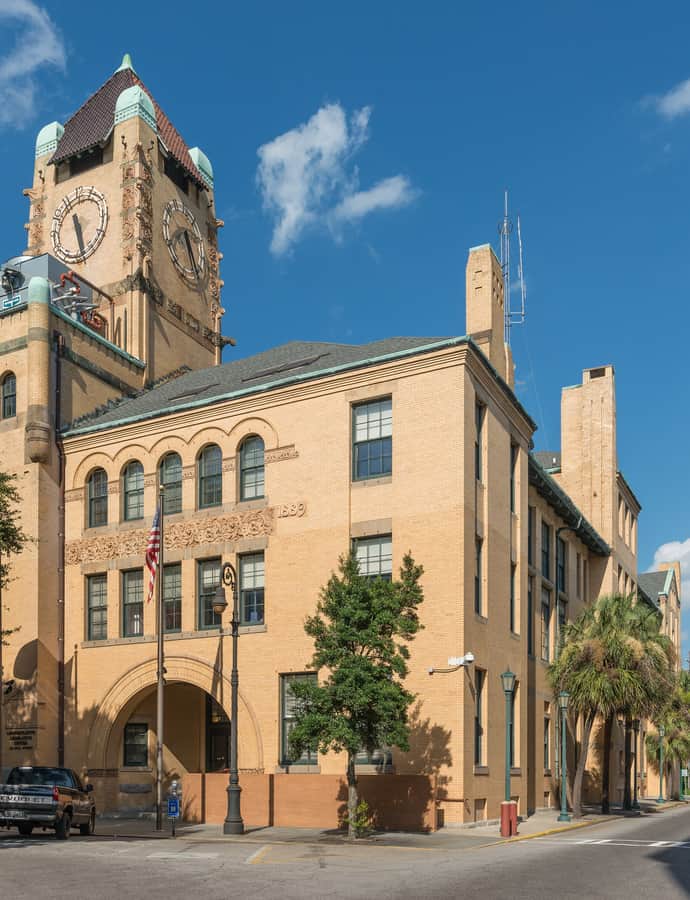
Chatham County Courthouse (Georgia)

Landmark

Chatham County Courthouse (Georgia)

William G. Preston

Chatham County Courthouse in Savannah, Georgia, was designed by architect William G. Preston, a civic building with a prominent street presence in the landmark district downtown.

Photo: DXR , CC BY-SA 4.0

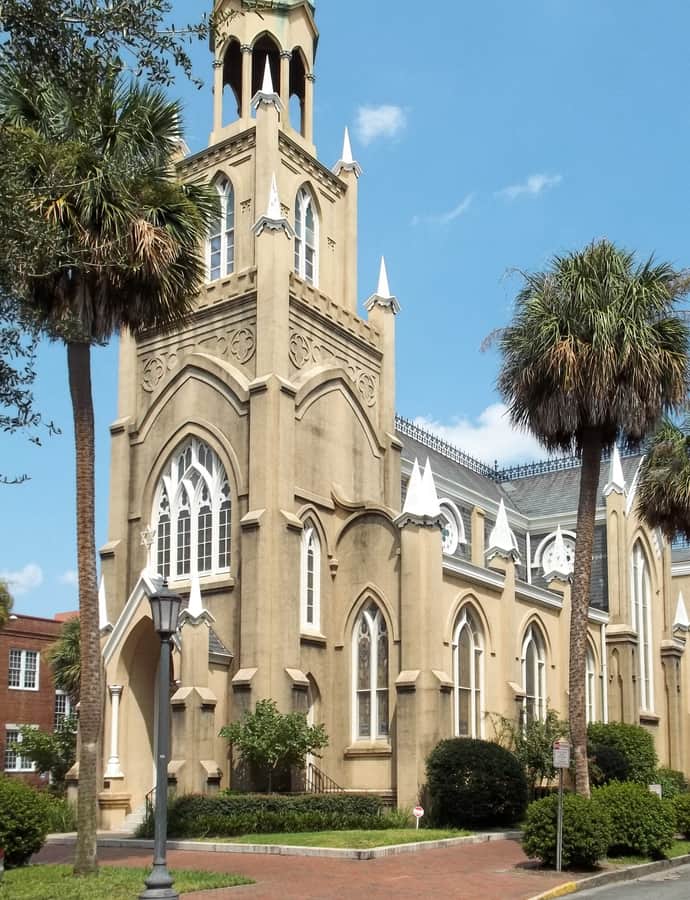
Congregation Mickve Israel

Gothic Revival

Congregation Mickve Israel

Henry G. Harrison · 1733

Congregation Mickve Israel, at 20 East Gordon Street on Monterey Square, was organized in 1735 by Sephardic Jewish immigrants from London who had sailed for Savannah in 1733 aboard the William and Sarah, making it one of the oldest Jewish congregations in the United States. The current Gothic Revival synagogue, designed by Henry G. Harrison, was consecrated in 1878 and now shares its site with a Jewish history museum.

Photo: Ebyabe , CC BY-SA 3.0

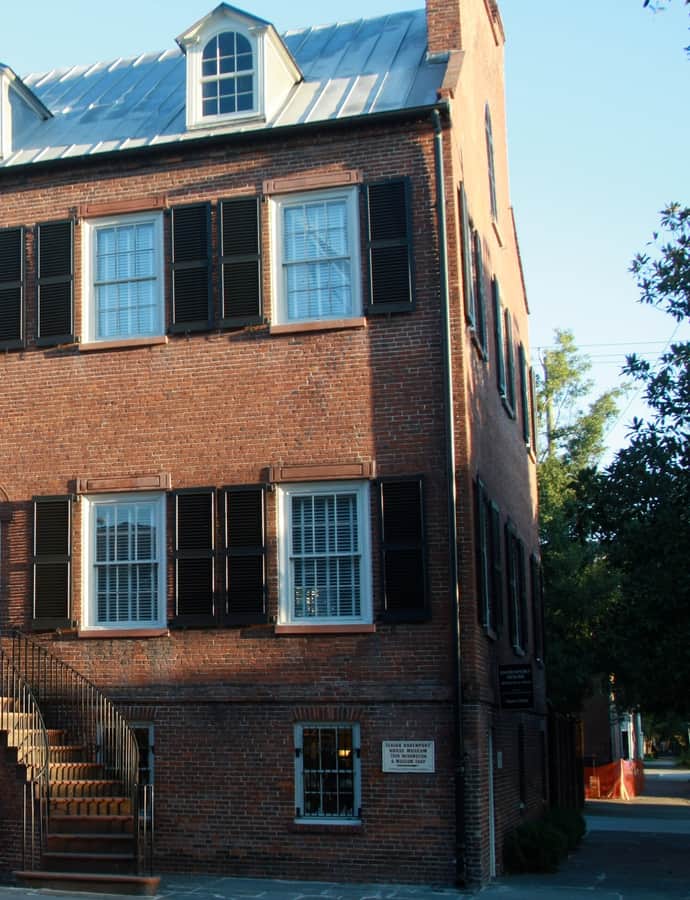
Davenport House

Landmark

Davenport House

1820

The Isaiah Davenport House at 324 East State Street, on Columbia Square, was built in 1820 by master builder Isaiah Davenport, a New England transplant who designed and built the Federal-style dwelling both as a home for his large household and as a demonstration of his own craftsmanship. It has operated as a historic house museum under the Historic Savannah Foundation since 1963.

Photo: Cybersquire79 , CC BY-SA 3.0 us

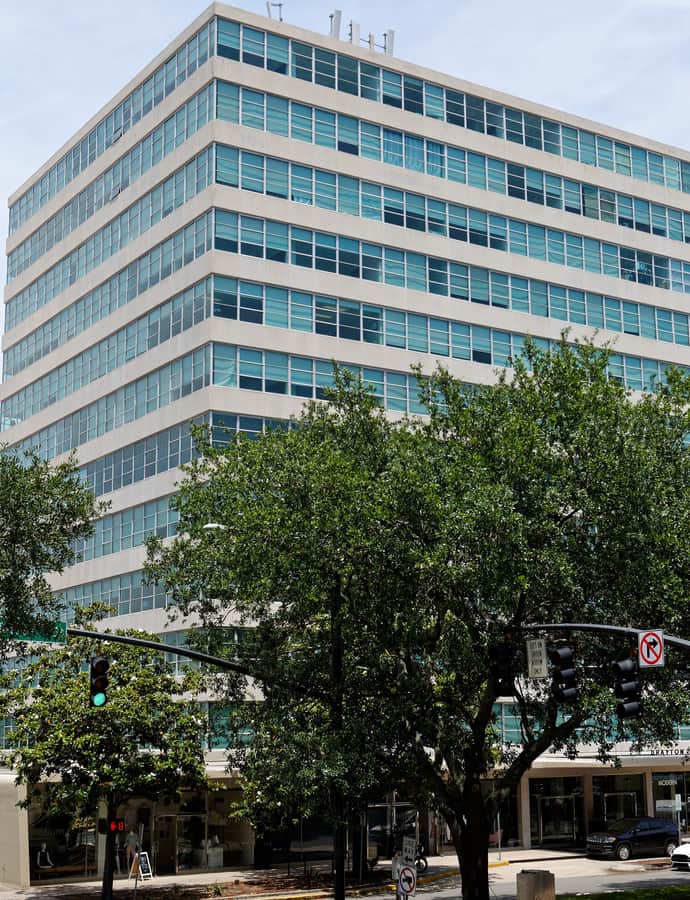
Drayton Tower Apartments

International Style

Drayton Tower Apartments

Drayton Tower Apartments is an International Style building listed on the National Register of Historic Places.

Photo: Jud McCranie , CC BY-SA 4.0

East Henry Street Carnegie Library

Landmark

East Henry Street Carnegie Library

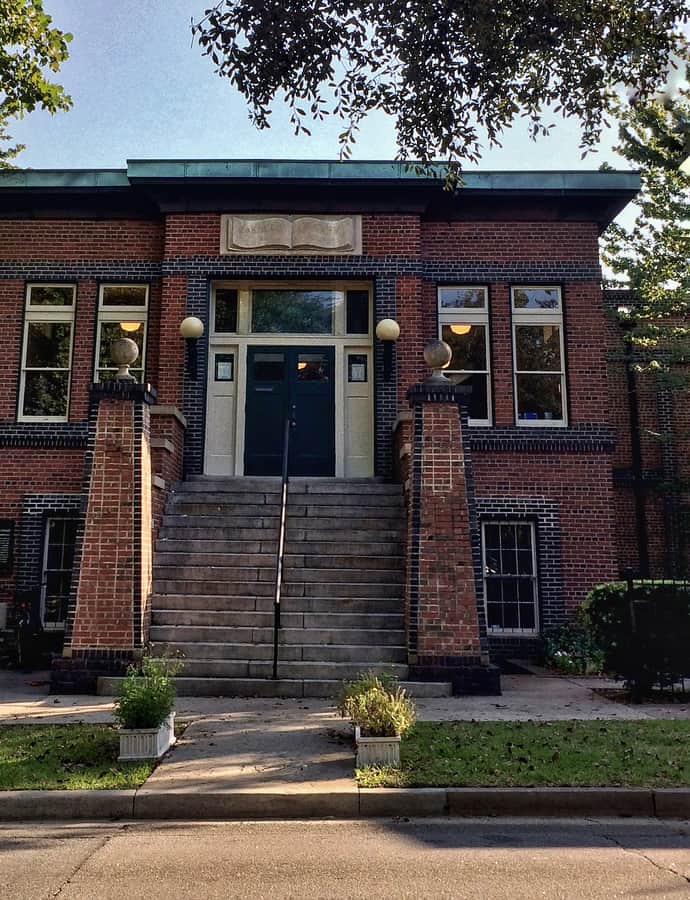
The East Henry Street Carnegie Library, historically known as the Carnegie Colored Library, was built as a segregation-era public library established for and by African Americans in Savannah. It is one of only two Carnegie library projects built for African Americans in Georgia, a Prairie-style building that now operates as a branch of Savannah's Live Oak Public Libraries system after preservation and renovation.

Photo: Farrargirl , CC BY-SA 4.0

First African Baptist Church

Landmark

First African Baptist Church

1777

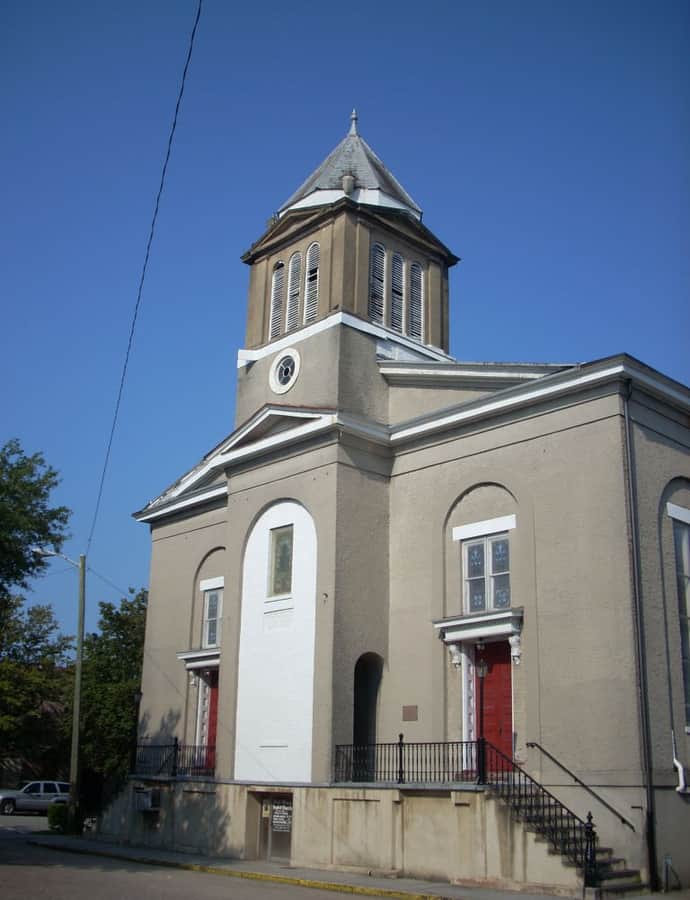
First African Baptist Church traces its founding to 1777, growing out of an earlier congregation formed in 1773 that was not officially organized until 1788. It is counted among the very first Black Baptist congregations in North America, a claim contested by South Carolina's Silver Bluff Baptist Church and the First Baptist Church of Petersburg, Virginia. The church now operates a museum displaying congregational memorabilia dating back to the 18th century.

Photo: KudzuVine , Public domain

Green-Meldrim House

Gothic Revival

Green-Meldrim House

John S. Norris

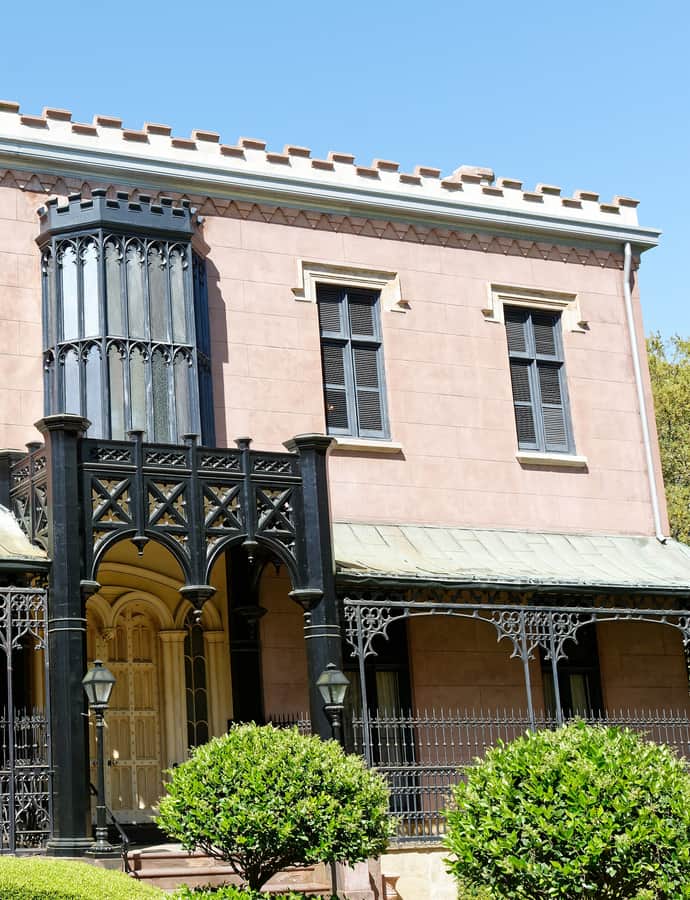
The Green–Meldrim House stands at the northwest corner of Madison Square, built in 1853 and designed by John S. Norris as one of the finest and most lavish examples of Gothic Revival architecture in the American South. It was designated a National Historic Landmark in 1976. St. John's Episcopal Church, its next-door neighbor, now owns the house and uses it for tours, meetings, and receptions.

Photo: Bubba73 (Jud McCranie) , CC BY-SA 4.0

Romanesque Revival

Hotel Bardo Savannah

2005

Hotel Bardo Savannah is a hotel building dating to 2005, built in Romanesque Revival style within Savannah's landmark historic district.

Masonic Center

Landmark

Masonic Center

Hyman Witcover · 1923

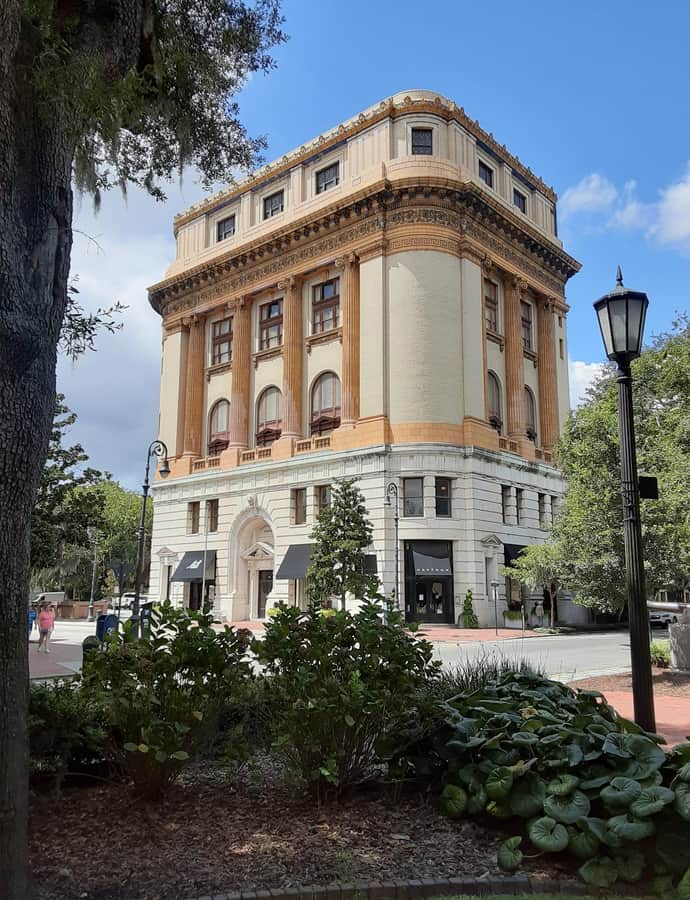
The Savannah Masonic Center at 341 Bull Street, on the southwestern corner of Madison Square, was designed by Hyman Witcover — the same architect behind Savannah City Hall — and built between 1913 and 1923. The Masonic community purchased the land in 1895 and spent years raising funds before laying the cornerstone in 1913, and the finished hall was deeded to the Scottish Rite. In 2019 the building was sold to the Savannah College of Art and Design, which now operates it as Gryphon.

Photo: JeffersonLH , CC BY-SA 4.0

Massie Common School House

Greek Revival

Massie Common School House

John S. Norris

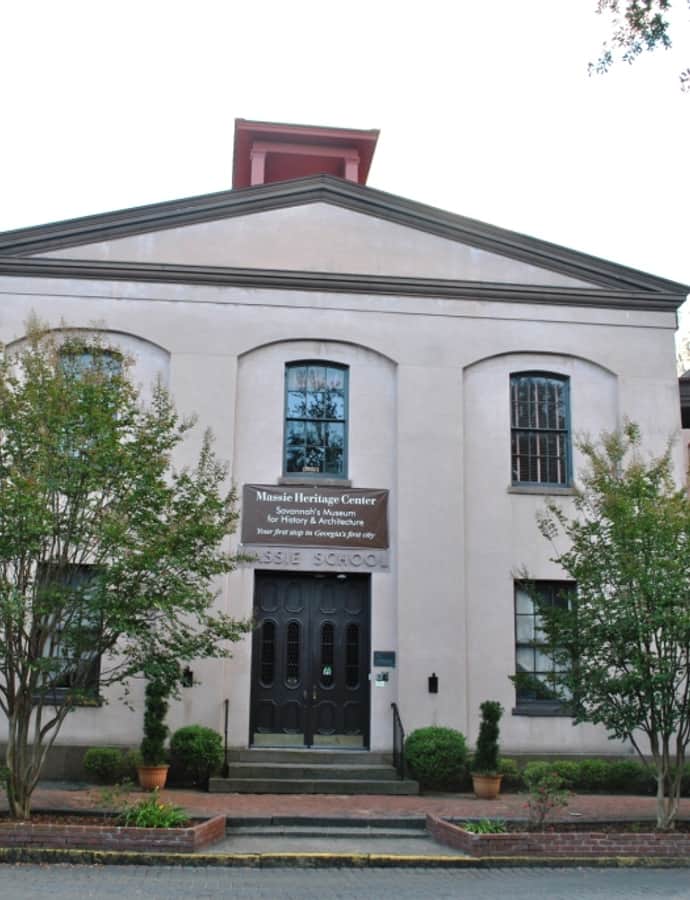
The Massie Common School House is a Greek Revival building designed by architect John S. Norris and listed on the National Register of Historic Places.

Photo: Elisa.rolle , CC BY-SA 4.0

Mercer House

Landmark

Mercer House

John S. Norris · 1868

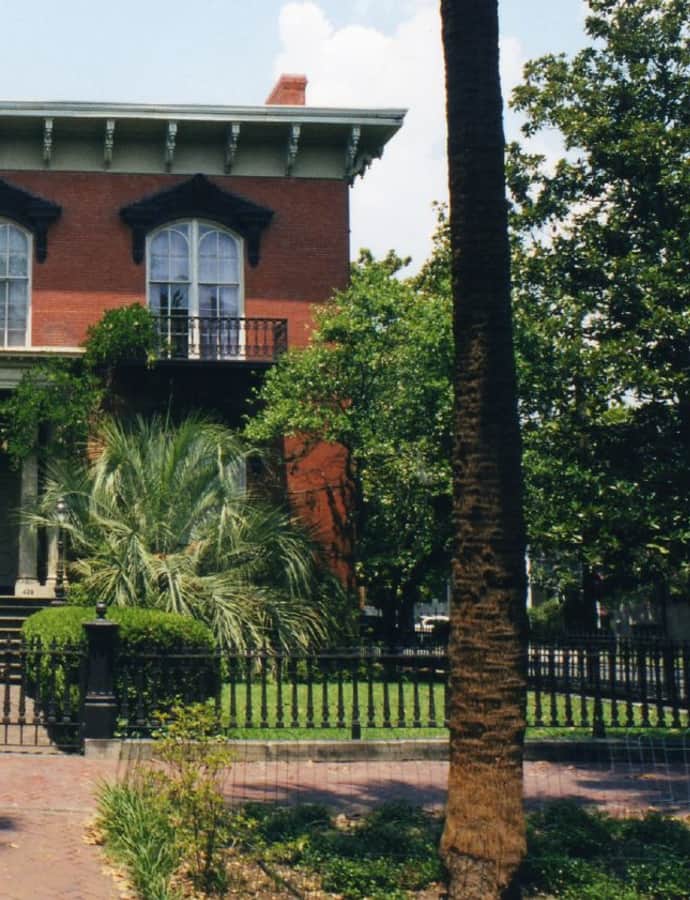
John S. Norris designed the Italianate Mercer House, completed in 1868 at 429 Bull Street on the southwestern block of Monterey Square. It later became notorious as the scene of the 1981 killing of Danny Hansford by owner Jim Williams, a story retold in John Berendt's 1994 book 'Midnight in the Garden of Good and Evil' and its film adaptation three years later. It now operates as the Mercer Williams House Museum.

Photo: Kyle Kesselring from Canal Winchester, OH , CC BY 2.0

Owens-Thomas House

Landmark

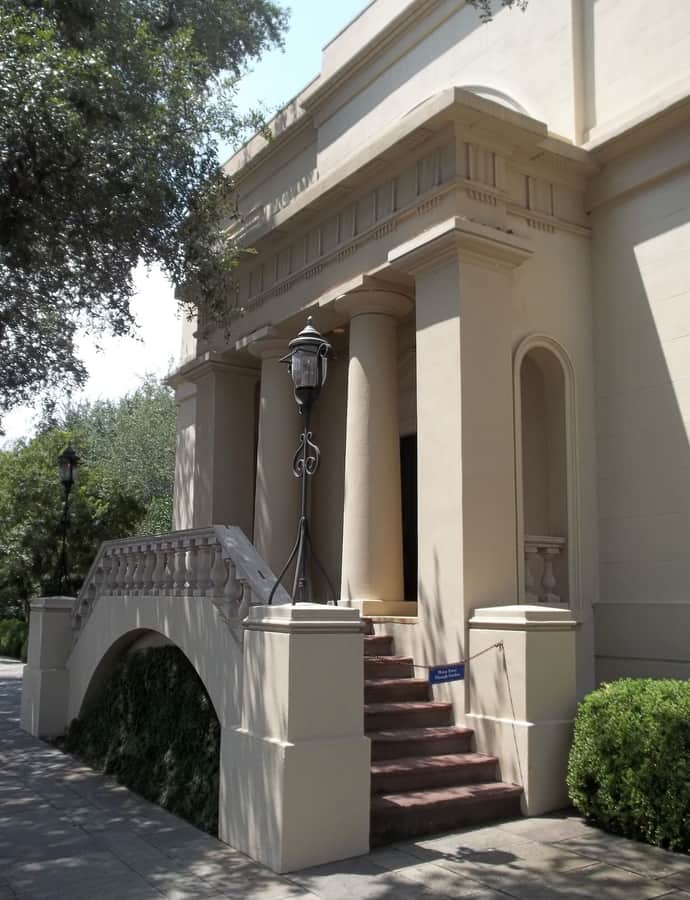
Owens-Thomas House

William Jay

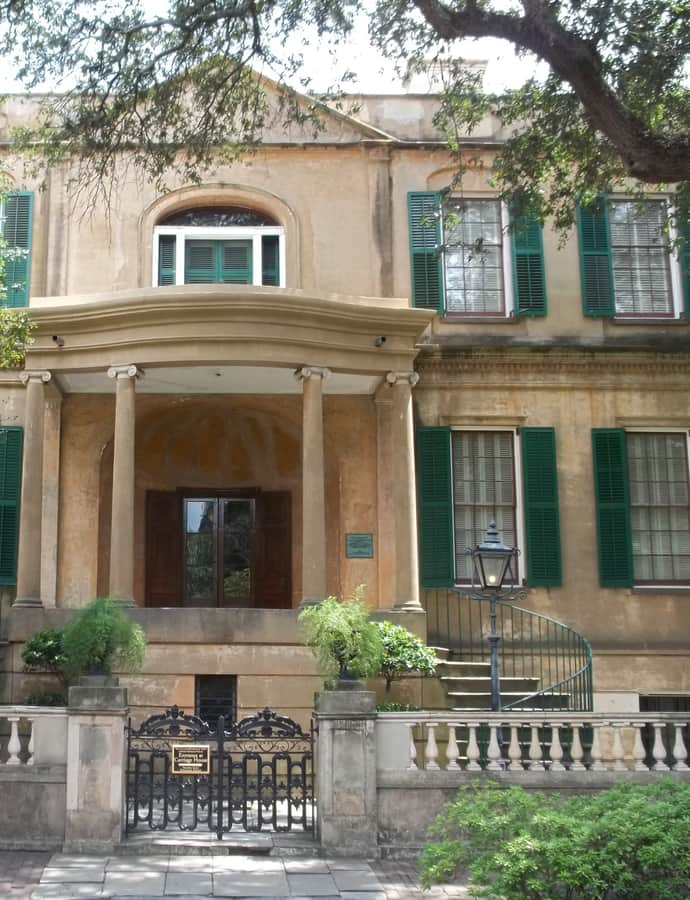
The Owens–Thomas House & Slave Quarters, at 124 Abercorn Street on Oglethorpe Square, was designed by the English architect William Jay of Bath and built between 1816 and 1819 for the Richardson family. Jay drew the plans in England and sent elevations ahead to Savannah workers before he himself arrived, and the finished house was recognized as one of the nation's finest examples of English Regency architecture, earning National Historic Landmark status in 1976. It is now operated as a historic house museum by Telfair Museums.

Photo: Ebyabe , CC BY-SA 3.0

Savannah Theatre

Landmark

Savannah Theatre

William Jay · 1818

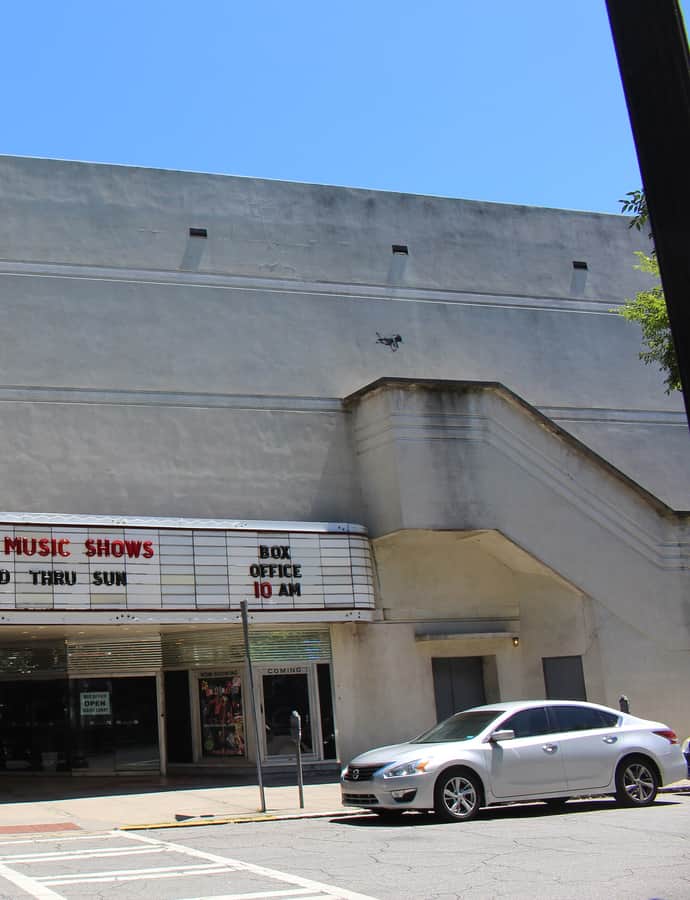
The Savannah Theatre opened at 5:30pm on December 4, 1818, on Bull Street facing Chippewa Square, with a performance of 'The Soldier's Daughter.' Designed by British architect William Jay, it is one of the oldest continually operating theatres in the United States, having survived an 1898 hurricane and fires in 1906 and 1948 to keep staging shows into the present.

Photo: Michael Rivera , CC BY-SA 4.0

Landmark

Sorrel–Weed House

Charles B. Cluskey · 1840

The Sorrel–Weed House, built in 1840 to a design by architect Charles B. Cluskey, stands at 6 West Harris Street on Madison Square as one of the largest houses in Savannah at 10,000 square feet. It was the boyhood home of Brigadier General Moxley Sorrel, and in 1954 it became one of the first two homes in Georgia designated a State Landmark.

Telfair Academy of Arts and Sciences

Landmark

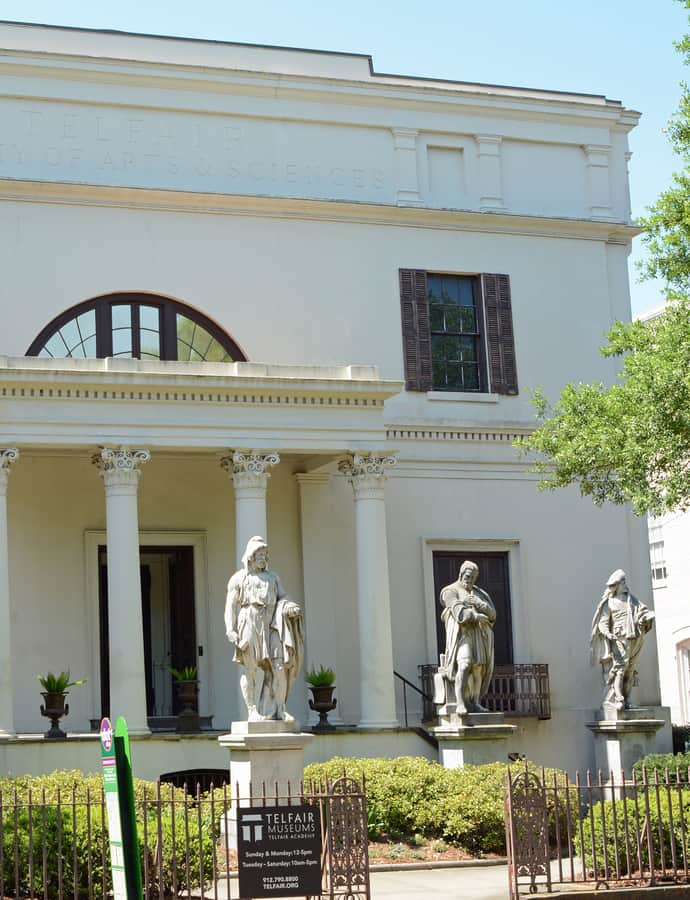
Telfair Academy of Arts and Sciences

1819

The Telfair Academy began as a private townhouse for the Telfair family, designed by William Jay and built in 1818 on the west side of Telfair Square. In 1886 it opened as a free public art museum, becoming one of the first ten art museums in America and the oldest public art museum in the South. It was declared a National Historic Landmark in 1976 and is one of only a small number of Jay's surviving buildings.

Photo: Bubba73 (Jud McCranie) , CC BY-SA 4.0

Landmark

Tomochichi Federal Building and United States Courthouse

Office of the Supervising Architect

Built between 1894 and 1899 and substantially enlarged in 1932, this Second Renaissance Revival courthouse occupies an entire block on the west side of Wright Square. It was constructed primarily to house the Savannah post office and now serves the United States District Court for the Southern District of Georgia. Listed on the National Register in 1974, it was renamed in 2005 to honor the Creek leader Tomochichi.

United States Customhouse

Greek Revival

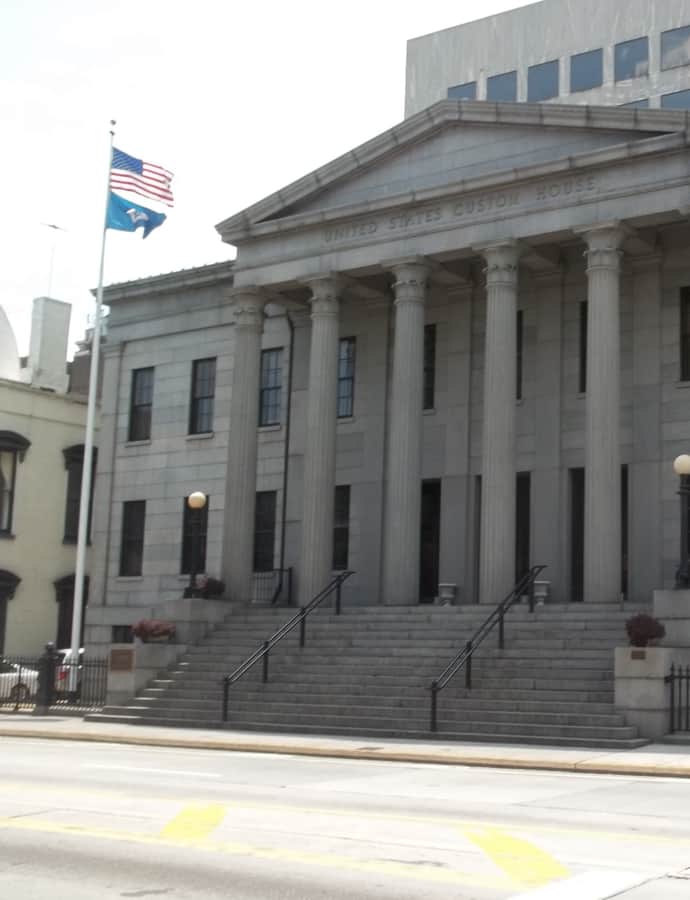
United States Customhouse

1852

The U.S. Customhouse, completed in 1852 at East Bay and Bull Streets, was built to house the customs offices overseeing Savannah's booming 18th- and 19th-century import-export trade. New York architect John S. Norris designed and supervised construction of the building — the first of eighteen commissions he would complete while living in Savannah from 1846 to 1861.

Photo: Ebyabe , CC BY-SA 3.0

William Scarbrough House

Landmark

William Scarbrough House

William Jay

The William Scarbrough House was built in 1819 for William Scarbrough, one of the principal owners of the SS Savannah, which that same year became the first steamship to cross the Atlantic Ocean. Designed by William Jay, it is a nationally significant early example of Greek Revival architecture and one of only a few of Jay's works to survive in the United States. Declared a National Historic Landmark in 1973, it now houses the Ships of the Sea Maritime Museum.

Photo: Ebyabe , CC BY-SA 3.0

Notable buildings

Worth a stop when you're nearby.

Savannah City Hall

Renaissance Revival

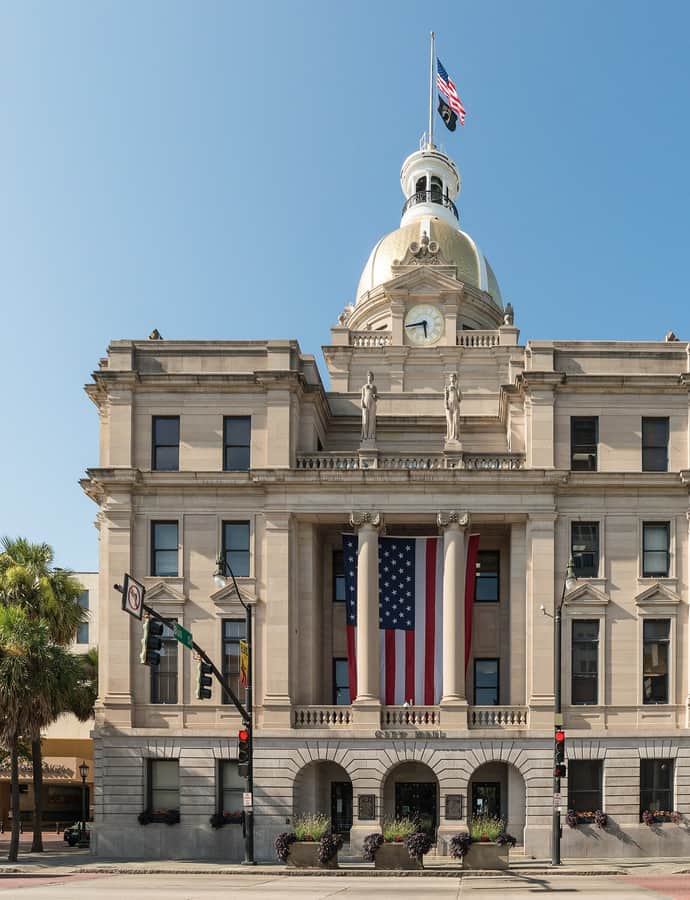
Savannah City Hall

Hyman Witcover · 1906

Savannah City Hall, designed by Hyman Witcover in the Renaissance Revival style, was built between 1904 and 1905 and opened in 1906 on the site of the old City Exchange, demolished that same year. It went up during the administration of Mayor Herman Myers, who called it a building that would 'typify the twentieth century Savannah' and stand as 'a monument to the progressive spirit.'

Photo: DXR , CC BY-SA 4.0