
Central Public Library (Carnegie Library)
- Architect
- Albert Randolph Ross
- Year
- 1902
- Style
- Beaux-Arts
- City
- Washington, DC
- Collection
- the city beautiful
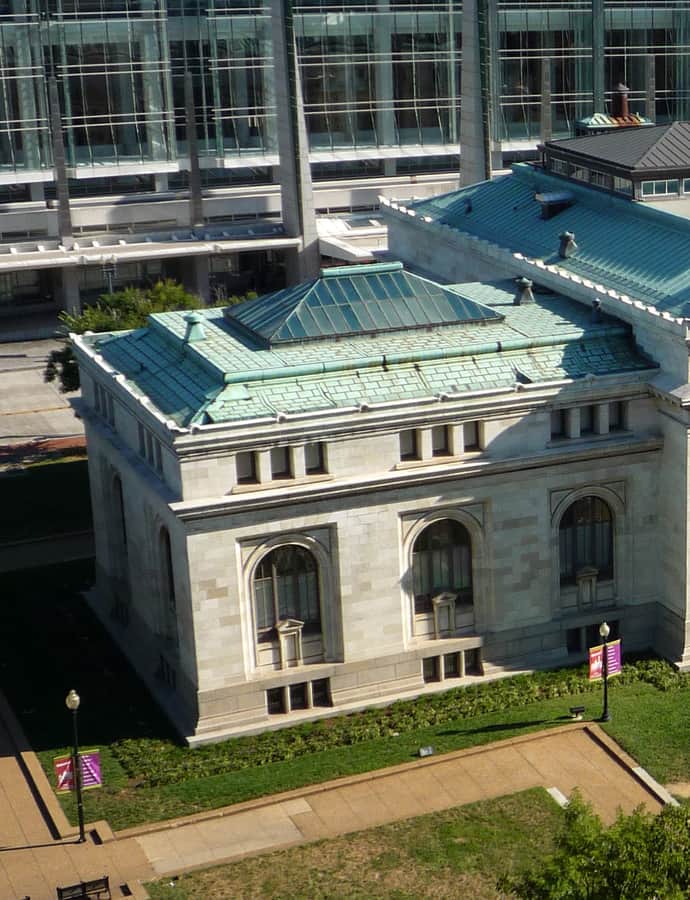

The Carnegie Library of Washington, D.C., also known as Central Public Library, was the first of four libraries in the city funded by Andrew Carnegie, after banker and developer Brainard Warner, then vice president of the Washington Public Library board, secured Carnegie's backing around 1900. Designed by the New York firm of Ackerman & Ross — architect Albert Randolph Ross — in the Beaux-Arts style, it was dedicated on Mount Vernon Square on January 7, 1903, and was the city's first desegregated public building.
the building
Nearly a century of civic life. The building served as Washington's central public library for almost 70 years before overcrowding forced a move to the Martin Luther King Jr. Memorial Library. It then sat closed for a decade before being renovated as part of the University of the District of Columbia.
the style
Ross and his firm, Ackerman & Ross, designed the library in the Beaux-Arts style.
More on Beaux-Artssignificance
The building is a DC Historic Landmark, listed on the National Register of Historic Places as "Central Public Library" since 1969, and included in the District of Columbia Inventory of Historic Sites. It was the city's first desegregated public building.
nearby
- American Federation of Labor
- United Brotherhood of Carpenters and Joiners-Local 132 building
- Sixth & I Historic Synagogue
- Bruce, Blanche K. House
- Surratt, Mary House
- Greyhound Bus Terminal