
Boston Young Men's Christian Association
- Architect
- Shepley, Rutan and Coolidge
- Style
- Neoclassical
- City
- Boston, MA
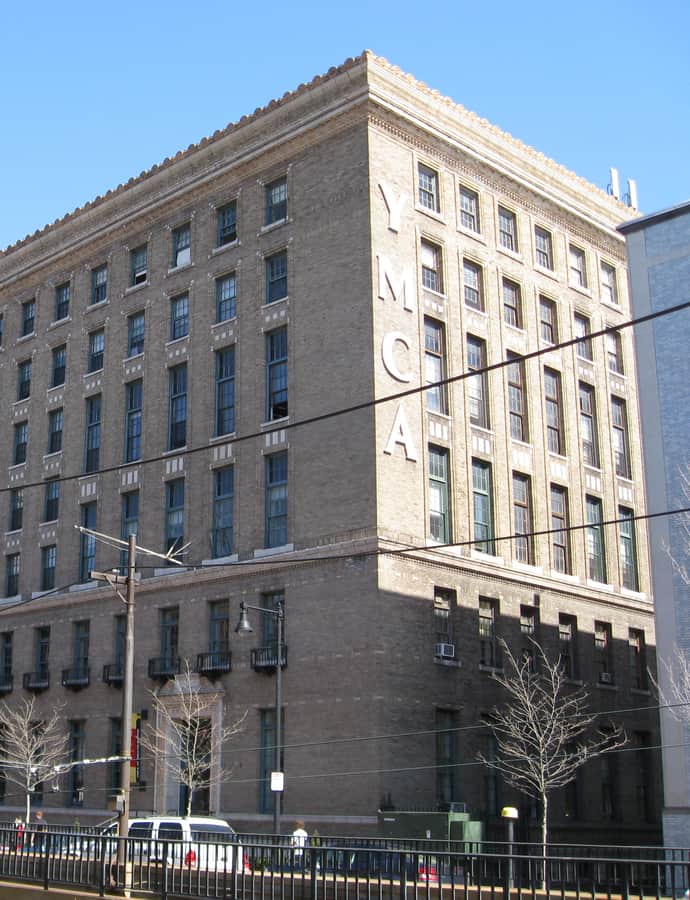

The Boston YMCA, founded in 1851 as the first YMCA chapter in the United States, built its Huntington Avenue administration building in 1911, designed by Shepley, Rutan and Coolidge, the successor firm to H.H. Richardson. The building reflects a broader relocation of Boston institutions away from the downtown core, following the filling-in of Back Bay and a series of fires that reshaped land use there — a migration that also carried the Museum of Fine Arts and other institutions further down Huntington Avenue.
the building
Neoclassical administration building. The 1911 administration building was designed by Shepley, Rutan and Coolidge, the firm that succeeded H.H. Richardson's practice, in the Neoclassical style.
Athletic and social mission. As it grew from a modest Evangelical association into a major social service organization, the YMCA offered athletic and educational facilities, employment services, lodging for young unmarried men, and summer camps for boys.
the style
The building's Neoclassical design came from Shepley, Rutan and Coolidge, the successor firm to H.H. Richardson's office.
More on Neoclassicalthe architect
Shepley, Rutan and Coolidge was the successor firm to the office of H.H. Richardson, and designed the YMCA's Huntington Avenue administration building in 1911.
significance
The building is listed on the National Register of Historic Places, and the YMCA of Greater Boston it houses was the first YMCA chapter founded in the United States, in 1851.
nearby
- New England Conservatory/Jordan Hall (ext&int)
- Symphony Hall
- New Riding Club
- Four Seasons Hotel & Private Residences, One Dalton Street
- Museum of Fine Arts Boston
- Massachusetts Historical Society