City guide

architecture in Grand Rapids.

16 buildings worth a detour, each with what to look for. Open them on the map, or walk them with the iPhone app, which collects each one you photograph.

Landmarks

The buildings that define the city's architecture.

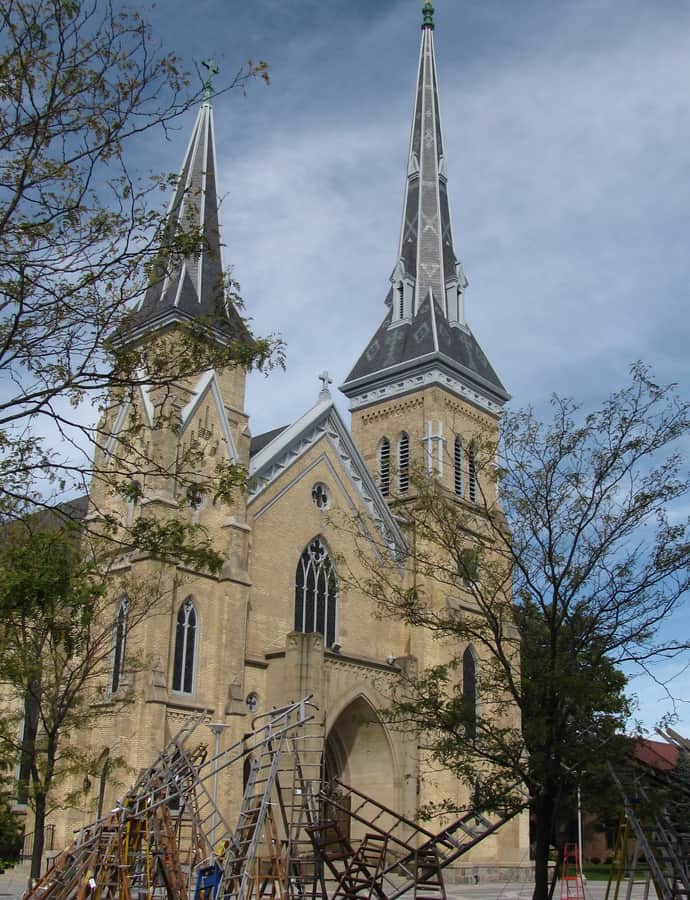
Basilica of St. Adalbert

Romanesque Revival

Basilica of St. Adalbert

1913

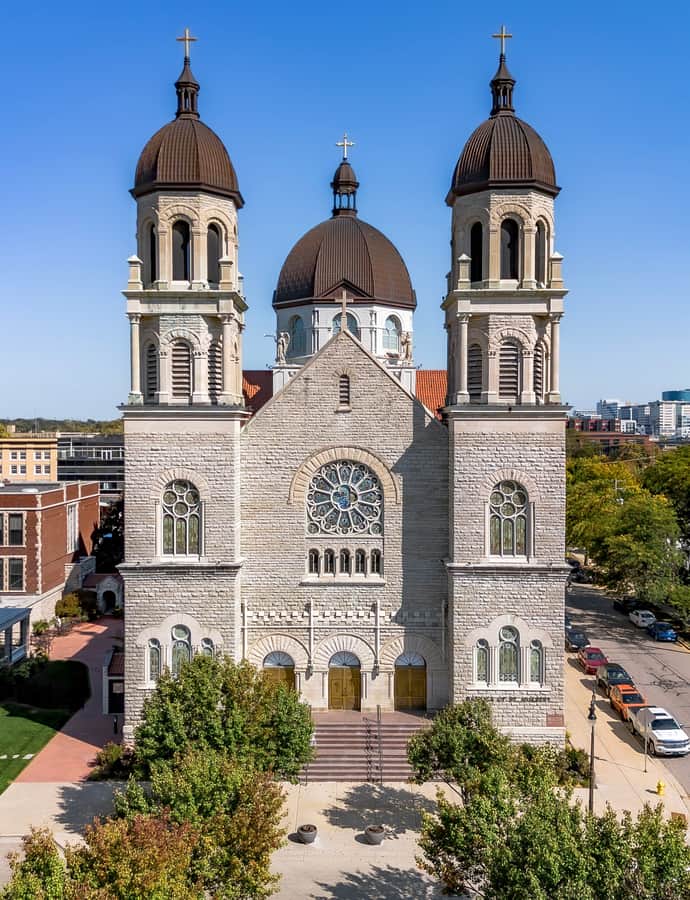
The Basilica of St. Adalbert traces its roots to the Saint Adalbert Aid Society, founded in 1872 to help new Polish immigrants in Grand Rapids find housing and work. The society built a small wooden church in 1881, enlarged it a decade later, and then began the present church in July 1907, laying the cornerstone that August 18. Construction by the Andrews Brothers Company of Cleveland, Ohio continued until spring 1913, at a cost of roughly $150,000 for the building and its furnishings. It is named for St. Adalbert of Prague, patron of Poland, the parishioners' homeland.

Photo: WMrapids , CC0
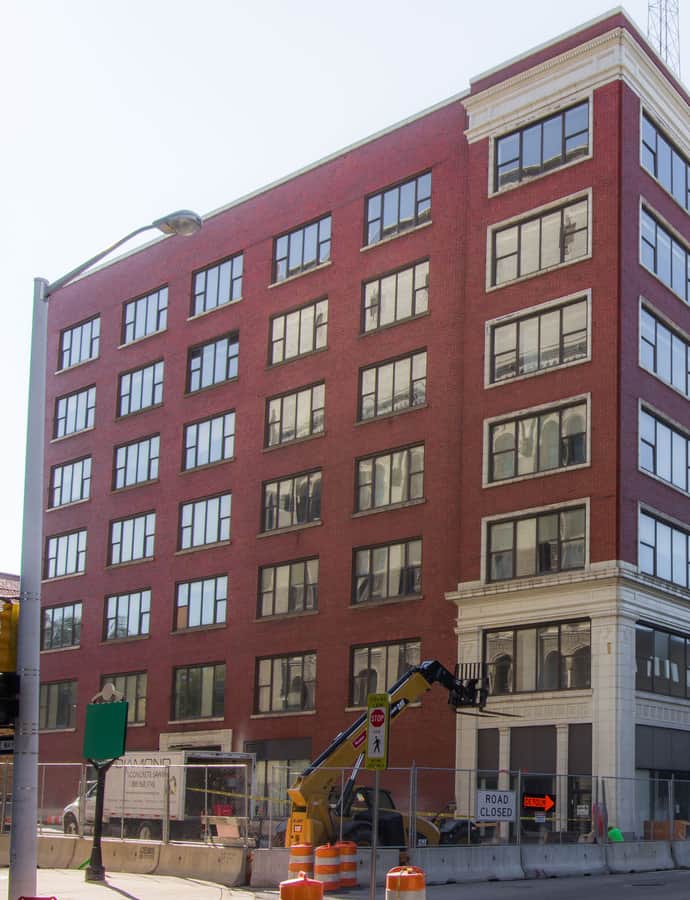
Berkey and Gay Furniture Company Factory

Romanesque Revival

Berkey and Gay Furniture Company Factory

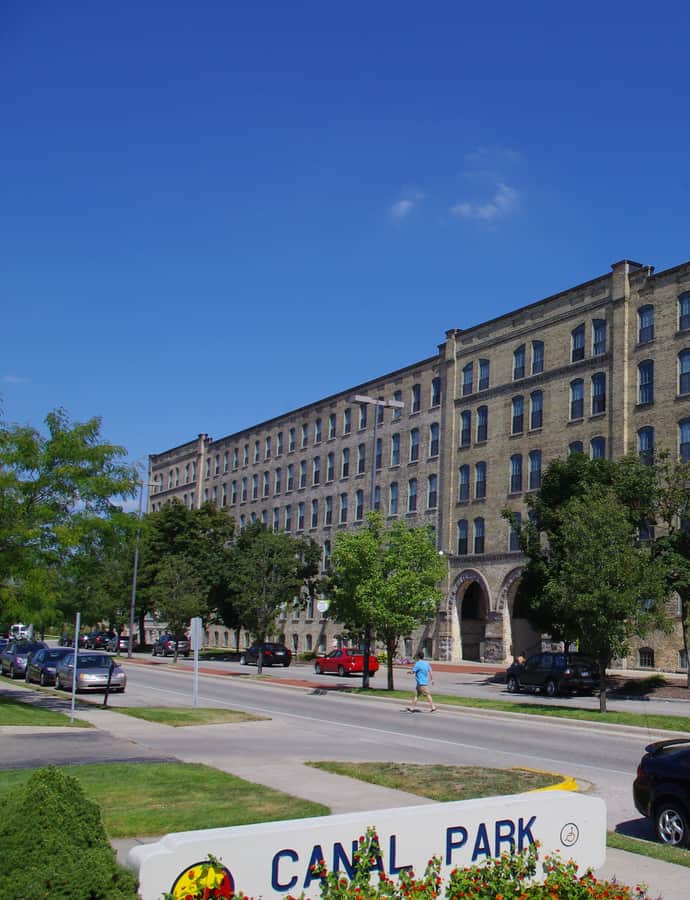
The Berkey and Gay Furniture Company Factory at 940 Monroe Avenue NW traces back to William Berkey, who arrived in Grand Rapids in 1855 and founded a mill making window sashes and wood building products. Joined by his brother Julius and later by partner George W. Gay, the operation grew into the Berkey & Gay Furniture Company, which opened its six-story factory, complete with wholesale and retail showrooms, in 1874. By 1882 the factory covered three city blocks. It was listed on the National Register of Historic Places in 2000.

Photo: SSTEFFEK , CC BY-SA 3.0

Cathedral of Saint Andrew

Gothic Revival

Cathedral of Saint Andrew

1876

The Cathedral of Saint Andrew traces back to St. Mary's Church, founded by Rev. Frederic Baraga to serve Native American parishioners on the west bank of the Grand River. As the town grew, Father Andreas Viszoczky built a new limestone church on Monroe Street, completed in 1850 and named St. Andrew. Construction of the present church on Sheldon Boulevard began in 1875 and finished in 1876, and when Pope Leo XIII established the Diocese of Grand Rapids in 1882, its first bishop, Henry J. Richter, chose Saint Andrew's as his cathedral, consecrated there on April 22, 1883.

Photo: JohnE777 , CC BY 2.0

Goodspeed Brothers Building

Chicago School

Goodspeed Brothers Building

1895

The Goodspeed Brothers Building at 188 Monroe Street NW was built by John W. Goodspeed (born 1859) and his younger brother Theron (born 1864), who moved from Ypsilanti to Grand Rapids in the early 1890s and opened a shoe store. As their business thrived, they constructed this Chicago School building in the heart of the central business district, completed by 1895. It was listed on the National Register of Historic Places in 1980.

Photo: Andrew Jameson , CC BY-SA 3.0

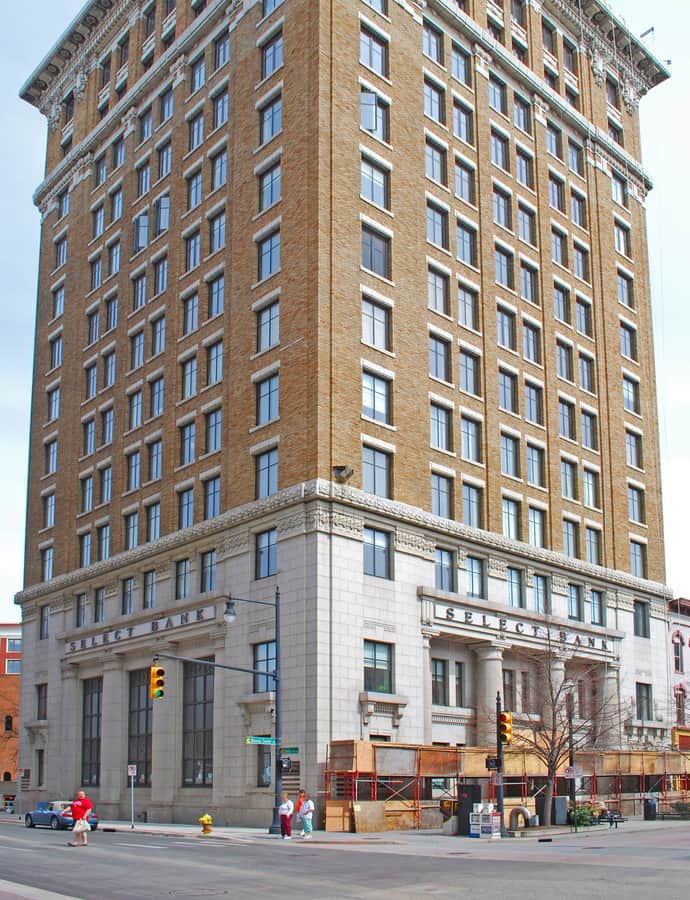
Grand Rapids Savings Bank Building

Beaux-Arts

Grand Rapids Savings Bank Building

1916

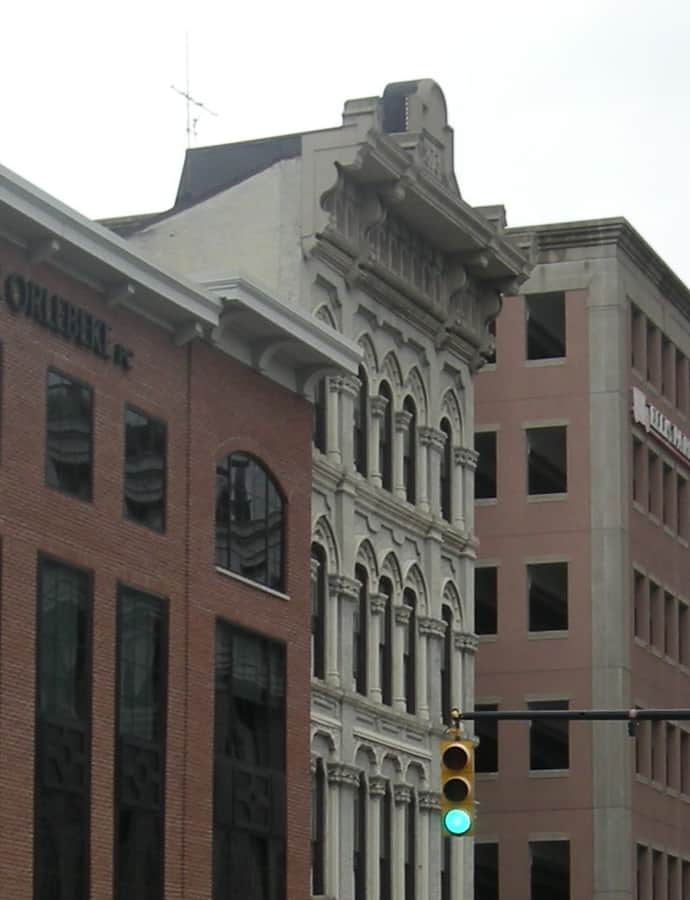
The Grand Rapids Savings Bank Building rose at 60 Monroe Center in 1916, right as a pre-World War I boom in financial firms was reshaping downtown Grand Rapids. Local architects Osgood & Osgood designed the 13-story steel-frame tower to serve as the bank's headquarters while leasing extra floors to tenants, among them lumberman John W. Blodgett, Senator Arthur Vandenberg, and war correspondent Alfred D. Rathbone IV. It was listed on the National Register of Historic Places in 1990.

Photo: Andrew Jameson , CC BY-SA 3.0

Keeler Building

Chicago School

Keeler Building

The Keeler Building at 56 North Division Avenue began in the early 1910s as a showroom where local furniture manufacturers could exhibit their work, built for the founders of Keeler Brass. Architect Eugene Osgood designed it, contractor Owen Ames & Kimball built it, and construction finished in 1911 before a substantial 1913 expansion. Furniture makers Baker Furniture Company, Herman Miller Inc., and Kindel Furniture Company all leased showroom space there.

Photo: rossograph , CC BY-SA 4.0

Ladies' Literary Club

Richardsonian Romanesque

Ladies' Literary Club

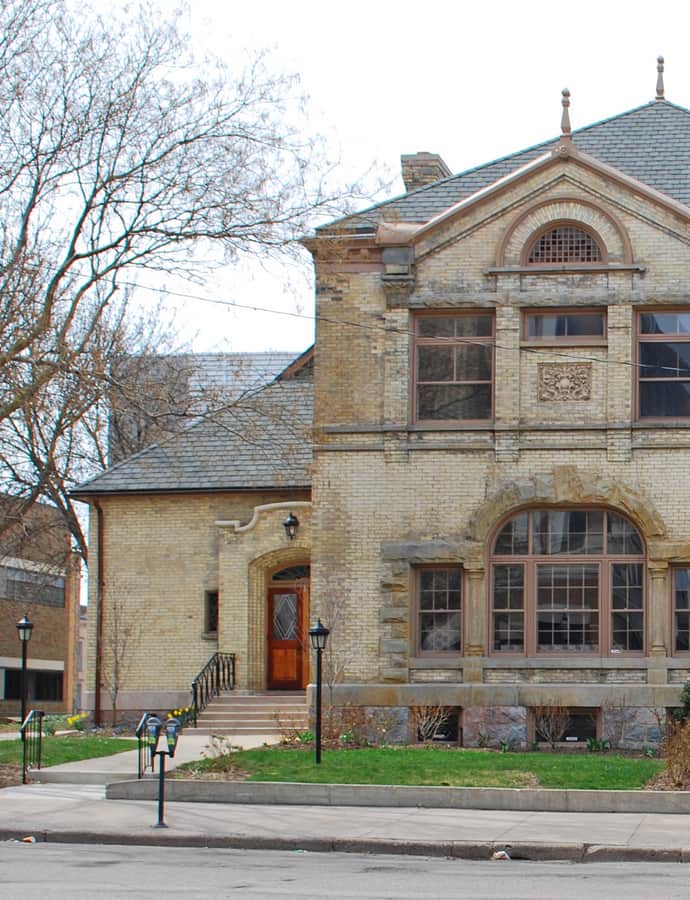
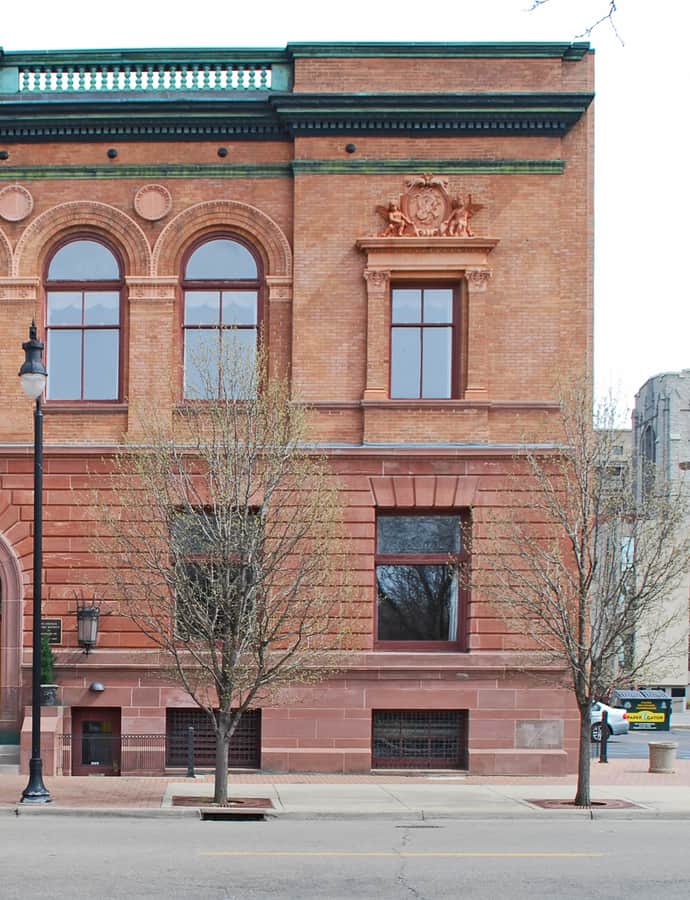
The Ladies' Literary Club at 61 Sheldon Street SE grew out of a small history class organized by Grand Rapids women in 1869, which became the Ladies' Literary Association in 1870 and was influential in opening the city's public library. Reincorporated as the Ladies' Literary Club in 1882, the group hired local architect William G. Robinson to design a clubhouse; ground broke in 1887 and construction finished that December. The building later gained major additions in 1931, and though the club disbanded in 2005, the building is now operated by the nonprofit 'The Lit Grand Rapids' as a community cultural hub.

Photo: Andrew Jameson , CC BY-SA 3.0

Meyer May House

Prairie School

Meyer May House

Frank Lloyd Wright · 1909

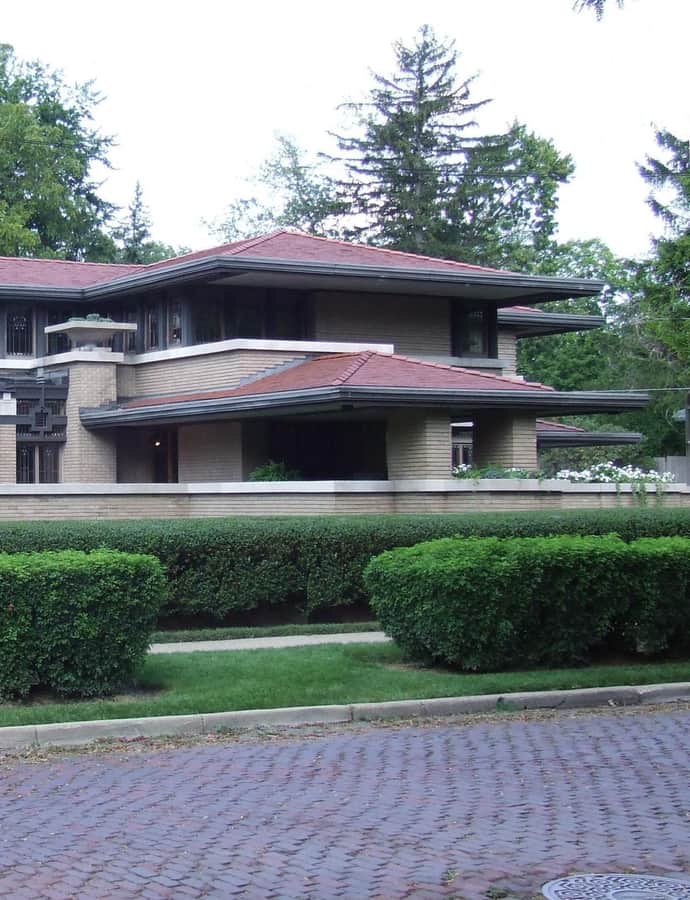
The Meyer May House is a Frank Lloyd Wright-designed home built in 1908-1909 for Meyer S. May, president of May's clothing store in Grand Rapids, and his wife Sophie. Set in the Heritage Hill Historic District at 450 Madison Avenue SE, it stands out sharply against the Victorian houses that surround it. It's regarded as a fine example of Wright's Prairie School era and has been called "Michigan's Prairie masterpiece," now considered one of the most completely restored of Wright's Prairie residences.

Photo: en:User:Jaydec , CC BY-SA 3.0

Michigan Trust Company Building

Romanesque Revival

Michigan Trust Company Building

Solon Spencer Beman · 1891

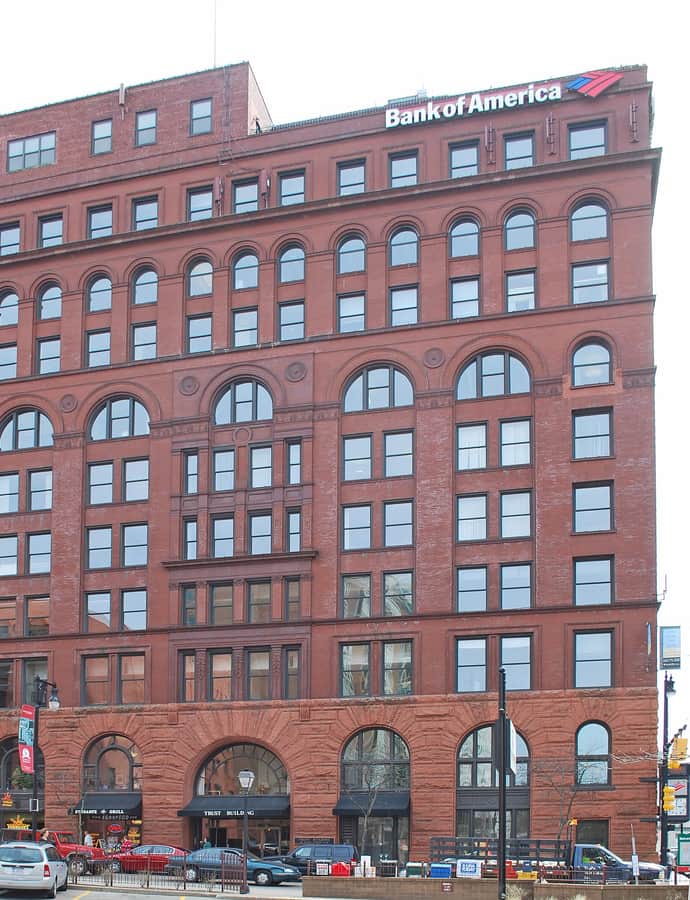
The Michigan Trust Company Building at 40 Pearl Street NW was built as headquarters for the Michigan Trust Company, established in 1889 by Grand Rapids businessmen including Anton G. Hodenpyl and Lewis H. Withey. The firm hired Chicago architect Solon S. Beman, who designed it in the Romanesque Revival style with construction beginning in 1891 and completion in 1892. It became the city's tallest office building and the first structure in Grand Rapids built solely to house office space. It was listed on the National Register of Historic Places in 1983.

Photo: Andrew Jameson , CC BY-SA 3.0

Old Grand Rapids City Hall

Gothic Revival

Old Grand Rapids City Hall

Elijah E. Myers · 1885

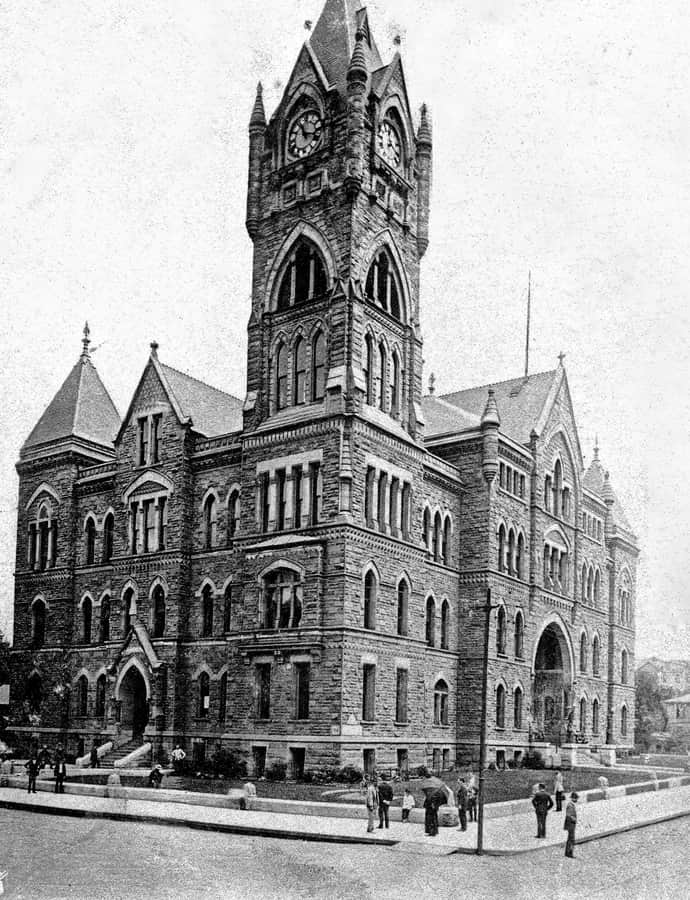
The old Grand Rapids City Hall was a government building at 35 Lyon Street NW, designed by architect Elijah E. Myers, with construction beginning in 1885 and the building dedicated in 1888 at a cost of $314,800. It was added to the National Register of Historic Places in 1969, but was demolished later that same year and de-listed from the register in 1970, after extended efforts to save it failed.

Photo: Unknown authorUnknown author , Public domain

Rood Building

Gothic Revival

Rood Building

The Rood Building is a commercial building built in 1873 for attorney and investor Charles Conant Rood, after whom it's named, replacing an earlier three-story building on the site that had burned down in October 1872. Designed by Grand Rapids architect William G. Robinson, it's a four-story timber frame structure clad in brick, and it's the only surviving High Victorian Gothic commercial building in Grand Rapids and one of only a few High Victorian buildings in the city. It was added to the National Register of Historic Places on March 4, 1988.

Photo: User:Michael Barera , CC BY-SA 4.0

St. Cecilia Music Center

Renaissance Revival

St. Cecilia Music Center

Henry Ives Cobb

The St. Cecilia Music Center, built in 1894 as the St. Cecilia Society Building at 24 Ransom Avenue NE, was designed by Chicago architect Henry Ives Cobb for a women's club devoted to "musical improvement and the development in the community." The St. Cecilia Society, founded in 1883, grew from nine members to nearly 100 within months and commissioned the building to give itself a permanent performance space. It was listed on the National Register of Historic Places in 1971 and, as of 2019, still houses a musical performance space run by the organization that built it.

Photo: Andrew Jameson , CC BY-SA 3.0

Third Reformed Church of Grand Rapids, Michigan

Gothic Revival

Third Reformed Church of Grand Rapids, Michigan

Third Reformed Church, now the Church of God in Christ, is a historic church at 1009 Hermitage St. SE built in 1875 to serve Dutch immigrant congregants on Grand Rapids' east side, founded as a subsidiary of the Second Reformed Church established in 1849. It was added to the National Register of Historic Places in 1982, and as of 2019 was being rehabilitated into a neighborhood arts center.

Photo: rossograph , CC BY-SA 4.0

Notable buildings

Worth a stop when you're nearby.

Abram W. Pike House

Greek Revival

Abram W. Pike House

1844

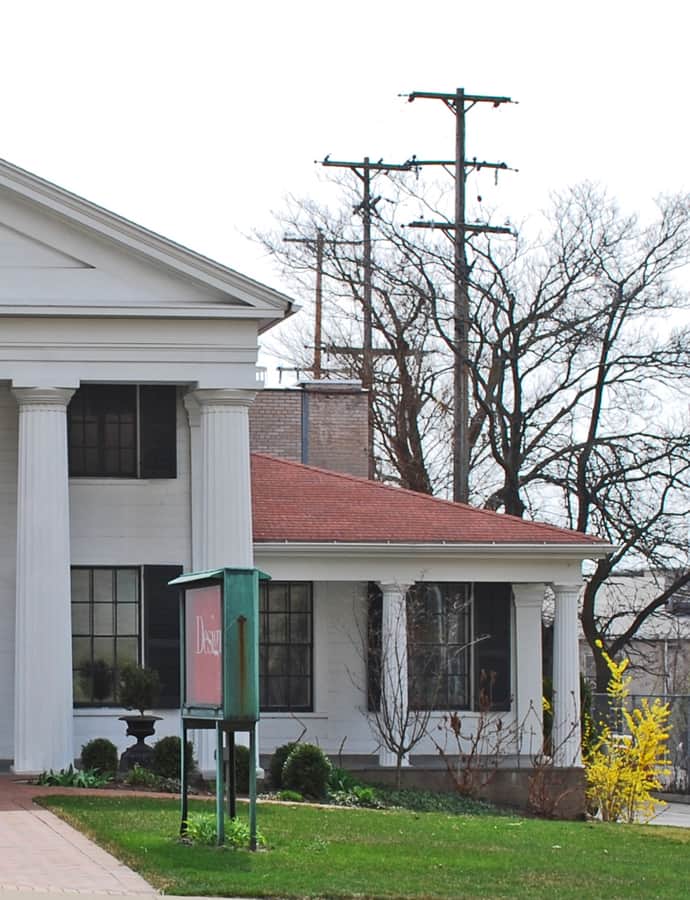
Built in 1844, the Abram W. Pike House at 230 E. Fulton Street is one of the oldest homes still standing in Michigan. It's named for Abram W. Pike, a fur trader who came to Michigan in 1827 and worked as company clerk for the Port Sheldon Land Company at Port Sheldon on Lake Michigan. When Pike relocated to Grand Rapids in 1844, he had four of the six pillars from Port Sheldon's short-lived Ottawa House Hotel hauled by ox and attached to the front of his new home. The house served as a family residence until 1922, when it became the Grand Rapids Art Gallery, now the Grand Rapids Art Museum.

Photo: Andrew Jameson , CC BY-SA 3.0

President Gerald R. Ford, Jr. Boyhood Home

Colonial Revival

President Gerald R. Ford, Jr. Boyhood Home

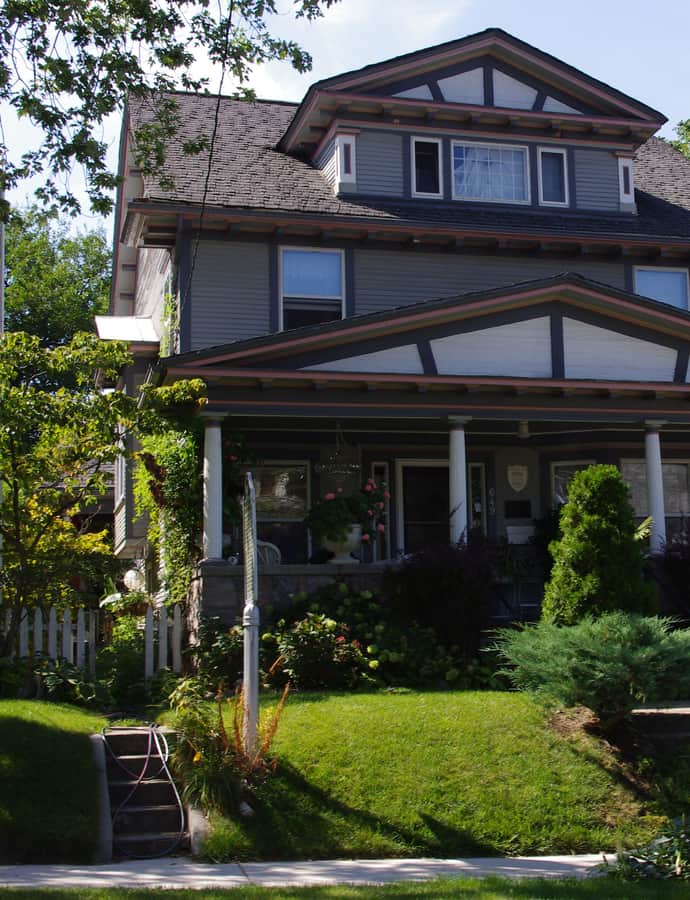
Built around 1910, the house at 649 Union Avenue SE became home to Gerald R. Ford from 1921 to 1930, ages 8 to 17, after his family's bank foreclosure forced them into renting it; they bought the house in 1925. Of all his boyhood homes, Ford remembered this one most vividly in his autobiography.

Photo: SSTEFFEK , CC BY-SA 3.0

Hidden gems

Fine buildings that fewer people seek out.

Eliphalet H. Turner House

Greek Revival

Eliphalet H. Turner House

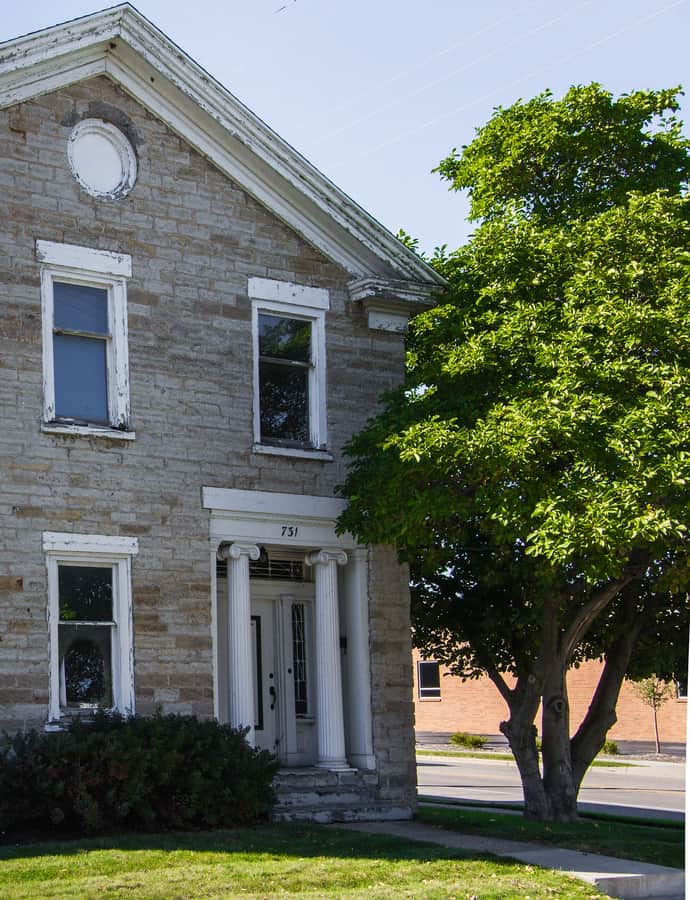
The Eliphalet H. Turner House at 731 Front Street NW was built around 1845, contracted by Eliphalet Turner, who had arrived in Grand Rapids in 1833 and served as the city's first clerk. Turner was a contractor who built the first bridge across the Grand River and the first Kent County jail, and likely helped build his own house alongside builder Gideon Colton.

Photo: rossograph , CC BY-SA 4.0