
Tweed Courthouse
- Architects
- Leopold Eidlitz John Kellum
- Year
- 1872
- Style
- Italianate
- City
- Manhattan, NY
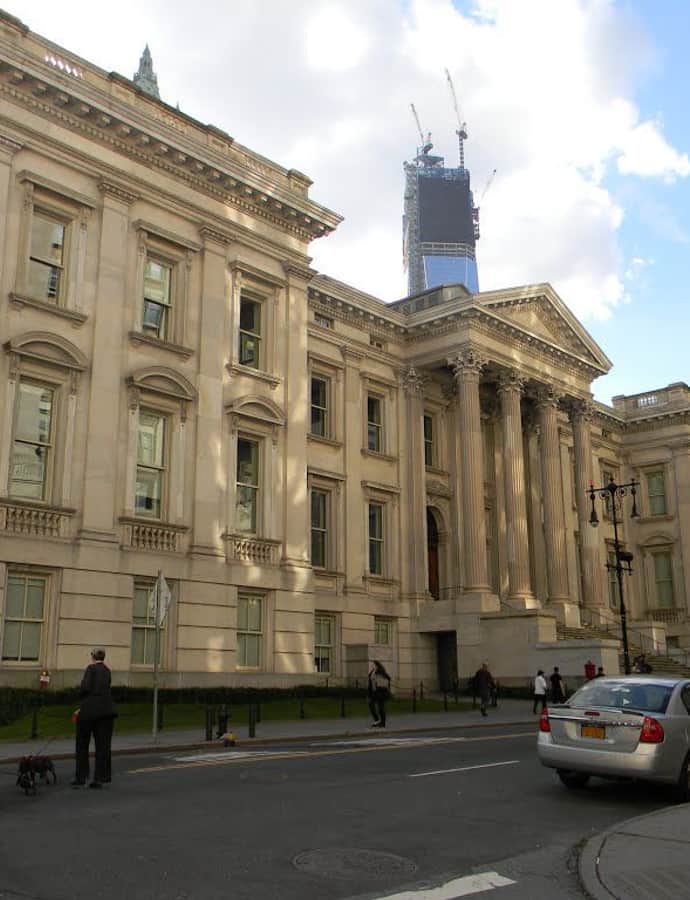

The Tweed Courthouse, also known as the Old New York County Courthouse, is a historic courthouse at 52 Chambers Street in Manhattan's Civic Center, built in the Italianate style with Romanesque Revival interiors. William M. "Boss" Tweed, the corrupt leader of the Tammany Hall political machine, oversaw its construction, and the building served as a judicial building for New York County. Completed in 1872, it is the second-oldest city government building in the borough, after City Hall.
the building
Pavilions and wing. The structure comprises pavilions to the east and west of a central section, along with a rear wing to the south, added during the building's second phase of construction.
the style
The Tweed Courthouse was built in the Italianate style on the exterior, with Romanesque Revival interiors — a combination that reflected the shifting hands of its two architects across a construction period marked by scandal.
More on Italianatethe architect
John Kellum, working with political appointee Thomas Little, designed the first portion of the courthouse, built from 1861 to 1872. Construction was interrupted in 1871 when Kellum died and the corruption surrounding the building's construction was exposed. Leopold Eidlitz completed the project, adding the rear wing and finishing the interior.
significance
The Tweed Courthouse is a National Historic Landmark, listed on the National Register of Historic Places and the New York State Register of Historic Places, and is a New York City Landmark. Its construction and cost became a defining symbol of the corruption of the Tweed-era Tammany Hall political machine.
nearby
- City Hall
- Emigrant Industrial Savings Bank Building
- 280 Broadway
- Surrogate's Courthouse
- Broadway-Chambers Building
- Home Life Insurance Company Building