City guide

architecture in Augusta.

22 buildings worth a detour, each with what to look for. Open them on the map, or walk them with the iPhone app, which collects each one you photograph.

Landmarks

The buildings that define the city's architecture.

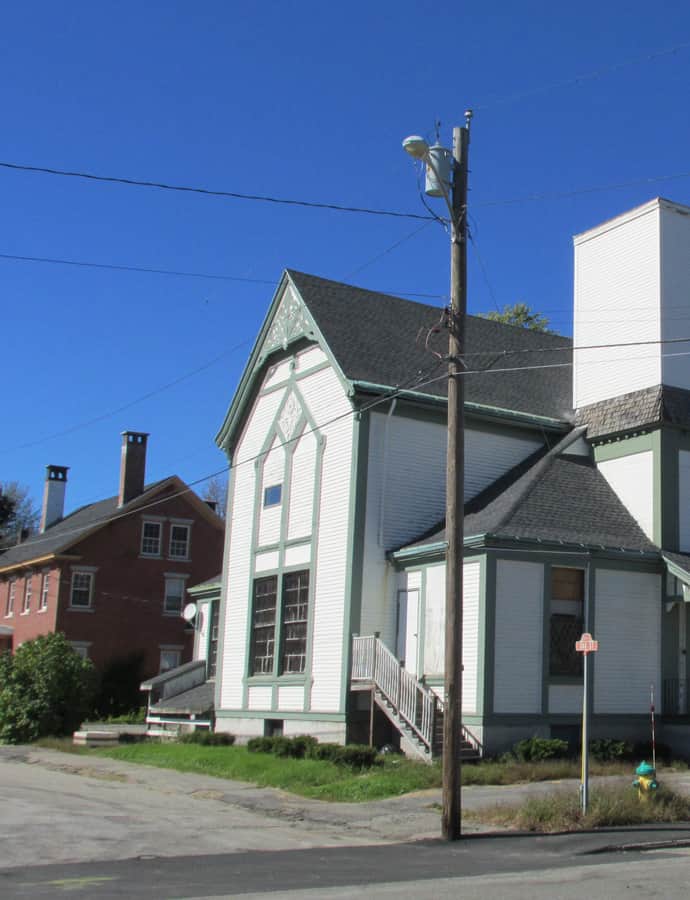
Alls Souls Church

Queen Anne

Alls Souls Church

Thomas Silloway · 1879

All Souls Church at 70 State Street was built in 1879 for a Unitarian congregation established in 1825, and ranks among Maine's finest examples of Stick style architecture. It stands at the northwest corner of Oak and State Streets in central Augusta.

Photo: John Phelan , CC BY-SA 3.0
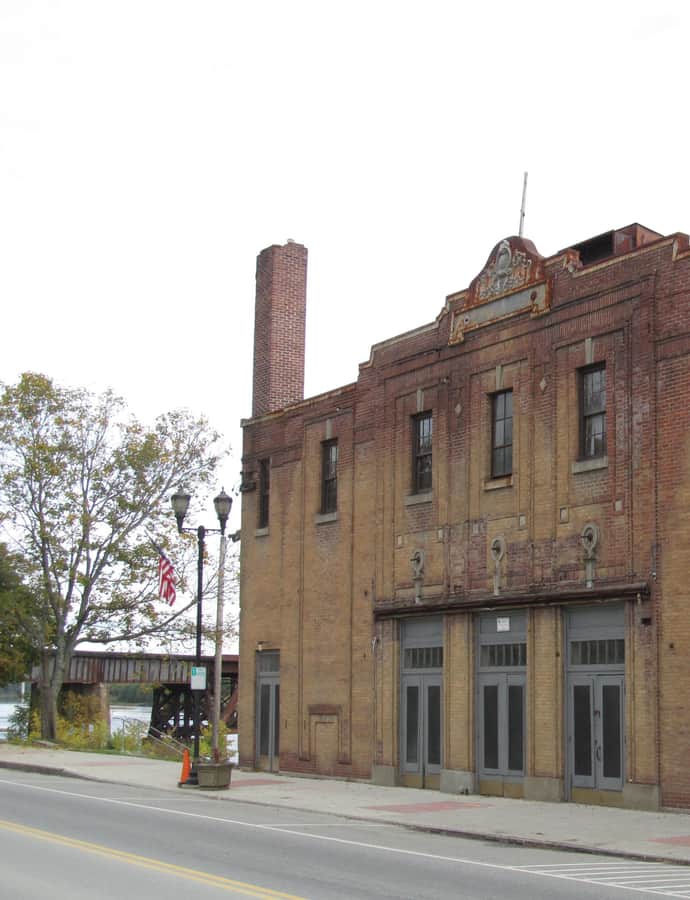
Colonial Theater

Art Deco

Colonial Theater

Harry S. Coombs

The Colonial Theater at 139 Water Street was built in 1913 and rebuilt after a fire in 1926, emerging as a Beaux Arts building with features anticipating Art Deco. It is the last surviving movie theater building in downtown Augusta, standing on the Kennebec River near the north end of Water Street, and was listed on the National Register of Historic Places in 2014 after standing vacant for many years.

Photo: Doug Kerr , CC BY-SA 2.0

Former Augusta City Hall

Renaissance Revival

Former Augusta City Hall

1896

The Former Augusta City Hall at 1 Cony Street was built in 1895-96 as a well-preserved local example of civic Renaissance Revival architecture, serving as Augusta's city hall until 1987. It stands near the Kennebec River, just north of Fort Western, and has since been converted into an assisted living facility called The Inn At City Hall.

Photo: Magicpiano , CC BY-SA 3.0

Gov. John F. Hill Mansion

Colonial Revival

Gov. John F. Hill Mansion

John Calvin Stevens · 1901

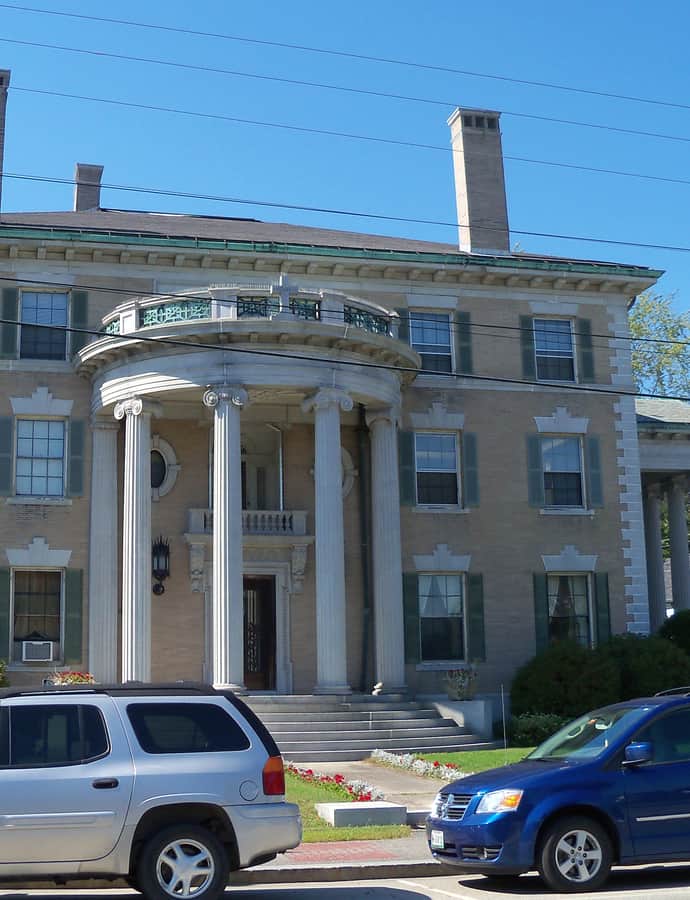
Built in 1901 at 136 State Street for Governor John F. Hill, this mansion is one of Maine's grandest examples of Colonial Revival architecture. Designed by architect John Calvin Stevens, it stands between downtown Augusta and the state capitol complex and today operates as an event facility.

Photo: AlexiusHoratius , CC BY-SA 3.0

Romanesque Revival

Lithgow Public Library

Joseph Ladd Neal

Augusta's public library was established in 1896, funded by a $20,000 bequest from local merchant Llewellyn Lithgow along with a $9,000 gift from Andrew Carnegie and money raised through local subscriptions. Designed by Joseph Ladd Neal, it opened its doors to the community in February 1896 and has since expanded in 1979 and 2016, now holding about 67,000 books.

Lot Morrill House

Greek Revival

Lot Morrill House

1830

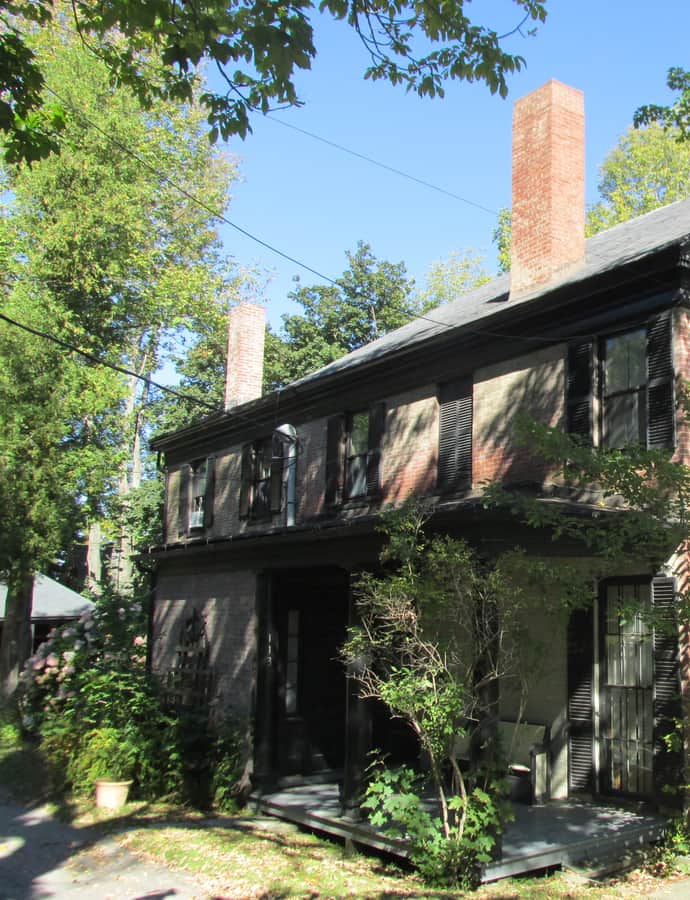
The Lot Morrill House is a brick Greek Revival house built about 1830 at 113 Winthrop Street, a fairly typical example of the style for its era. It is best known as the home of Lot Morrill during the height of his power, when he served as a United States Senator and Governor of Maine. The house was listed on the National Register of Historic Places in 1974.

Photo: John Phelan , CC BY-SA 3.0

Maine Industrial School for Girls

Colonial Revival

Maine Industrial School for Girls

1898

The Maine Industrial School for Girls, also known as the Stevens School and State School for Girls, operated as a juvenile detention and education facility on Winthrop Street in Hallowell from its founding in 1874 until the mid-1970s. The campus later housed state offices and a Department of Corrections pre-release center until 2003, sat unsold until Mastway Development, LLC purchased it in 2016, and reopened in August 2019 as a 36-bed student dormitory for the University of Maine at Augusta.

Photo: Magicpiano , CC BY-SA 4.0

Greek Revival

Maine State House

Charles Bulfinch; George Henri Desmond · 1829

The Maine State House is Maine's capitol, completed in 1832 in Augusta, which had become the state capital just five years earlier. Built of Maine granite, the design followed the Massachusetts State House, a nod to Maine's history as part of Massachusetts before it split off as its own state in 1820. The legislature first convened here on January 4, 1832, under Governor Samuel E. Smith.

Masonic Hall

Renaissance Revival

Masonic Hall

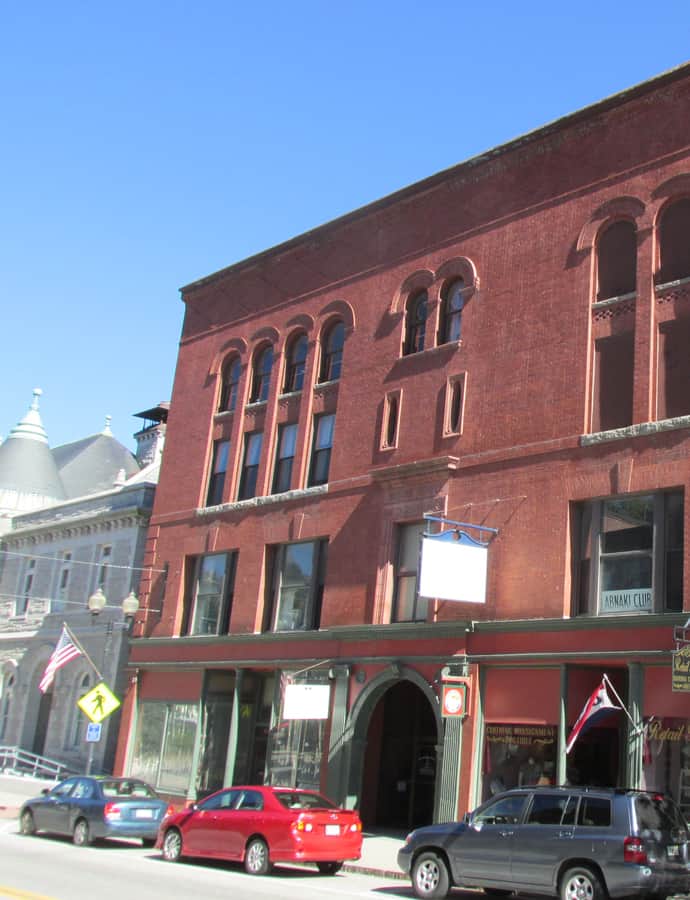
The Masonic Hall is a four-story commercial and fraternal society building at 313-321 Water Street in downtown Augusta, built in 1894. It is a significant work of Boston architect John Spofford and a good local example of restrained Renaissance Revival architecture. The building was listed on the National Register of Historic Places in 1986.

Photo: John Phelan , CC BY-SA 3.0

Tappan-Viles House

Italianate

Tappan-Viles House

John Calvin Stevens · 1816

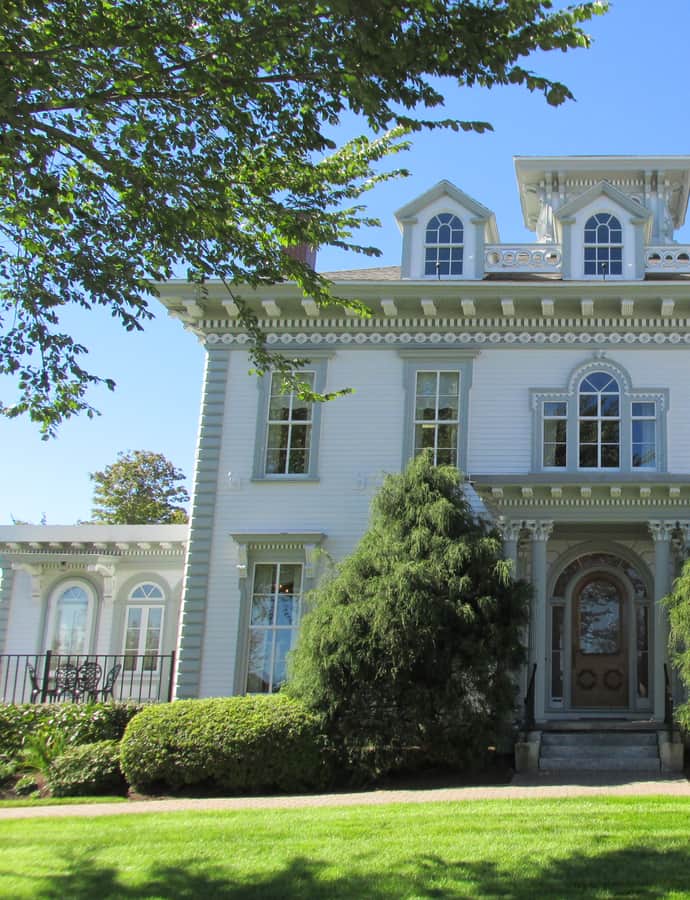
The Tappan-Viles House at 150 State Street began in 1816 and was restyled several times over the following century, layering Federal, Italianate, and Colonial Revival work — the last contributed by architect John Calvin Stevens. It now forms part of Kennebec Savings Bank's Augusta branch.

Photo: John Phelan , CC BY-SA 3.0

Notable buildings

Worth a stop when you're nearby.

Fort Western

rustic architecture

Fort Western

1754

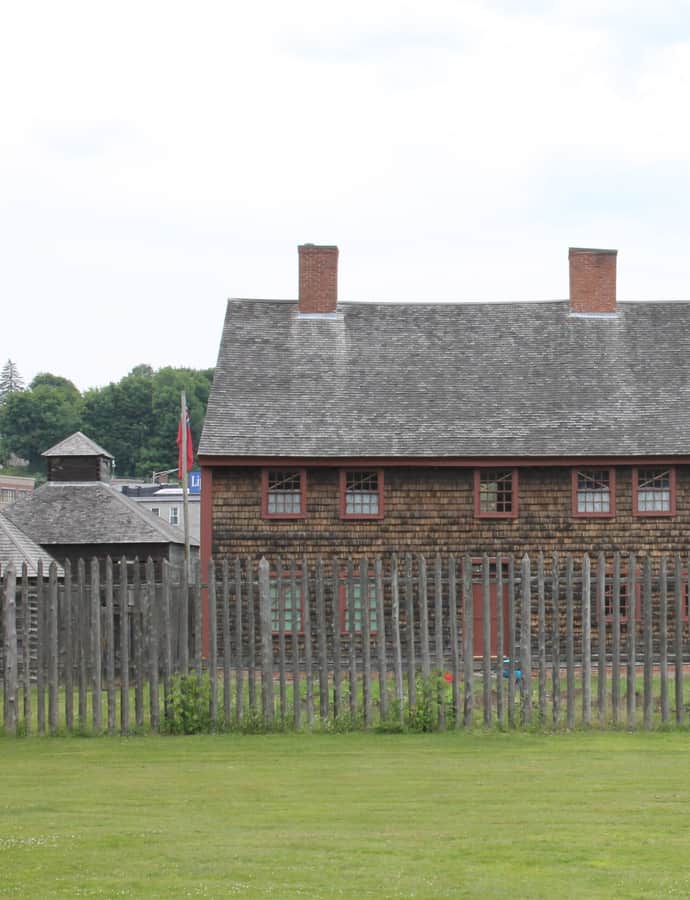
Fort Western was built in 1754 during the French and Indian War as a fortified trading post at the head of navigation on the Kennebec River, constructed by the Boston-based Kennebec Proprietors to promote settlement and British power in the region. It is the oldest surviving wooden fort in America. Its main building, the only original element to survive, was restored in 1920 by William H. Gannett and Guy P. Gannett, who gifted it back to the City of Augusta; it opened as a museum on July 4, 1922.

Photo: Billy Hathorn , CC BY-SA 3.0

Old Cony High School

Colonial Revival

Old Cony High School

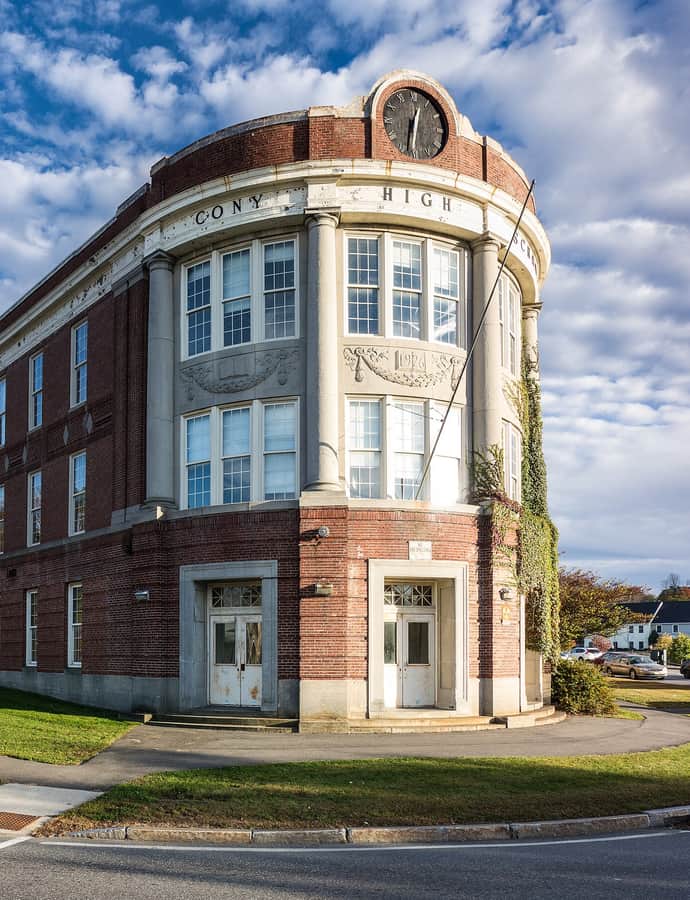
Old Cony High School, known as the Cony Flatiron, is a school building at Cony and Stone Streets built between 1926 and 1932 as the city's third high school building. It is locally unusual for its wedge, or flatiron, shape and was listed on the National Register of Historic Places in 1988. The high school building and its catwalk were demolished in 2008.

Photo: Kenneth C. Zirkel , CC BY-SA 4.0

Old Post Office

Romanesque Revival

Old Post Office

1889

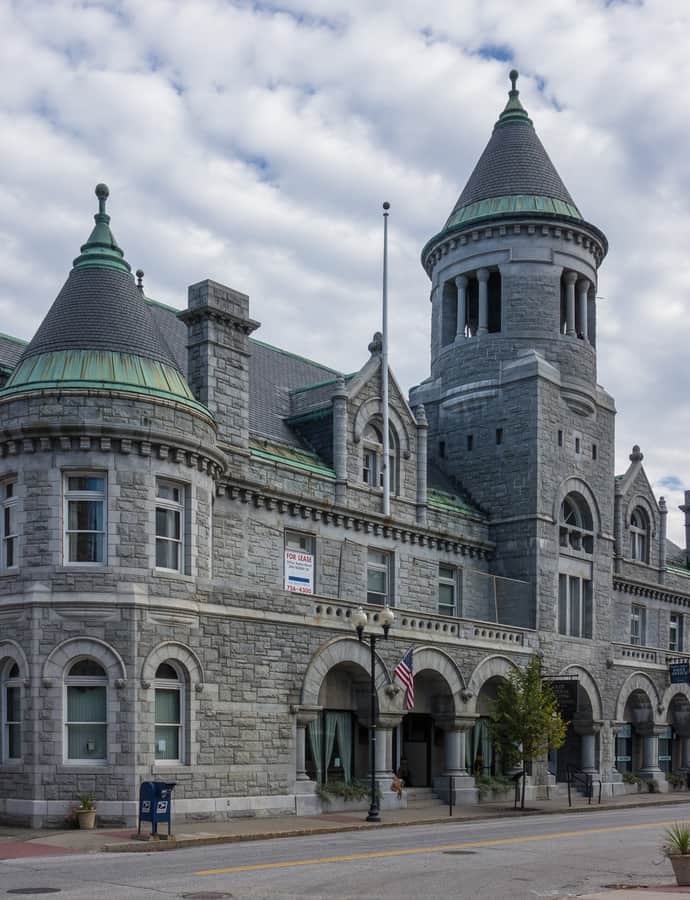
The Old Post Office and Court House is a former federal government building at 295 Water Street in downtown Augusta, built in 1886-1890 and designed by Mifflin E. Bell, Supervising Architect for the U.S. Treasury. It is one of Maine's finest surviving examples of Romanesque Revival architecture and was listed on the National Register of Historic Places in 1974.

Photo: Kenneth C. Zirkel , CC BY-SA 4.0

South Parish Congregational Church and Parish House

Queen Anne

South Parish Congregational Church and Parish House

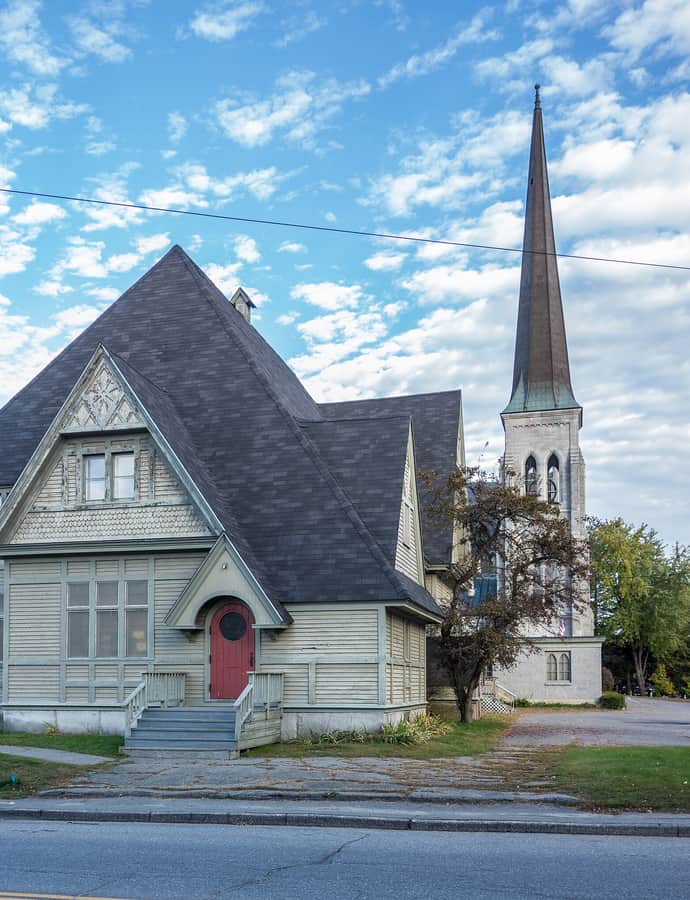
The South Parish Congregational Church and Parish House stands at 9 Church Street in Augusta. The 1865 church is a major Gothic Revival work by Francis H. Fassett, Maine's leading mid-19th-century architect, while its 1889 parish house, designed by James H. Cochrane, is a rare Maine example of Stick style architecture. The congregation itself dates to 1773, when the area was still part of Hallowell, and the property was listed on the National Register of Historic Places in 1980.

Photo: Kenneth C. Zirkel , CC BY-SA 4.0

Hidden gems

Fine buildings that fewer people seek out.

Algernon Bangs House

Queen Anne

Algernon Bangs House

1892

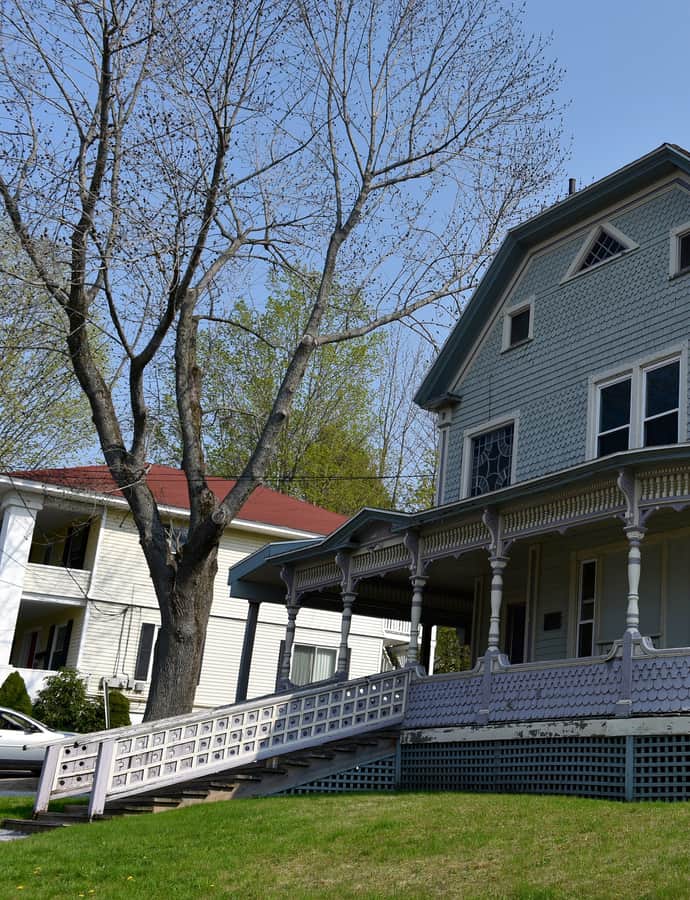
The Algernon Bangs House is a historic house at 16 East Chestnut Street in Augusta, built in 1892 for Algernon Sydney Bangs as a distinctive and idiosyncratic exhibition of Queen Anne architecture. It was listed on the National Register of Historic Places in 1982 and now houses professional offices.

Photo: Jim Roberts , CC BY-SA 3.0

D.V. Adams Co.-Bussell and Weston

Neoclassical

D.V. Adams Co.-Bussell and Weston

1909

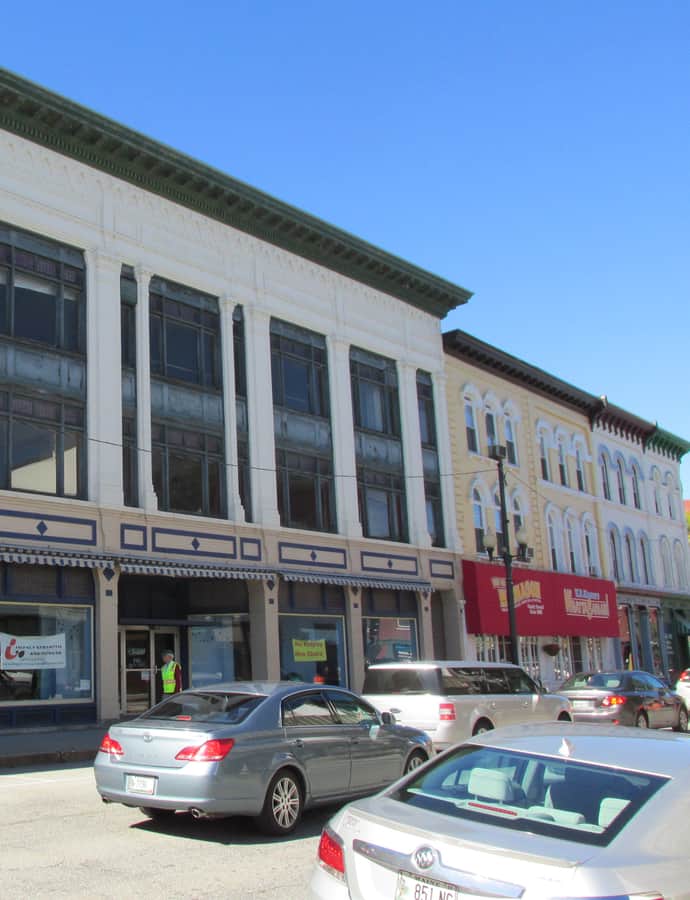
The D.V. Adams Co.-Bussell and Weston Building is a three-story brick commercial building at 190 Water Street, built in 1909 by the Boston firm of Freeman, Funk and Wilcox for Bussell & Weston. It is one of Maine's best early examples of a department store building and was listed on the National Register of Historic Places in 1986.

Photo: John Phelan , CC BY-SA 3.0

Doughty Block

Italianate

Doughty Block

http://www.wikidata.org/.well-known/genid/ad04a7d033f0112e4d90b9bd12f98cd7 · 1890

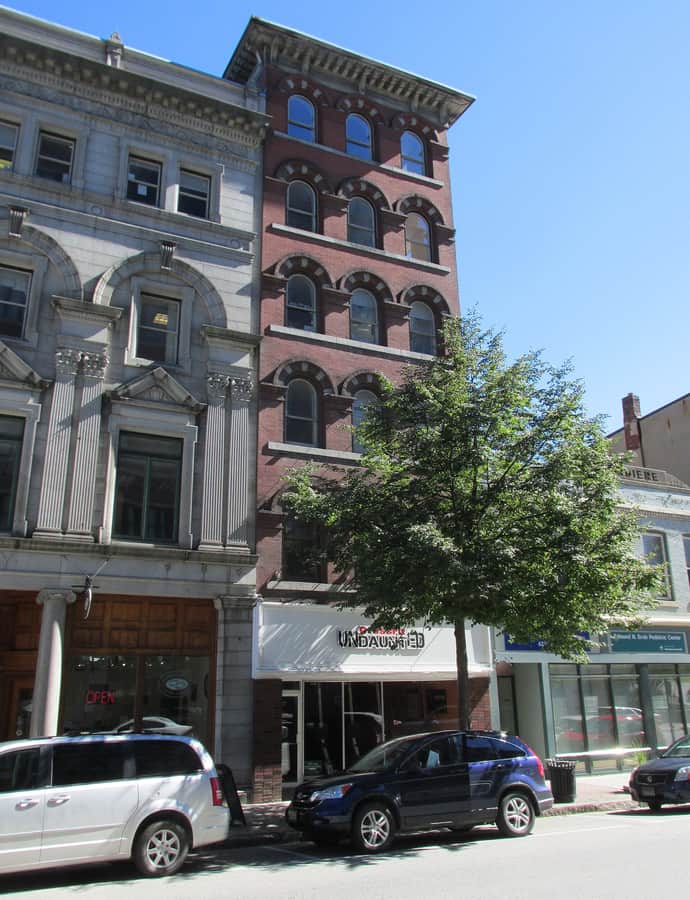
The Doughty Block is a six-story brick commercial building at 265 Water Street, built in 1890 for Charles Doughty by local builder Charles Fletcher. It is downtown Augusta's only 19th-century high rise, standing noticeably taller than its neighbors on Water Street. It was listed on the National Register of Historic Places in 1986.

Photo: John Phelan , CC BY-SA 3.0

Dr. J.W. Ellis House

Greek Revival

Dr. J.W. Ellis House

1855

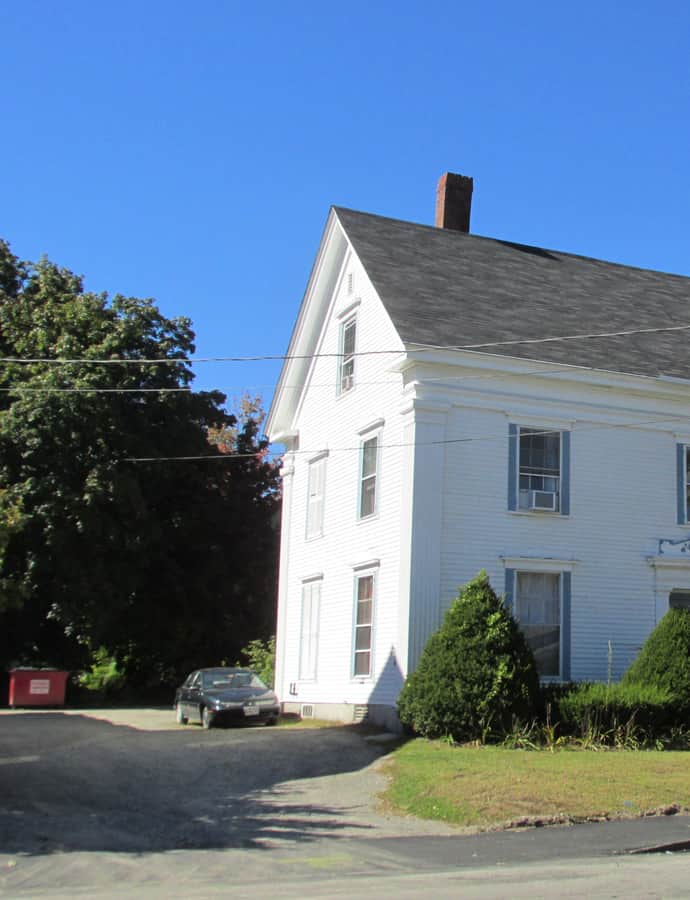
The Dr. J.W. Ellis House is a wood-frame Greek Revival house at 62 State Street, built around 1855 for local doctor Joseph Willard Ellis. It was listed on the National Register of Historic Places in 1979.

Photo: John Phelan , CC BY-SA 3.0

Journal Building

Renaissance Revival

Journal Building

1899

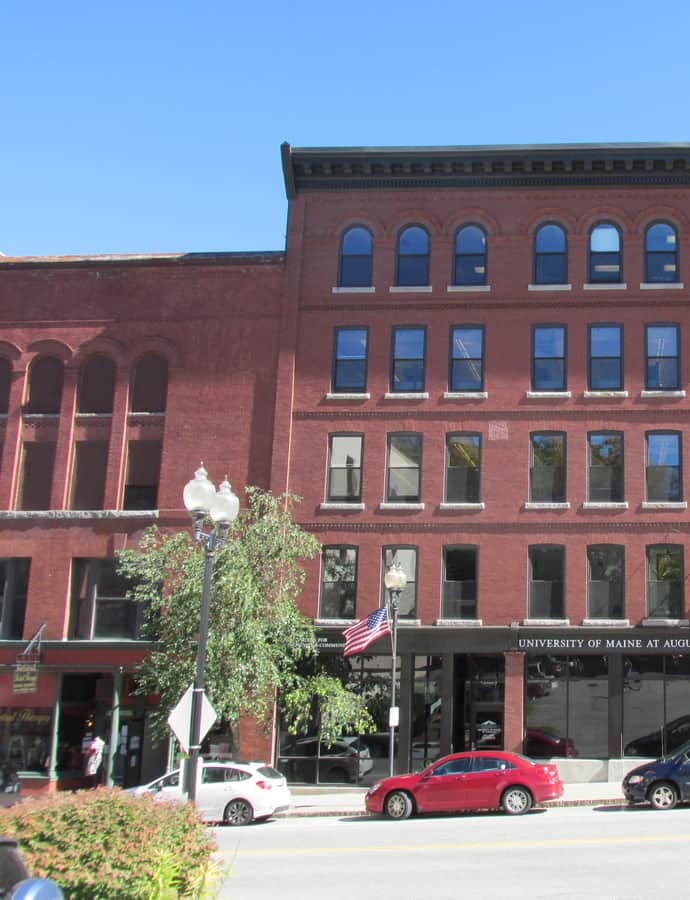
The Journal Building, also known as the Gannett Building and Handley Hall, is a five-story brick commercial building at 325-331 Water Street, built in 1899 to a design by Arthur G. Wing. It was for many years home to the Kennebec Journal, Augusta's leading newspaper, and was listed on the National Register of Historic Places in 1986. It is now occupied by the University of Maine at Augusta.

Photo: John Phelan , CC BY-SA 3.0
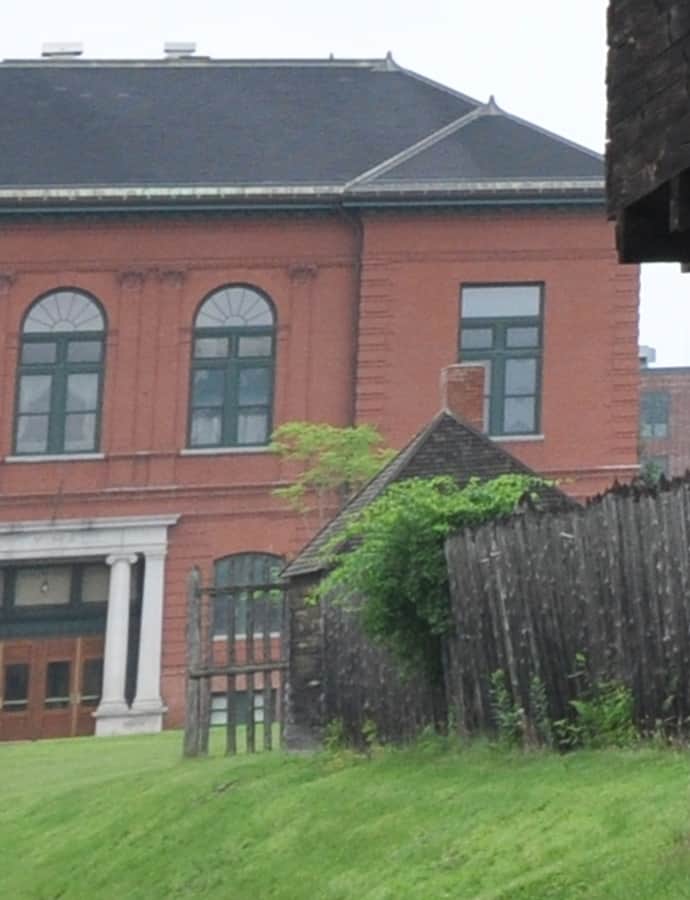
Libby-Hill Block

Italianate

Libby-Hill Block

1866

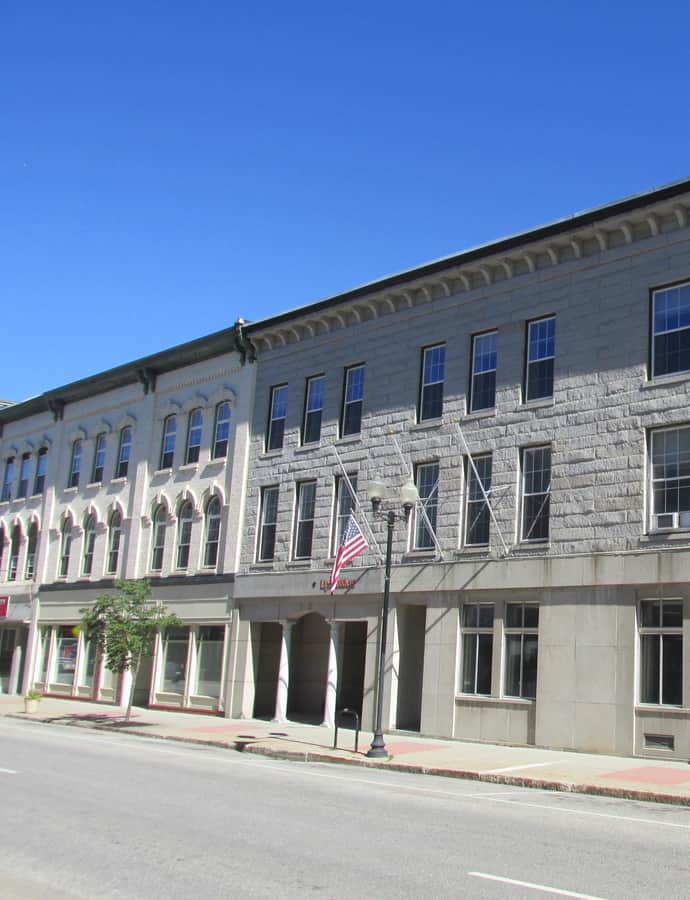
The Libby-Hill Block is a three-story granite commercial building at 227-233 Water Street, built in 1866 by businessmen B. Libby and Dr. H.H. Hill after a fire destroyed part of downtown Augusta the previous year. It is one of the city's oldest granite commercial buildings and was listed on the National Register of Historic Places in 1986.

Photo: John Phelan , CC BY-SA 3.0
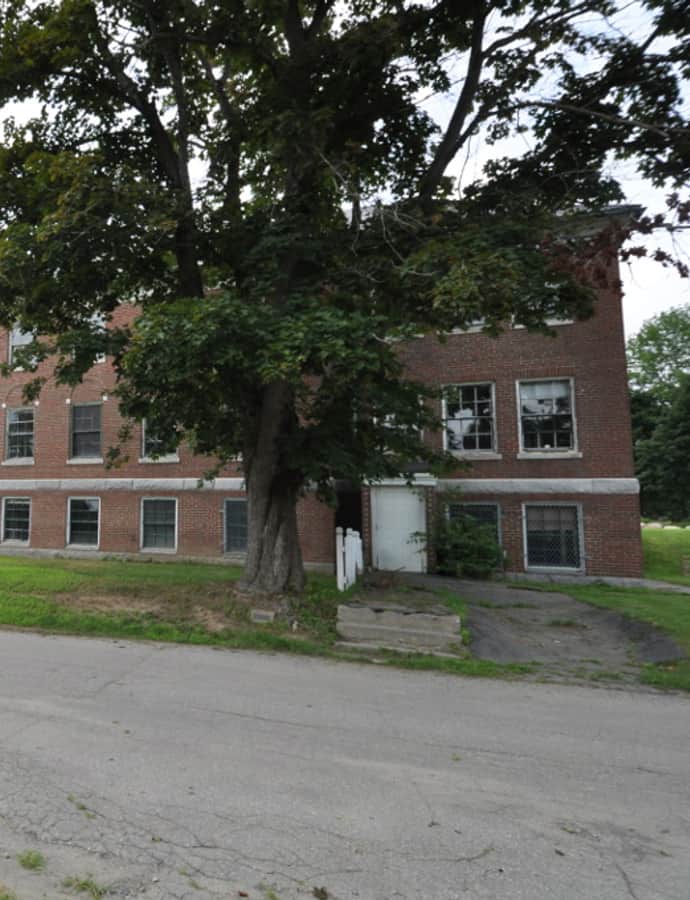
Noble Block

Italianate

Noble Block

1865

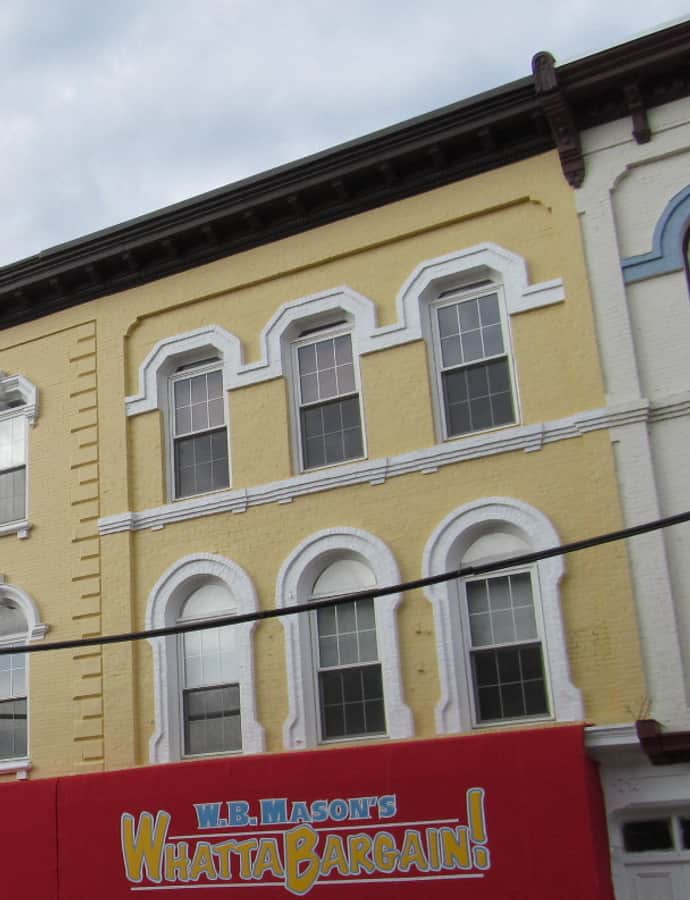
The Noble Block is a three-story brick commercial building at 186 Water Street, built in 1867 as one of four Italianate buildings raised in a row after the 1865 downtown fire. It was listed on the National Register of Historic Places in 1986.

Photo: Doug Kerr , CC BY-SA 2.0

Vickery Building

Renaissance Revival

Vickery Building

1895

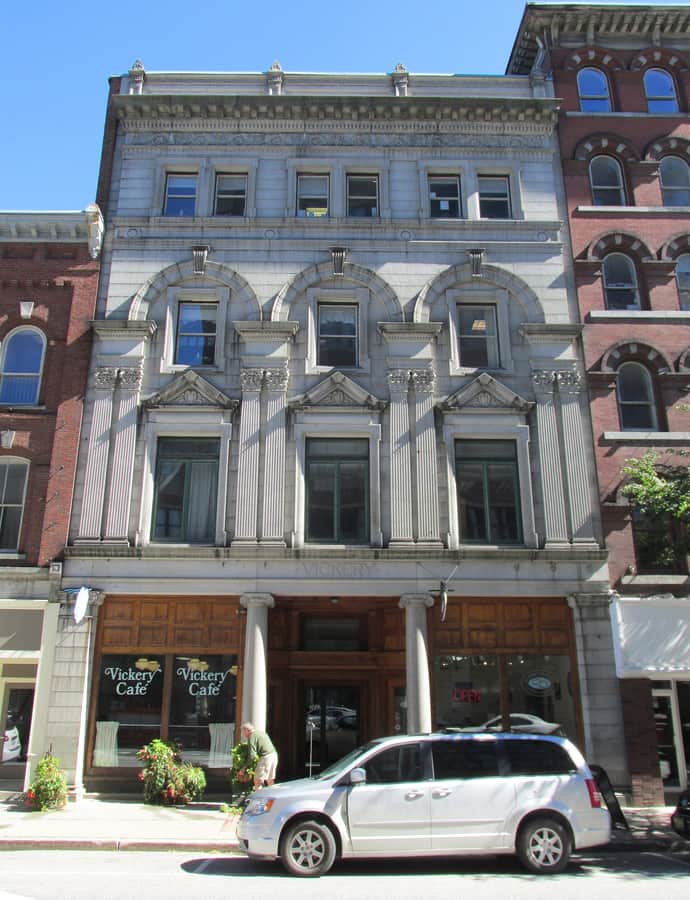
The Vickery Building is a four-story granite commercial building at 261 Water Street, built in 1895 to a design by John C. Spofford for Peleg O. Vickery, a leading publisher and three-term mayor of Augusta. It is one of downtown's few granite commercial buildings and was listed on the National Register of Historic Places in 1984.

Photo: John Phelan , CC BY-SA 3.0