
Mary Fiske Stoughton House
- Architect
- Henry Hobson Richardson
- Year
- 1882
- Style
- Shingle Style
- City
- Boston, MA
- Collection
- richardson romanesque
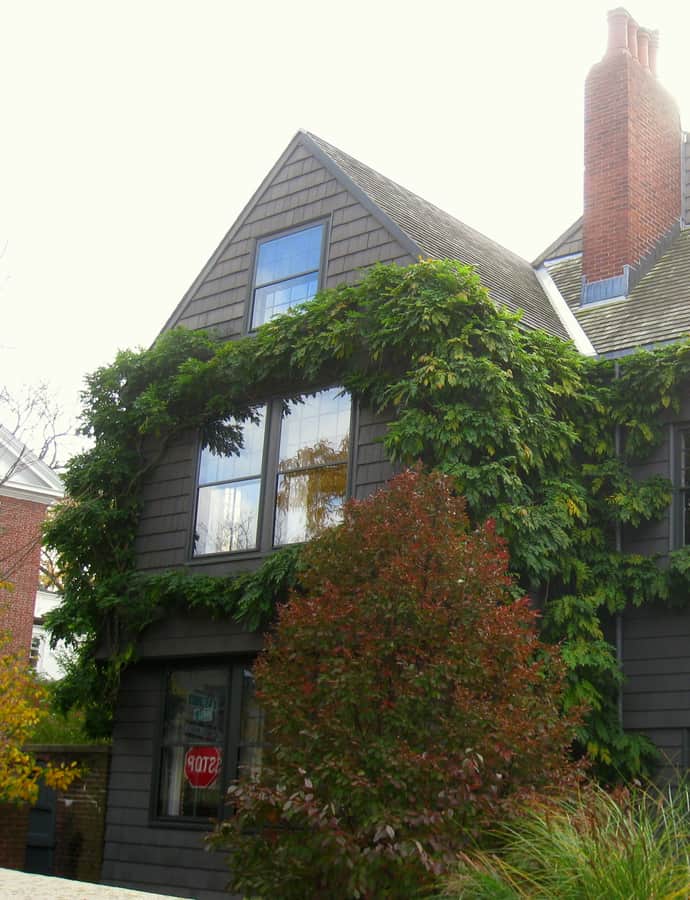

Mary Fiske Stoughton, widow of Edwin W. Stoughton, commissioned this house in 1882 to live nearer her son John Fiske, the philosopher and historian, at 90 Brattle Street in Cambridge. Henry Hobson Richardson designed it in what became known as the Shingle style, completing it in 1883, and it drew immediate notice in the architectural community as a defining example of the new idiom. Richardson's handling of space here was later seen as anticipating major 20th-century architects, including Frank Lloyd Wright.
the building
Shingles as a skin. Richardson wrapped the house's irregular volumes in a continuous skin of wood shingles with a minimum of applied ornament, an approach that became a hallmark of the Shingle style he helped originate with this commission.
Later alterations. John Fiske expanded the kitchen wing westward and extended the whole rear of the house southward in 1900, with a further alteration following in 1925.
the style
The house is a seminal, textbook exemplar of the Shingle style, and its masterful use of space was a significant influence on the style's growth in popularity through the late 19th century.
More on Shingle Stylethe architect
Henry Hobson Richardson designed the house in 1882, completing it in 1883; its handling of interior space is credited with foreshadowing the work of major 20th-century architects, including Frank Lloyd Wright.
More on Henry Hobson Richardsonsignificance
The Mary Fiske Stoughton House was designated a National Historic Landmark in 1989 and is listed on the National Register of Historic Places.
more by Henry Hobson Richardson
nearby
- Oliver Hastings House
- Longfellow House–Washington's Headquarters National Historic Site
- Edwin Abbot House
- Conventual Church of St. Mary and St. John
- Christ Church
- Building at 10 Follen Street