
Roslindale Substation
- Style
- Neoclassical
- City
- Boston, MA
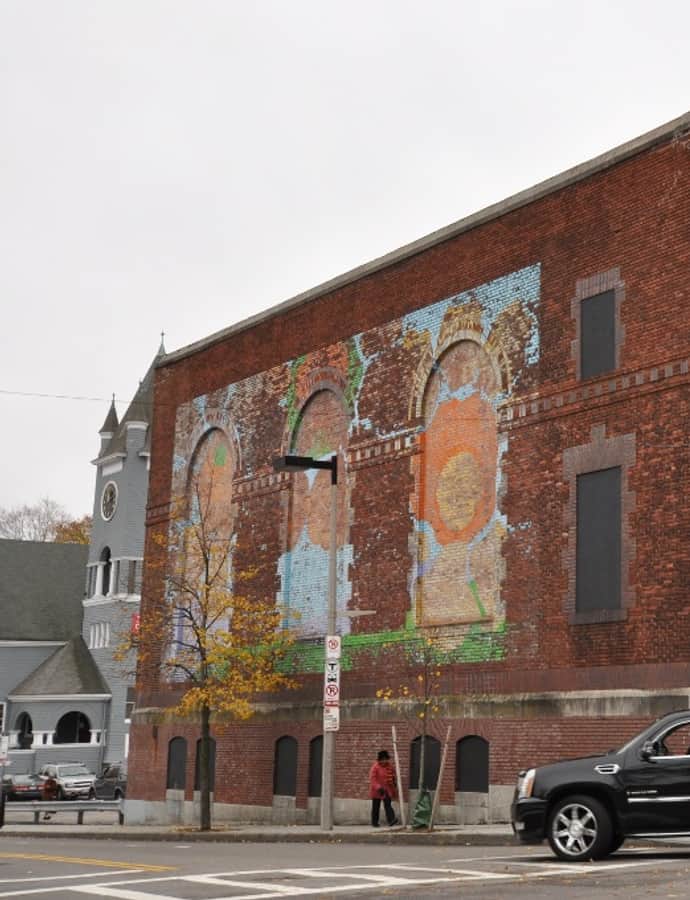

The Roslindale Substation is a brick Classical Revival building at 4228 Washington Street, built in 1911 by the Boston Elevated Railway, predecessor to today's MBTA. Designed by Robert S. Peabody of Peabody and Stearns and built by Stone & Webster, the monumental structure - 80 feet long, 50 feet wide, 46 feet high - converted AC to DC power for the city's streetcars until 1971.
the building
Adaptive reuse. Left vacant from 1971 to 2013, the substation was sold by the city to two local nonprofits, Historic Boston Incorporated and Roslindale Village Main Street, who bought an adjoining parcel and partnered with a private developer to bring the building back into use.
the style
The building's Classical Revival detailing dresses up a purely utilitarian structure - built simply to house power-conversion equipment for streetcars, not to be seen up close, yet given monumental brick massing befitting its civic role.
More on Neoclassicalsignificance
One of only four of the seven substations originally built by the Boston Elevated Railway to survive. Listed on the National Register of Historic Places in 2013.
nearby
- Roslindale Congregational Church
- Adams-Nervine Asylum
- Theodore Parker Unitarian Universalist Church
- Brandegee Estate
- First Church of Jamaica Plain
- District 13 Police Station